
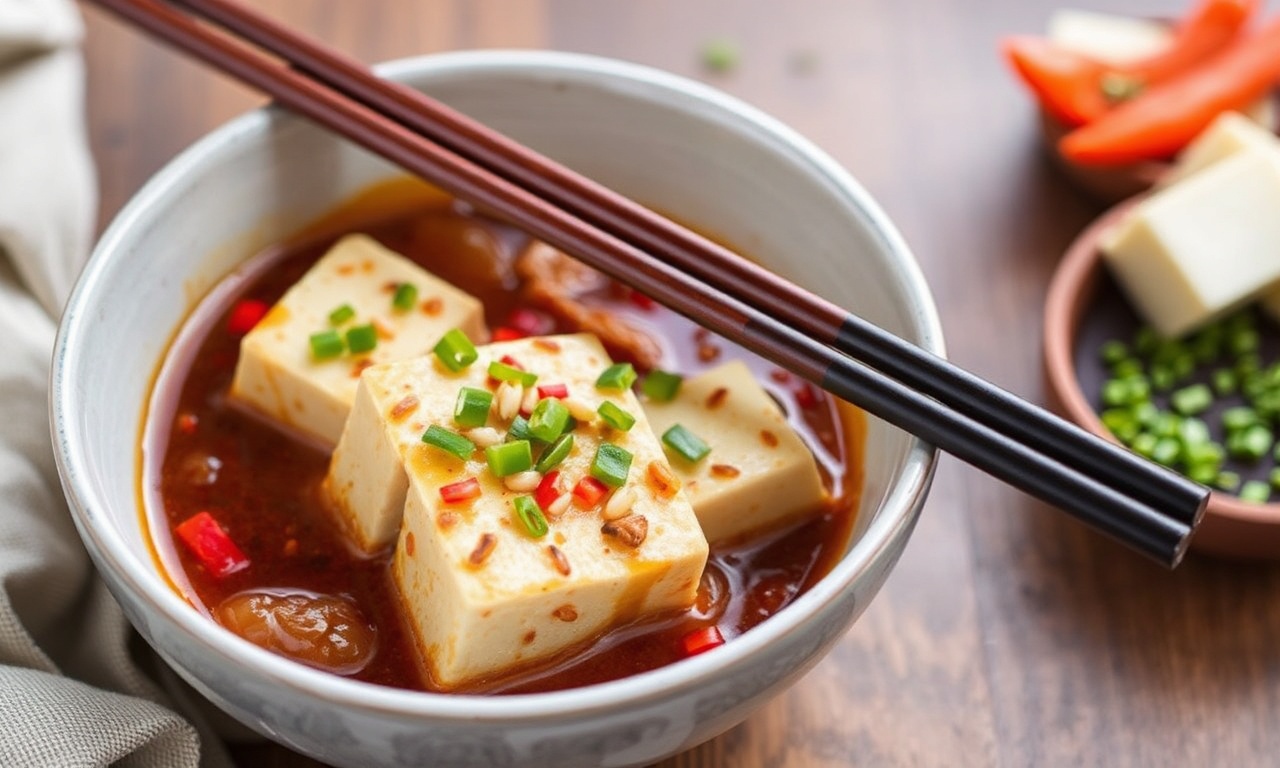
Spicy vegetarian Sichuan mapo tofu delivers the classic mala experience: fiery chili heat paired with a peppery, numbing bite. This version keeps the dish fully plant-based while preserving the dish’s signature depth, silky texture, and bold aromatics.
At a Glance
- Flavor: Doubanjiang and fermented black beans build savory depth.
- Texture: pressed firm tofu stays intact while the sauce turns glossy.
- Heat control: adjust Sichuan peppercorns for mala, and Doubanjiang for chili heat.
- Timing: aim for about 35 minutes total for best results.
Mapo tofu starts with two sensations: heat from chili and numbing from Sichuan peppercorns. When you swap meat for vegetarian umami, you still get layered savoriness that clings to rice.
For a quick reference on the spice’s profile, see Sichuan pepper. It helps you understand why mala feels different from pure chili burn.
Why Spicy Vegetarian Sichuan Mapo Tofu Works
Traditional mapo tofu often uses ground meat for savoriness and fat. Vegetarian spicy Sichuan mapo tofu relies on fermented ingredients—especially chili bean paste and fermented black beans—to create a similar “sticky” depth.
Fermentation adds complexity. Instead of one salty note, you get savory, slightly sweet, and tangy background flavors that build as the sauce simmers.
If you want to place the dish in its regional context, review Sichuan cuisine. The cuisine’s bold flavor logic explains why mala-forward cooking depends on aromatics and fermented staples.
What creates the mala (numbing + spicy) effect
The “mala” feel comes from compounds in Sichuan peppercorns plus the warming burn of chili. Both sensations hit at different speeds, so the sauce tastes lively rather than one-note.
When you toast and grind Sichuan peppercorns fresh, you sharpen aroma and increase perceived intensity. For background on chili heat, read chili pepper.
Prep and Cook Time
Plan your cooking so tofu stays intact and the sauce thickens at the right moment. Texture matters more than most people expect in mapo tofu.
Press tofu first, then prep aromatics and whisk the slurry. Once you start simmering, you need steady attention, not constant stirring.
- Preparation: 15 minutes
- Cooking: 20 minutes
- Total Time: 35 minutes
Yield
This recipe makes enough for a satisfying family meal. It serves 4 with rice as the main starch.
It reheats well when you refresh the sauce consistency with a small splash of broth. Reheating helps tofu reabsorb flavor, but you must avoid boiling hard.
Difficulty Level
Spicy vegetarian Sichuan mapo tofu looks bold, but the steps stay straightforward. You mainly control heat, blooming, coating, and thickening.
Follow the order: bloom the chili bean paste, simmer for depth, then thicken to a glossy finish. Keep the simmer gentle so tofu stays silky.
Difficulty: Medium. Great for home cooks who want authentic Sichuan technique without complex equipment.
Ingredients
Pick ingredients that match the flavor job. Fermented chili paste supplies heat and aroma, while fermented black beans add savory rounds and tang.
For tofu, choose firmness that survives stirring. For sauce, keep your slurry ready before you thicken so you control the texture quickly.
- 400g firm tofu, drained and cut into 1-inch cubes
- 2 tbsp vegetable oil or peanut oil
- 3 cloves garlic, finely minced
- 1 tbsp fresh ginger, grated
- 2 scallions, white and green parts separated, sliced
- 1.5 tbsp Sichuan Doubanjiang (fermented chili bean paste)
- 1 tbsp fermented black beans, rinsed and roughly chopped
- 1 tsp ground Sichuan peppercorns, toasted and ground fresh
- 1 cup vegetable broth, preferably homemade or low-sodium
- 1 tbsp soy sauce, naturally brewed
- 1 tsp dark soy sauce for color (optional)
- 1 tsp sugar, to soften the heat and balance umami
- 1 tbsp cornstarch mixed with 2 tbsp water (slurry)
- 1 tsp toasted sesame oil
- Fresh ground black pepper, to taste
- Cooked jasmine or short-grain rice, for serving
Instructions
Heat management drives final flavor. Use medium-high to bloom the paste quickly, then simmer only as long as needed.
Keep tofu gentle at every step. When cubes break apart, the dish loses that “silky in pieces” experience that makes mapo tofu satisfying.
- Prepare your tofu: press gently to remove excess moisture for 10 minutes. Cut into even cubes so they cook evenly.
- Heat the oil: warm a wok or heavy skillet over medium-high heat until shimmering. Add scallion whites, garlic, and ginger. Stir-fry until fragrant, about 30 seconds.
- Bloom Doubanjiang: add Sichuan Doubanjiang and fermented black beans. Stir vigorously for 1–2 minutes until aromatic.
- Coat the tofu: slide tofu cubes in and fold gently so they stay intact. Coat the pieces with the spicy paste.
- Simmer: pour in vegetable broth, soy sauce, dark soy sauce (if using), and sugar. Bring to a gentle simmer and cook about 5 minutes.
- Thicken: stir in the cornstarch slurry slowly. Stir gently until the sauce turns glossy and clings to tofu.
- Finish: add toasted sesame oil and freshly ground Sichuan peppercorns. Taste and adjust black pepper.
- Garnish: top with scallion greens for fresh color.
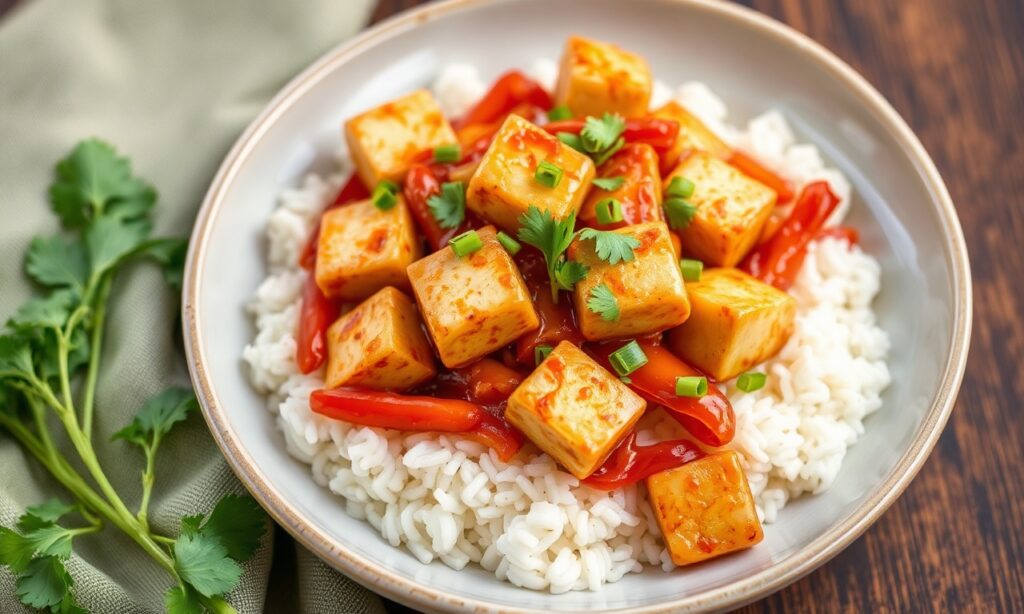
- Serve: serve promptly over steamed rice so the texture stays silky.
Cornstarch thickens when heated with liquid, which is why you control cook time after adding slurry. For a clearer mechanism, see cornstarch.
If you want an easy technique reference for tofu handling and water content, review tofu. Water level strongly affects how tofu absorbs sauce and holds shape.
Tips for Success
Small technique choices keep spicy vegetarian Sichuan mapo tofu balanced, not harsh. Focus on tofu firmness, paste blooming, and controlled thickening.
Sichuan peppercorns taste best when you preserve fresh aroma. Grind right before serving whenever possible so the mala stays bright.
- Choosing tofu: use firm or extra-firm tofu pressed to reduce moisture. If tofu feels softer, shorten the simmer and fold more gently.
- Doubanjiang quality: use a reputable Sichuan Doubanjiang. Its fermented base drives the sauce, so avoid swapping it for a random chili paste.
- Balancing heat: adjust Doubanjiang for chili heat and Sichuan peppercorns for mala intensity. Toast peppercorns briefly before grinding for better fragrance.
- Make-ahead: cook the sauce base and keep tofu separate. Reheat the sauce, then add tofu briefly and thicken right before serving.
- Vegetable broth: use flavorful broth. Low-sodium broth gives control over salt and prevents a flat tasting sauce.
For background on why fermented pastes create depth, read fermentation. It clarifies why fermented ingredients deliver more than just “salty heat.”
: Bloom Doubanjiang until it looks slightly darker and smells toasted. Then add broth. This step lifts aroma and reduces any raw fermented edge that can linger in tofu dishes.
Serving Suggestions
Serve spicy vegetarian Sichuan mapo tofu right away while the sauce still clings to tofu. The contrast between saucy tofu and hot rice creates that satisfying bite.
Garnish just before serving. Green onion adds sharp freshness, and a light extra grind of Sichuan peppercorns boosts aroma at the table.
For presentation, use a wide bowl so sauce spreads evenly and looks glossy. Pair with steamed jasmine rice or short-grain rice to balance heat with a neutral, starchy base.
If you want a crunchy counterpoint, make a cucumber salad with rice vinegar. Acid cuts through chili oil richness without changing the Sichuan flavor profile.
| Nutrient | per serving |
|---|---|
| Calories | 280 kcal |
| Protein | 18 g |
| Carbohydrates | 14 g |
| Fat | 16 g |
Sesame oil acts as a finishing oil, so you add it at the end. If you want the why behind that, see sesame oil.
To explore how tofu behaves across cuisines, read tofu. Texture and water content affect how tofu absorbs sauces.
Q&A
These answers help you troubleshoot and tune the heat. Use them as a quick checklist while you cook.
With a few adjustments, spicy vegetarian Sichuan mapo tofu stays authentic, stable, and delicious.
What makes Sichuan Mapo Tofu uniquely spicy?
Sichuan Mapo Tofu mixes chili heat with Sichuan peppercorn mala. Doubanjiang provides chili aroma and fermented depth, while ground Sichuan peppercorns create the numbing, tingling finish.
That combo tastes different from straight pepper or straight chili. It feels warm, then tingles, then settles into savory depth.
How can I keep Mapo Tofu vegetarian without losing authenticity?
Use fermented black beans and good Doubanjiang for savory layers. Then handle tofu carefully and thicken with slurry at the right moment.
The goal is not to mimic meat directly. The goal is to preserve the dish’s fermented umami and silky coating.
Which tofu type works best for Mapo Tofu?
Firm or extra-firm tofu works best because it holds shape during simmering and gentle stirring. Softer tofu can work, but you must shorten simmer time and fold more lightly.
Pressing tofu first also helps it absorb flavor while staying more intact in sauce.
What role do Sichuan peppercorns play?
Sichuan peppercorns create mala—numbing and warming sensation—separate from chili heat. Grind them fresh and add near the end to preserve aroma.
If the aroma feels flat, you likely ground too early or cooked the pepper too long.
How spicy should Spicy Vegetarian Sichuan Mapo Tofu be?
Start with the listed amounts for bold but manageable heat. For a milder dish, use slightly less Doubanjiang.
For extra mala, add a small amount of ground Sichuan peppercorns after thickening, then taste and adjust.
See also: Spicy Mapo Tofu