


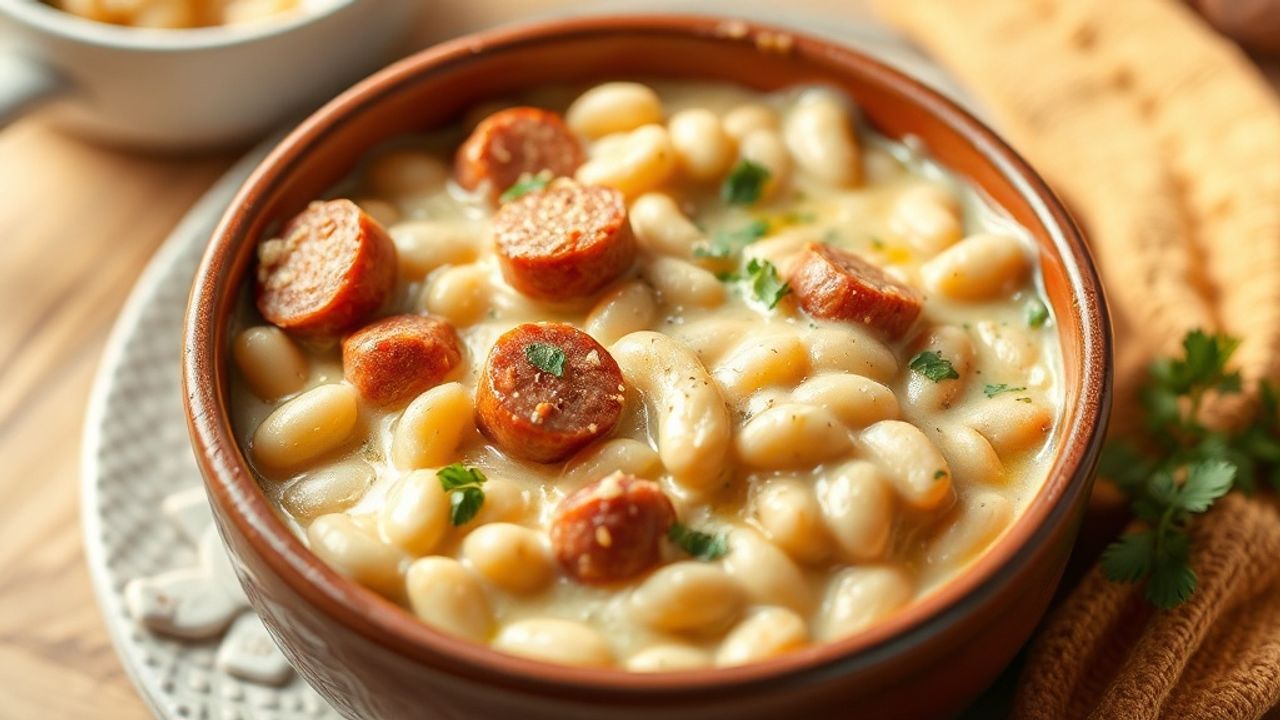
This recipe centers on the humble white bean and elevates it with savory chicken sausage for a balanced, comforting bake. The approach prioritizes texture, seasoning, and timing so each serving delivers creamy beans, browned sausage, and a golden top.
- Prep and Cook Time
- Yield
- Difficulty Level
- Ingredients
- Instructions
- Tips for Success
- Serving Suggestions
- Nutrition Snapshot
- Variations and Substitutions
- Q&A
- What makes the white bean casserole with chicken sausage stand out?
- Can I use canned beans or should I cook dried beans?
- How do I prevent the casserole from becoming watery?
- Is this recipe adaptable for vegetarians?
- How long do leftovers keep?
- In Retrospect
- Key outcome: creamy base with chunky bean texture and browned sausage.
- Timing: prep ~15 minutes, bake ~25 minutes for a 1-hour total.
- Flexibility: swap sausage proteins or cheeses without losing structure.
- Storage: makes excellent next-day leftovers and reheats reliably.
When you want a dependable weeknight casserole, the white bean casserole approach wins on nutrition and flavor. This dish works with pantry staples and delivers high protein and fiber per portion while remaining approachable for most cooks.
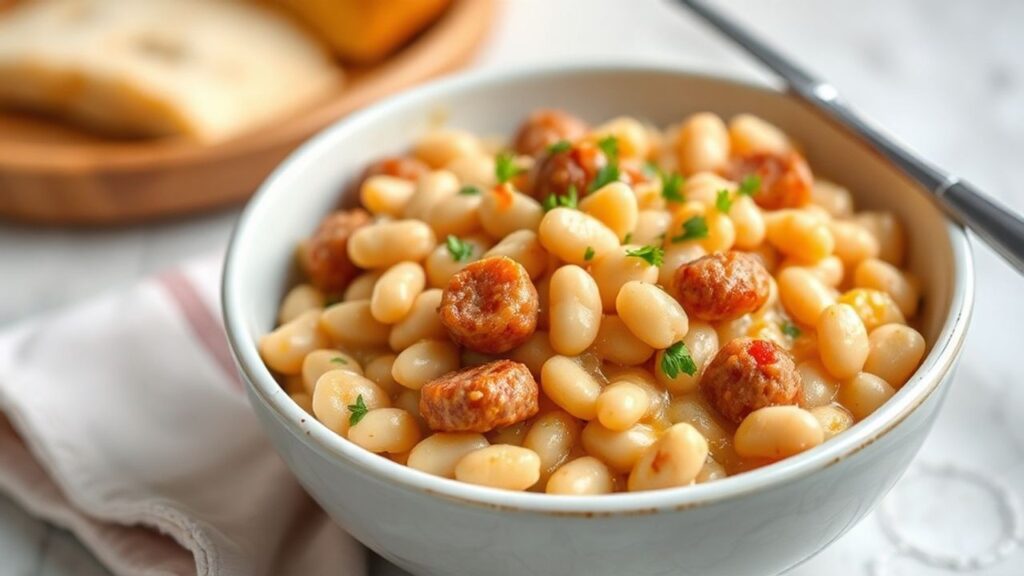
Prep and Cook Time
Preparation Time: 15 minutes. This time includes slicing sausage, dicing onion, and measuring broth and dairy. Efficient mise en place shortens active work and prevents overcooking.
Cooking Time: 45 minutes total including rapid sauté and oven finishing. Bake 20–25 minutes to brown the top and set the filling; rest 5 minutes before serving to let the structure firm up.
Yield
This recipe yields 6 generous portions—ideal for family dinners or meal prep. Leftovers refrigerate well and portion for lunches or a quick reheat for dinner.
Expect about 1 to 1.5 cups per serving depending on side dishes. Adjust the yield proportionally if you need to scale up for a crowd.
Difficulty Level
Medium. The technique relies on simple sautéing and a basic bake; the challenge is balancing moisture and texture. Even novice cooks can execute the recipe by following the sequence precisely.
Key skills used include light browning, gentle mashing of legumes, and timing the oven finish. These techniques translate to many other casserole recipes, broadening household repertoire.
Ingredients
Below are tested ingredients that deliver the classic flavor profile. Use canned beans for speed or cooked dried beans for control over texture; both work effectively.
- 2 cups cooked white beans (cannellini or great northern), drained and rinsed
- 1 lb chicken sausage, sliced into ½-inch rounds
- 1 medium yellow onion, finely diced
- 3 cloves garlic, minced
- 1 cup low-sodium chicken broth
- ½ cup heavy cream
- 1 cup shredded sharp cheddar cheese
- 2 tablespoons olive oil
- 1 teaspoon dried thyme
- 1 teaspoon smoked paprika
- ½ teaspoon crushed red pepper flakes (optional)
- Salt and freshly ground black pepper, to taste
- 2 tablespoons chopped fresh parsley, for garnish
Choose high-quality sausage for maximal flavor; the protein drives the savory profile. For spice context, see the general article on paprika and how smoked varieties influence aroma.
Instructions
Follow these numbered steps in order to control texture and flavor concentration. The instructions assume you use cooked white beans; if using canned, rinse to reduce excess sodium before proceeding.
Step-by-step sauté and combine
1. Preheat oven to 375°F (190°C). Grease a 9×13-inch baking dish with olive oil to prevent sticking and encourage crisp edges.
2. Heat 2 tablespoons olive oil in a large skillet over medium heat. Add sliced chicken sausage and brown until golden, about 5–7 minutes; remove and set aside.
Build the creamy base
3. In the same skillet, add diced onion and cook until translucent, about 4–5 minutes. Stir in minced garlic for 30–60 seconds until fragrant.
4. Add thyme, smoked paprika, and optional red pepper flakes. Stir to coat the aromatics and let spices bloom briefly to release oils.
Finish and bake
5. Add the white beans and chicken broth. Use the back of a spoon to mash about half the beans to create a creamy binder while leaving some whole for texture.
6. Stir in heavy cream and ¾ cup of shredded cheddar until silky. Return browned sausage to the pan and fold gently. Transfer to the prepared baking dish and sprinkle the remaining ¼ cup of cheddar on top.
7. Bake uncovered 20–25 minutes until the top is golden and bubbling. Rest 5 minutes before serving and garnish with fresh parsley for brightness.
Tips for Success
Control bean texture by mashing selectively: half mashed and half whole preserves mouthfeel and prevents gluey outcomes. Use a gentle hand when folding ingredients to maintain distinction between beans and sausage.
Adjust liquid cautiously. If the filling looks tight before baking, add up to ¼ cup additional broth. Overly loose mixtures often compact during baking and can become soupy when reheated.
For dairy-free versions, substitute heavy cream with full-fat coconut milk or a cashew cream and use dairy-free cheese blends. These swaps change mouthfeel so taste and adjust seasoning before baking.
Serving Suggestions
Serve the white bean casserole with a bright, peppery salad to cut richness; lemon vinaigrette works particularly well. The acidity balances the cream and cheese while the salad adds a contrasting texture.
For a rustic plating, offer slices of crusty country bread for scooping or a simple side of roasted seasonal vegetables. Pair with a crisp white wine or a medium-bodied beer to complement savory notes from the sausage and smoked paprika.
Nutrition Snapshot
Per serving this casserole delivers a strong protein-to-carb ratio due to the sausage and legumes. White beans provide fiber and micronutrients while the sausage supplies concentrated flavor and protein.
The table below shows averaged values per serving; adjust based on exact ingredients and portion sizes. For general context about legumes and nutrition, see the overview on beans.
| Nutrient | Per Serving |
|---|---|
| Calories | 370 |
| Protein | 28g |
| Carbohydrates | 22g |
| Fat | 18g |
Variations and Substitutions
Swap chicken sausage for turkey sausage, plant-based sausage, or crumbled pork for different flavor profiles. Each protein alters fat content and seasoning needs; taste and adjust spices accordingly.
Add vegetables such as spinach or roasted peppers to increase volume and micronutrients. Fold in wilted greens just before baking to avoid excess moisture loss during the oven step.
Q&A
What makes the white bean casserole with chicken sausage stand out?
This casserole pairs the creamy density of white beans with bold, browned sausage that provides a savory counterpoint. The technique of partial mashing creates a luxurious texture while retaining bite.
Can I use canned beans or should I cook dried beans?
Both approaches work. Canned white beans speed preparation; rinse them to reduce sodium. Cooked dried beans offer superior texture control and can be seasoned during the cooking process. For technique background, consult the general legume entry.
How do I prevent the casserole from becoming watery?
Mash only half the beans and measure broth conservatively. If you plan to refrigerate the assembled dish before baking, expect some moisture redistribution; add a splash of broth just before baking if the mixture looks dry.
Is this recipe adaptable for vegetarians?
Yes. Replace sausage with a plant-based sausage or a blend of sautéed mushrooms and tempeh for savory depth. Increase umami with a small amount of miso or nutritional yeast to compensate for reduced meat flavors.
How long do leftovers keep?
Store leftovers in an airtight container in the refrigerator for up to 3–4 days. Reheat gently in the oven or microwave, adding a splash of broth if the casserole appears dry.
In Retrospect
The white bean casserole with chicken sausage is an efficient, nourishing dish that scales from weeknight cooking to casual entertaining. It relies on technique rather than complicated ingredients to achieve balanced texture and flavor.
With small adjustments you can tailor the recipe to dietary needs or flavor preferences while preserving the dish’s core identity: creamy beans, savory sausage, and a satisfying baked finish. The method transfers well to other bean-based bakes and reinforces reliable home-cooking skills.

See also: white bean