
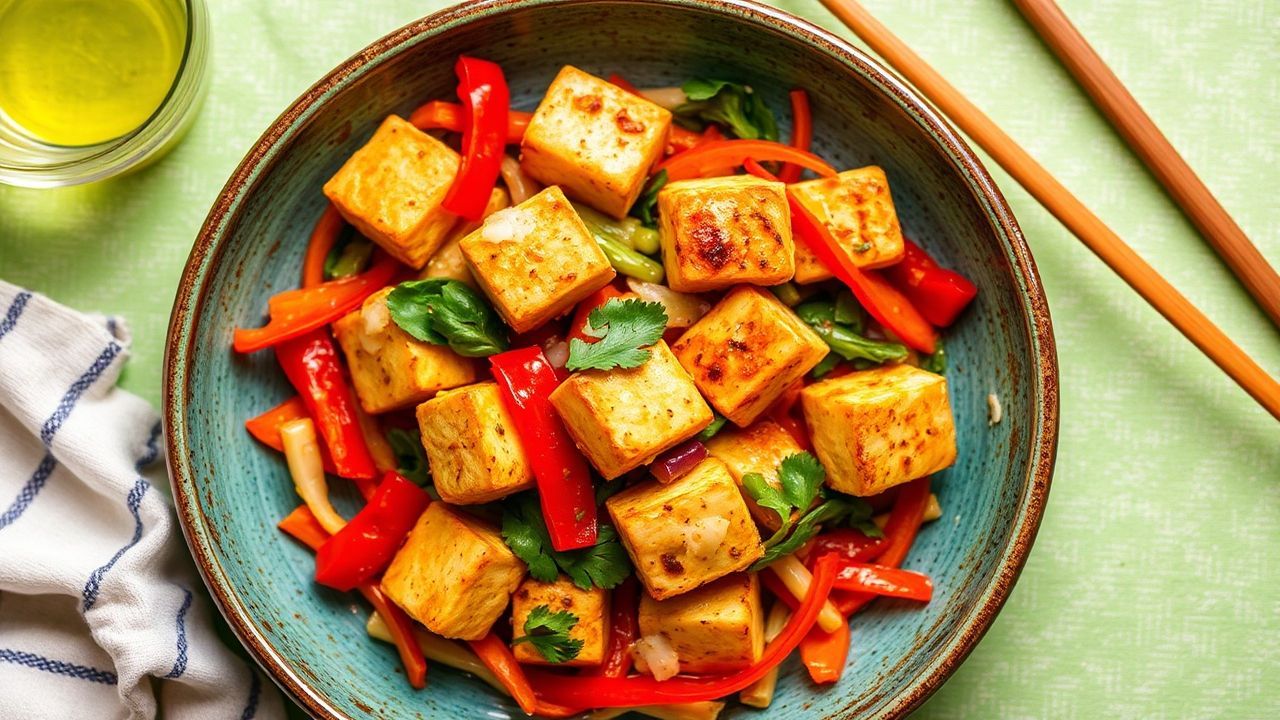
Vibrant tofu veggie stir-fry brings together crisp-tender vegetables and pan-seared tofu in a fast, weeknight-friendly flow. This colorful plant-powered delight tastes bright, savory, and lightly sweet, thanks to a simple soy-maple sauce balanced with rice vinegar.
- Why This Tofu Veggie Stir-Fry Stays Colorful and Saucy
- Prep and Cook Time
- Yield and Difficulty Level
- Ingredients That Bring Your Tofu Veggie Stir-Fry to Life
- Mastering the Art of Crisp Tofu and Tender Veggies
- Flavor Pairings and Sauces to Elevate Your Stir-Fry Experience
- Serving Suggestions and Creative Twists for Every Palate
- Tips for Success (So Your Stir-Fry Always Hits)
- At a Glance: What to Remember
- In Retrospect
- FAQ
- Fast prep + high heat: You can finish this in about 27 minutes.
- Crispy tofu texture: Cornstarch and proper drying help tofu brown instead of steam.
- Color and crunch: Stir-fry for a short window to keep vegetables vibrant.
- Easy swaps: Swap veggies and choose tamari for gluten-free.
Whether you cook plant-based meals often or you want more nutrients without extra effort, this tofu veggie stir-fry delivers a satisfying bowl. You’ll get protein from tofu, fiber from mixed vegetables, and that craveable glossy coating from the sauce.
For the best results, treat tofu like a main event. Dry it well, coat it lightly, and cook it in batches so the pan stays hot and the edges turn golden.
Why This Tofu Veggie Stir-Fry Stays Colorful and Saucy
The appeal of a tofu veggie stir-fry starts with two textures working together. Crisp tofu gives a satisfying bite, while stir-fried vegetables stay tender-crisp when you avoid overcooking.
Then comes the sauce balance. Soy sauce adds deep umami, maple syrup brings gentle sweetness, and rice vinegar brightens everything so the dish tastes fresh instead of heavy. For background on soy foods and nutrition, see tofu and soy sauce.
Protein and plant nutrition in one bowl
Tofu acts as a versatile protein that absorbs seasonings without overpowering the vegetables. Its mild flavor also makes it easy to customize the stir-fry for different heat levels and sauces.
If you want a nutrition anchor for your meal planning, tofu and soy are widely studied foods. For general context on soy-based nutrition, read soy.
Prep and Cook Time
This recipe stays simple and repeatable, which helps you cook it week after week. You’ll spend most of your time on quick chopping and pressing tofu.
- Planning: 15 minutes
- Cooking: 12 minutes
- Total: 27 minutes
Yield and Difficulty Level
This tofu veggie stir-fry makes enough food for a full family-style meal. It also holds up well for lunch leftovers when you store it properly.
Serves: 4 hearty portions.
Difficulty: Easy—ideal for busy weeknights and relaxed casual entertaining.
Ingredients That Bring Your Tofu Veggie Stir-Fry to Life
Use fresh, crisp vegetables for the best color and crunch. If a vegetable feels too mature, swap it for something firmer so it stays vibrant during quick stir-frying.
Below is a reliable ingredient set that balances sweetness, savory depth, and aromatic heat. You can adjust spice later, after you taste the sauce.
- 14 oz firm tofu, pressed and cut into 1-inch cubes
- 2 tablespoons cornstarch (for crisp tofu edges)
- 3 tablespoons vegetable oil (divided)
- 1 red bell pepper, thinly sliced
- 1 medium carrot, julienned
- 1 cup snap peas, trimmed
- 1 small red onion, thin wedges
- 2 cloves garlic, minced
- 1 tablespoon fresh ginger, grated
- 3 green onions, chopped (separate white and green parts)
- ½ cup shiitake mushrooms, sliced
- ⅓ cup low-sodium soy sauce
- 1 tablespoon toasted sesame oil
- 1 tablespoon maple syrup or agave nectar
- 1 tablespoon rice vinegar
- 1 teaspoon chili garlic sauce (optional)
- Fresh cilantro leaves (garnish)
- Sesame seeds (toasted, garnish)
- Cooked jasmine or brown rice, to serve
Mastering the Art of Crisp Tofu and Tender Veggies
Stir-fry success comes from heat control. Keep the pan hot, cook tofu in batches, and avoid overcrowding so moisture escapes and the crust forms.
For sauce knowledge and flavor science, you can think of soy sauce as a concentrated umami base. To explore the broader role of umami, review umami on Wikipedia.
- Press and dry the tofu thoroughly with paper towels or a tofu press. Remove as much surface moisture as you can for better browning.
- Toss tofu cubes in cornstarch until coated. Keep the coating even to create a golden crust during pan-frying.
- Heat 2 tablespoons vegetable oil in a large non-stick skillet over medium-high heat. Fry tofu in batches so the pan stays hot. Cook 3-4 minutes per side until golden and crisp. Remove to a plate.
- In the same pan, add the remaining 1 tablespoon oil. Sauté garlic, ginger, and the white parts of green onions for about 30 seconds until fragrant.
- Add onion, carrots, bell pepper, snap peas, and mushrooms. Stir-fry 5-6 minutes until vegetables turn tender-crisp and stay colorful.
- Whisk together soy sauce, maple syrup, rice vinegar, sesame oil, and chili garlic sauce. Pour over vegetables and toss until glossy.
- Return tofu to the pan and gently toss. Warm through for 1-2 minutes so tofu stays crisp.
- Finish with garnishes like cilantro, sesame seeds, and green onion tops. Serve immediately.
How to keep tofu crisp after saucing
After the sauce goes in, you only need a short reheat. Over-tossing and long simmering will soften the crust.
Also, handle tofu gently. Use a wide spatula and fold tofu through the vegetables so the coating stays intact.
Once you nail batch cooking, you’ll notice a major texture difference. You’ll also find it easier to scale the recipe for meal prep.
Remember that vegetables finish faster than tofu. Add vegetables in the right order so the crunch stays balanced across the bowl.
For plant-based cooking science, it helps to understand how heat affects proteins. If you want a general reference point, read proteins and browning reactions on Wikipedia.
Flavor Pairings and Sauces to Elevate Your Stir-Fry Experience
The flavor profile of a tofu veggie stir-fry works because each component has a clear job. Soy sauce supplies savory depth, maple syrup adds light sweetness, and rice vinegar lifts the whole dish.
If you want a deeper reference for spice and aromatics, consider garlic and ginger for how these ingredients deliver strong aroma and flavor.
For variety, try a few simple sauce moves. Add chili garlic sauce for warmth, or lower the spice by using only a small amount. You can also add more vinegar at the end if you want extra brightness.
Pairing ideas keep the meal interesting without extra cooking. Serve over jasmine rice for soft comfort, or use brown rice for a nuttier base. If you prefer noodles, choose whole-grain noodles and toss them with the stir-fry sauce for coating.
Two sauce upgrades that stay balanced
First, add a touch more sesame oil at the finish for aroma. Sesame oil performs best when you add it at the end, because heavy cooking can dull its fragrance.
Second, consider a small splash of lime or extra vinegar. Acid cuts through sweetness and keeps the vegetables tasting fresh.
Serving Suggestions and Creative Twists for Every Palate
Serving style changes the experience. A bowl with rice makes the sauce feel rich, while a salad-style serving keeps things lighter and crunchy.
Choose the twist that matches your week. On busy nights, keep it simple and repeatable. On weekends, swap vegetables and explore new garnishes.
- Serve over steamed jasmine rice or brown rice for a hearty, satisfying meal.
- For a gluten-free option, swap soy sauce for tamari or a gluten-free soy sauce.
- Add crunch with roasted cashews or crushed peanuts for extra texture.
- Pair with cucumber salad or steamed edamame to complete the plate.
- Boost nutrients by adding baby spinach or kale during the last minute of cooking.
Veggie swaps that still work with the sauce
Swap in zucchini, broccoli, or baby corn if you want a different seasonal mix. Keep the cook time tight so vegetables stay crisp-tender.
For general plant-food basics, you can also browse vegetables to understand why high-water vegetables hold texture during quick cooking.
Tips for Success (So Your Stir-Fry Always Hits)
Small habits make a big difference with tofu veggie stir-fry. When you plan ahead for pressing tofu and organize your chopping, cooking feels calm and fast.
Use these tips to protect flavor, texture, and timing. They also help you avoid soggy vegetables and soft tofu.
- Pressing tofu: Remove moisture so tofu sears instead of steaming.
- Heat management: Keep the skillet hot. Avoid crowding for that golden crust.
- Vegetable chopping: Cut pieces evenly so everything finishes at the same time.
- Make ahead: Press tofu up to a day in advance. Store wrapped in paper towels in the fridge.
- Leftover tip: Reheat gently in a skillet to keep tofu crisp. Skip the microwave if you want the crust.
| Nutrient | Per Serving |
|---|---|
| Calories | 280 kcal |
| Protein | 18 g |
| Carbohydrates | 22 g |
| Fat | 14 g |
You can use these numbers as a planning baseline. Actual values vary by tofu brand, oil amount, and the exact vegetable mix you choose.
For a nutrition reference on overall dietary patterns with plant foods, check plant-based diet.
At a Glance: What to Remember
You’ll get the best results when you focus on texture first and sauce second. When tofu crisps and vegetables stay crisp-tender, the whole bowl tastes more satisfying.
- Dry + cornstarch create a crisp tofu crust.
- High heat + batches prevent steaming.
- Short stir-fry time keeps vegetables vivid.
- Quick toss after saucing preserves crunch.
In Retrospect
A good tofu veggie stir-fry feels like a balanced performance. Crispy tofu brings body, colorful vegetables add freshness, and the sauce ties everything together with savory-sweet brightness.
Once you learn the method—press, coat, sear in batches—you can build endless variations. Keep the flavor base, change the vegetables, and let your pantry guide the next bowl.
FAQ
How do I make my tofu veggie stir-fry taste less salty?
Use low-sodium soy sauce and balance with the sweetness from maple syrup plus a splash of rice vinegar. If it still tastes salty, add more vegetables or a bit more vinegar at the end to brighten flavor.
Can I meal prep tofu veggie stir-fry?
Yes. Store it in an airtight container for several days. Reheat in a skillet over medium heat to restore crispness instead of microwaving.
What vegetables work best for this stir-fry?
Choose vegetables that stay crisp when cooked quickly, such as bell pepper, snap peas, carrots, onions, and mushrooms. Cut them into similar sizes so they finish together.
Is tamari a good gluten-free swap?
Tamari works well as a gluten-free alternative to soy sauce in most stir-fry sauces. Always check labels if you follow strict gluten-free needs.
Why does my tofu turn soft in the pan?
It usually happens from excess moisture or overcrowding. Dry the tofu thoroughly, coat evenly with cornstarch, and cook in batches so the tofu can brown instead of steam.
See also: tofu veggie stir-fry