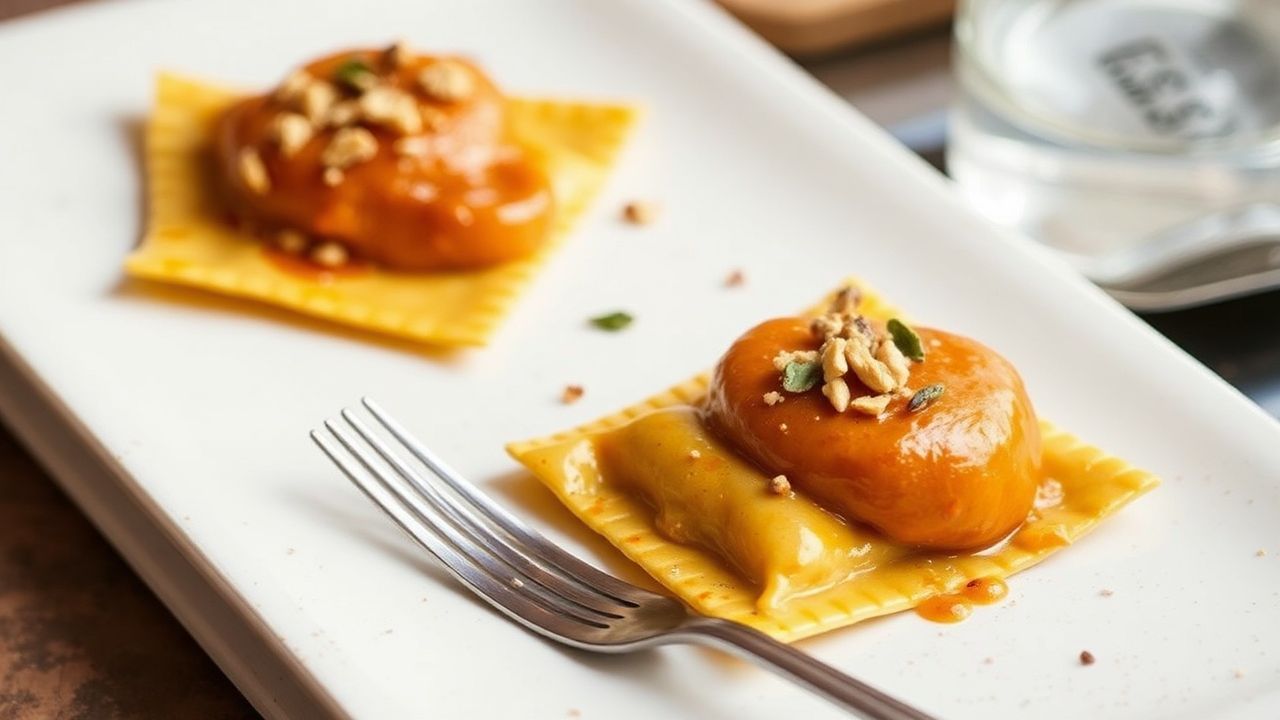
Autumn turns simple ingredients into bold comfort, and pumpkin ravioli captures that spirit perfectly. The filling stays creamy and fragrant, while sage brown butter adds a nutty, herb-forward finish.
- Pumpkin Ravioli with Sage Brown Butter: What Makes It Velvety
- Prep and Cook Time
- Yield and Difficulty Level
- Ingredients
- Instructions: How to Make Velvety Pumpkin Ravioli
- 1) Prepare the Pumpkin Filling
- 2) Make the Fresh Pasta Dough
- 3) Roll and Shape the Ravioli
- 4) Cook the Ravioli
- 5) Make Sage Brown Butter and Serve
- Tips for Success
- Serving Suggestions and Pairings
- Q&A
- Silky texture: roast pumpkin, drain ricotta, and balance spices.
- Better sauce: brown butter until nutty, then simmer briefly with sage.
- Clean sealing: brush edges lightly and press firmly to prevent bursting.
- Fresh or make-ahead: shape, chill, or freeze for later.
These pillowy pasta pockets taste like a special-occasion dinner, yet they follow clear steps you can repeat. When you pair the sweet pumpkin with a sharp, aromatic drizzle, each bite feels warm, balanced, and deeply satisfying.
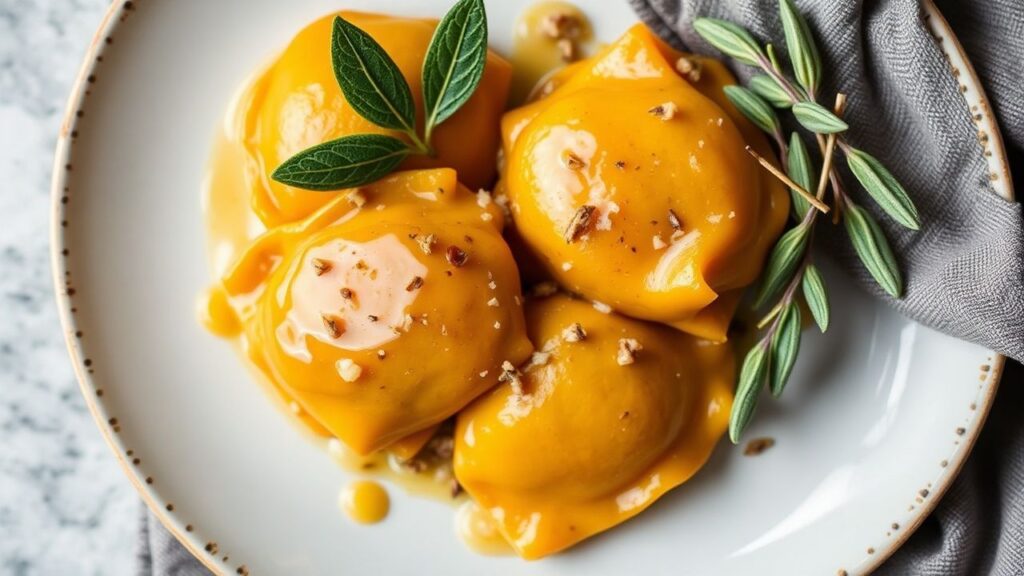
Pumpkin Ravioli with Sage Brown Butter: What Makes It Velvety
A truly velvety pumpkin ravioli starts with two things: a filling that stays moist and a dough that rolls thin without turning fragile. Pumpkin puree provides natural sweetness and body, while ricotta brings a soft, dairy-forward texture.
The sauce seals the flavor story. Browning butter drives nutty, caramel notes, and fresh sage adds a slightly piney aroma. Brown butter is based on Maillard reactions, which develop those deeper flavors as milk solids toast.
For a helpful science anchor, skim brown butter and connect it to what you see: butter turns from pale gold to amber, and the aroma shifts to toasted and nutty.
Finally, the pasta itself matters. Fresh pasta dough needs time to relax after kneading, which improves elasticity during rolling. For a quick technique reference, see pasta and how egg-based dough supports tender bites.
Prep and Cook Time
Plan for a smooth workflow. You’ll make the filling, rest the dough, roll and fill, then cook in small batches.
- Preparation: 40 minutes
- Cooking: 15 minutes
- Total: 55 minutes
These times assume you roll dough to about 1/16 inch and cook ravioli right after shaping. If you chill the pasta first, add 15–30 minutes for setup and you may cook a bit slower.
Yield and Difficulty Level
This recipe yields about 20 ravioli, depending on how wide you cut the shapes. Serve it as a main course with salad, or as a starter if you also plan a second side dish.
Difficulty stays in the “medium” range because sealing and rolling take practice. Once you get the rhythm, you can repeat the steps with confidence.
Yield: Serves 4 generously (approximately 20 ravioli)
Difficulty Level: Medium
Ingredients
Use fresh, high-quality ingredients for the best texture. Focus on well-drained ricotta and pumpkin puree with good flavor.
If you want a reference for ingredient purpose, read ricotta and how its moisture affects softness.
For the Pumpkin Filling
- 1 ½ cups roasted pumpkin puree (sugar pumpkin works great)
- ½ cup ricotta cheese, well drained
- ¼ cup grated Parmesan
- 1 teaspoon freshly grated nutmeg
- ½ teaspoon ground cinnamon
- Salt and freshly ground black pepper, to taste
- 1 tablespoon olive oil
- 1 small shallot, finely minced
For the Fresh Pasta Dough
- 2 cups all-purpose flour, sifted
- 3 large eggs (room temperature)
- ½ teaspoon fine sea salt
- 1 tablespoon olive oil
For the Sage Brown Butter Sauce
- 8 tablespoons unsalted butter
- 12 fresh sage leaves
- Salt, to taste
- Freshly cracked black pepper, to taste
- Toasted pine nuts or chopped walnuts (optional)
Choose nuts that you enjoy, because they add texture and a toasted finish. If you’re unsure where to start, check nut basics for flavor variety.
Instructions: How to Make Velvety Pumpkin Ravioli
Work step-by-step. When your filling cools and your dough rests, shaping becomes easier and the final texture improves.
Keep a small bowl of water nearby. You’ll use it to help edges seal without soaking the pasta too much.
1) Prepare the Pumpkin Filling
- Heat olive oil in a small skillet over medium heat. Sauté minced shallot until translucent and fragrant, about 2 minutes. Let it cool slightly.
- In a medium bowl, combine roasted pumpkin puree, sautéed shallots, ricotta, Parmesan, nutmeg, and cinnamon. Season with salt and pepper to balance sweetness.
Drain ricotta well before mixing. Excess water can create weak seams and watery filling.
2) Make the Fresh Pasta Dough
- Mound flour on a clean surface and create a well in the center. Crack eggs into the well, add salt and olive oil. Use a fork to beat eggs, then gradually pull flour inward until dough forms.
- Knead dough for about 8–10 minutes until smooth and elastic, not sticky. Wrap tightly and rest at room temperature for 30 minutes.
Dough rest improves elasticity and reduces tearing. If you need a concept refresher, see gluten and why hydration and kneading matter.
3) Roll and Shape the Ravioli
- Divide dough into quarters. Roll each portion thin using a pasta machine or rolling pin (about 1/16 inch). Lay sheets on a lightly floured surface.
- Place small teaspoons of pumpkin filling spaced evenly on one pasta sheet. Lightly brush around the filling with water, cover with another sheet, and press gently to seal. Avoid air pockets.
- Cut ravioli into squares or circles using a fluted cutter or knife. Press edges firmly to seal, then set on a lightly floured tray.
Keep the thickness consistent. Thinner ravioli cook faster and hold their filling better when sealed well.
4) Cook the Ravioli
- Bring a large pot of salted water to a gentle boil. Carefully drop ravioli in batches so they don’t crowd.
- Cook 3–4 minutes, until they float and the dough feels tender but firm.
Starchy water helps sauce cling later. If you want a scientific grounding, starch explains why pasta water thickens sauces.
5) Make Sage Brown Butter and Serve
- In a large skillet, melt butter over medium heat. Add sage leaves and cook until butter turns golden and nutty, about 4–5 minutes. Remove leaves if you want a milder flavor.
- Drain ravioli, reserving a bit of pasta water. Add ravioli to the skillet and toss gently to coat. Use a splash of pasta water to emulsify if needed.
- Season with salt and freshly cracked black pepper. Plate promptly and drizzle with extra sage brown butter. Garnish with toasted pine nuts or walnuts.
Plate right after tossing. Fresh pasta loses texture when it sits too long.
Tips for Success
Small adjustments keep the process consistent. These tips help you avoid the two most common failures: loose filling and cracked pasta.
Use a calm, repeatable rhythm. Ravioli cooking moves fast, so you want sauce ready before the first batch finishes.
- Roast pumpkin for deeper flavor: roast at 400°F (200°C) until tender, then puree.
- Keep dough pliable: if it dries, mist lightly with water before folding.
- Seal firmly: avoid overfilling so pasta closes without stress.
- Make-ahead: freeze shaped ravioli on a tray, then store in a sealed bag. Cook straight from frozen.
- Sage butter variations: add a squeeze of lemon or a pinch of chili flakes for brightness.
If you’re curious about how heat changes fats and flavors, Maillard reaction offers a simple explanation for why browning improves taste.
Serving Suggestions and Pairings
Serve pumpkin ravioli in warm bowls so butter doesn’t cool too fast. The goal is to keep the sauce glossy and the pasta springy.
Use simple garnishes that support texture. Add shaved Parmesan, toasted nuts, and a few crisp sage leaves for contrast.
For a lighter balance, pair with arugula salad plus lemon vinaigrette. The peppery greens cut through the butter and help the pumpkin taste brighter.
If you want a crisp side concept, arugula explains why this green works well with rich sauces.
| Nutrient | Per Serving |
|---|---|
| Calories | 480 kcal |
| Protein | 18 g |
| Carbohydrates | 52 g |
| Fat | 18 g |
For more pasta-making ideas, browse pasta styles and use those techniques to guide your next batches. For pumpkin background, pumpkin helps you pick varieties with good sweetness.
Q&A
These quick answers handle the questions you’re most likely to ask while cooking. Use them to fix issues fast and keep the process smooth.
If something goes wrong, don’t panic. Most ravioli problems come from moisture, thickness, or heat timing, and you can correct them.
What makes pumpkin ravioli different from other filled pastas?
Pumpkin ravioli focuses on sweet, earthy filling plus warm spices. The filling stays creamy because roasted pumpkin and drained ricotta balance each other, and the sauce adds nutty depth with browned butter and sage.
Can I use fresh pumpkin instead of canned?
Yes. Fresh pumpkin tastes brighter and more aromatic when you roast it and puree it well. Canned pumpkin is consistent and convenient, so it still creates excellent results.
How do I prevent ravioli from bursting during cooking?
Seal edges firmly and avoid overfilling. Also keep water at a gentle boil so the dough doesn’t open under strong agitation.
What pasta dough thickness works best?
Roll to about 1/16 inch so the dough cooks through in 3–4 minutes. If your dough feels thick, increase cooking time slightly, but try to keep thickness consistent.
How should I store leftover ravioli?
Store cooked ravioli and sauce separately in airtight containers in the refrigerator. Reheat gently with a splash of water or broth to keep the sauce silky and the pasta tender.
See also: pumpkin ravioli