
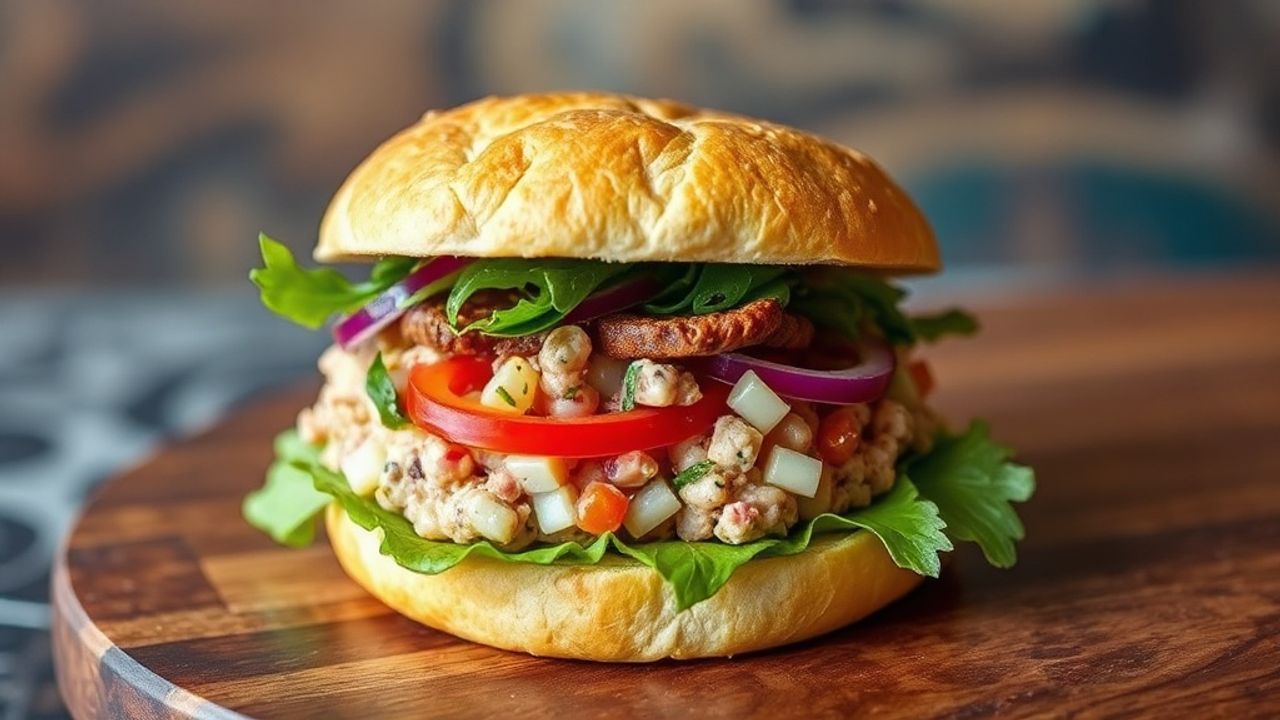
Vegan muffuletta packs New Orleans soul into a plant-based sandwich built on a tangy olive salad and layered roasted vegetables. This recipe preserves the classic balance of brine, fat, and texture while using vegan ingredients that hold up to bold flavor.
- At a Glance: Make the olive salad ahead to deepen flavor.
- Key Swap: Use firm roasted eggplant or smoked tempeh for texture.
- Timing: Toast the loaf, assemble tightly, then chill 30–60 minutes.
- Serve: Slice into wedges and pair with a crisp salad or pickles.
Vegan Muffuletta: Origins and Flavor Profile
The vegan muffuletta borrows its identity from the classic muffuletta sandwich, replacing cured meats and cheeses with plant-based layers. It keeps the signature olive salad so each bite remains briny and layered.
Chefs value the contrast between the olive salad and soft round bread; that contrast defines the sandwich. For regional context, the muffuletta developed in New Orleans and reflects Mediterranean immigrant influences.
Vegan Muffuletta Prep and Cook Time
Readiness: 30 minutes active prep; olive salad benefits from resting. Active steps include roasting and toasting; the recipe is approachable for home cooks.
Total Time: 45–90 minutes depending on marination; plan at least one hour if chilling the olive salad. Timing ensures the full melding of flavors and a firm texture when slicing.
Vegan Muffuletta Ingredients
For the olive salad, combine mixed green and black olives, chopped pickled vegetables, roasted red peppers, minced shallot, garlic, fresh herbs, olive oil, and red wine vinegar. A touch of agave or maple balances acidity while preserving the briny profile.
For the sandwich layers, gather a round sesame loaf or focaccia, roasted eggplant or zucchini, marinated artichoke hearts, sautéed mushrooms, vegan deli slices or smoked tempeh, and fresh arugula. A thin spread of mustard vinaigrette or vegan mayo adds slip without masking the olive salad.
Pantry and Produce Notes
Use firm, low-moisture vegetables for structure and olives with varied textures. Castelvetrano olives give a buttery counterpoint while oil-cured olives add concentrated depth.
Reserve some olive oil from jarred ingredients to adjust dressing viscosity. Quality olive oil amplifies flavor and mouthfeel without extra ingredients.
Vegan Muffuletta Instructions
Step 1 — Make the Olive Salad: Chop olives and pickled vegetables uniformly. Even pieces ensure a consistent bite and clean assembly.
Whisk olive oil, red wine vinegar, and agave; toss with herbs and aromatics. Refrigerate at least one hour or overnight to let acidity soften the vegetables.
Step 2 — Roast and Saute: Slice eggplant or zucchini 1/4 inch thick; roast or pan-sear until caramelized. Saute mushrooms until golden and season lightly; these layers contribute savory body.
Toast the loaf at 350°F (175°C) for 5–8 minutes to crisp the crust while keeping the interior tender. Toasting prevents rapid sogginess from the olive salad.
Step 3 — Assemble Precisely: Spread a thin layer of mustard vinaigrette or vegan mayo on the bottom half to control moisture transfer. Layer vegan deli or smoked tempeh, then roasted vegetables, artichoke hearts, and finally a generous but measured portion of olive salad.
Press gently, wrap in parchment, and chill 30–60 minutes. Chilling compacts the sandwich so slices hold together and flavors knit into a consistent profile.
Pro Tip on Slicing: Use a serrated knife and a sawing motion. Slice through chilled sandwich to maintain crisp edges and neat wedges.
Vegan Muffuletta: Tips for Success
Marinate the olive salad overnight when possible; resting develops savory complexity and softens fibrous vegetables. That time also makes the salad more cohesive when spread on bread.
Control moisture by lightly toasting the bread and spreading a moisture barrier like vegan mayo or a mustard vinaigrette. This approach preserves texture and prevents a soggy loaf.
For added richness, layer a thin smear of cashew ricotta under the olive salad; it buffers acidity and adds a creamy contrast. Use arugula or peppery greens to cut through the sandwich’s richness.
Pack leftovers tightly wrapped to preserve structure; refrigerate and serve within three days for optimal texture. Re-chill briefly before slicing to achieve cleaner wedges.
Vegan Muffuletta Serving Suggestions
Serve wedges on a rustic board with lemon wedges and parsley sprigs for brightness. Pair the sandwich with crunchy dill pickles, kettle chips, or a citrus-fennel salad to complement briny notes.
For gatherings, pre-slice and set out small plates so guests can sample without breaking the sandwich. This sandwich holds well, making it ideal for buffet-style service.
Nutritional Notes and Variations
A standard vegan muffuletta wedge supplies moderate protein from tempeh or seitan and fiber from vegetables and olives. Calorie and macronutrient profiles depend on bread choice and olive oil quantity.
Substitute gluten-free round bread for a GF option, and reduce added oil for lower fat versions. Swap smoked tempeh for marinated tofu if you prefer milder plant protein.
Vegan Muffuletta and Culinary Context
The vegan muffuletta sits at the crossroads of Mediterranean and New Orleans foodways, echoing Sicilian cuisine influences and local American adaptation. Its olive-forward profile mirrors Mediterranean antipasto traditions.
For broader context on plant-based eating, review the principles of veganism. Using preserved vegetables and acid-based dressings are classic ways to layer flavor without animal products.
Internal Resources
Explore additional recipes in our Vegan New Orleans Recipes collection for complementary dishes. These internal guides help build a full plant-based menu that pairs with the muffuletta.
Check our make-ahead and hosting tips at Make-Ahead Sandwiches to plan gatherings efficiently. These pages offer storage, timing, and serving strategies optimized for entertaining.
FAQ
Below, find focused answers to common questions about building and storing a vegan muffuletta. Each response is practical and tested for home kitchens.
What makes a vegan muffuletta different?
The vegan muffuletta swaps cured meats and dairy for roasted vegetables, marinated proteins, and a robust olive salad. It preserves the signature briny-acid profile while eliminating animal-derived ingredients.
The result remains layered and bold, with olives driving the primary flavor. Use firm vegetables and a binding spread to maintain structure.
How do I make an authentic olive salad at home?
Use a mix of olives, pickled vegetables, red peppers, shallot, garlic, herbs, olive oil, and red wine vinegar. Chop ingredients to similar size and let the salad rest to meld flavors.
Taste and adjust: a small pinch of sweetener balances acidity if needed, and a final grind of black pepper sharpens the overall profile.
Can I prepare the sandwich in advance?
Yes. Assemble, wrap tightly in parchment, and refrigerate for 24–48 hours. Chilling improves cohesion and makes slicing neater.
Longer storage increases moisture transfer, so consume within a few days for best texture. Toasting the bread and using a moisture barrier lengthens shelf life.
What bread should I use for the best texture?
A round sesame loaf or focaccia with a firm crust works best to soak up olive salad juices without collapsing. The crust-to-crumb ratio matters for structure and bite.
If unavailable, choose an artisan round that holds its shape; avoid very soft sandwich bread that becomes mushy quickly.
How do I balance saltiness from olives?
Rinse very salty olives briefly, then taste before combining. Adjust vinegar and add a touch of sweetener to counteract excess salt.
Include neutral elements like roasted vegetables or a thin layer of cashew cream to soften the perceived salt intensity without removing flavor.
Final Note: A well-constructed vegan muffuletta highlights olive salad as the anchor flavor while using roasted vegetables and plant proteins for body. Practice small adjustments—salt, acid, sweetness—to match your palate and preserve the sandwich’s vibrant character.
See also: vegan muffuletta