
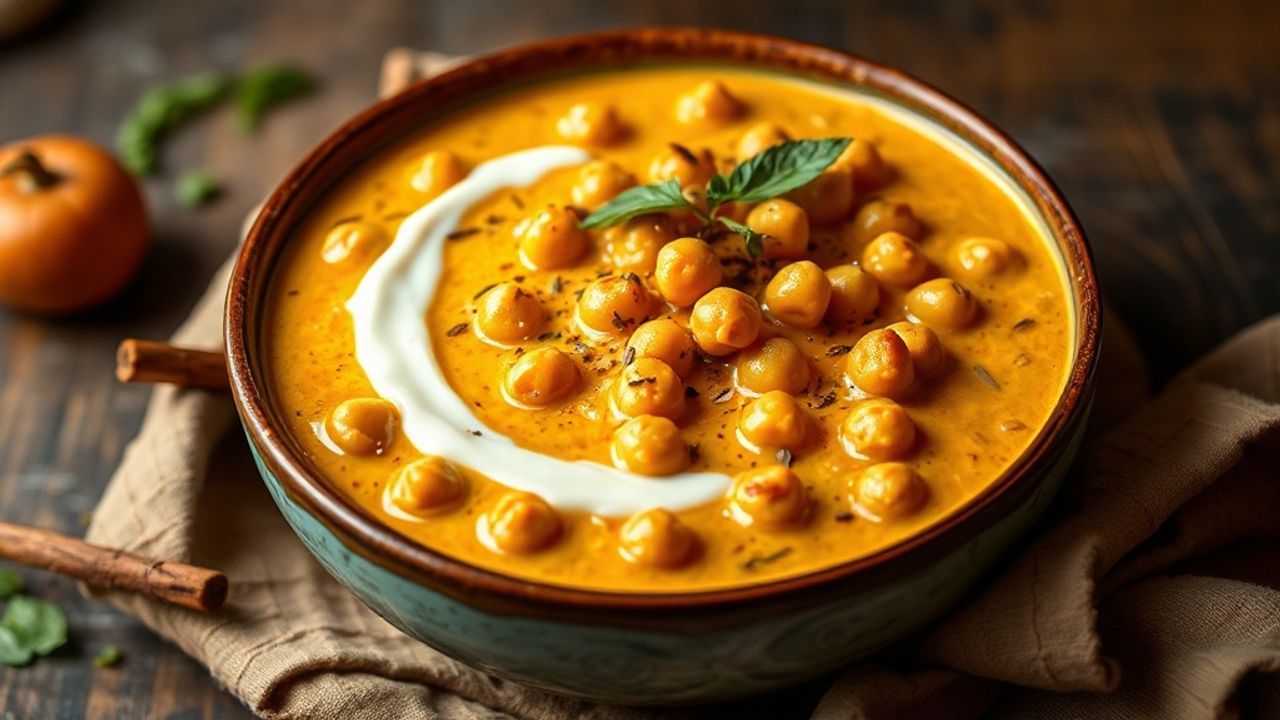
Creamy chickpea curry with coconut milk delivers a rich, dairy-free sauce that coats each legume in silky flavor. This chickpea curry blends warm Indian spices, full-fat coconut milk, and pantry staples to create a fast, nourishing weeknight dinner.
- Prep and Cook Time
- Yield and Difficulty
- Ingredients
- Ingredient Notes and Sourcing
- Instructions
- Technique Tips for a Creamy Texture
- Tips for Success
- Serving Suggestions
- Nutritional Snapshot
- Variation Ideas
- FAQ
- Is this chickpea curry suitable for meal prep?
- Can I use dried chickpeas instead of canned?
- What spices make this chickpea curry stand out?
- How do I adjust heat level?
- Can I make the curry nut-free and allergy-friendly?
- The Way Forward
- Ready in 45 minutes and serves four generous portions.
- Full-fat coconut milk yields the creamiest texture; use light only to reduce calories.
- Chickpeas supply protein and fiber, making the dish filling without meat.
- Toast spices briefly to unlock deeper aroma and better flavor absorption.
Prep and Cook Time
Preparation: 15 minutes. Cooking: 30 minutes. The total work time stays close to 45 minutes for most home cooks.
Work efficiently by chopping onions and grating ginger first. Then open cans and measure spices so you stay in the flow during the sauté stage.
Yield and Difficulty
This recipe yields four generous portions. It fits low-to-moderate skill levels and works well for cooks who know basic sauté and simmer techniques.
Use a heavy skillet or medium saucepan for even heat. The method scales easily if you need to feed more people or meal-prep servings.
Ingredients
Use quality, simple ingredients for consistent results. Key components include canned chickpeas, tomatoes, aromatic spices, and a can of full-fat coconut milk for that signature creaminess.
Below is a clear ingredient list. Measure everything before you begin for smooth cooking.
- 2 tbsp coconut oil (or neutral vegetable oil)
- 1 medium onion, finely chopped
- 4 garlic cloves, minced
- 1-inch piece fresh ginger, grated
- 1 tbsp garam masala
- 2 tsp ground cumin
- 1 tsp ground turmeric
- 1 tsp smoked paprika
- 1/2 tsp chili powder (adjust to taste)
- 2 medium tomatoes, finely chopped or 1 cup canned diced tomatoes
- 2 cans (15 oz each) chickpeas, drained and rinsed
- 1 can (14 oz) full-fat coconut milk
- 1 cup vegetable broth
- Salt to taste
- Fresh cilantro, chopped, for garnish
- Juice of 1/2 lemon
Ingredient Notes and Sourcing
Chickpeas are a key ingredient and act as the protein backbone. If you want to cook dried chickpeas, soak and simmer them first for best texture. For reference on the legume and varieties, see chickpeas on Wikipedia.
Coconut milk provides the fat that creates the silky mouthfeel. Use full-fat canned coconut milk and shake the can before opening. Learn more about the product at coconut milk on Wikipedia.
Instructions
Follow an active, stepwise approach. Start by heating the oil and sweat the onions until soft and caramelized; that forms the flavor base for a great curry.
Proceed to add garlic and ginger, then the spices, and finish by adding tomatoes, chickpeas, coconut milk, and broth. Simmer until the sauce thickens and flavors meld.
- Heat the coconut oil in a large skillet over medium heat. Add the onions and sauté 6–8 minutes until translucent and lightly golden.
- Add garlic and ginger and cook 1–2 minutes until fragrant. Stir to prevent scorching.
- Toast the dry spices—garam masala, cumin, turmeric, smoked paprika, and chili powder—for 30–60 seconds. Blooming the spices in oil releases essential oils and improves flavor. For background on this spice mix, consult garam masala on Wikipedia.
- Add tomatoes and cook until they break down, about 4–6 minutes. The mixture should look thick and fragrant.
- Stir in the chickpeas to coat them with the spiced tomato base.
- Pour in the coconut milk and vegetable broth. Stir to combine and bring to a gentle simmer.
- Simmer for 15–20 minutes so the sauce reduces and clings to the chickpeas. Stir occasionally to prevent sticking.
- Season with salt and finish with lemon juice to brighten the flavors. Adjust seasoning before serving.
- Garnish with chopped cilantro and serve immediately with rice or flatbread.
Technique Tips for a Creamy Texture
Achieving a velvety sauce depends on fat content and gentle reduction. Full-fat coconut milk and a moderate simmer create the right mouthfeel without curdling.
If you prefer an ultra-smooth sauce, remove a half cup of cooked chickpeas and blend them with some sauce, then return the purée to the pan. This increases body while keeping whole chickpeas intact.
Tips for Success
Toast spices lightly to deepen aroma. Do not leave them unattended; spices can turn bitter if they burn.
Resting time improves flavor. The curry often tastes better after a few hours or the next day because the spices continue to meld.
- Full-fat coconut milk gives maximum creaminess.
- Check salt late because reduction concentrates seasoning.
- Make-ahead stores well in the fridge for up to 4 days and freezes for up to 3 months.
Serving Suggestions
Serve the chickpea curry over steaming basmati rice or with warm flatbread. The starch soaks up sauce and balances the spices.
Finish plates with fresh herbs and a citrus wedge. For toasted nuts or greens, add them just before serving to retain texture and color.
Nutritional Snapshot
This chickpea curry provides balanced macronutrients: plant protein and fiber from chickpeas and healthy fats from coconut milk. It qualifies as a satiating, plant-forward main when paired with whole grains.
Portion control helps manage calorie intake. Swap light coconut milk or reduce oil to lower fat if needed, but note that texture will change.
| Nutrient | Per Serving |
|---|---|
| Calories | 320 kcal |
| Protein | 12 g |
| Carbohydrates | 38 g |
| Fat | 14 g |
Variation Ideas
Customize the recipe by adding leafy greens, diced sweet potato, or roasted cauliflower. Each addition changes texture and nutrient profile without altering the core technique.
For a nuttier finish, stir in a tablespoon of tahini or top with toasted cashews just before serving. These options enhance mouthfeel and add complementary flavors.
FAQ
Is this chickpea curry suitable for meal prep?
Yes. The flavors deepen after resting, so the curry often tastes better the next day. Store it in airtight containers in the refrigerator for up to four days.
Can I use dried chickpeas instead of canned?
Absolutely. Soak dried chickpeas overnight and simmer until tender before adding them to the curry. This reduces sodium and lets you control texture.
What spices make this chickpea curry stand out?
A balanced mix of turmeric, cumin, and garam masala creates warmth, earthiness, and complexity. Toasting these spices briefly in oil releases volatile oils for a more potent aroma.
How do I adjust heat level?
Start with a small amount of chili powder and increase to taste. Fresh chilies or crushed red pepper add sharp heat; add them late if you want a fresher spice bite.
Can I make the curry nut-free and allergy-friendly?
Yes. The recipe contains no tree nuts by default. If you add toppings such as cashews, note allergen risks and replace them with seeds or roasted chickpeas for crunch.
The Way Forward
Use this chickpea curry framework to experiment with spices and textures. It offers a flexible template for seasonal vegetables and pantry staples.
Keep notes on what works for your palate. Over time, you will refine ratios and timing to produce consistently excellent results at home.
For a broader culinary context on curry as a dish category, see curry (dish) on Wikipedia. Use that reference to explore regional variations and cooking philosophies.
Embrace the straightforward technique and dependable ingredients. This creamy, vegan chickpea curry with coconut milk becomes a repeatable favorite when you master the simple steps and seasoning adjustments.
See also: chickpea curry