

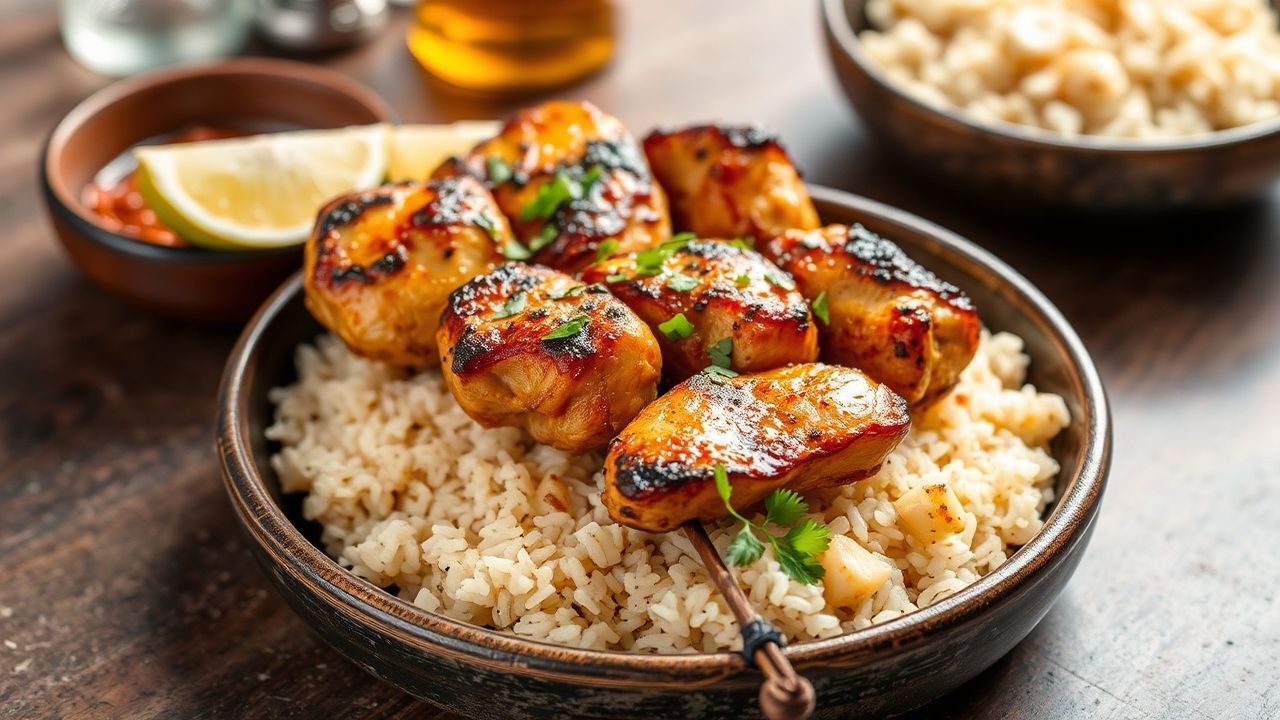
Turkish chicken kebab plates with rice pilaf bring together two classics: smoky grilled chicken and fluffy, buttery rice. You get a balanced plate—spices lead, yogurt tenderizes, and rice soaks up the drippings. This pairing works because both components share similar flavor notes: garlic, lemon, warm spices, and herb freshness.
At a Glance
- Marinate chicken in yogurt, lemon, and spices for juiciness.
- Simmer rice pilaf gently to keep grains fluffy.
- Grill hot for char while keeping the inside tender.
- Finish bright with lemon and parsley for contrast.
When you serve these on one plate, the meal tastes more complete. The rice pilaf adds mild richness, and it also helps you stretch the kebab flavors across every bite. For reference on the broader cuisine influences, see Turkish cuisine.
There is a practical reason this works for home cooks. Yogurt-based marinades and controlled resting time improve texture, while a tight lid protects steam during pilaf cooking. You also avoid dryness by grilling until done, then resting briefly before serving.
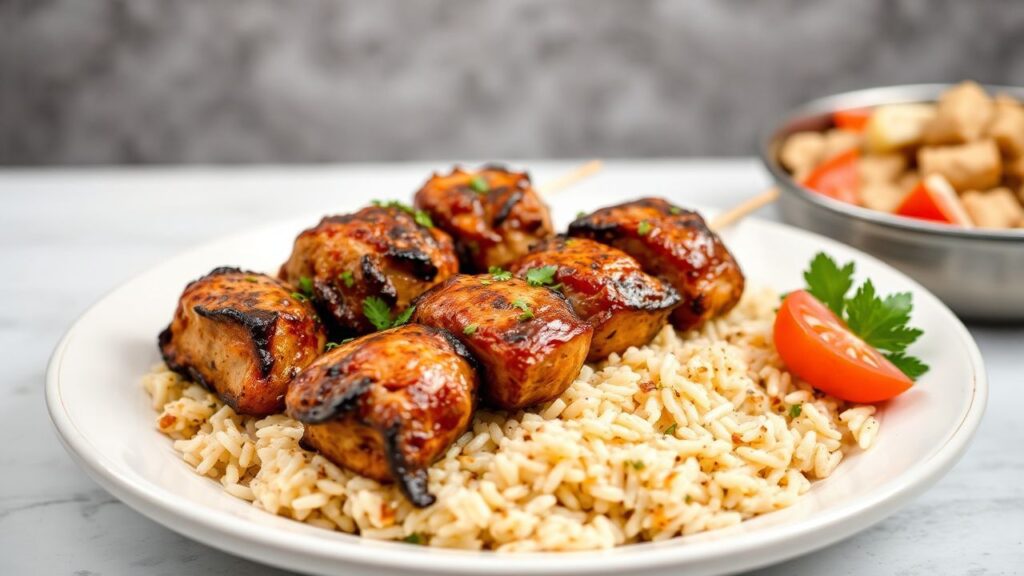
Savor Turkish Chicken Kebab Plates Paired with Rice Pilaf
Savor Turkish chicken kebab plates with rice pilaf for a plate that feels both rustic and restaurant-ready. The chicken carries paprika heat, sumac tang, and lemon brightness, while the rice pilaf stays soft and aromatic. Together, they deliver a satisfying bite that balances savory and fresh flavors.
In Turkey, kebabs often pair with rice, bread, and yogurt sides. That mix keeps each spoonful interesting and stops the meal from feeling heavy. If you want to understand the role of rice in regional cooking, review pilaf.
Prep & Cook Time
Plan your timeline first so the chicken has enough marination time. Yogurt needs time to coat and season the meat, and longer contact usually improves flavor distribution. Keep the marinade covered and refrigerated.
Once marinating ends, cooking moves fast. Rice pilaf takes steady simmering, while kebabs cook quickly over high heat. This schedule works well for weeknight hosting too.
- Preparation Time: 20 minutes
- Marinating Time: 4 hours (or overnight for deeper flavor)
- Cooking Time: 15 minutes
- Total Time: Approximately 4 hours 35 minutes (plus grill time)
Yield
This recipe makes enough for a main-course plate. Serve 4 people with a generous portion of rice and 2–3 kebab skewers per person, depending on appetite.
If you host larger groups, scale the marinade and rice in the same ratio. Keep the chicken cut size consistent so grilling finishes on the same schedule.
- Serves 4 as a main course
Difficulty Level
You can complete this comfortably even if you grill only a few times a year. The technique focuses on practical steps: proper marination, controlled rice simmering, and hot-grill cooking.
Medium difficulty mainly comes from timing. If you rest the chicken and keep the rice covered, you avoid most common mistakes.
- Medium — great for cooks ready to sharpen grilling and rice skills
Ingredients
Gather ingredients before you start. For the best texture, use boneless, skinless chicken thighs. Thighs stay juicy under high heat better than lean breast.
For the rice, long-grain works best for fluffy results. You can add orzo for extra body, but it stays optional. If you like the concept of aromatic cooking, the spice family matters—see sumac for background on its tang.
Turkish Chicken Kebab Marinade
- 1 ½ lbs boneless, skinless chicken thighs, cut into 1.5-inch pieces
- 1 cup plain Greek yogurt
- 3 cloves garlic, minced
- 2 tablespoons tomato paste
- 2 tablespoons olive oil
- 1 tablespoon smoked paprika
- 1 tablespoon ground cumin
- 1 teaspoon ground coriander
- 1 teaspoon ground sumac (optional for tanginess)
- ½ teaspoon ground cinnamon
- 1 teaspoon salt
- ½ teaspoon freshly ground black pepper
- Juice and zest of 1 medium lemon
Aromatic Turkish Rice Pilaf
- 1 cup long-grain white rice, rinsed until water runs clear
- 2 tablespoons unsalted butter
- ½ cup orzo (optional for added texture)
- 2 cups chicken broth, heated
- 1 small onion, finely chopped
- Salt, to taste
- Fresh parsley, chopped (for garnish)
Instructions
Follow the steps in order to protect timing. Start with marinade, then move to rice pilaf, then finish with grilling and plating. When you plan this way, the rice stays warm and fluffy while the chicken rests.
For safety and accuracy, cook chicken until it reaches a safe internal temperature. For general food safety guidance on poultry handling, see food safety.
- Prepare the marinade: In a large bowl, mix Greek yogurt, minced garlic, tomato paste, olive oil, smoked paprika, cumin, coriander, sumac, cinnamon, salt, black pepper, lemon juice, and lemon zest. Stir until smooth and fully combined.
- Marinate the chicken: Add chicken pieces and toss to coat every piece. Cover and refrigerate at least 4 hours, or overnight for deeper flavor.
- Prepare the rice pilaf: In a medium pot over medium heat, melt butter. Add chopped onion and sauté until translucent, about 3–4 minutes. Stir in orzo (if using) and toast until golden, about 2–3 minutes.
- Add rinsed rice and stir gently to coat grains. Pour in hot chicken broth, season with a pinch of salt, and bring to a boil.
- Simmer and rest: Reduce heat to low, cover with a tight-fitting lid, and simmer for 15 minutes without lifting the lid. Turn off heat, then let it rest covered for 10 minutes before fluffing with a fork.
- Skewer and grill the chicken: Thread marinated chicken onto metal skewers or soaked wooden skewers, leaving small space between pieces for even cooking.
- Preheat your grill or grill pan over medium-high heat. Lightly oil the grates to reduce sticking.
- Grill kebabs 6–8 minutes per side (time varies by thickness), until cooked through and charred at the edges. Aim for 165°F / 75°C internal temperature.
- Rest the kebabs: Remove from the grill and loosely tent with foil for 5 minutes to redistribute juices.
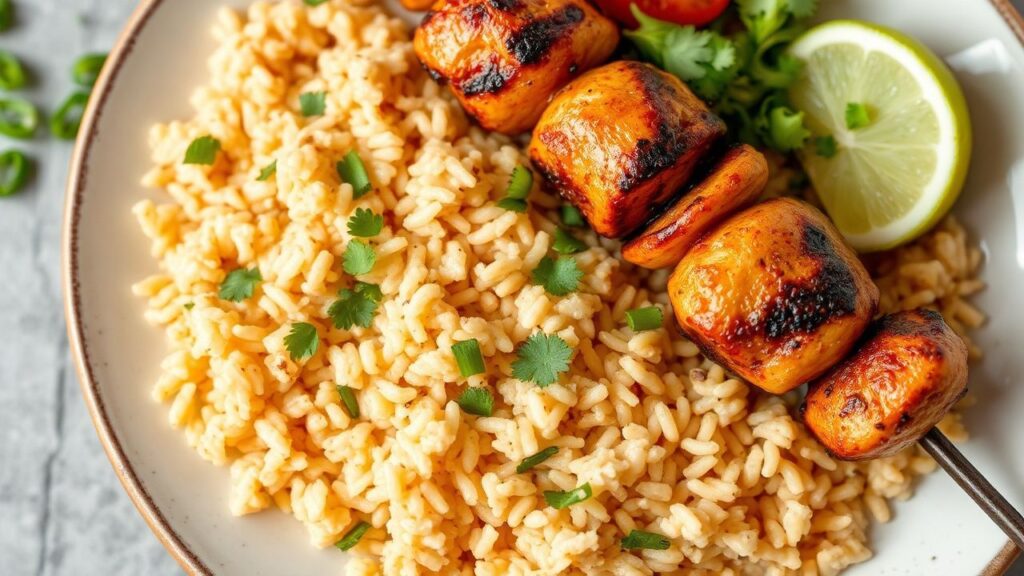
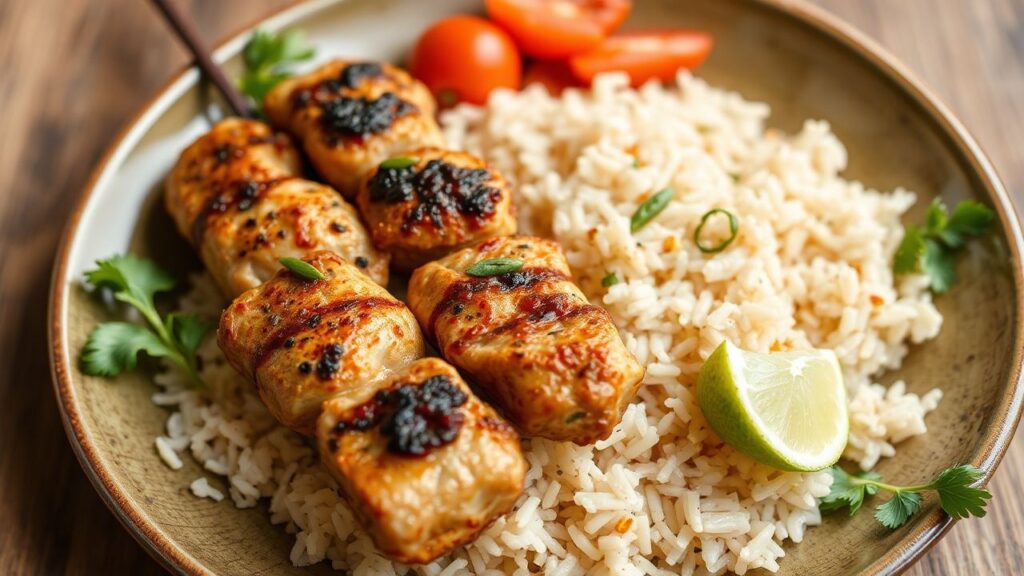
- Plate and garnish: Serve kebabs atop aromatic rice pilaf. Finish with chopped parsley, a sprinkle of sumac (optional but flavorful), and a lemon wedge.
Now you have two warm components ready to eat together. The key to the plate is how you finish: lemon and herbs lift the richness, and char adds smoky depth. You keep the texture by resting before plating and serving immediately after fluffing.
Tips for Success
Success starts with marination and ends with heat control. Let the yogurt mixture coat the meat fully, then keep the chicken chilled until you grill. That steady temperature helps seasoning absorb without turning the meat mushy.
Next, grill hot and work in batches if needed. If you overcrowd the grill, surface temperature drops and char delays. For an overview of grilling methods, see grilling.
- Marinate Longer: Overnight marination improves seasoning depth and tenderness. Stir once after 2–3 hours so the pieces coat evenly.
- Sumac Substitute: If sumac isn’t available, use extra lemon zest or a small increase in lemon juice. Taste as you go to avoid over-acidifying.
- Grill Indoors: Use a cast-iron grill pan for high heat and strong sear lines. Or use a broiler, but watch closely for quick browning.
- Make Ahead: Rice reheats well with a splash of hot broth. Reheat gently and cover to prevent drying.
- Chicken Cuts: Thighs stay forgiving. If you use breast, cut slightly larger and shorten grill time to avoid dryness.
Serving Suggestions
Serve these Turkish chicken kebab plates with a cool yogurt side for contrast. cacık (yogurt with cucumber, garlic, and herbs) cools the palate and makes the spices taste brighter. If you want to understand the broader idea of yogurt-based dips, see cacık.
Also add a fresh salad for crunch. Tomatoes, cucumbers, and parsley bring watery freshness that balances grilled char. Warm pita or lavash helps you scoop rice and chicken together, which increases satisfaction per bite.
To finish, add a light drizzle of extra virgin olive oil and a few lemon squeezes. This boosts aroma right before eating. Finally, consider grilled peppers or eggplant for smoky sweetness alongside the savory kebab.
| Nutrition (per serving) | Amount |
|---|---|
| Calories | 480 kcal |
| Protein | 38 g |
| Carbohydrates | 38 g |
| Fat | 15 g |
Explore More
Pair your kebab plate with meze to build a full Turkish meal. A small spread of mezze helps guests taste variety without changing the main dinner. If you want a starting point on meze, read meze.
For a wider view of how Turkey uses herbs, spices, and grilling traditions, use Turkish cuisine as a reference. It helps you spot patterns—like lemon brightness and yogurt tang—that show up across many recipes.
FAQ
What makes Turkish chicken kebabs uniquely flavorful?
Turkish kebabs often rely on a spice blend and a yogurt-lemon marinade. Sumac, smoked paprika, cumin, and garlic add layered aroma, while yogurt improves tenderness. The lemon also boosts freshness and keeps the flavor from tasting flat.
Char from hot grilling adds a smoky edge that plain pan cooking can’t match. If you want more background on char and grilling impacts, see Maillard reaction.
How do I keep rice pilaf fluffy instead of sticky?
Rinse rice until the water runs clearer to remove excess surface starch. Toasting the onion and orzo in butter helps each grain separate. Then simmer with a tight lid and avoid stirring after the boil.
Finally, rest the pilaf before fluffing. This step lets steam finish cooking so grains hold structure instead of turning mushy.
Can I make this Turkish chicken kebab plate without a traditional grill?
Yes. A grill pan gives strong sear lines, and a broiler works when you monitor browning closely. Choose medium-high heat and rotate skewers as needed for even cooking.
Whichever method you use, keep the meat pieces similar in size. Uniform pieces cook evenly and protect juiciness.
What sides pair best with rice pilaf and kebabs?
Cacık works especially well because it cools the palate and adds garlic-herb freshness. A salad with tomatoes and cucumbers adds crunch, while warm pita helps you scoop rice and kebab juices.
If you prefer grains, you can also serve a simple bulgur side, but keep it light so the rice pilaf stays the star. For a general background on bulgur, see bulgur.
How long can I store leftovers?
Store chicken and rice separately in airtight containers. Refrigerate within two hours, then eat within 2–3 days for best quality and texture.
Reheat gently with a small splash of broth for the rice. That helps the pilaf regain softness without drying out.
See also: Turkish chicken kebab