
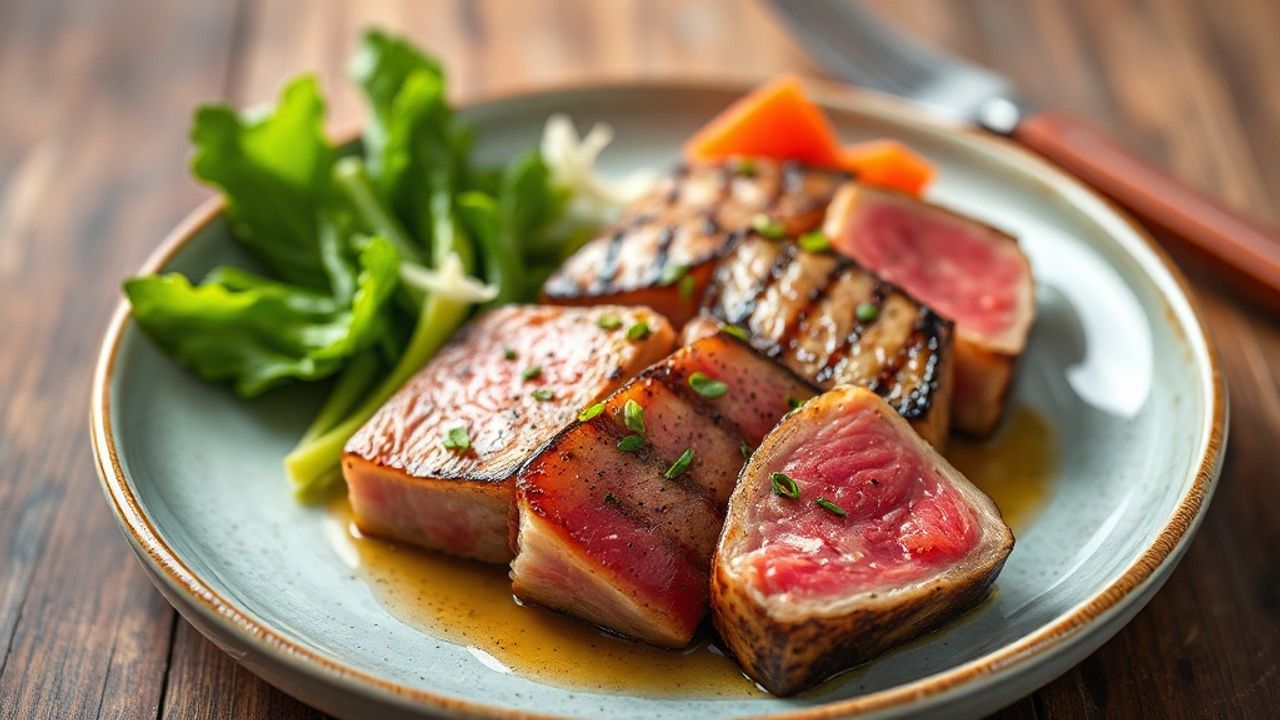
Tuna steak delivers a meaty texture and vivid ocean flavor that rewards precise technique and bold seasoning.
- Prep and Cook Time for Tuna Steak
- Yield for Tuna Steak
- Difficulty Level for Tuna Steak
- Ingredients for Tuna Steak
- Instructions: Cook Tuna Steak
- Tips for Tuna Steak Success
- Serving Suggestions for Tuna Steak
- Variations and Recipe Ideas for Tuna Steak
- Kitchen Tools and Techniques for Tuna Steak
- Nutritional Notes for Tuna Steak
- Common Mistakes to Avoid When Cooking Tuna Steak
- FAQ
- At a glance: quick sears, short marinades, and sashimi-grade quality yield best results.
- Timing matters: high heat, 1.5–3 minutes per side for rare to medium-rare.
- Pairings: bright citrus, crisp vegetables, and dry rosé or Sauvignon Blanc lift the flavor.
- Nutrition: tuna packs lean protein and omega-3s for a healthy plate.
Prep and Cook Time for Tuna Steak
Prep: about 15 minutes for trimming and mixing marinades; marinating adds 20–30 minutes when used.
Cook: searing takes 4–6 minutes total; resting adds 2–4 minutes. Total time stays under an hour.
Yield for Tuna Steak
Recipe quantities below serve four people with 6-ounce tuna steaks, ideal for individual plating.
Scale easily: increase steaks by one per guest and adjust marinade proportionally.
Difficulty Level for Tuna Steak
Moderate. The technique hinges on heat control and timing rather than complex steps.
With consistent practice you will master a reliably seared exterior and tender pink center.
Ingredients for Tuna Steak
Use four 6-ounce, 1-inch-thick tuna steaks, 2 tablespoons soy sauce, 1 tablespoon sesame oil, 1 tablespoon fresh lime juice, 2 garlic cloves, 1 teaspoon grated ginger, 1 tablespoon honey or maple syrup, salt, pepper, 2 tablespoons olive oil, toasted sesame seeds, and fresh herbs for garnish.
Opt for sushi- or sashimi-grade fish when available for optimal texture and safety. See Tuna for background on species and sourcing.
Instructions: Cook Tuna Steak
Follow a clear sequence: make the marinade, briefly marinate, heat the pan, sear quickly, then rest.
These steps preserve the interior while building a caramelized crust for that classic tuna steak contrast.
Marinade and Flavor for Tuna Steak
Whisk soy sauce, sesame oil, lime juice, minced garlic, grated ginger, and honey. Taste and adjust salt and pepper to balance umami and acidity.
Marinate only 20–30 minutes to avoid acid denaturing the surface proteins; prolonged acidic contact mimics curing and alters texture.
Searing Technique for Tuna Steak
Use a heavy skillet or cast-iron pan over medium-high heat until oil shimmers. Oil the fish lightly and place steaks down without crowding.
Sear 1.5–3 minutes per side for rare to medium-rare depending on thickness. Rest steaks 2–4 minutes to redistribute juices before slicing.
Tips for Tuna Steak Success
Freshness first: buy bright, firm steaks that smell briny, not fishy. Ask your fishmonger about last-catch timing.
Consider learning sashimi-handling basics; the Sashimi page outlines standards that apply to raw-quality fish.
Use moderate salt pre-sear; too much salt early pulls moisture out. Finish with a light seasoning after the rest period if needed.
Serving Suggestions for Tuna Steak
Serve tuna steak with citrus-accented slaw, grilled vegetables, or a light grain salad to balance its firm texture and umami richness.
Bright finishes—lemon or lime squeeze, microgreens, or a spoon of mango salsa—contrast the seared exterior and lift the palate.
For wine choices, select an acidic white or dry rosé to cut through the richness without overpowering delicate fish flavors.
Variations and Recipe Ideas for Tuna Steak
Try a blackened spice rub for heat, a honey-soy glaze for gloss and umami, or a citrus-herb crust for brightness.
Substitute sesame seeds and scallions for a textured finish, or top with a cold herb vinaigrette to add freshness and contrast.
Kitchen Tools and Techniques for Tuna Steak
A heavy-bottomed pan or cast-iron skillet gives the sustained heat needed for a crisp sear and even browning.
Use a sharp knife to slice against the grain for cleaner presentation and a tender mouthfeel on the plate.
Nutritional Notes for Tuna Steak
Tuna provides lean protein and important long-chain polyunsaturated fats. The fish is a recognized source of omega-3s; see Omega-3 fatty acid for details.
Adjust accompaniments to manage calories and sodium—light sides and simple vinaigrettes keep the plate balanced and nutrient-dense.
Common Mistakes to Avoid When Cooking Tuna Steak
Avoid overcrowding the pan; doing so drops pan temperature and prevents a fast sear. Searing works only with high, dry heat and space around the fish.
Do not over-marinate in acids. Cured surfaces lead to a mealy or chalky texture rather than the desired tender interior.
FAQ
How long should I sear a tuna steak?
Sear 1.5–3 minutes per side depending on thickness for rare to medium-rare. Adjust by 30–60 seconds for thicker cuts.
Rest steaks briefly after searing; carryover heat continues to cook the center and evens the internal temperature.
Is it safe to eat tuna steak rare?
Yes, when you use sashimi- or sushi-grade tuna and handle it properly. Keep the fish cold, avoid cross-contamination, and consume promptly.
When in doubt, consult your fishmonger about source and handling to minimize food-safety risk.
Can I use frozen tuna steaks?
High-quality frozen tuna that has been properly thawed in the refrigerator cooks well. Pat dry before seasoning and searing.
Avoid refreezing after thawing; this can degrade texture and moisture retention in the flesh.
What sides pair best with tuna steak?
Light, crisp sides such as citrus slaw, grilled asparagus, or a quinoa salad complement tuna steak without masking its flavor.
Choose acidic or herb-driven sauces to contrast the fish’s umami and preserve its clean profile on the plate.
Can I adapt these tuna steak techniques for other fish?
Yes. Use the same high-heat searing approach for other meaty fish like swordfish or mahi-mahi, adjusting cook times to thickness and texture.
Remember that lean, dense fish handle quick sears better than flaky, delicate varieties.
With these methods, you can consistently produce attractive, flavorful tuna steaks. Practice heat control and timing, prioritize fresh fish, and refine seasonings to your taste.
See also: Tuna Steak