

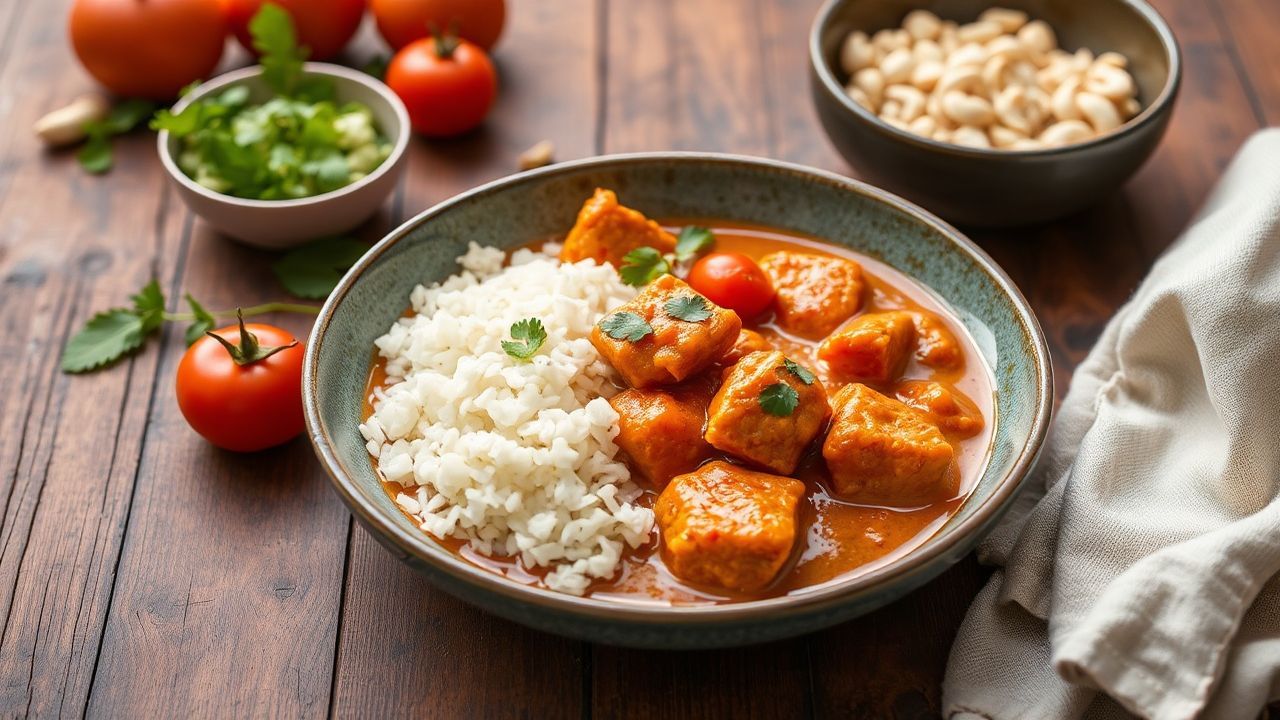
Velvety Tomato Cashew Chicken Curry combines ripe tomatoes, toasted cashews, and warm Indian spices into one creamy sauce. You get that restaurant-style thickness without heavy cream, because the cashews emulsify as they simmer. It’s a weeknight curry that still feels special.
- What Makes Velvety Tomato Cashew Chicken Curry So Creamy
- Prep and Cook Overview
- Ingredients for Velvety Tomato Cashew Chicken Curry
- Instructions: Step-by-Step Cooking Method
- Step 1: Make the cashew paste
- Step 2: Cook and puree the tomatoes
- Step 3: Build the curry base
- Step 4: Bloom aromatics and toast spices
- Step 5: Thicken the tomato base
- Step 6: Add cashew paste and simmer
- Step 7: Cook the chicken
- Step 8: Simmer until tender and velvety
- Step 9: Finish with lemon brightness
- Step 10: Garnish and serve
- Tips for Success: Achieving a Velvety Texture Every Time
- Serving Suggestions and Pairings
- Nutritional Snapshot
- Q&A
- Cashew paste creates the creamy texture.
- Tomato puree adds tangy sweetness and body.
- Toasted spices deepen flavor fast.
- Gentle simmer keeps the chicken tender.
In many South Asian curries, the sauce starts with tomatoes and aromatics, then turns glossy as it reduces. Here, the nuts add a smooth mouthfeel that stays stable as the curry cools and reheats. That balance of tang, nutty richness, and spice heat makes this dish easy to love.
To build the flavor, you’ll toast spices briefly, cook onions until golden, and blend roasted tomatoes into a puree. Then you’ll combine everything with the ground cashew mixture and simmer until the sauce turns velvety. If you follow the steps in order, the texture becomes creamy on its own.
What Makes Velvety Tomato Cashew Chicken Curry So Creamy
The creaminess comes from a simple technique: you grind toasted cashews into a paste, then simmer it into the tomato base. Cashews release oils and starches when blended, so the sauce thickens and looks silky. You also avoid the grainy feel that can happen with poorly blended nuts.
Tomatoes bring tangy sweetness and natural acidity. When you cook tomato puree for a few minutes, it concentrates and helps the sauce cling to the chicken. For background on tomatoes in cooking, see Tomato.
Spices matter, too. Toasting cumin and warming powdered spices for about a minute boosts aroma through dry heat chemistry. If you want a quick reference for spice context, Indian cuisine offers helpful background on how spices shape regional curries.
For the cashew element, use cashew as your guide for what to expect from the nut’s oils. Toasting lightly keeps the flavor nutty but not bitter. Blend with enough water to stay smooth, then simmer just long enough to thicken.
Prep and Cook Overview
This curry is built for steady, practical cooking. You’ll do the active work first—pastes, puree, and browning—then let the sauce simmer while the chicken turns tender. That rhythm keeps your kitchen workload low.
- Preparation: 15 minutes
- Cooking: 35 minutes
- Total: 50 minutes
Yield: Serves 4 hearty portions. Difficulty: Medium—approachable if you keep an eye on simmer heat and stir when sauces reduce.
Ingredients for Velvety Tomato Cashew Chicken Curry
Use good-quality tomatoes and fresh aromatics for the best flavor. Chicken thighs stay juicy because they handle simmering without drying out as quickly as lean cuts. Choose boneless pieces so you can coat them evenly.
For spice balance, keep measurements tight, especially for turmeric and garam masala. If you like heat, increase green chilies or red chili powder gradually rather than adding everything at once.
- 500 g boneless chicken thighs, cut into bite-sized pieces
- 3 medium ripe tomatoes, roughly chopped
- 1/2 cup raw cashews
- 1 large onion, finely chopped
- 4 garlic cloves, minced
- 1 tbsp fresh ginger, grated
- 2 green chilies, slit (adjust to taste)
- 2 tbsp vegetable oil (or ghee)
- 1 tsp cumin seeds
- 1 tsp coriander powder
- 1/2 tsp turmeric powder
- 1 tsp garam masala
- 1 tsp paprika (color and mild heat)
- 1/2 tsp red chili powder (optional)
- Fresh cilantro, chopped for garnish
- Salt, to taste
- 1 cup water (or chicken broth for deeper flavor)
- Juice of half a lemon
If you want a quick reference for how cumin and coriander are used in spice blends, check cumin and coriander. These links help you understand why toasting matters.
Instructions: Step-by-Step Cooking Method
Follow these steps in order. The curry thickens from reduction and the cashew emulsion, so timing matters. If you rush the tomato cook stage, the sauce may stay watery.
Step 1: Make the cashew paste
Toast cashews lightly in a dry pan over medium heat until fragrant and just golden, about 3–4 minutes. Cool slightly, then blend with about 1/3 cup water until smooth. Set the paste aside.
Step 2: Cook and puree the tomatoes
In the same pan, cook chopped tomatoes on medium heat until softened and slightly caramelized, about 8 minutes. Blend until smooth. This puree becomes your main sauce base.
Step 3: Build the curry base
Heat oil in a heavy-bottomed skillet over medium heat. Add cumin seeds and let them sizzle for about 30 seconds. Stir so the spices don’t burn.
Add chopped onions and cook until golden brown, about 7–8 minutes. Stir often to develop color and prevent scorching. Golden onions add sweet depth to the finished curry.
Step 4: Bloom aromatics and toast spices
Add garlic, ginger, and green chilies, then cook for about 2 minutes until fragrant. Next, add coriander powder, turmeric, paprika, and red chili (if using), plus a pinch of salt.
Stir continuously for about 1 minute to toast the spices. This step turns raw spice notes into warm, nutty aroma. For spice concepts, spice provides useful background on why aroma compounds activate with heat.
Step 5: Thicken the tomato base
Pour in the tomato puree and cook for about 5 minutes. Stir until the mixture thickens slightly and oil starts to appear at the edges. That visual cue tells you the tomato water has reduced.
Step 6: Add cashew paste and simmer
Stir in the cashew paste and blend thoroughly into the sauce base. Simmer for about 4 minutes so flavors meld and the texture turns creamy. Keep heat moderate to prevent separation.
[TIP]Expert Insight: If your cashew paste looks too thin, add it a little at a time while stirring. This keeps the sauce stable and helps the emulsion form evenly. Adjust with 1–3 tablespoons water only if needed.
Step 7: Cook the chicken
Add chicken pieces and coat them in the sauce. Pour in 1 cup water or broth, bring to a gentle boil, then reduce to a simmer. Avoid a hard boil so the sauce stays smooth.
Step 8: Simmer until tender and velvety
Cover and cook for about 20 minutes, stirring occasionally. When the chicken is tender, the sauce should look thick and velvety. If it gets too thick, add a splash of water and stir.
[WARNING]Pro-Caution: Don’t add garam masala and lemon juice at the start. High heat for too long can dull garam masala’s aroma, and lemon can turn slightly harsh if it simmers too aggressively.
Step 9: Finish with lemon brightness
Stir in garam masala and lemon juice. Taste and adjust salt. The lemon lifts the tomato tang and makes the creamy cashew flavor feel lighter.
Step 10: Garnish and serve
Scatter chopped cilantro over the curry and serve hot. Pair it with basmati rice or warm flatbreads for best sauce pickup. The curry should cling to the spoon without running.
For more on how rice types affect texture, see Basmati. Long-grain rice works well because it stays separate and supports saucy curries.
Tips for Success: Achieving a Velvety Texture Every Time
Small choices control the final mouthfeel. Use ripe tomatoes, toast cashews, and simmer long enough for reduction. If you keep these three points consistent, your curry reliably turns creamy.
- Use ripe tomatoes: Riper tomatoes taste sweeter and cook down faster. Avoid underripe tomatoes, which keep a more acidic edge.
- Low and slow: Simmer gently so the sauce thickens naturally. Fast boiling can cause texture to break.
- Cashew paste consistency: Blend thick and smooth, not watery. Thick paste emulsifies better into tomato sauce.
- Spice timing: Toast powdered spices briefly, then cook them in the tomato base. This keeps flavor rounded.
- Make-ahead: Resting improves flavor. Reheat on low heat and add a splash of water if the sauce thickens.
If you’re curious about the chemistry behind creamy sauces, emulsions are a key idea. Wikipedia’s overview in emulsion explains why fat and water combine when blended and heated properly.
Serving Suggestions and Pairings
Serve this curry with rice or naan to capture the sauce. A simple plate works best: curry in the center, rice on the side, and herbs on top. That keeps focus on texture and spice balance.
For contrast, add a cooling side like cucumber raita. Crisp salad and lemon wedges also help cut through richness. If you like pickles, choose mild ones so they don’t overpower the tomato-cashew base.
For curry spice context, curry provides helpful background on how regional sauces differ. You can use that understanding to adjust thickness and heat level.
Nutritional Snapshot
Nutrition varies by brand and portion size. This estimate assumes chicken thighs, moderate oil, and the listed spices. Use it as a planning reference, not a strict measurement.
| Nutrient | Per Serving |
|---|---|
| Calories | 385 kcal |
| Protein | 30 g |
| Carbohydrates | 12 g |
| Fat | 22 g |
Q&A
What makes Velvety Tomato Cashew Chicken Curry different from other chicken curries?
The creamy texture comes from blended cashews simmered into a reduced tomato puree. Many chicken curries rely on cream, yogurt, or coconut milk, but this one builds creaminess through nut emulsion and sauce reduction.
Can I make this curry ahead of time?
Yes. Most curries taste better after resting because flavors blend and the sauce thickens slightly. Reheat gently on low heat, then add a splash of water if needed.
How do cashews affect flavor and texture in the curry?
Cashews add a mild, nutty sweetness and natural oils that help the sauce emulsify. When you blend toasted cashews into a smooth paste, the curry turns smooth and velvety instead of grainy.
What spices are essential for authentic flavor here?
Cumin, coriander, turmeric, and garam masala provide the warm foundation. Garlic, ginger, and green chilies add aroma and heat depth, while paprika supports color and mild spice.
Is this recipe naturally gluten-free or dairy-free?
It is naturally gluten-free and dairy-free as written, since it uses cashews instead of dairy ingredients. Always check spice labels if you need strict gluten-free compliance.
See also: Velvety Tomato