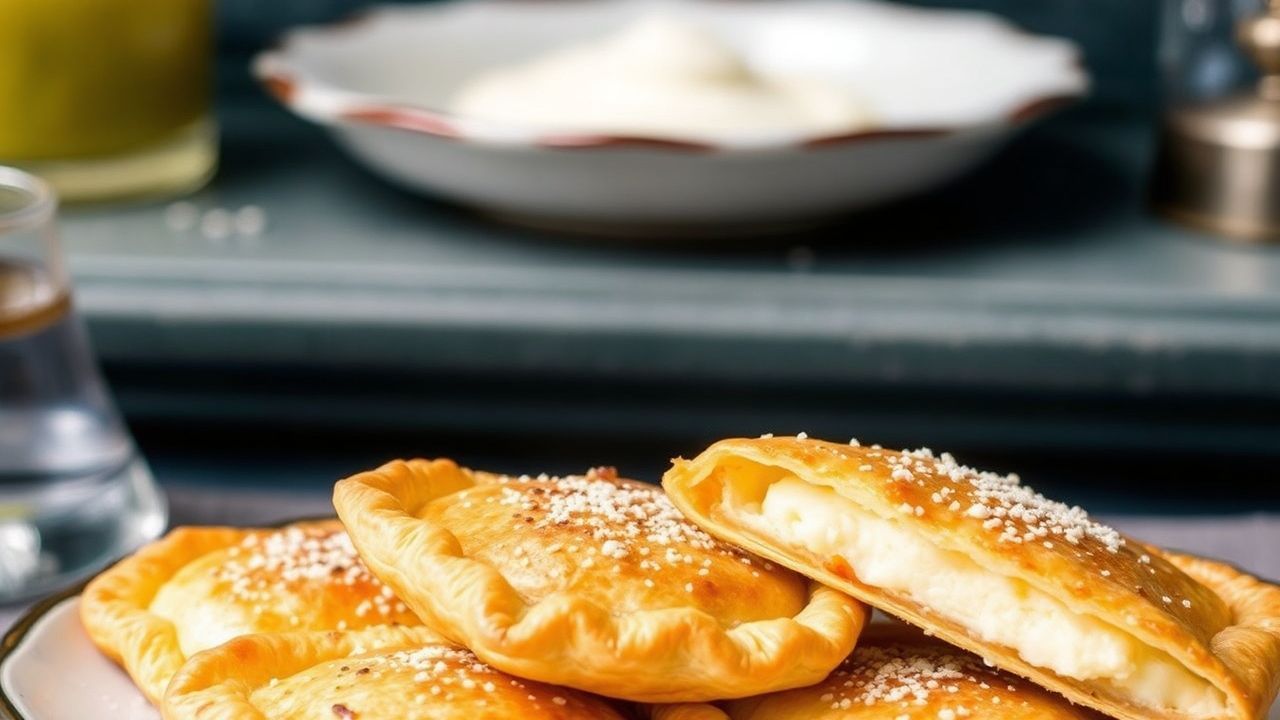
Delightful sweet cheese filo pastries bring a crisp, golden shell and a creamy center into one bite. These pastries rely on thin filo dough layers that bake fast, turn shatteringly crisp, and hold sweet cheese filling without getting soggy.
- What Makes Sweet Cheese Filo Pastries So Special
- Prep and Cook Time Overview
- Yield, Difficulty, and What to Expect
- Ingredients for Sweet Cheese Filo Pastries
- Instructions: How to Make Sweet Cheese Filo Pastries
- Chef’s Notes: Tips for Success
- Serving Suggestions and Pairings
- Nutritional Snapshot (Per Pastry)
- Quick Cultural Context: Filo, Phyllo, and Sweet Fillings
- Insights and Conclusions
- FAQ: Sweet Cheese Filo Pastries
- High crunch, low mess: handle filo in short sessions to prevent drying.
- Flavor balance matters: use lemon zest or vanilla to brighten the cheese.
- Seal the filling: fold tightly so the center stays intact while baking.
- Finish for shine: optional honey glaze adds aroma and a glossy top.
From family kitchens to busy dessert counters, sweet cheese filo pastries fit both casual sharing and plated entertaining. You can shape them as triangles or bundles, and you can adjust sweetness with honey or sugar for your crowd.
Below you’ll find a clear recipe flow, practical technique tips, and pairing ideas that support real results. If your goal is bakery-style crispness at home, you’ll get the exact handling details that make the difference.
What Makes Sweet Cheese Filo Pastries So Special
Filo pastry works because it uses very thin layers that bake quickly and crisp up when warmed evenly. That contrast—crisp outside, soft inside—makes sweet cheese filo pastries feel light even when the filling stays rich.
Sweet cheese fillings often use mild, creamy cheeses such as ricotta or cream cheese because they melt into a smooth texture. When you add lemon zest, vanilla, or cinnamon, you create a bright top note that keeps the dessert from tasting flat.
If you want to build deeper flavor, it helps to understand how phyllo (filo) dough behaves during baking and why moisture control matters. Thin dough sheets lose moisture fast, which affects crispness and layering.
You can also borrow structure from pastry technique: many classic filo desserts use layered dough plus a binding filling. For context on pastry fats and browning, review Maillard reaction, which supports that deeper golden color.
Prep and Cook Time Overview
Plan your workflow so the filo stays covered and your station stays tidy. Sweet cheese filo pastries move fast once you start layering, so timeboxing helps you stay consistent.
- Preparation: 30 minutes
- Resting (dough/filo handling): 10 minutes
- Cooking/Baking: 25 minutes
- Total Time: 1 hour 5 minutes
These timings assume your filling mixes in one bowl and your folding method stays repeatable. If you’re new to triangles, expect a slightly slower first batch.
If you want to refine your pacing, think about how ovens heat food. Even browning depends on convection and rack position, so rotate the pan mid-bake for best results.
Yield, Difficulty, and What to Expect
This recipe yields about 12 pastries, sized for sharing or an elegant snack plate. Each piece comes out crisp and golden with a creamy cheese interior.
Difficulty: Medium. You must handle filo gently and work in small batches, but the steps stay straightforward once you master coverage and folding.
When you bake filo, the goal is dry, crisp layers—not a soft, steamed stack. If your pastries feel chewy, it usually points to excess moisture or underbaked time.
For deeper understanding of crisp textures, it helps to know that water loss affects food texture. See the basics of evaporation and how heat drives it during baking.
Ingredients for Sweet Cheese Filo Pastries
Choose cheeses that stay creamy after baking. Ricotta and mascarpone blend well and keep the filling smooth without turning grainy.
- 1 package (16 sheets) filo dough, thawed and covered with a damp cloth
- 1 ½ cups ricotta cheese (or a blend of ricotta and cream cheese)
- ½ cup mascarpone cheese (optional, for richness)
- ⅓ cup granulated sugar
- 1 tsp vanilla extract
- 1 tsp lemon zest (finely grated)
- ¼ tsp ground cinnamon (optional)
- 4 tbsp unsalted butter, melted, for brushing
- Powdered sugar for dusting
- Honey or simple syrup, for glazing (optional)
Use fresh lemon zest if possible. Citrus aroma lifts cheese desserts and makes the sweetness taste more “designed” instead of heavy.
If you want a quick science anchor for dairy sweetness, read about lactose and why dairy sweetness can shift with cooking and browning.
Instructions: How to Make Sweet Cheese Filo Pastries
Set up your baking sheet, melt your butter, and mix your filling first. Then move step-by-step so the filo never sits exposed for long.
- Preheat the oven to 375°F (190°C) and line a baking sheet with parchment paper.
- Mix the filling: In a bowl, combine ricotta, mascarpone (if using), sugar, vanilla, lemon zest, and cinnamon. Stir gently until smooth.
- Handle filo: Keep filo covered with a damp kitchen towel. Work with one sheet at a time.
- Layer for strength: Brush a sheet lightly with melted butter. Add a second sheet, brush again, then build to 3–4 layers.
- Cut shapes: Cut the stacked sheets into rectangles about 3×6 inches.
- Fill and seal: Place a tablespoon of filling near one short edge. Fold into a triangle and continue folding along the strip.
- Arrange: Place pastries seam side down. Brush tops generously with melted butter.
- Bake: Bake 20–25 minutes until puffed and deep golden. Rotate the pan halfway for even color.
- Glaze (optional): While warm, brush lightly with honey or simple syrup.
- Cool and finish: Cool 5 minutes, then dust with powdered sugar.
Repeat the folding motion the same way every time. That keeps thickness consistent, which improves bake time and crunch.
If you want a browning target, aim for “deep golden.” That color comes from both oven heat and surface reactions, which aligns with Maillard chemistry in cooked foods.
[TIP]Expert Insight: Set a timer for filo exposure. Pull one sheet, shape your rectangle stack, then cover everything again. This small habit protects the texture so your filo turns crisp instead of leathery.
Keep the filling thick enough to stay put when you fold. If it runs, it will leak and stain the layers.
[WARNING]Pro-Caution: Avoid overmixing ricotta until it looks foamy. Too much aeration can weaken the filling structure, and it may seep out during baking.
For best crunch, bake fully and avoid “just underdone.” When in doubt, give 2–3 extra minutes and watch the edges for deep golden color.
Chef’s Notes: Tips for Success
Great filo pastries come down to moisture control and reliable shaping. Keep your towel damp, brush butter evenly, and fold firmly so the filling stays locked.
- Filo handling: Tear-prone sheets need coverage. Work in short bursts to prevent drying.
- Cheese choice: Ricotta plus mascarpone gives a creamy center. Lemon zest and vanilla keep it bright.
- Butter alternatives: For a different flavor, use coconut oil or a neutral oil, then brush generously.
- Flavor variations: Try orange zest, a pinch of nutmeg, or sprinkle pistachios before baking.
- Make ahead: Assemble and refrigerate up to 2 hours before baking.
- Storage: Refrigerate leftovers in an airtight container. Re-crisp in an oven at 350°F (175°C) for 5–7 minutes.
If you add nuts, toast them first when possible. Toasting brings out oils and aroma, which improves the overall dessert profile.
For background on butter and fats in baking, see butter and how fat content supports browning and crispness.
Serving Suggestions and Pairings
Serve sweet cheese filo pastries warm for the best contrast. The shell stays crisp, while the center remains soft and fragrant.
Dust with powdered sugar right before serving to prevent dissolve from kitchen humidity. If you want extra shine, add a light honey glaze while the pastries are still warm.
For tea pairings, choose flavors that match sweetness. A mild herbal tea or lightly spiced black tea works well because it supports creamy notes without overpowering citrus zest.
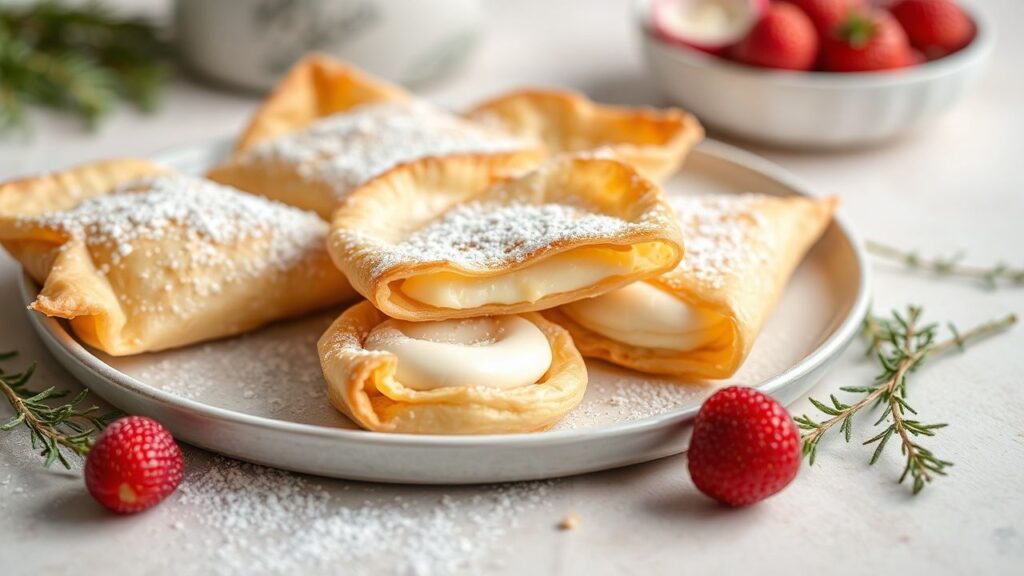
You can also add fresh fruit for a bright counterbalance. Berries provide acidity that cuts richness, and it pairs well with both vanilla and lemon flavors.
Nutritional Snapshot (Per Pastry)
Use the numbers below as a rough estimate. Exact values depend on brand of filo, amount of butter brushed, and cheese type.
| Nutritional info (per pastry) | Calories | Protein (g) | Carbs (g) | Fat (g) |
|---|---|---|---|---|
| Sweet Cheese-Filled Filo Pastry | 180 | 6 | 22 | 8 |
If you reduce sugar, expect a slight flavor shift rather than a structural change. You can keep the crisp shell by maintaining butter brushing and full bake time.
For general guidance on dairy nutrition, reference nutrition basics rather than treating labels as universal truth.
Quick Cultural Context: Filo, Phyllo, and Sweet Fillings
Filo-style pastries appear across Mediterranean and Middle Eastern cuisines, often in both savory and sweet forms. Sweet cheese versions show up at celebrations because they look elegant and taste comforting.
Across regions, cooks vary the cheese, add honey or syrup, and adjust sweetness. That flexibility helps these pastries remain a staple for gatherings.
If you want background on dough traditions, explore Greek cuisine and related Mediterranean baking styles. For dough basics, pastry covers how fillings and dough form classic textures.
These notes guide flavor choices, but your best results come from hands-on practice with filo handling. Use the timer and coverage approach above for repeatable crunch.
Insights and Conclusions
Sweet cheese filo pastries deliver a clear payoff: crisp, buttery layers plus a creamy interior with bright aromatics. When you control filo moisture and seal the filling, you get a dessert that holds up from tray to first bite.
Keep your technique steady—stack layers evenly, brush butter thoroughly, and bake until deep golden. Then finish with powdered sugar or honey for a bakery-style look that guests trust.
When you reheat leftovers, restore crispness with a short oven pass. This simple step helps the filo layers regain crunch and makes the dessert feel fresh again.
FAQ: Sweet Cheese Filo Pastries
Why does filo dough turn crisp instead of soft?
Thin layers bake quickly and lose surface moisture. When you brush butter evenly and bake until deep golden, the layers dry and crisp without steaming.
Which cheeses work best for sweet filo filling?
Ricotta and cream cheese provide a mild, creamy base, while mascarpone boosts richness. Add lemon zest or vanilla to keep the filling bright and balanced.
How can I stop my filo from drying out while assembling?
Cover sheets with a damp towel and work one sheet at a time. If your kitchen runs dry, replace the towel moisture and keep exposure times short.
Can I freeze sweet cheese filo pastries before baking?
Yes. Assemble and freeze on a tray, then transfer to a freezer bag once solid. Bake straight from frozen, adding a few extra minutes for full thaw and browning.
What’s the best way to reheat leftovers for crispness?
Reheat in a 350°F (175°C) oven for 5–7 minutes. This method re-crisps the filo better than microwaving and helps the cheese stay creamy.
See also: sweet cheese filo