
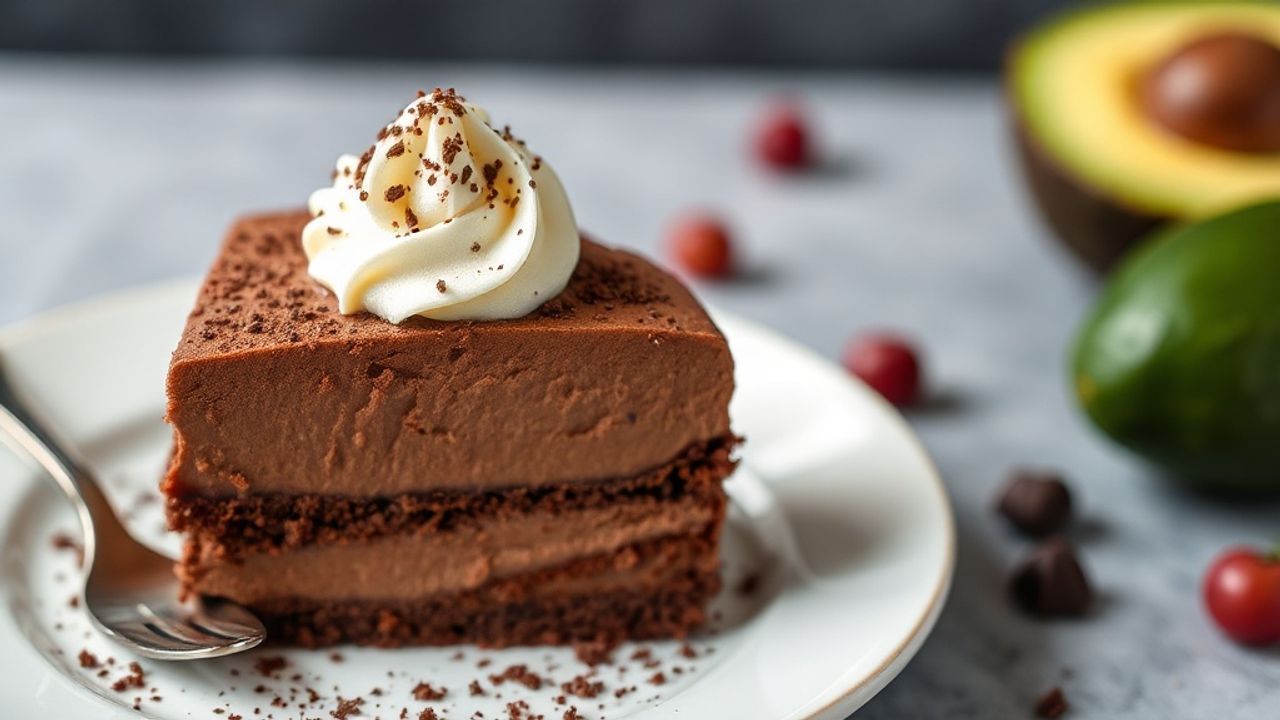
Decadent sugar-free chocolate avocado mousse cake delivers rich chocolate flavor without refined sugar. This recipe turns ripe avocados into a creamy mousse that layers on a crisp almond crust for a refined, low-sugar dessert that performs well for gatherings and everyday indulgence.
- Why choose sugar-free chocolate avocado mousse cake
- Prep, cook time and yield for sugar-free chocolate avocado mousse cake
- Ingredients — building blocks for sugar-free chocolate mousse cake
- Step-by-step instructions for the sugar-free chocolate mousse cake
- Chef’s notes, texture tweaks and ingredient swaps for sugar-free chocolate results
- Serving suggestions and storage for the sugar-free chocolate avocado mousse cake
- Nutrition overview and suitability for special diets
- Related recipes and internal resources
- Q&A — common questions about sugar-free chocolate avocado mousse cake
- At a glance: Silky avocado mousse, crunchy almond crust, chilled to set.
- Serves: 8 generous slices; best chilled 4–24 hours.
- Diet-friendly: Vegan, gluten-free, low net carbs when made with erythritol.
Why choose sugar-free chocolate avocado mousse cake
Choosing a sugar-free chocolate mousse cake blends sensory pleasure with sensible nutrition. Avocado supplies natural creaminess and healthy monounsaturated fats while dark chocolate adds concentrated flavor with minimal sugar.
This cake suits those who monitor added sugars, want plant-based richness, or need a gluten-free option. For background on avocado composition and benefits, see avocado.
Prep, cook time and yield for sugar-free chocolate avocado mousse cake
Plan a short active prep followed by an extended chill. Active kitchen time runs about 20–30 minutes; chilling requires at least four hours. The resting time allows texture and flavor to harmonize.
Yield: Serves 8. Total time: ~4 hours 20 minutes including chilling. Keep an eye on chilling to achieve proper mousse structure.
Ingredients — building blocks for sugar-free chocolate mousse cake
Assemble quality ingredients for reliable results. The crust is simple: almond flour, unsweetened cocoa powder, coconut oil and a granular sugar alternative. Use erythritol or monk fruit for minimal aftertaste.
For the mousse itself, use ripe avocados, unsweetened cocoa, a powdered sweetener, a touch of coconut cream and high-cocoa dark chocolate for depth. For notes on sweeteners, refer to erythritol and sweetness profiles.
Crust (short)
Crust: 1 ½ cups almond flour, 3 tbsp melted coconut oil, 2 tbsp unsweetened cocoa, 2 tbsp erythritol, pinch sea salt. Press into a 9-inch springform pan.
Chill the crust while you blend mousse. Pressing firmly yields a compact base that supports the mousse without crumbling.
Mousse (short)
Mousse: 3 ripe avocados (peeled, pitted), ½ cup unsweetened cocoa, ½ cup powdered sweetener, 1 tsp vanilla, 2 tbsp coconut cream, 100g 85% dark chocolate (melted).
For coconut components, consider the texture of coconut milk and use the thick cream from the top for stability.
Step-by-step instructions for the sugar-free chocolate mousse cake
Follow each step deliberately to maintain texture and flavor balance. Measure ingredients and prepare equipment before starting to blend.
The food processor does heavy lifting here; blend to a uniform, silky texture and incorporate melted chocolate slowly to prevent separation.
1. Prepare and set the crust
Whisk almond flour, cocoa, erythritol and salt. Add melted coconut oil and mix until the mixture clumps like damp sand. Press evenly into the bottom of a springform pan.
Refrigerate the pan while making the mousse to firm the base. A chilled crust resists sogginess when the mousse is poured on top.
2. Make the mousse
Combine avocados, cocoa, powdered sweetener, vanilla, salt and coconut cream in a food processor. Blend on high, scraping sides, until smooth and emulsified.
With the processor running, drizzle in melted dark chocolate. Blend until homogeneous and glossy, adjusting sweetness sparingly to taste.
3. Assemble and chill
Pour mousse over the chilled crust and smooth the surface. Refrigerate at least four hours; overnight chilling improves structure and flavor melding.
Before serving, run a knife around pan edges, release the springform, and garnish with fresh raspberries, toasted almonds or cacao nibs for contrast.
Chef’s notes, texture tweaks and ingredient swaps for sugar-free chocolate results
Ingredient quality drives the final flavor. Choose high-cocoa dark chocolate (85% or higher) for intense chocolate character with low sugar content. See general chocolate information at chocolate.
Adjust texture by folding in lightly whipped coconut cream for a lighter mousse. For alternative sweeteners, monk fruit (Luo Han Guo) works but test ratios because sweetness intensity varies.
When melting chocolate, temper its temperature with a spoon of the avocado mixture to avoid seizing. Work quickly to keep the chocolate fluid but not hot enough to break the emulsion.
Serving suggestions and storage for the sugar-free chocolate avocado mousse cake
Slice into thin wedges and plate with a drizzle of sugar-free raspberry coulis or a dollop of whipped coconut cream. Fresh berries add acidity and brightness against the rich mousse.
Store leftovers in an airtight container refrigerated for 3–4 days. The mousse will firm slightly over time; let slices sit at room temperature 10–15 minutes before serving for optimal mouthfeel.
Nutrition overview and suitability for special diets
This cake provides healthy fats from avocado and coconut, and moderate protein from almond crust. Using erythritol yields a low net-carb count when compared to traditional sugar-based desserts.
The recipe is naturally vegan and gluten-free when you use certified gluten-free almond flour. For readers tracking dietary compounds, consult ingredient labels and adjust for allergies.
Related recipes and internal resources
Explore more ideas in our Healthy Chocolate Desserts Collection for variations and plating ideas. For a broader low-sugar selection, see our Sugar-Free Recipes hub.
Both internal resources include tested recipes and plating techniques that pair well with this mousse cake and help plan menus for events or weekly meal prep.
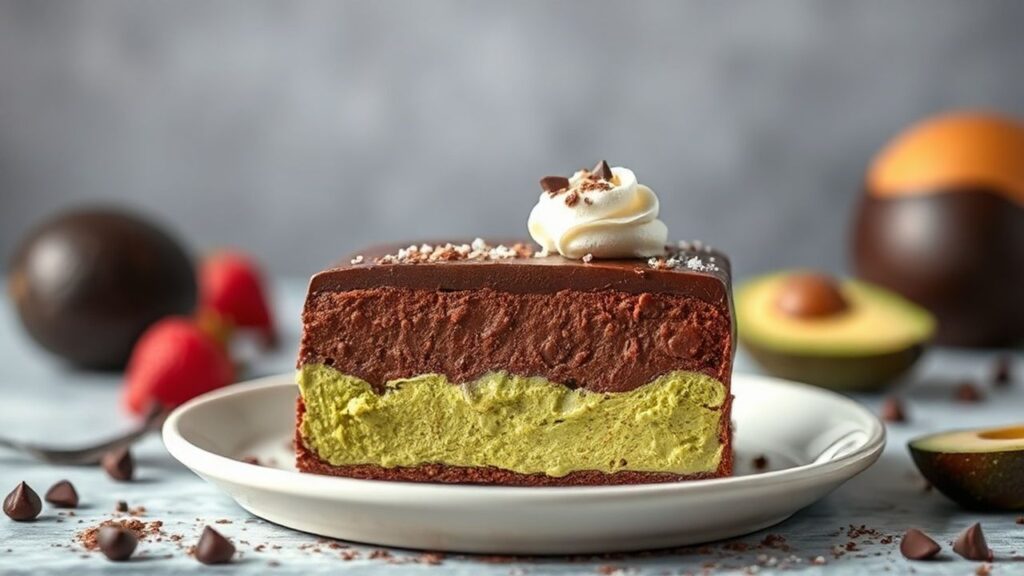
Q&A — common questions about sugar-free chocolate avocado mousse cake
Is this sugar-free chocolate mousse cake actually low in sugar?
Yes. When you use non-caloric sweeteners such as erythritol or monk fruit, added sugar content drops to near zero. Natural sugars from whole ingredients remain but are minimal compared with traditional desserts.
Can I swap sweeteners or chocolate percentages?
Yes. Swap erythritol for monk fruit or allulose, adjusting amounts to taste. Increase or decrease dark chocolate percentage for intensity; higher percentages reduce sugar but increase bitterness, so balance sweetness carefully.
How do I get a lighter mousse texture?
Whip a portion of chilled coconut cream separately until airy and fold it into the avocado-chocolate base. This aeration introduces volume while keeping the recipe dairy-free.
Is this dessert kid-friendly?
Many children enjoy the creamy chocolate flavor. If serving kids, adjust sweetness moderately and introduce small portions so they adapt to the richer dark chocolate profile.
How far ahead can I prepare the cake?
Prepare up to 24 hours in advance for peak flavor and texture. Store chilled; bring to room temperature briefly before serving to soften the mousse slightly.
Key takeaways: A well-executed sugar-free chocolate avocado mousse cake balances ripe-avocado creaminess with concentrated dark chocolate, uses reliable low-carb sweeteners, and benefits from careful chilling and quality ingredients.
See also: sugar-free chocolate