

Fiery Stir-Fried Eggplant in Spicy Black Bean Sauce: Why It Works
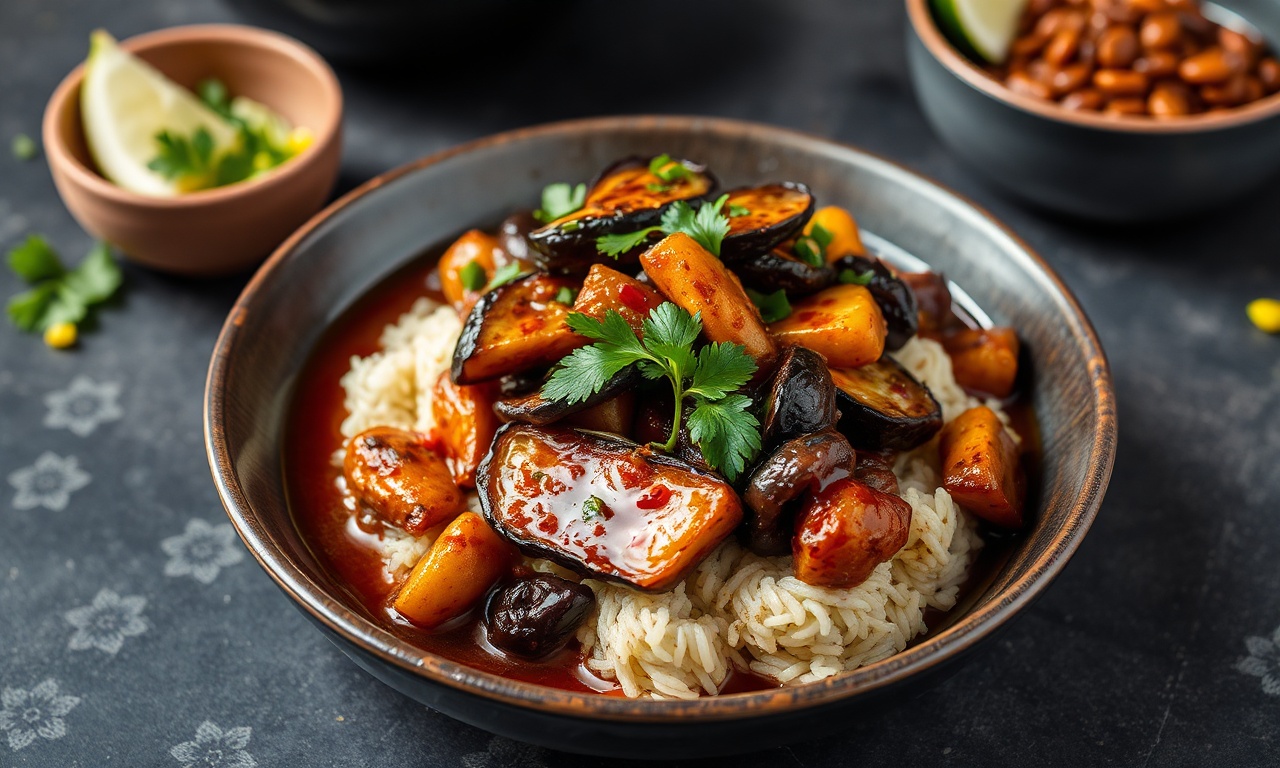
Fiery stir-fried eggplant in spicy black bean sauce brings together two textures that cook fast and taste deep. You get tender, glossy eggplant coated in a salty, smoky, chili-tinged sauce made from fermented beans.
- Fiery Stir-Fried Eggplant in Spicy Black Bean Sauce: Why It Works
- Prep and Cook Time, Yield, and Difficulty
- Ingredients for Fiery Stir-Fried Eggplant in Spicy Black Bean Sauce
- Step-by-Step Instructions
- 1) Prep the eggplant for a non-soggy stir-fry
- 2) Stir-fry until golden, then hold aside
- 3) Sauté aromatics and chili for fast fragrance
- 4) Cook fermented black beans and chili bean paste
- 5) Build the sauce base and simmer
- 6) Return eggplant and coat thoroughly
- 7) Thicken for a glossy, clinging finish
- 8) Finish with fresh green tops
- Tips for Success (Texture, Heat, and Flavor Balance)
- Serving Suggestions and Pairings
- FAQ: Fiery Stir-Fried Eggplant in Spicy Black Bean Sauce
- 1) What makes the sauce taste bold without tasting flat?
- 2) How do I avoid bitter or watery eggplant?
- 3) Can I make this dish vegetarian or vegan?
- 4) How can I thicken the sauce to the right texture?
- 5) Can I meal prep or reheat leftovers?
- Final Notes on Flavor Balance
At a Glance
- Core flavor: fermented black beans + doubanjiang for umami and heat
- Best eggplant: Chinese or Japanese varieties for fast softening
- Key technique: dry-salt briefly, then stir-fry hot to prevent sogginess
- Finish right: thicken at the end for a clinging sauce
This dish traces its flavor logic to Sichuan-style stir-fry profiles: chili heat, salty depth, and aromatics that release quickly in a hot wok. If you’ve ever tasted drier, saucy stir-fries in Chinese restaurants, you’ve met the same balance pattern.
Fermented black beans (douchi) act like a concentrated seasoning paste. They add savory notes that feel “round,” even when the chili level stays bold. For background on the ingredient itself, see fermented foods and how fermentation develops flavor.
Prep and Cook Time, Yield, and Difficulty
Plan for steady prep, then quick cooking. The eggplant takes most of the time, while the sauce forms in a few minutes once aromatics hit the wok.
For timing clarity, use the breakdown below and keep your ingredients staged. Stir-fry recipes reward speed, so set everything out before you heat the pan.
- Readiness Time: 20 minutes
- Cooking Time: 15 minutes
- Total Time: 35 minutes
Yield: Serves 4 as a main or 6 as a side dish.
Difficulty Level: Medium. You’ll succeed faster if you use high heat and don’t crowd the wok.
Ingredients for Fiery Stir-Fried Eggplant in Spicy Black Bean Sauce
These ingredients focus on one goal: maximum flavor per bite with a sauce that clings to eggplant. Each item plays a job—salt for depth, chili for heat, and starch for texture.
If you’re new to fermented seasonings, remember that black bean sauce tastes stronger than regular soy alone. That’s why the recipe uses both soy and fermented beans, not just one.
- 3 medium Chinese eggplants, cut into 1-inch batons
- 2 tablespoons fermented black beans, rinsed and roughly chopped
- 3 garlic cloves, minced
- 1 tablespoon fresh ginger, minced
- 2 small fresh red chilies, thinly sliced (adjust to taste)
- 2 tablespoons soy sauce
- 1 tablespoon Shaoxing cooking wine (optional)
- 1 tablespoon chili bean paste (doubanjiang)
- 1 teaspoon dark soy sauce (for color and depth)
- 1 teaspoon sugar
- 1/2 cup vegetable broth or water
- 2 tablespoons cornstarch slurry (1 tbsp cornstarch + 2 tbsp water)
- 3 tablespoons vegetable oil (peanut or canola)
- 2 green onions, sliced (whites and greens separated)
- Fresh cilantro and toasted sesame seeds for garnish
For more on how soy products change flavor when processed, check soybeans and the broader world of legume-based foods.
Step-by-Step Instructions
Follow the order closely. Eggplant texture and sauce gloss depend on timing—dry-salting first, then high-heat stir-fry, then thickening at the end.
Also, treat the wok like a timer. When aromatics and chili paste hit heat, flavors bloom quickly, and you don’t want to burn them.
1) Prep the eggplant for a non-soggy stir-fry
Choose firm Chinese eggplants so the pieces soften fast without turning mushy. Cut them into even 1-inch batons so every piece cooks at the same pace.
Lightly salt the eggplant, rest 10–15 minutes, then pat dry. This step reduces surface moisture and helps you avoid a watery wok.
Eggplant naturally holds water, so dry prep matters. For general reference, see eggplant.
2) Stir-fry until golden, then hold aside
Heat 2 tablespoons oil over medium-high heat until shimmering. Spread eggplant in a single layer and stir often so it browns instead of steaming.
Cook 5–6 minutes total, in batches if needed. Transfer to paper towels to absorb extra oil.
3) Sauté aromatics and chili for fast fragrance
In the same wok, add the remaining 1 tablespoon oil. Toss in garlic, ginger, green onion whites, and sliced red chilies, then stir-fry 1–2 minutes.
Keep the aromatics moving so they release scent without scorching. This stage builds the sauce aroma that makes the whole dish feel “hot and fragrant.”
4) Cook fermented black beans and chili bean paste
Add chopped fermented black beans and chili bean paste (doubanjiang). Stir for about 1 minute to wake up the umami and bring out smoky notes.
If you want a deeper, more cohesive flavor, let the paste lightly sizzle before you add liquids. The sauce improves when beans cook briefly in oil.
Fermented bean intensity is a known effect in fermentation: microbes and time create flavor compounds you can taste at the stove.
5) Build the sauce base and simmer
Pour in soy sauce, dark soy sauce, sugar, and broth. Stir well, then bring to a gentle simmer so the seasonings blend.
Simmering helps the sugar dissolve and rounds the chili edge. You don’t need a long boil—just enough time to unify the mixture.
6) Return eggplant and coat thoroughly
Fold eggplant back into the wok and toss gently. Cook 2–3 minutes so every baton absorbs sauce and heats through.
If you stir too aggressively, eggplant can break. Use a folding motion to keep the pieces intact while coating them evenly.
7) Thicken for a glossy, clinging finish
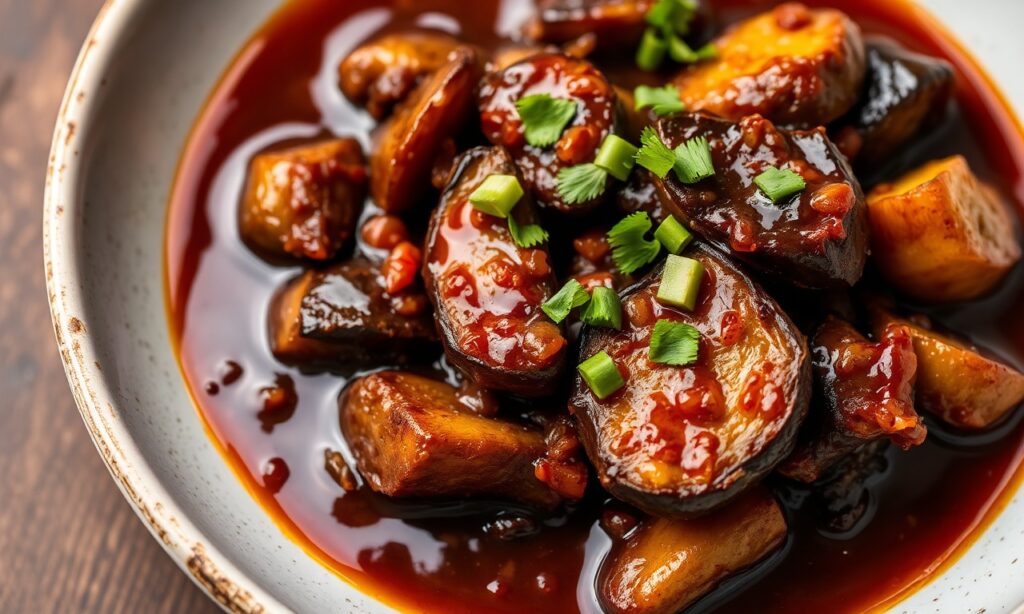
Stir the cornstarch slurry in slowly while mixing constantly. Cook about 1 minute until the sauce turns glossy and clings to the eggplant.
Thicken at the end for best texture. If you over-thicken too early, the sauce can feel heavy rather than silky.
8) Finish with fresh green tops
Turn off the heat and stir in green onion greens. This keeps their bite bright and prevents them from fading.
For a final garnish, top with cilantro and toasted sesame seeds. The seeds add nutty crunch that balances the soft eggplant.
Tips for Success (Texture, Heat, and Flavor Balance)
Small adjustments create big differences in stir-fry results. Use these controls to tune spice, softness, and sauce thickness.
Work with a clear goal: keep eggplant tender, keep sauce glossy, and keep heat bold without tasting harsh.
Expert Insight
You’ll also get better results by cutting eggplant evenly and by patting it very dry after the salt rest. Those two steps reduce sogginess and improve surface contact with hot oil.
Pro-Caution
If your wok looks crowded, cook in batches. It takes a little longer but improves texture and prevents an oily finish.
Spice control and substitutions
Adjust heat by changing doubanjiang and fresh chilies. Removing seeds reduces heat while keeping chili aroma.
For gluten-free needs, confirm soy sauce ingredients and choose a gluten-free soy alternative. If your fermented beans or chili paste contains wheat, swap to a certified gluten-free brand.
Serving Suggestions and Pairings
Serve this fiery eggplant hot so the sauce stays glossy. Pair it with plain grains so the chili-salty notes shine instead of competing.
Because the sauce clings, it works like a side and like a main. Spoon it over rice to capture every drop.
Best base for absorbing sauce
Serve over steamed jasmine rice or a simple bowl of brown rice. The mild sweetness in rice offsets fermented saltiness and softens chili bite.
If you want extra crunch, add garlic fried rice or a lightly seasoned fried rice variation. Keep it simple so eggplant stays the star.
Cool, crisp sides
For contrast, add stir-fried greens like bok choy or gai lan. These vegetables offer a clean, earthy bitterness that balances rich black bean sauce.
A chilled cucumber salad with a light vinaigrette also works. The cool acidity brightens the palate between spoonfuls.
FAQ: Fiery Stir-Fried Eggplant in Spicy Black Bean Sauce
These answers help you troubleshoot flavor and texture. Use them as quick guidance before you cook.
If you prefer a milder or spicier dish, adjust at the sauce stage where chili paste and chilies combine with oil.
1) What makes the sauce taste bold without tasting flat?
The fermented black beans deliver deep umami, while doubanjiang adds chili warmth and fermented complexity. Soy sauce and dark soy sauce round out salt and color so the flavor feels complete.
2) How do I avoid bitter or watery eggplant?
Salt the eggplant briefly, then pat it dry. Even 10–15 minutes helps reduce excess moisture and improves surface browning.
3) Can I make this dish vegetarian or vegan?
Yes if your soy sauce and fermented black beans contain no non-vegetarian additives. Also check broth choice and use vegetable broth if needed.
4) How can I thicken the sauce to the right texture?
Use cornstarch slurry and add it at the end while stirring constantly. Cook for only about a minute after thickening so the sauce stays glossy, not pasty.
5) Can I meal prep or reheat leftovers?
Refrigerate leftovers in a sealed container and reheat gently. The sauce often thickens as it cools, so add a small splash of water during reheating and stir to loosen.
Final Notes on Flavor Balance
Fiery stir-fried eggplant in spicy black bean sauce works because the dish layers fast-cooking aromatics with concentrated fermented depth. You build flavor in short steps, then finish with starch for a clinging coating.
When you control heat, dry the eggplant well, and thicken at the right moment, you get a dish that tastes bold and stays satisfying from first bite to last.
For more background on stir-frying technique and heat control, read stir fry.
For details on the broader role of chili in cooking heat, see chili pepper.
For general fermentation context that explains the depth you taste from douchi, revisit fermented food.
See also: spicy black bean