
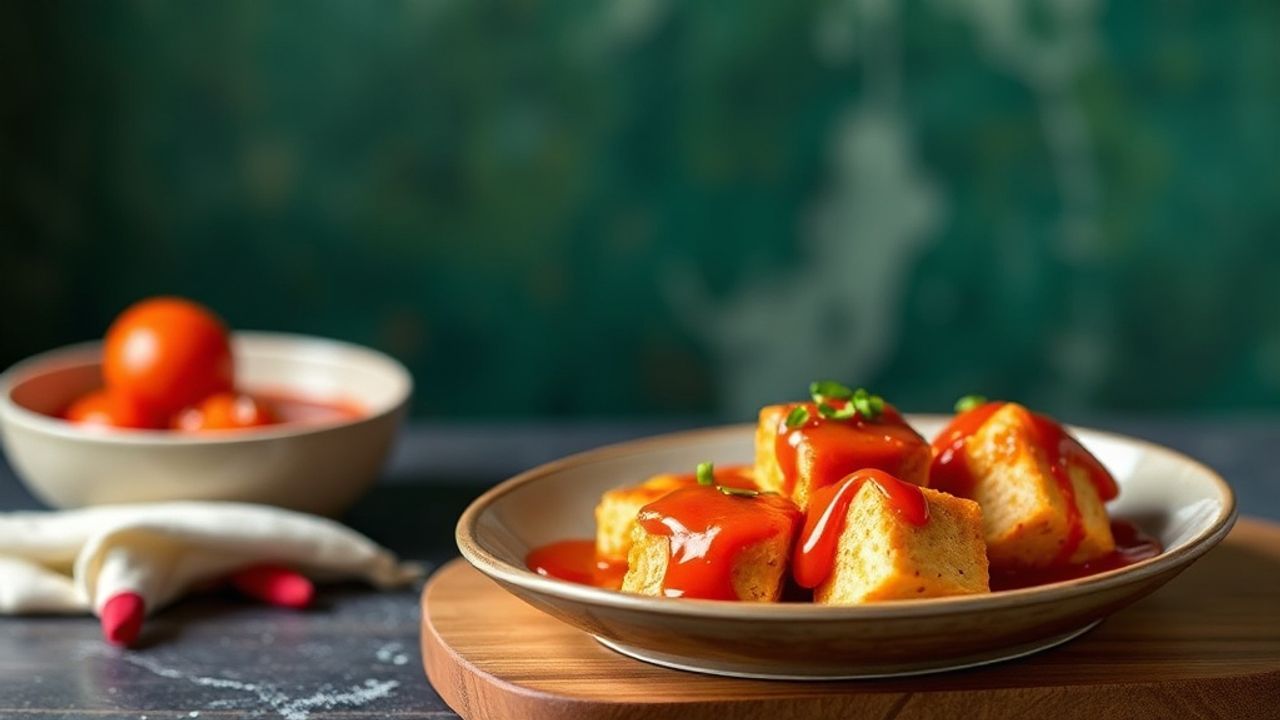
Sticky Orange Gochujang Tofu delivers bold color and flavor with crisped tofu coated in a glossy, citrus-spiked glaze.
This Sticky Orange Gochujang tofu recipe pairs fermented chili paste with fresh orange for a sticky, balanced coating that clings to crunchy tofu cubes. The method focuses on texture and sauce-build — a precise approach experts use to get repeatable results.
- Ready in 35 minutes: fast weeknight vegan main with make-ahead options.
- Texture-first technique: press, crisp, then glaze for a sturdy bite.
- Flavor balance: sweet, spicy, umami, and bright citrus in each mouthful.
- Customizable heat: adjust gochujang or maple syrup to taste.
Gochujang Tofu — Prep and Cook Time
Gochujang tofu performs best when the tofu is pressed and portioned uniformly before cooking. Pressing removes water so the cornstarch can form a thin, even crust during pan-frying or oven-baking.
Plan roughly 15 minutes for pressing and prep, plus 20 minutes for crisping and saucing, for a total time of about 35 minutes. These timings produce a reliably crisp exterior while keeping the interior tender.
- Planning: 15 minutes
- Cooking: 20 minutes
- Total Time: 35 minutes
Yield for Gochujang Tofu
This recipe yields four hearty servings suitable for family dinners or meal prep. Each portion offers a balanced mix of protein and carbohydrates when plated with rice or grains.
Scale ingredients in 25–50% increments for larger groups, and re-crisp tofu just before saucing for best texture when serving a crowd.
Difficulty Level — Gochujang Tofu
Difficulty is easy to moderate: the techniques are straightforward but benefit from attention to pressing and even browning. Home cooks with basic pan skills will succeed quickly.
Equipment: a heavy skillet for browning or an oven for sheet-pan roasting, plus a clean towel or press for tofu. Precise ingredient ratios give consistent glaze viscosity and flavor.
Ingredients for Gochujang Tofu
Use extra-firm tofu to ensure structure during crisping; if you prefer a drier bite, freeze-thaw the block first and squeeze out additional moisture. Cornstarch helps form a thin, crisp crust that holds sauce.
Key flavor components include gochujang for fermented heat, orange juice for citrus lift, soy or tamari for umami, and a sweetener to balance. For background on these ingredients see gochujang and tofu.
- 400g extra-firm tofu, pressed and cut into 1-inch cubes
- 2 tablespoons cornstarch (for crisping)
- 2 tablespoons vegetable oil (for frying)
- 3 tablespoons gochujang (Korean chili paste)
- 1/3 cup fresh orange juice (preferably navel orange; see orange for varieties)
- 2 tablespoons soy sauce (or tamari for gluten-free)
- 1 tablespoon maple syrup (or agave nectar)
- 1 teaspoon rice vinegar (for acidity)
- 2 cloves garlic, minced
- 1 teaspoon grated fresh ginger
- 1 teaspoon toasted sesame oil (toasted oil adds fragrance; see sesame oil)
- 2 green onions, thinly sliced (for garnish)
- 1 tablespoon toasted sesame seeds (optional garnish)
Instructions: Make Sticky Orange Gochujang Tofu
Follow a three-phase workflow: press and portion, crisp the tofu, then build and reduce the sauce. This order locks texture first and then coats the pieces evenly.
Keep heat under control to avoid burning the sugar in the glaze. A gentle simmer allows the sauce to thicken without turning bitter.
- Press the tofu: Wrap the block in a clean kitchen towel and set a heavy pan on top for 15 minutes to expel moisture.
- Once pressed, cut the tofu into uniform 1-inch cubes. Toss lightly with cornstarch so each face has a thin dusting.
- Heat vegetable oil in a large non-stick skillet over medium-high heat. Arrange tofu cubes in a single layer without crowding and fry until golden on one side, about 3–4 minutes.
- Flip cubes and continue rotating to brown evenly, about 6–8 more minutes total. Transfer the tofu to a paper towel-lined plate to drain excess oil.
- Whisk together gochujang, fresh orange juice, soy sauce, maple syrup, rice vinegar, garlic, ginger, and toasted sesame oil to make the glaze.
- Pour the sauce into the skillet over medium heat and bring to a gentle simmer. Stir frequently and allow the glaze to thicken for 3–4 minutes.
- Return the crispy tofu to the pan and toss gently to coat each cube in the sticky orange gochujang sauce.
- Remove from heat, transfer to a serving plate, and garnish with sliced green onions and toasted sesame seeds.
Tips for Success with Gochujang Tofu
Pressing thoroughly is non-negotiable: excess moisture causes splatter and prevents crisping. Use a weighted pan or a tofu press for even pressure and consistent results.
Adjust the balance between sweet and hot by small increments. Start with the recipe amounts and tweak gochujang or maple syrup in 1/2 teaspoon steps until you hit the desired profile.
- Press the tofu thoroughly: prevents soggy texture and improves browning.
- Cornstarch vs. flour: cornstarch produces a lighter, crisper crust versus all-purpose flour.
- Adjust heat: reduce gochujang for milder spice; add a pinch of cayenne for extra kick.
- Oven-frying option: bake at 200°C (400°F) on a parchment-lined tray with cornstarch and oil for 25 minutes, flipping halfway.
Resting between steps matters. A short rest after tossing the tofu with cornstarch improves the Maillard reaction during frying, producing a more uniform golden crust.
Use a medium stovetop setting and continuous stirring during reduction. This preserves the bright citrus notes and prevents scorching on the pan base.
Serving Suggestions for Gochujang Tofu
Serve Sticky Orange Gochujang Tofu over steamed jasmine rice or fluffy quinoa to absorb sauce and round the meal. The starch helps balance the glaze and makes the dish more filling.
Add quick sautéed greens or roasted vegetables for color and contrast. For a fresh counterpoint, a simple cucumber salad or light pickles cut through richness and refresh the palate.
For inspiration, study elements of Korean cuisine, which frequently pairs fermented pastes with bright acids and sweeteners for layered flavor.
Nutrition: Gochujang Tofu Per Serving
Nutrition will vary by brand of tofu and gochujang. The table below reflects a typical preparation using extra-firm tofu and moderate oil.
Adjust portions or ingredients to meet dietary needs; use tamari for gluten-free and swap oil methods to reduce saturated fat if desired.
| Nutrient | Per Serving |
|---|---|
| Calories | 280 kcal |
| Protein | 16 g |
| Carbohydrates | 18 g |
| Fat | 15 g |
Q&A
Below are concise answers to common practical questions about preparation and customization. These clarify technique and substitutions for home cooks.
Reference the instructions above when adjusting time or ingredients; small changes to sugar, acid, or heat will alter the final balance.
Q&A: Sticky Orange Gochujang Tofu – A Vibrant Vegan Delight
Q1: What is Sticky Orange Gochujang Tofu?
A1: Sticky Orange Gochujang Tofu is a vegan dish where crispy tofu cubes are glazed in a tangy-sweet and mildly spicy orange gochujang sauce. The orange brightens the fermented depth of the paste and the cornstarch keeps the tofu crisp.
Q2: What makes gochujang effective in this recipe?
A2: Gochujang provides fermented umami, heat, and a subtle sweetness that caramelizes with the orange and maple, forming a clingy glaze. Use measured amounts and taste as you go to control intensity.
Q3: Can this be made ahead?
A3: Yes. Prepare tofu and keep it refrigerated separately; re-crisp in a dry skillet before tossing in the warm glaze to retain texture and flavor.
Q4: How to reduce sodium or spice?
A4: Use low-sodium soy or dilute the glaze with a touch more orange juice. Decrease gochujang by 1 tablespoon to lower heat and intensity.
Key Takeaways
The hallmark of successful Sticky Orange Gochujang tofu is separating texture and saucing: crisp first, sauce second. Consistent pressing and even browning yield the best results.
Balance is crucial: adjust the sweet, sour, and spicy elements by small amounts and finish with fresh garnishes to brighten the plate. This keeps the dish dynamic and approachable for varied palates.
FAQ
How long should I press the tofu?
Press for at least 15 minutes under a weighted pan or use a press for 20–30 minutes for drier texture. Drier tofu crisps faster and forms a better surface for the glaze to adhere.
Can I bake instead of pan-fry?
Yes. Toss cubes with oil and cornstarch and bake at 200°C (400°F) for about 25 minutes, flipping halfway. Baking reduces oil use and still builds a firm exterior suitable for glazing.
Is gochujang gluten-free?
Some commercial gochujang contains barley or wheat. Check labels if you need gluten-free alternatives; using gluten-free tamari and a certified gochujang is safest.
What can I substitute for maple syrup?
Use agave nectar, brown rice syrup, or a mild honey if not strictly vegan. Keep the ratio the same and taste the glaze before finishing.
How should I store leftovers?
Store cooled leftovers in an airtight container in the refrigerator for up to 3 days. Re-crisp the tofu in a skillet for 2–3 minutes and reheat the glaze separately to refresh the texture and shine.
See also: Gochujang tofu