
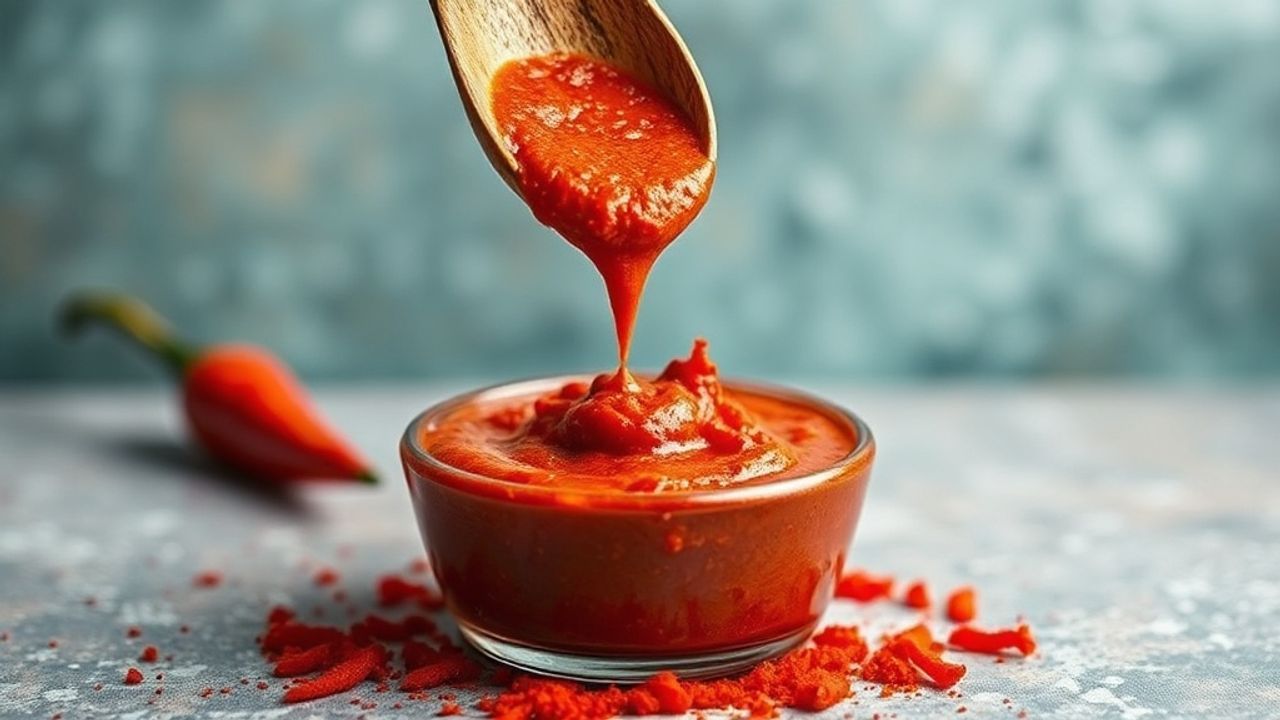
Harissa paste delivers spicy, smoky flavor with North African roots. This fiery chili condiment turns simple meals into bold, aromatic plates.
At a Glance
- Flavor base: dried chilies, toasted spices, garlic, olive oil.
- Heat control: keep seeds for extra punch or remove them for mild-to-medium.
- Best results: rest 24 hours so flavors blend and mellow.
- Use it fast: cook, stir, spread, or marinade.
In the kitchens of Tunisia and Morocco, people treat harissa as more than heat. They use it to add depth, warmth, and a reliable chili aroma to stews, couscous, and grilled foods.
To help you cook with confidence, this guide covers origins, ingredient choices, timings, a clear method, storage tips, and practical serving ideas. You’ll finish with a jar of spicy harissa paste that tastes balanced—not harsh.
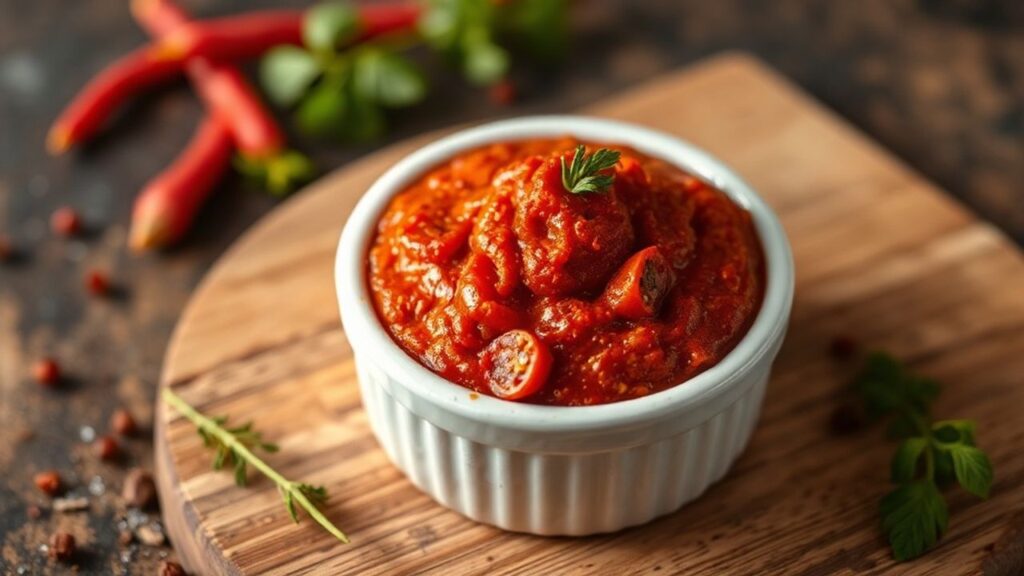
Origins and Authentic Ingredients: The Heart of Harissa Paste
Harissa paste comes from North Africa, especially Tunisia, where chili blends often anchor everyday cooking. The exact recipe varies by family, region, and available peppers, but the core idea stays the same.
Most harissa recipes start with dried or rehydrated chili peppers. Then cooks add toasted spices for aroma, garlic for savory depth, and olive oil for a smooth, clingy texture. For context on chili types and cultivation, see chili pepper.
Many cooks also use cumin and coriander, plus a pepper-forward smoked note like paprika. These spice choices give harissa its “warm-first” flavor profile, not just raw heat.
If you want a deeper grounding in traditional spice use, read about cumin. You’ll recognize the earthy, toasty character that shows up after careful toasting and blending.
Fiery flavors depend on ingredient quality
Freshness matters for both chilies and spices. Dull spices taste flat, and old chilies can turn bitter during cooking or grinding.
For olive oil, choose extra virgin when possible. Olive oil supports flavor carry and gives a glossy mouthfeel that works well on flatbreads and roasted vegetables. Learn the basics of olive oil to understand why it behaves differently by quality and extraction method.
Optional notes that make harissa taste “finished”
Some makers add tomato paste for gentle sweetness and body. A small amount of lemon juice also sharpens the blend and keeps it from tasting heavy.
For floral or fruity complexity, cooks sometimes include rose petal (or another aromatic option). Whether you add it or not, aim for a paste that tastes spicy, smoky, and bright all at once.
Prep and Cook Time
This method keeps things efficient while still building flavor. You roast and toast just long enough to wake up the spices and mellow the garlic.
- Planning: 15 minutes
- Cooking: 10 minutes
- Total time: 25 minutes
Even though you can eat harissa right away, resting improves it. The oils bind with chili compounds, and the spice aroma evens out after a day.
If you want a practical framework for why heat feels different over time, use basic knowledge of capsaicin. It helps explain why chili intensity and perception can shift as the mix hydrates and rests.
Yield and difficulty
This recipe makes about 1 cup of harissa paste, enough for 8–10 servings as a condiment. You’ll store it for later and use smaller amounts per dish.
The difficulty level stays Medium. You need careful toasting and smooth blending, but the steps stay straightforward.
Ingredients
Use dried chilies for a bold, smoky base. Rehydrate them first so the paste turns smooth rather than gritty.
Choose spices you can toast and grind. Whole seeds release more aroma than pre-ground blends, and the texture improves after blending.
- 8 dried red chilies (Guajillo or Aleppo work well), soaked in warm water for 20 minutes
- 4 garlic cloves, peeled and lightly crushed
- 1 teaspoon cumin seeds
- 1 teaspoon coriander seeds
- 1 teaspoon smoked paprika
- 1/2 teaspoon caraway seeds (optional, for a classic note)
- 2 tablespoons extra virgin olive oil, plus more for storage
- 1 tablespoon tomato paste (optional, for depth)
- 1 tablespoon lemon juice
- 1 teaspoon sea salt
- 1/4 teaspoon ground cayenne pepper (adjust for heat)
Instructions: How to Make Spicy Harissa Paste
Follow the steps in order so each flavor step builds on the previous one. Toasting comes first, then grinding, then blending.
- Toast the spices: In a dry skillet over medium heat, toast cumin, coriander, and caraway seeds for about 2 minutes. Stir constantly so they brown evenly.
- Grind the toasted spices: Grind to a fine powder using a spice grinder or mortar and pestle.
- Prepare the chilies: Drain soaked chilies. Remove stems and seeds if you want milder heat. Roughly chop for easier blending.
- Roast the garlic: Warm garlic in 1 tablespoon olive oil on medium-low heat for about 5 minutes, until soft and lightly golden.
- Blend the paste: Combine chilies, roasted garlic with oil, toasted spice powder, smoked paprika, tomato paste, lemon juice, salt, and cayenne. Blend until smooth. Add a small splash of water or extra olive oil only if needed.
- Taste and adjust: Add more salt for balance, more lemon juice for brightness, or a pinch more cayenne for heat.
- Store smart: Transfer to a clean jar. Cover the top with a thin layer of olive oil. Refrigerate.
You’ll notice the texture changes as it cools. If it feels thick, stir in a teaspoon of olive oil before serving.
For a general reference on grinding and texture changes in food systems, review food grinding.
For best taste, rest the paste. Put it in the fridge for at least overnight. The flavors round out and the smoke note becomes more even.
Tips for Success: Make It Taste Balanced Every Time
Harissa wins when heat and spice feel layered. Use these tips to avoid common issues like harsh bitterness or flat aroma.
First, control the chili seeds. Seeds push heat up fast, so remove them for milder pastes or keep them for a stronger kick.
- Customize heat: deseed for mild-to-medium; keep seeds for extra punch
- Lock in aroma: toast seeds until fragrant, not dark
- Balance with acid: lemon juice helps the paste taste fresh
- Rest overnight: flavor improves after 24 hours
If you’re curious how heat sensation works in the mouth, Scoville scale explains why different peppers vary widely. Use it as guidance when swapping chilies.
For longer-term storage, freeze in small portions. Ice cube trays work well because you can thaw only what you need for a quick meal.
Smooth texture options
If you prefer a silky paste for spreads or sauces, run the blended harissa through a sieve. This step reduces chili fiber and improves spreadability.
Keep in mind that sieving may slightly reduce volume. That’s normal, and the trade-off brings better mouthfeel.
Serving Suggestions: Where Spicy Harissa Paste Works Best
Use harissa as a flavor multiplier. Start with a small spoon and taste as you go, because chili strength varies by pepper and rest time.
Harissa shines with roasted and grilled foods. Dollop it on roasted chicken, swirl it into couscous, or mix it into yogurt for a quick cooling dip.
It also works in cooked sauces and marinades. Stir a spoon into vegetable stew, or use it to coat fish before grilling.
For background on North African staple foods that pair with chili pastes, check couscous. It often appears alongside harissa in regional home cooking.
Fast pairing ideas
Pair harissa with warm pita for a simple dip. Combine it with tahini and lemon to soften the chili while keeping the smoky edge.
Drizzle it on hummus or mix it into salad dressings. The oil base helps the paste distribute evenly across greens.
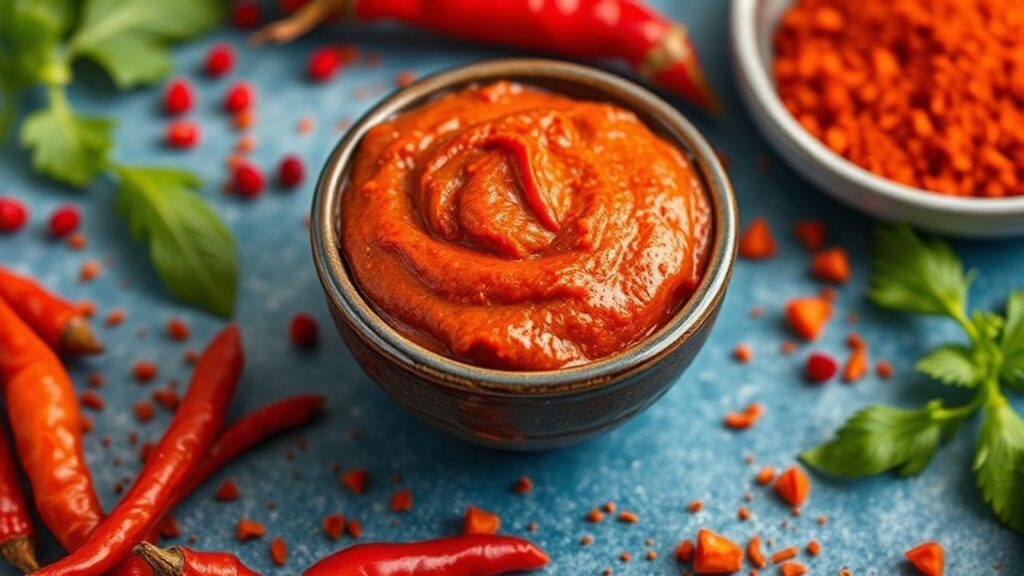
| Nutrient | Per 1 tbsp | % Daily Value* |
|---|---|---|
| Calories | 25 kcal | 1% |
| Protein | 0.5 g | 1% |
| Carbohydrates | 3 g | 1% |
| Fat | 1.8 g | 3% |
*Percent Daily Values are based on a 2,000 calorie diet.
These values depend on your chili brand, oil amount, and whether you add tomato paste. If you track macros, weigh your portion and compute based on your exact ingredients.
Q&A: Spicy Harissa Paste Explained
Quick answers help you make better choices. Use this section when you’re deciding on heat level, pepper substitutes, or storage.
If you still want to learn about the spice chemistry behind chili heat, start with chili chemistry for a high-level overview.
Q1: What is harissa paste, and where does it originate?
Harissa paste is a chili-based condiment known for smoky heat and aromatic spices. It originates in North Africa, with Tunisia as a key reference point for common home styles.
Q2: What gives spicy harissa paste its signature flavor?
Its flavor comes from more than heat. Toasted cumin, coriander, and pepper notes create a warm base, while garlic and olive oil add savory roundness.
Q3: Can I make harissa paste without a food processor?
Yes. You can use a mortar and pestle to grind spices and chilies, though the texture may stay chunkier. For a smoother paste, blend longer or sieve after mixing.
Q4: How can I adjust the heat level?
To reduce heat, remove chili seeds and use milder peppers. To increase it, keep seeds and add cayenne or a hotter dried chili.
Q5: How should I store harissa paste for best freshness?
Keep harissa in an airtight jar in the refrigerator. A thin layer of olive oil helps limit air contact, and the paste stays useful for weeks when handled with clean spoons.
For safe chili handling and general food safety basics, follow food safety principles and refrigerate promptly after cooking.[/END]
See also: spicy harissa