
Spanish ajo blanco (cold almond garlic soup) delivers a rare combo: silky creaminess, a bright garlic bite, and a cooling finish that feels natural in summer. You can make it with a blender in minutes—then the fridge does the heavy work.
- What Is Ajo Blanco (Spanish Almond Garlic Soup)?
- Why This Cold Soup Tastes So Refreshing
- Key Ingredients and How They Affect Flavor
- Almonds: the creaminess engine
- Garlic: the bold signature
- Olive oil and lemon: balance and lift
- Seasoning and optional smoked paprika
- Authentic-Style Recipe: Chilled Almond Garlic Soup (Ajo Blanco)
- Expert-Level Tips for Perfect Texture and Flavor
- Serving Ideas That Make Ajo Blanco Feel Special
- Health and Nutrition: What Makes This Soup a Smart Choice
- Storage, Make-Ahead, and Troubleshooting
- At a Glance: Key Takeaways
- FAQ
- Texture tip: Soaked almonds create the signature velvety body.
- Flavor control: Blend garlic to your heat tolerance; season at the end.
- Serve cold: Chill for at least 2 hours for a smoother, more “spoon-coating” mouthfeel.
- Garnish matters: Olive oil, herbs, and crunchy toppings turn it from simple to impressive.
What Is Ajo Blanco (Spanish Almond Garlic Soup)?
Ajo blanco is a traditional chilled soup from southern Spain, known for its creamy almond base and punchy garlic flavor. People often describe it as “light” yet satisfying, because the almonds add richness without the heavy finish of cooked dairy.
Its name literally points to garlic (“ajo” means garlic), and the dish pairs that savory bite with fruit-like nuttiness from almonds. For a deeper cultural read on Spanish regional food traditions, see Spanish cuisine.
Because it’s served cold, ajo blanco also tastes different than hot soups. Cold temperatures mute harsh edges and help flavors feel cleaner, which is why garlic can taste bold without feeling “burny.”
Why This Cold Soup Tastes So Refreshing
The refreshing effect comes from two things working together: chilling and emulsification. When you blend almonds, garlic, lemon, and oil, you form a stable mixture that coats the tongue and carries flavor evenly, even at low temperatures.
Also, lemon adds sharp acidity that stays vivid when chilled. That bright note prevents the soup from tasting flat, especially if your garlic is mild or your garnish is subtle.
Olive oil adds aroma and a smooth finish. If you want to understand why olive oil feels “silky,” review olive oil. Many of its sensory qualities come from flavor compounds and the way fats cling to aromas.
Key Ingredients and How They Affect Flavor
Ajo blanco stays simple on purpose. Each ingredient plays a clear sensory job—so if you swap or change amounts, you’ll feel it fast.
Almonds: the creaminess engine
Blanched, soaked almonds blend into a smooth, creamy matrix. Soaking softens the almond skin removal process and hydrates the nut, which helps your blender break down fibers more completely.
If you skip soaking, the soup can turn gritty or thin. For background on nut types and nutritional basics, you can reference almonds.
Garlic: the bold signature
Raw garlic provides the aromatic snap that makes ajo blanco memorable. The trick is to control intensity—3 cloves can be strong for some palates, especially in a cold soup where flavors feel crisp.
For general chemistry and why garlic tastes sharp, consult garlic. Start with less and adjust after tasting, rather than trying to “fix” it later.
Olive oil and lemon: balance and lift
Extra virgin olive oil thickens mouthfeel and rounds garlic edges. Lemon juice gives lift, which keeps the soup from feeling heavy or overly nutty.
Acid also sharpens aroma, so small changes in lemon quantity can feel big. Taste before chilling only after blending; lemon added too early can sometimes make the blend taste less integrated.
Seasoning and optional smoked paprika
Salt helps pull sweetness and nuttiness forward, while black pepper adds a mild warming note. Smoked paprika can add subtle color and a gentle smoky background, but it should not overpower the almond-garlic core.
If you use paprika, begin with a small amount. Cold soups can taste “muted,” so strong spices can dominate quickly after chilling.
Authentic-Style Recipe: Chilled Almond Garlic Soup (Ajo Blanco)
This recipe aims for a classic chilled texture with bright, balanced flavor. You can make it dairy-free and vegan-friendly by using only plant ingredients.
Prep and chilling plan
Planning time: 15 minutes
Chill time: at least 2 hours
Total: about 2 hours 15 minutes (active time stays low)
Servings and difficulty
Serves: 4
Difficulty: Easy (blender-based)
You don’t need a stove or complicated technique, which makes it a reliable choice for weeknight hosting.
Ingredients
Core base
- 1 cup blanched almonds, soaked overnight and drained
- 3 cloves garlic, peeled
- 3 cups cold filtered water
- 1 tbsp extra virgin olive oil, plus more for garnish
- Juice of 1 large lemon (about 3 tbsp)
- 1 tsp sea salt
Optional
- 1/2 tsp smoked paprika (for color and light warmth)
- Freshly cracked black pepper to taste
- Fresh herbs for garnish: parsley, chives, or mint
- Crunch topping ideas: toasted almonds or thin radish slices
Step-by-step instructions
1) Soak almonds
Cover almonds with cold water and soak 8 to 12 hours. Drain well so you don’t add extra water flavor.
2) Blend the base
Add almonds, garlic, salt, paprika (if using), and cold water to a high-speed blender. Blend on high 2 to 3 minutes until completely smooth.
3) Add oil and lemon
Pour in lemon juice and olive oil. Blend 30 to 45 seconds to emulsify.
4) Taste and adjust
Check salt, pepper, and garlic intensity. Blend briefly after each adjustment so the flavors distribute.
5) Chill
Transfer to a covered container and refrigerate at least 2 hours. The soup thickens slightly and tastes more “one-note” in the best way.
6) Serve
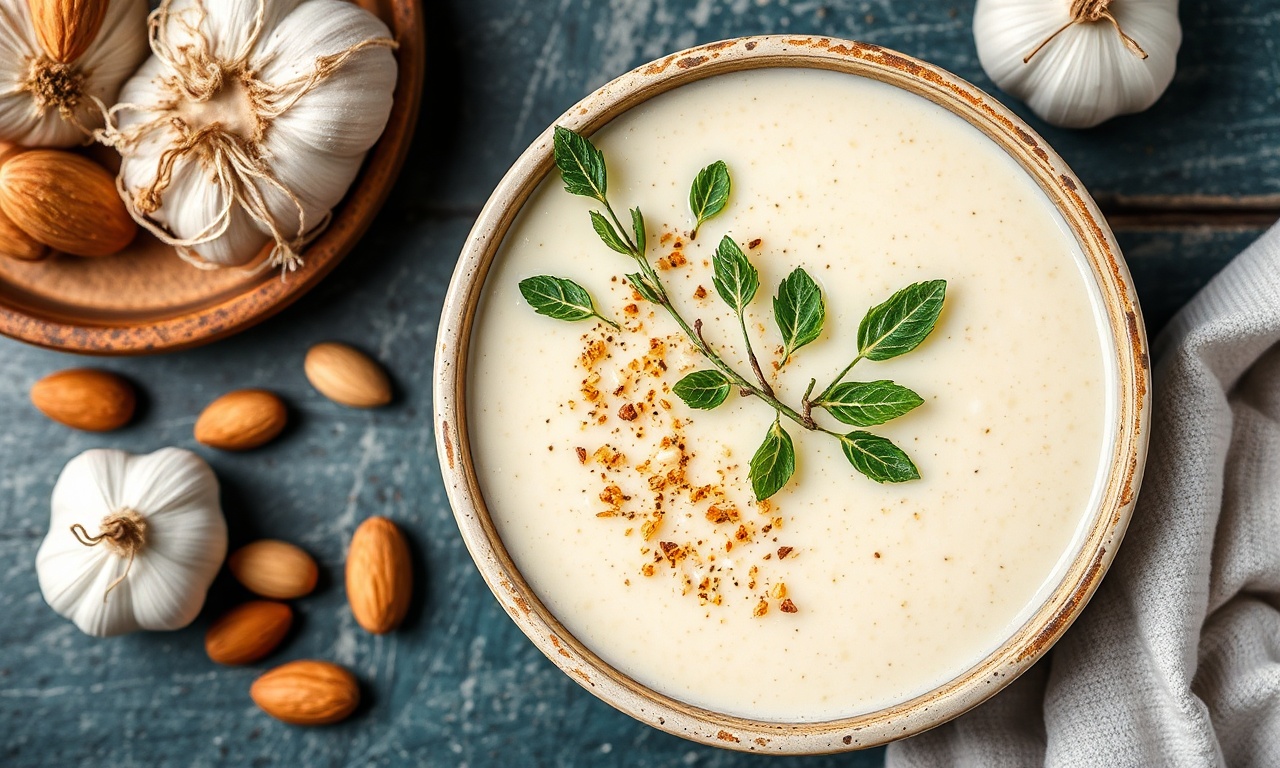
Ladle into bowls or glasses. Finish with olive oil, herbs, and a crunchy topping for contrast.
Expert-Level Tips for Perfect Texture and Flavor
Small process details decide whether ajo blanco tastes “restaurant smooth” or slightly uneven. Focus on hydration, blending time, and final seasoning.
Also consider the garlic. If you want milder flavor, use 1 to 2 cloves, or pre-chop and let the blender work longer. If you love boldness, keep 3 cloves—but season carefully after you taste.
Finally, add lemon right after blending the almond-garlic base. That order helps the lemon taste bright instead of muted.
Serving Ideas That Make Ajo Blanco Feel Special
Ajo blanco works as a starter, a light lunch, or even a unique party dish served in small glasses. Presentation changes the experience—especially because the soup looks pale and glossy.
Serve it icy cold. If your kitchen runs warm, keep the bowl in the fridge while you finish garnishes.
Garnish combinations (choose 2–3)
Use garnishes that add aroma, crunch, and color. A drizzle of extra virgin olive oil adds perfume; herbs add freshness.
- Mint + olive oil + toasted almond slivers
- Chives + black pepper + thin radish coins
- Parsley + smoked paprika sprinkle + cucumber matchsticks
- Microgreens + herb oil + a few roasted chickpeas
Crunch matters because the base is creamy. Even a light texture contrast makes the soup feel more “complete.”
Pairing with seasonal foods
Ajo blanco pairs naturally with fresh, high-acid salads and grilled summer vegetables. The almond base sits well with crisp greens, cucumber, tomatoes, and mild greens.
For a broader view of regional Mediterranean-style ingredient pairings, browse Mediterranean diet. The common thread is plant-forward meals with olive oil, herbs, and seasonal produce.
What to serve alongside
If you want something more filling, add bread or legumes on the side. Keep the soup as the star by choosing mild, not overly spiced flavors.
- Crusty bread or gluten-free crackers
- Roasted chickpeas for crunch
- Grilled vegetables with a simple lemon-olive oil drizzle
- Light seafood or poultry on warm days (if you eat them)
Health and Nutrition: What Makes This Soup a Smart Choice
Ajo blanco can fit well into a healthy eating pattern because it relies on almonds, olive oil, garlic, and lemon. Those ingredients provide unsaturated fats, plant compounds, and strong flavor without heavy cooking.
Almonds are energy-dense, but they also bring healthy fats and vitamin E. If you want a quick reference point, see almond nutrition and general dietary discussions.
Garlic and antioxidants
Garlic contains sulfur compounds that contribute to its characteristic taste and potential health benefits. People often focus on its antioxidant activity, though the exact outcomes vary by individual and diet overall.
For general factual background, review garlic. Treat health claims as “supporting factors,” not a cure.
Portion awareness
Because almonds and olive oil contain fats, portion size matters if you track calories. This is still a lighter option than many creamy soups, but it’s not “zero calorie.”
A realistic serving helps you enjoy flavor without overdoing it. For many people, 4 small bowls or 2 larger starters provides satisfaction.
Storage, Make-Ahead, and Troubleshooting
You can make ajo blanco ahead of time, and that often helps. Chilling lets the blend settle into a smoother, more cohesive texture.
Store it in an airtight container in the refrigerator for up to 2 days. Stir gently before serving because almond-based blends can thicken as they chill.
If it’s too thick
Add cold water a tablespoon at a time, then blend again briefly. This keeps the emulsion stable and avoids a watery taste.
If it’s too garlicky
Let it chill longer. Cold flavors integrate over time. If it still feels too strong, dilute with a bit more cold water and a small pinch of salt to round sharpness.
If it’s gritty
Grit usually comes from under-blended almonds or insufficient soaking. Next time, soak longer and blend longer, with a mid-blend scrape. For this batch, blend again and strain through a fine mesh if needed.
This fixes many texture issues while keeping the recipe simple.
At a Glance: Key Takeaways
Ajo blanco works because it balances three forces: almond creaminess, garlic aroma, and lemon brightness. When you blend well and chill long enough, the dish becomes smooth, vivid, and easy to serve.
Quick checklist
- Soak almonds overnight for the right texture.
- Blend until fully smooth, scraping the blender sides once.
- Add lemon after blending for clean brightness.
- Chill at least 2 hours and garnish right before serving.
FAQ
Is ajo blanco the same as gazpacho?
No. Gazpacho is typically tomato- or vegetable-based and served cold, while ajo blanco is almond-and-garlic based. The flavor profile and texture also differ: gazpacho tastes fresher and lighter, while ajo blanco tastes creamy and nutty.
Can I make ajo blanco without soaking the almonds?
You can, but the texture often turns gritty or thinner than you want. Soaking hydrates the almonds and improves blender performance, which leads to a smoother, more authentic mouthfeel.
How do I reduce the garlic intensity?
Use fewer cloves and season at the end. Also, blend the garlic with the almonds first, then taste after lemon and oil. Chilling helps integrate harshness, so let it rest before judging final flavor.
Can I freeze ajo blanco?
Freezing can break the emulsion and change texture. For best quality, refrigerate only and eat within 2 days.
What are the best garnishes for cold almond garlic soup?
Choose one creamy-tasting oil finish and one contrast element. Olive oil plus fresh herbs works well; add crunch with toasted almonds or thin radish slices.
See also: Ajo blanco