

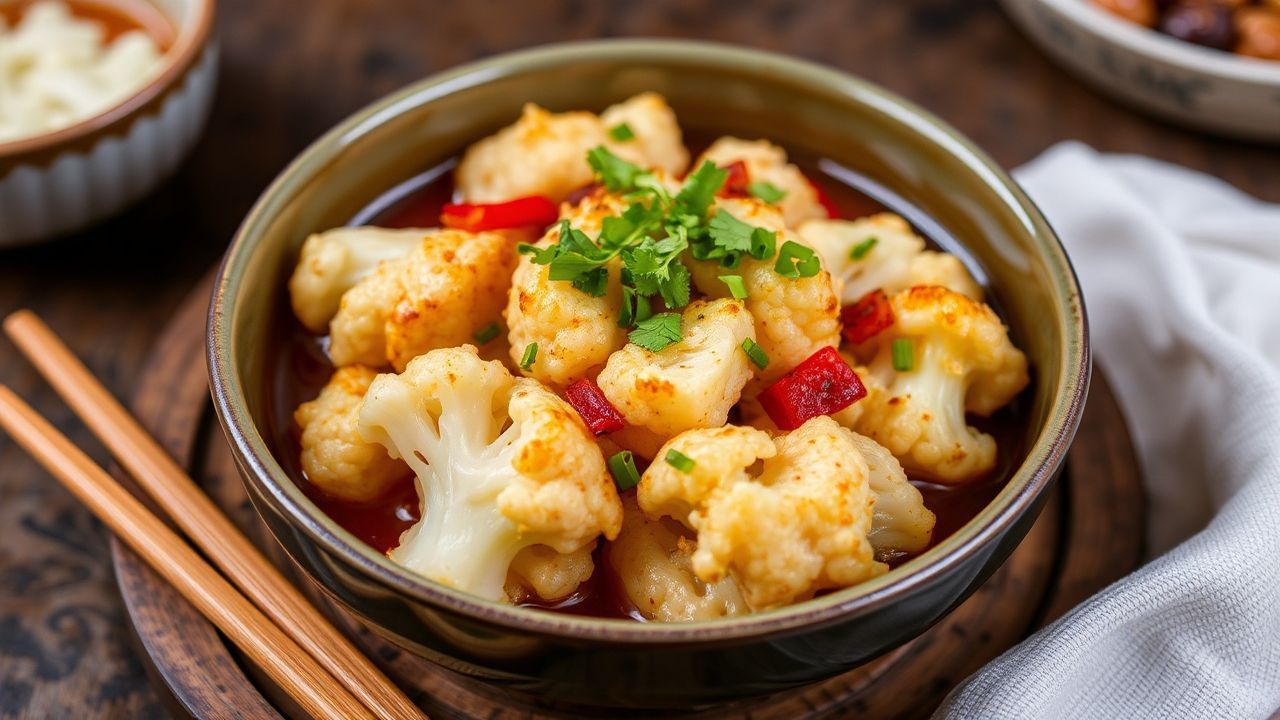
Sizzling Dry Pot Delight: Cauliflower & Lotus Root
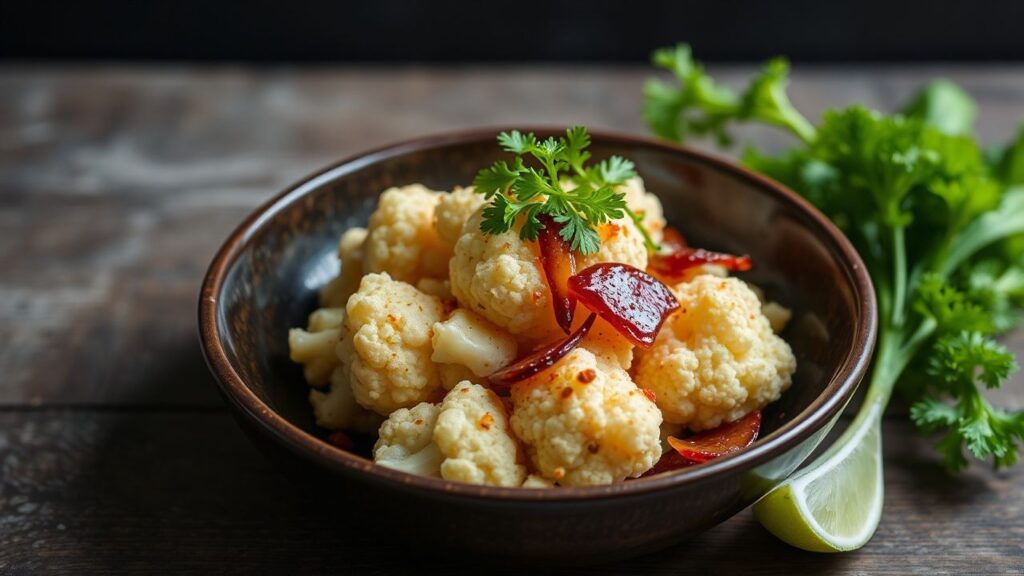
Few dishes deliver the same wake-up call as a sizzling dry pot. This Cauliflower & Lotus Root Dry Pot Delight pairs crisp lotus root with tender cauliflower, then coats both in a spicy, fragrant sauce made for high-heat cooking. The result tastes bold, smells aromatic, and crunches in all the right places.
- What Makes a Dry Pot So “Sizzling”?
- Prep and Cook Time for Cauliflower & Lotus Root
- Ingredients You’ll Need
- Instructions: How to Cook the Sizzling Dry Pot Delight
- Tips for Success (Texture, Heat, and Timing)
- Serving Suggestions and Pairing Ideas
- Health and Ingredient Notes (What to Expect)
- FAQ: Cauliflower & Lotus Root Dry Pot Delight
At a Glance
- Heat-first cooking: stir-fry at high temperature for char and snap.
- Texture control: soak and pat dry lotus root to prevent sogginess.
- Flavor layering: bloom aromatics, then season in stages.
- Dry pot finish: thicken lightly so sauce clings, not pools.
What Makes a Dry Pot So “Sizzling”?
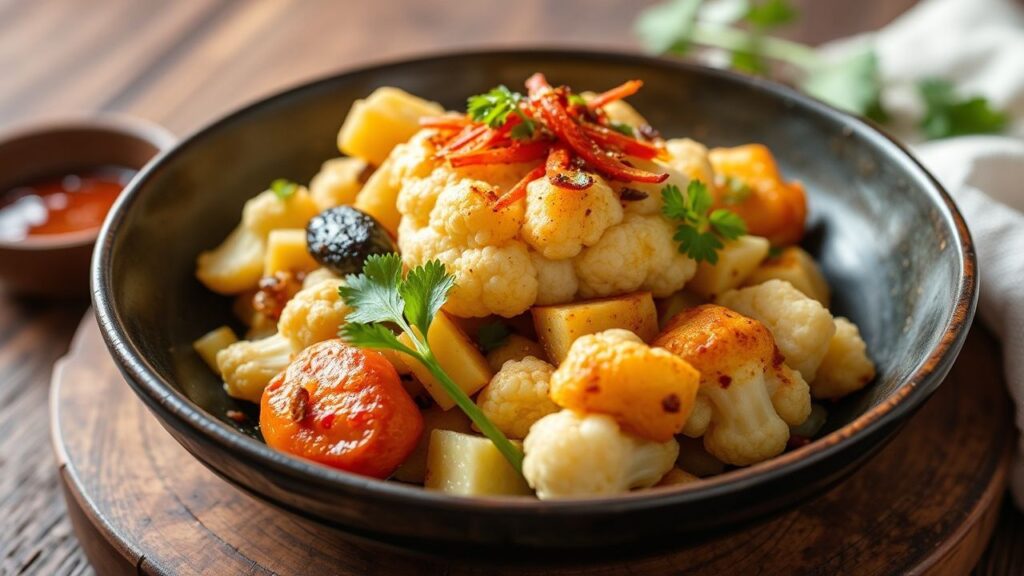
A true dry pot keeps flavor concentrated. Chefs stir-fry the ingredients, then let a spicy seasoning cling to the food. Unlike broth-heavy hot pots, the pan stays mostly dry, so the sauce reduces fast.
That method highlights char, caramelization, and spice aroma. You get the heat from chilies, the numbing lift from Sichuan pepper, and a glossy coating from a light starch finish. For background on the spice family, see Sichuan pepper.
Why This Vegetable Pair Works
Cauliflower soaks up seasonings quickly. It also chars at the edges when you cook it hot and fast. Lotus root adds crunch and a slightly sweet, earthy note that stays crisp longer than many other vegetables.
Lotus root’s natural structure helps it hold shape. It also reacts well to quick searing because its slices get browned on the surface. If you want more context on the ingredient, check lotus root.
Prep and Cook Time for Cauliflower & Lotus Root
This recipe stays practical for weeknights. You spend time prepping, then you cook in one focused stir-fry session. Plan for clean, quick steps so the vegetables stay crisp.
- Planning: 20 minutes
- Cooking: 15 minutes
- Total: 35 minutes
Yield and Serving Size
Serve 4 as a main meal with rice. Serve 6 as a side dish for family-style dinners. Either way, the bold sauce works best when you eat soon after cooking.
If you plate early, keep the dish warm but do not cover too tightly. A dry pot loses crunch when steam traps in the pan. Aim for hot, sizzling service.
Ingredients You’ll Need
This ingredient list focuses on classic dry pot flavor. It blends aromatics, chili heat, fermented depth, and a light sweet balance. Then you finish with sesame oil for aroma.
For a quick reference on common Asian chili pastes, see doubanjiang.
- 1 medium cauliflower head, cut into bite-sized florets
- 200g lotus root, peeled and sliced into 1/8-inch rounds
- 3 tbsp vegetable oil (peanut or sunflower work well)
- 4 cloves garlic, finely minced
- 2-inch piece fresh ginger, julienned
- 2 dried red chili peppers, whole
- 1 tbsp Sichuan peppercorns, lightly crushed
- 2 green onions, chopped (separate whites and greens)
- 1 red bell pepper, thinly sliced
- 2 tbsp soy sauce (light)
- 1 tbsp chili bean paste (doubanjiang)
- 1 tsp sugar
- 1 tbsp toasted sesame oil
- Fresh cilantro for garnish (optional)
- 1 tsp cornstarch + 2 tbsp water (optional glaze)
Instructions: How to Cook the Sizzling Dry Pot Delight
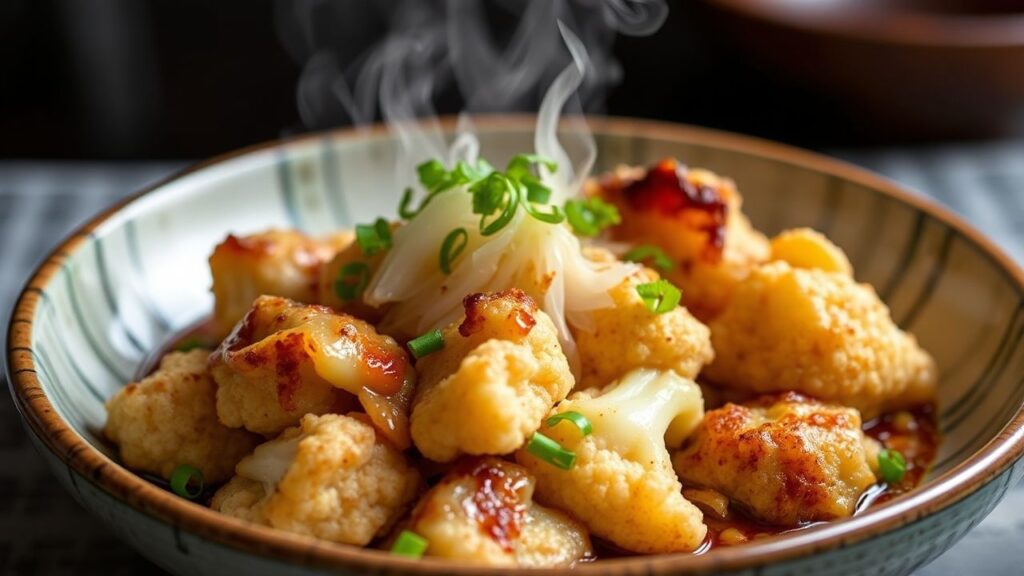
Work in order. If you shuffle steps, the pan cools and the sauce turns dull. This sequence keeps each ingredient at its best texture.
-
Prepare the vegetables:
Rinse and pat dry the cauliflower and lotus root slices. Soak lotus root in cold water with a small splash of vinegar for 10 minutes, then drain thoroughly. -
Heat the pan:
Use a large wok or heavy skillet. Heat 3 tbsp oil over medium-high until the surface shimmers. -
Bloom aromatics and spices:
Add Sichuan peppercorns, dried chilies, garlic, ginger, and the white parts of green onions. Stir for about 1–2 minutes until fragrant. -
Sear the lotus root:
Add lotus root in a single layer. Sauté about 5 minutes, flipping occasionally, until you see golden, slightly crisp edges. -
Add cauliflower and bell pepper:
Add cauliflower florets and sliced red bell pepper. Increase heat if needed. Toss until cauliflower edges char lightly and the florets stay tender-crisp, about 7 minutes. -
Season in stages:
Stir in soy sauce, doubanjiang, and sugar. Toss well for about 2 minutes so the vegetables get evenly coated. -
Optional glaze:
Drizzle cornstarch slurry and toss quickly until sauce thickens and clings to vegetables. -
Finish and serve:
Turn off the heat. Stir in toasted sesame oil, then top with green onion tops and cilantro.</n
Tips for Success (Texture, Heat, and Timing)
Texture defines this dish. You want crisp lotus root, lightly charred cauliflower, and a sauce that coats instead of running. Small handling choices make a major difference.
- Control lotus root moisture: soak, drain, and pat dry. Moist slices steam, and steaming kills crisp edges.
- Adjust spice heat: use fewer dried chilies for mild heat, or add extra if you want a stronger chili layer.
- Don’t over-brown garlic: cook aromatics just until fragrant. If garlic darkens, bitterness replaces sweetness.
- Use high heat: dry pot flavor depends on reduction. A cooler pan leaves sauce watery and dull.
[ TIP ]Expert Insight: For crisp results, cut lotus root slices evenly and avoid overcrowding the pan. If the wok feels crowded, the temperature drops and the slices soften instead of browning.[/TIP]
For wider context on high-heat stir-frying, see stir-fry. The same principles apply here: surface contact plus fast cooking gives the best browning.
Wok Hei vs. Home Skillet Results
A wok helps hot air circulate and creates strong browning. Still, a heavy skillet works if you preheat it well and move food quickly. Keep each batch moving so the surface chars instead of steams.
Dry pot dishes also rely on sauce reduction. As the sauce reduces, it leaves behind aromatic oils and spice particles. That’s why fast cooking matters.
Serving Suggestions and Pairing Ideas
Serve right away. The vegetables taste best while the sauce still clings and the edges stay crisp. Rice works because it absorbs the peppery sauce without diluting it.
For a simple pairing approach, steam jasmine rice or cook fragrant brown rice. Then add a cool side like cucumber salad to balance heat. You can also serve a light soup, but keep portions small so the main flavors stay in charge.
| Nutrient | Per Serving |
|---|---|
| Calories | 180 |
| Protein | 5g |
| Carbohydrates | 20g |
| Fat | 9g |
Health and Ingredient Notes (What to Expect)
Lotus root and cauliflower bring fiber and a good crunch, while chili and peppercorn add flavor that feels bold without needing heavy sauces. The dish stays vegetarian, especially if you choose plant-safe seasonings.
If you want more general background, read cauliflower and chili pepper. These references cover the ingredient basics behind taste and cooking behavior.
FAQ: Cauliflower & Lotus Root Dry Pot Delight
1) What makes this dish different from a regular stir-fry?
A dry pot uses a drier pan and quick reduction. You coat the vegetables with sauce that clings, not broth. That creates a more intense, concentrated flavor.
2) How do I keep lotus root crisp?
Soak in cold water with a splash of vinegar, then drain and pat dry very well. Also sear in a single layer so the slices brown instead of steaming.
3) Can I make this less spicy?
Yes. Use fewer dried chilies and reduce doubanjiang slightly. You can also add extra bell pepper for sweetness and balance.
4) Will the cauliflower get mushy?
Not if you cook it hot and stop when edges char and florets stay tender-crisp. Overcooking happens when the pan cools or when you hold the dish too long.
5) Can I prep ahead?
You can slice cauliflower and lotus root ahead, and mince aromatics early. Cook the dry pot right before serving for the best texture and clinging sauce.
See also: sizzling dry pot