
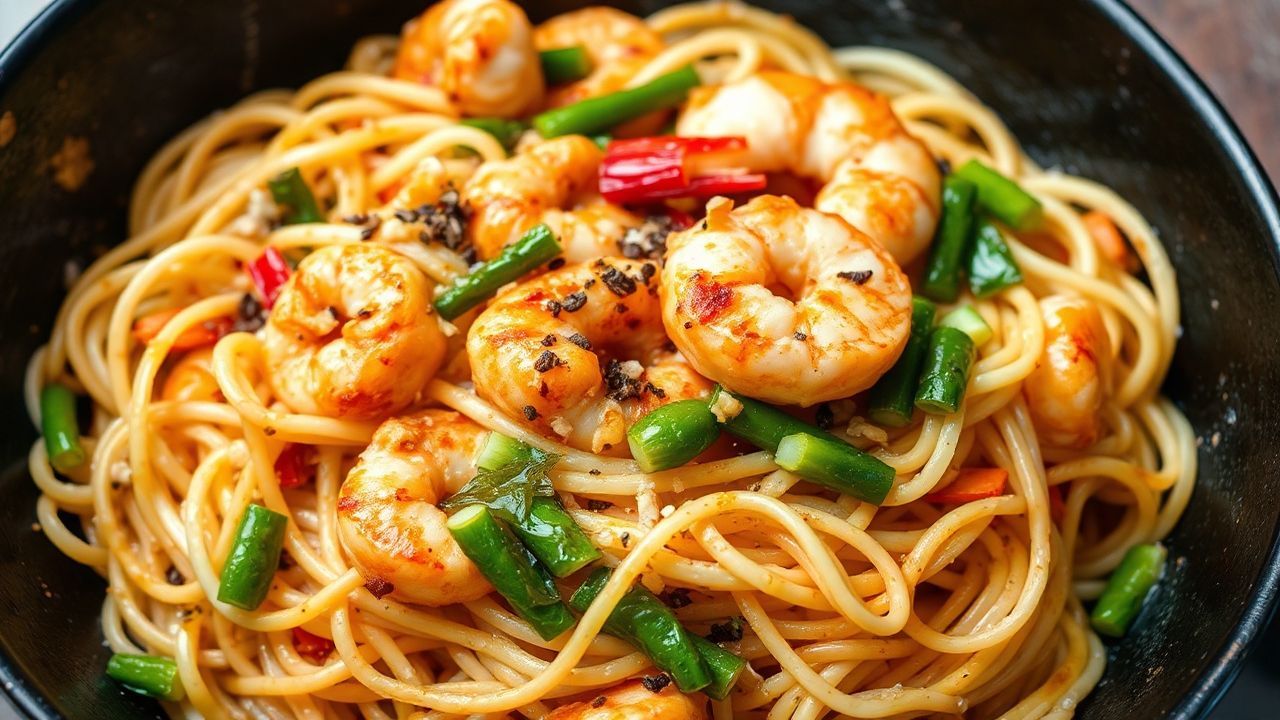
Stir-fried shrimp noodles with bean sprouts deliver bright crunch, tender seafood, and slippery noodles in one fast wok meal. The key is simple: cook shrimp quickly, heat the wok hard, and add bean sprouts at the last moment so they stay crisp.
- Why This Stir-Fry Works
- Prep and Cooking Plan
- Ingredients for Stir-Fried Shrimp Noodles with Bean Sprouts
- Step-by-Step Instructions (Fast and Focused)
- 1) Prepare the Noodles
- 2) Heat the Wok
- 3) Sauté Aromatics
- 4) Cook the Shrimp
- 5) Stir-Fry the Noodles
- 6) Return Shrimp and Build Sauce
- 7) Preserve the Crunch with Bean Sprouts
- 8) Finish with Sesame Oil
- 9) Plate and Garnish
- Tips for Success (Common Fixes That Work)
- Serving Suggestions and Pairings
- Final Thoughts on Texture-First Wok Cooking
- FAQ
- Crunch first: add bean sprouts near the end.
- High heat: stir-fry fast to keep shrimp tender.
- Glossy sauce: toss noodles until evenly coated.
- Balance: savory soy + oyster depth with a lime finish.
Fresh bean sprouts carry a clean, slightly nutty flavor that cuts through the savory sauce. Meanwhile, shrimp brings sweet, briny notes that taste great with garlic, ginger, and a hint of chili.
This recipe focuses on real stir-fry fundamentals. If you control heat, timing, and moisture, you get noodles that cling to sauce and vegetables that still pop when you bite.
Why This Stir-Fry Works
A wok stir-fry succeeds when three things line up: heat, timing, and ingredient prep. Shrimp cooks fast, so you should treat it as a short step, not a long simmer.
Bean sprouts wilt easily when exposed to heat for too long. You keep them crisp by folding them in late and tossing gently for a short burst.
For sauce balance, soy sauce provides salt and umami, while oyster sauce adds depth. If you want a lighter taste, use less oyster sauce and finish with lime for brightness.
Texture Map: Noodles, Shrimp, and Sprouts
Rice vermicelli and similar noodles hydrate quickly. That means you must soak until pliable but still firm, then drain well to avoid soggy strands.
Shrimp turns opaque when cooked, usually within minutes on high heat. Overcooked shrimp becomes rubbery, so watch the color and pull it early.
Bean sprouts should stay crisp-tender. They taste best when they still look fresh and stay springy, not limp.
Flavor Base You Can Trust
Garlic and ginger set a warm aroma, and a touch of chili adds optional heat. These aromatics bloom fast in hot oil, which helps your sauce taste more vibrant.
Sesame oil belongs at the end. Heating it too long can dull its nutty aroma, so you drizzle it off-heat or right before you plate.
Prep and Cooking Plan
Plan for a fast cooking flow. If your ingredients sit chopped and ready, the stir-fry stays smooth, and everything finishes at the right time.
Use high heat and keep the wok moving. This prevents hot spots and helps you cook shrimp and noodles evenly.
Time Breakdown
- Planning: 15 minutes
- Cooking: 10 minutes
- Total: 25 minutes
Yield
Serves 4 generous portions.
If you want smaller bowls for lunch, you can stretch it to 5-6 servings.
Ingredients for Stir-Fried Shrimp Noodles with Bean Sprouts
Use fresh shrimp when you can. If you buy frozen, thaw fully in the fridge and pat dry so it sears instead of steaming.
Choose thin vermicelli noodles for the best mouthfeel. Thick noodles take longer and can crowd out the crisp texture from sprouts.
Ingredient List
- 200g rice vermicelli noodles (soak in warm water ~10 minutes, then drain well)
- 300g large shrimp, peeled and deveined
- 150g fresh bean sprouts, rinsed and drained
- 2 tbsp vegetable oil (neutral, like canola)
- 3 cloves garlic, finely minced
- 1 small red chili, thinly sliced (optional)
- 2 stalks green onions, julienned
- 2 tbsp light soy sauce
- 1 tbsp oyster sauce (or vegetarian mushroom sauce)
- 1 tsp toasted sesame oil
- 1 tsp freshly grated ginger
- Fresh cilantro leaves for garnish
- Lime wedges for serving
- Black pepper to taste
For noodle basics, rice vermicelli falls under rice noodles, which hydrate quickly and pair well with stir-fry sauces.
If you want a deeper understanding of soy sauce structure, see soy sauce for how fermentation drives umami.
Step-by-Step Instructions (Fast and Focused)
Before you start the wok, lay out every ingredient. When the wok heats, you should move, stir, and toss without pausing.
Keep bean sprouts aside and dry. Excess water makes noodles steam and sprouts soften.
1) Prepare the Noodles
Soak rice vermicelli in warm water until pliable but still firm, about 10 minutes. Then drain thoroughly and set aside.
Wet noodles stick together and clump. Good draining helps noodles separate when they hit the hot wok.
2) Heat the Wok
Place your wok over high heat. Add 1 tbsp oil and wait until it shimmers but does not smoke heavily.
High heat drives the Maillard reaction and fast cooking, which supports flavor and texture. Learn the science behind browning at Maillard reaction.
3) Sauté Aromatics
Add garlic, grated ginger, and sliced chili. Stir-fry about 30 seconds until fragrant, but avoid browning.
Burnt garlic turns bitter. If it starts to darken fast, drop heat briefly and then return to high.
4) Cook the Shrimp
Add shrimp and stir constantly. Cook for 3–4 minutes until pink and opaque, then remove to a plate.
Removing shrimp prevents carryover cooking. This single step keeps seafood tender instead of tough.
5) Stir-Fry the Noodles
Add the remaining 1 tbsp oil, then add drained noodles. Toss quickly to coat with aromatics and heat through for about 2 minutes.
Keep tossing so sauce clings evenly. If noodles look dry, add a splash of water and toss immediately.
6) Return Shrimp and Build Sauce
Return shrimp to the wok. Add soy sauce and oyster sauce, plus black pepper, then toss to combine until strands look glossy.
Even coating matters. When every strand gets sauce, diners taste the same balance in every bite.
7) Preserve the Crunch with Bean Sprouts
Fold in bean sprouts and julienned green onions. Toss gently for about 30 seconds, just until heated.
Remember: the goal is crisp-tender, not fully cooked sprouts. Late addition protects texture and freshness.
8) Finish with Sesame Oil
Turn off the heat. Drizzle toasted sesame oil over the stir-fry and toss once more.
Sesame oil carries strong aroma compounds that stay brighter when you add it off-heat. For background, review sesame oil.
9) Plate and Garnish
Serve immediately in wide bowls. Top with cilantro leaves and add lime wedges on the side.
Lime cuts richness and lifts aroma. Encourage diners to squeeze fresh juice right before eating.
Tips for Success (Common Fixes That Work)
Even small changes can fix most stir-fry problems. If noodles clump or sprouts soften, you can correct it next time with a few timing tweaks.
Use these practical checks while you cook. They save flavor, texture, and effort.
Noodle Tips
- Soak until firm-tender, then drain fully.
- Toss noodles in oil before sauce to prevent sticking.
- If noodles cool, they tighten. Keep heat on while tossing.
Shrimp Tips
- Pat shrimp dry for better sear.
- Cook until just opaque, then remove.
- Size matters: larger shrimp need a bit more time.
Sprout Tips
- Add bean sprouts last and toss briefly.
- Keep them dry to avoid steaming.
- Serve right away for maximum crunch.
Vegetarian Swap
For a vegetarian version, replace shrimp with firm tofu cubes and use mushroom sauce instead of oyster sauce. Tofu browns well in a hot wok and still absorbs savory flavors.
To understand tofu texture, see tofu. It helps you choose the right firmness for stir-fry.
Serving Suggestions and Pairings
Serve this dish hot and fresh. Wide bowls show the contrast of pink shrimp, pale noodles, and crunchy sprouts.
Add bright toppings to sharpen flavor. Cilantro and lime bring freshness, while a little chili adds optional heat.
Best Bowl Setup
Use shallow bowls so sauce coats noodles but doesn’t pool too deep. Garnish lightly so diners get crunch in the first bite.
If you want extra texture, add a small sprinkle of sesame seeds right before serving.
Side Dishes That Match the Texture
Pair with cucumber salad for cool crunch, or steamed greens for a softer counterpoint. A simple side keeps the main stir-fry focused.
If you prefer a study on flavor balance, explore lime and how citrus brightness affects overall taste perception.
Final Thoughts on Texture-First Wok Cooking
Stir-fried shrimp noodles with bean sprouts succeed because you respect time. Shrimp needs minutes, noodles need quick tossing, and sprouts need a late spotlight.
When you cook fast and finish smart, you get a meal that feels both comforting and alive. Serve immediately, and you’ll taste the crunch in every forkful.
FAQ
How do I keep noodles from getting soggy?
Drain noodles very well, then toss them in hot oil before adding sauce. Also, avoid boiling or leaving them in the wok after cooking.
Can I use gluten-free soy sauce?
Yes. Use gluten-free tamari or a certified gluten-free soy sauce. The flavor stays close, and the dish still tastes balanced.
What makes shrimp taste sweet instead of watery?
Pat shrimp dry and cook over high heat. Remove shrimp as soon as it turns opaque, then return it only briefly with the sauce.
Why do my bean sprouts turn soft?
Add them last and toss for only about 30 seconds. Also, keep them dry before you add them to the wok to reduce steaming.
Can I meal-prep this recipe?
You can prep components, but cook fresh for best texture. Store cooked shrimp and noodles separately, then reheat and fold in fresh sprouts at the end.
See also: shrimp noodles