
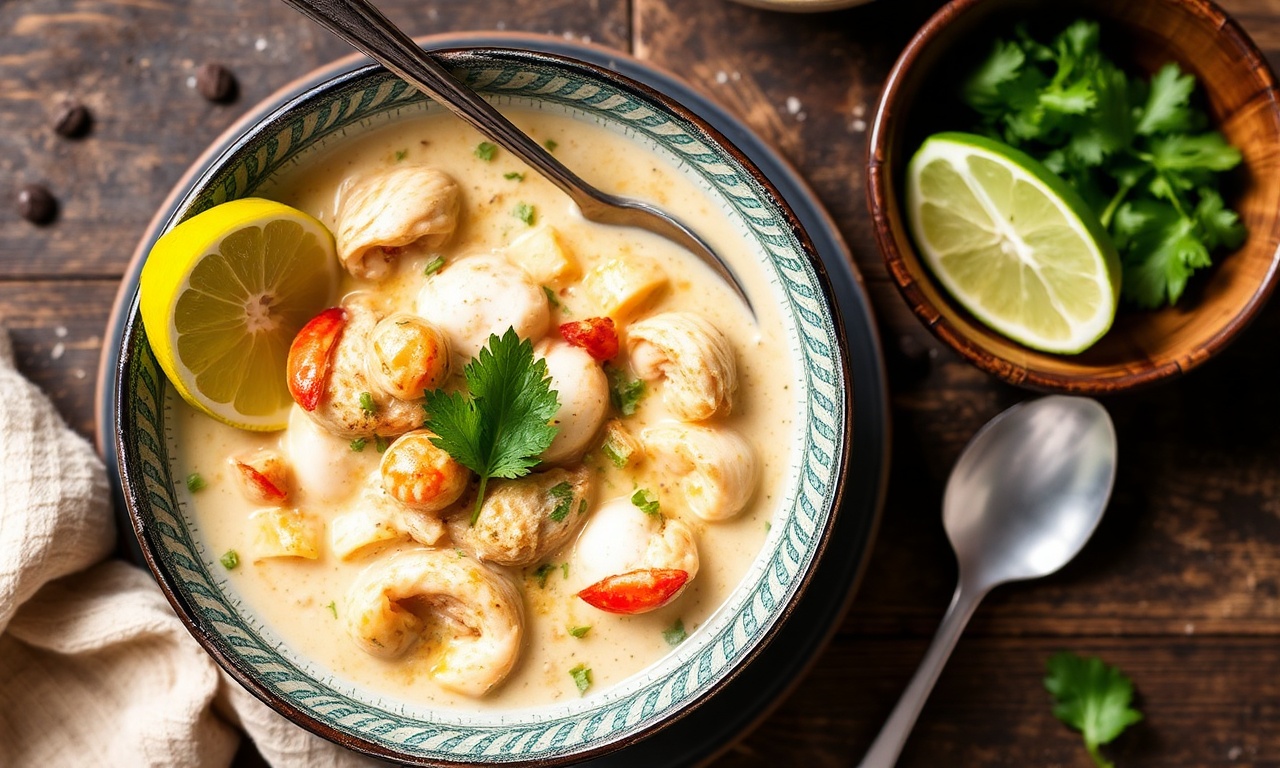
In tropical cooking, a creamy coconut stew brings a rare mix of richness and bright lift. This one-pot version pairs tender chicken with quick-cooking seafood in a coconut-based broth flavored by lemongrass, ginger, and lime. The method matters, because aromatics bloom first and seafood stays juicy.
At a Glance
- Best flavor: Sauté ginger and lemongrass in coconut oil, then build the broth.
- Best texture: Simmer chicken first; add seafood for a short finish.
- Best balance: Lime juice goes in at the end to stay fresh.
- Best garnish: Cilantro and Thai basil add a clean, aromatic top note.
This dish is a creamy coconut stew built on one core method: layer aromatics, braise chicken, then finish with seafood. Coconut milk thickens the broth and softens heat, so chili feels warm rather than sharp. If you like island-style flavors, this stew delivers deep aroma fast, with a clean finish.
What Makes This Creamy Coconut Stew So Flavorful?
A great creamy coconut stew starts with fat and fragrance working together. Coconut oil helps release volatile oils from ginger and lemongrass. Then coconut milk adds body and a mild sweetness that smooths the broth.
Next, you need tang. Lime juice and fresh herbs cut through coconut richness and prevent a heavy mouthfeel. In a layered flavor profile, aromatics lead, broth supports, and citrus wakes everything up. For background on the base, use the science of coconut milk as a reference.
Finally, seafood timing protects texture. Shrimp, scallops, and firm fish overcook quickly in a hot simmer. You control that by cooking chicken first, then adding seafood near the end. For general food protein guidance, review cooking and doneness principles.
Prep and Cook Time
Plan a simple, one-pot workflow that keeps you in control of texture. This schedule also helps you season in the right order, so the stew tastes balanced from first spoon to last bite. When tasks stay grouped, the stew cooks smoothly without rushed steps.
Because the cook time has two clear stages, you can multitask. Sear and build the base first, then simmer chicken while you prep seafood and herbs. When you add seafood, you stay close so the finish stays tender.
- Preparation: 20 minutes
- Cooking: 40 minutes
- Total Time: 1 hour
Yield
This recipe makes enough for family-style serving. It yields 6 generous portions and reheats well when you rewarm gently. If you plan leftovers, keep the seafood portion controlled so reheating does not overcook it.
If you scale down, keep the broth proportions steady. Shrinking by half works well, but reduce seafood by weight to avoid too much carryover heat. For handling safety basics, use food safety as your reference point.
Difficulty Level
Medium suits home cooks who follow steps with timing. You do not need advanced technique, but you do need a gentle simmer and correct seafood windows. That order keeps chicken tender and seafood pleasant.
Most difficulty comes from heat management. Keep the stew at a gentle simmer, not a rolling boil. Aromatics infuse at lower heat, and seafood stays silky instead of rubbery.
Ingredients
Use fresh aromatics for a vivid creamy coconut stew. Lemongrass and ginger drive the scent, while coconut milk supplies the signature body. Choose mixed seafood that includes shrimp and at least one firm, flaky fish.
To keep flavor consistent, measure salt, fish sauce, and sweetness. Coconut milk varies by brand, so you may need small adjustments to balance. For more on core aromatic ingredients, see ginger and lemongrass.
- 2 tbsp coconut oil
- 1 lb boneless, skinless chicken thighs, cut into bite-sized pieces
- 1 lb mixed seafood (shrimp, scallops, and firm white fish such as snapper), cleaned and chopped
- 1 large onion, finely chopped
- 4 cloves garlic, minced
- 2-inch piece fresh ginger, peeled and thinly sliced
- 2 stalks lemongrass, bruised and cut into 3-inch pieces
- 1 fresh red chili, deseeded and sliced thin (optional, for heat)
- 1 can (14 oz) full-fat coconut milk
- 2 cups chicken broth (low sodium preferred)
- 1 tbsp fish sauce
- 1 tbsp brown sugar
- Juice of 1 lime
- 1 red bell pepper, julienned
- 1 cup baby spinach leaves
- Fresh cilantro, roughly chopped, for garnish
- Fresh basil leaves, preferably Thai basil
- Salt and freshly ground black pepper, to taste
Instructions
Follow these steps in order. The sequence builds flavor first, then protects seafood and greens. Keeping this flow is what turns coconut broth into a creamy coconut stew with a restaurant-style balance.
Read the whole set once before you start. That small habit helps you avoid overcooking seafood and keeps your simmer steady. When you control timing, the stew tastes complex without feeling complicated.
- Heat coconut oil in a large heavy-bottomed pot over medium heat. Add the onion, garlic, ginger, lemongrass, and chili. Sauté until fragrant and translucent, about 5 minutes, stirring to prevent sticking.
- Add the chicken pieces and sear until lightly browned on all sides, about 6 minutes. This step builds depth through browning reactions.
- Pour in the chicken broth and coconut milk, then stir well. Add fish sauce and brown sugar to balance salt and richness. Bring to a gentle simmer.
- Cover and simmer on low heat for 20 minutes, until the chicken is tender and the lemongrass infuses the broth.
- Add the seafood and bell pepper. Cook uncovered for 5–7 minutes, or until seafood turns opaque and cooked through. Avoid overcooking.
- Stir in spinach and lime juice. Taste and adjust with salt and pepper. Remove lemongrass pieces before serving.
- Garnish with cilantro and Thai basil, then ladle into bowls.
For a practical refresher on why gentle heat matters for texture, you can review cooking and heat transfer concepts. The goal is simple: keep the boil away from the final seafood window.
Tips for Success
These tips help you nail both flavor and texture. Small choices—like chicken cut and seafood type—change the final mouthfeel in a coconut-based broth. Use them to make results predictable.
- Selecting poultry: Use boneless chicken thighs for juicier meat that stays tender after simmering.
- Seafood selection: Choose firm, fresh options (shrimp, scallops, snapper or similar). They hold shape in coconut broth.
- Broth clarity: If foam rises, skim lightly during the simmer for a cleaner look.
- Spice adjustments: Keep chili optional, then add more only if you like extra heat.
- Make-ahead: Cook the stew base through step 4. Cool, refrigerate, and add seafood and spinach before serving.
- Herb timing: Add cilantro and basil at the end for brighter aroma.
For fresh lemongrass and ginger flavor, bruise lemongrass well before it hits the oil. Bruising increases surface contact, which helps the hot fat extract more aroma. That step explains the bright “citrus-herbal” note many people expect from island-style stews.
Let the stew rest for 5 minutes after you add spinach. That short pause helps flavors blend and lets seafood finish cooking in residual heat. During that time, you can taste and fine-tune salt and lime.
Also, do not add delicate fish too early. If your mix includes fragile fillets, cut them thicker or add them in the last 2–3 minutes. When the stew finishes, seafood should look just opaque, not dry or firm.
Serving Suggestions
Serve this stew with starch that soaks up coconut broth. Jasmine rice works especially well because it stays fragrant and soft. Warm bread also works when you want spoon-to-mouth ease.
For crunch, add toasted cashews or sliced green onions. A lime wedge brightens each bite because people can adjust acidity to their own taste. If you enjoy pairing herbs, keep cilantro and basil consistent across every bowl.
For more on how herbs contribute flavor chemistry, you can reference herbs. That general background helps explain why fresh leaves added at the end taste “brighter” than wilted herbs.
Nutritional Snapshot (Per Serving)
These values give a practical estimate for meal planning. Nutrient needs vary by portion size and ingredient brands, especially coconut milk. Use this as a planning guide, not as medical advice.
If you want to lower calories, reduce coconut oil slightly and use low-sodium broth. Keep coconut milk full-fat for the best texture, but “light” coconut milk can work if you accept a thinner stew. For broader nutrition context on coconut products, see coconut.
| Nutrient | Per serving |
|---|---|
| Calories | 340 kcal |
| Protein | 34 g |
| Carbohydrates | 12 g |
| Fat | 18 g |
FAQ
These answers target the most common questions home cooks ask. They focus on timing, flavor balance, and preventing tough seafood.
What makes a creamy coconut stew taste balanced?
Balance comes from coconut milk for body, aromatics for depth, and lime juice for lift. Fish sauce and a small amount of brown sugar round out salt and acidity. That mix prevents the stew from tasting one-dimensional.
If your broth tastes flat, adjust in small steps: add a pinch of salt, then lime. Small changes work better than adding large amounts at once.
Which seafood should I use for this dish?
Use mixed seafood with different textures. Shrimp and scallops add sweet bite, while a firm white fish like snapper holds shape. Keep delicate items for the final minutes.
If you swap seafood, match cooking speed. Shrimp and scallops tolerate a brief finish; thin fish may need to be added last.
How do I prevent the seafood from getting tough?
Cook chicken first, then add seafood near the end. Keep the simmer gentle, and stop cooking as soon as seafood turns opaque. Overcooking happens fast once shrimp and fish pass their ideal temperature window.
Use timing rather than looks alone. Cubes of fish vary in thickness, so reduce simmer time if your pieces are small.
Can I make this creamy coconut stew ahead of time?
Yes. Cook the stew base through the chicken-simmer stage, cool it, and refrigerate. Reheat gently, then add seafood and spinach right before serving.
Reheating works best at a low simmer. High heat speeds up protein tightening and can dull the seafood texture.
What can I serve with creamy coconut stew?
Serve it with jasmine rice or warm crusty bread to soak up coconut broth. For freshness, add cucumber salad or a simple mango fruit salad. A lime wedge on the side lets guests fine-tune acidity.
For extra crunch, sprinkle toasted nuts or add sliced green onions. Keep garnish fresh so aroma stays strong at the table.
See also: creamy coconut stew