
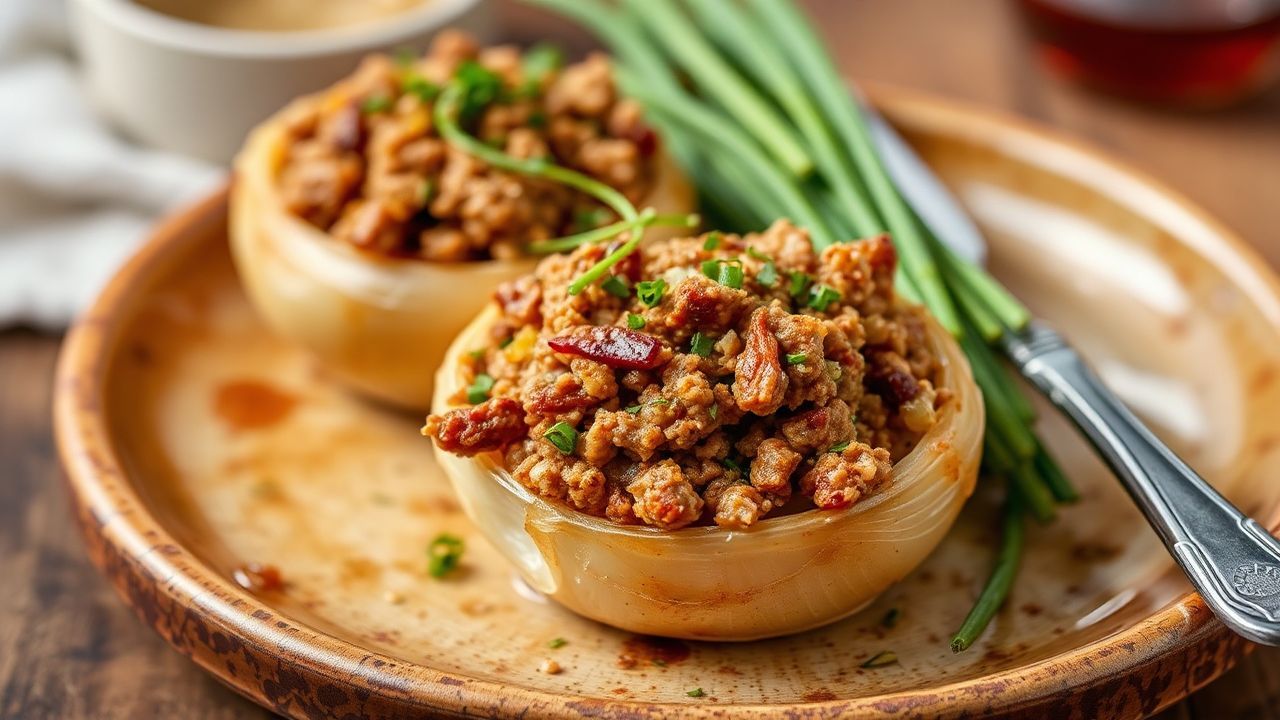
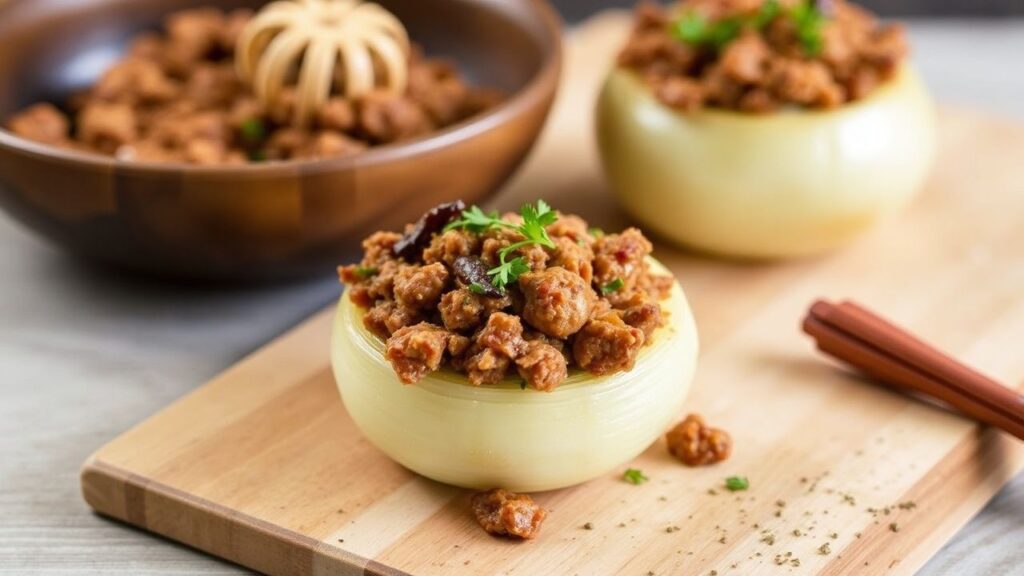
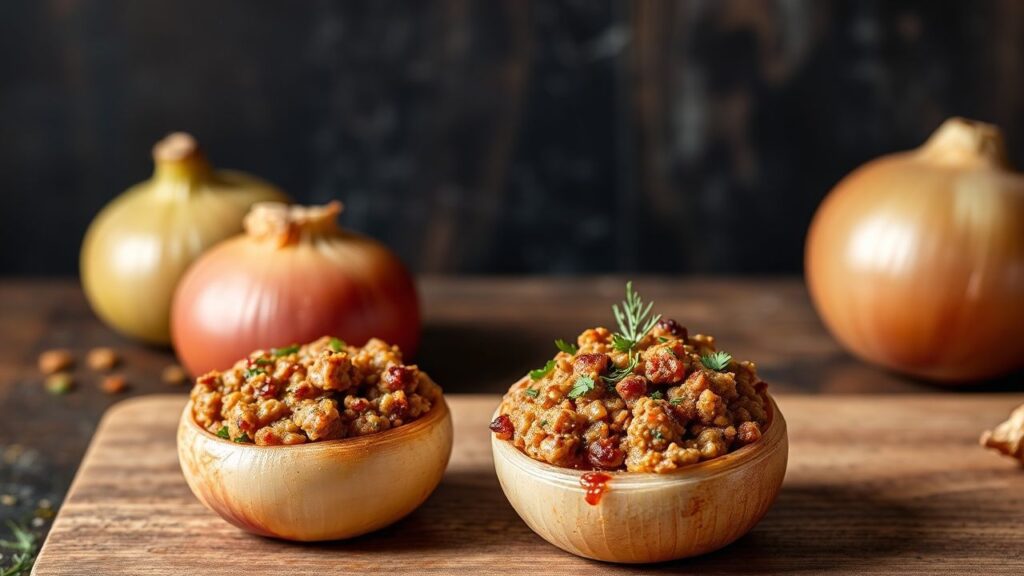
There’s something irresistibly charming about the humble onion—its layers hide not just flavor, but the kind of aroma that makes kitchens feel warm. Savory stuffed onions turn that everyday vegetable into a satisfying meal with tender cups and a spiced ground meat filling.
- What Makes Savory Stuffed Onions So Good
- Ingredients for the Ground Meat and Spice Delight
- Prep and Cook Time
- Yield and Difficulty
- Step-by-Step Instructions for Juicy Stuffed Onions
- 1) Prepare the onion cups
- 2) Build the aromatics base
- 3) Mix the ground meat and spice filling
- 4) Stuff and cap the onions
- 5) Bake in tomato sauce with steam
- Tips for Success (and Common Fixes)
- Serving Suggestions That Keep It Appetizing
- Optional Nutrition Snapshot
- Flavor Variations Without Losing the Core Identity
- FAQ
At a Glance
- Texture control: keep onion walls about 1/2 inch thick so the cups hold up.
- Flavor depth: toast spices briefly in the filling for a stronger savory profile.
- Juicy results: use a mix of sautéed aromatics and cooked rice.
- Even cooking: bake upright in tomato sauce with a little water for steam.
As you prep, you’ll shape onion “cups,” build a spiced meat blend, and bake everything until the onion softens and the filling cooks through. This approach draws on classic Mediterranean and Middle Eastern stuffing traditions, where onions and spiced meats work together as a balanced savory base.
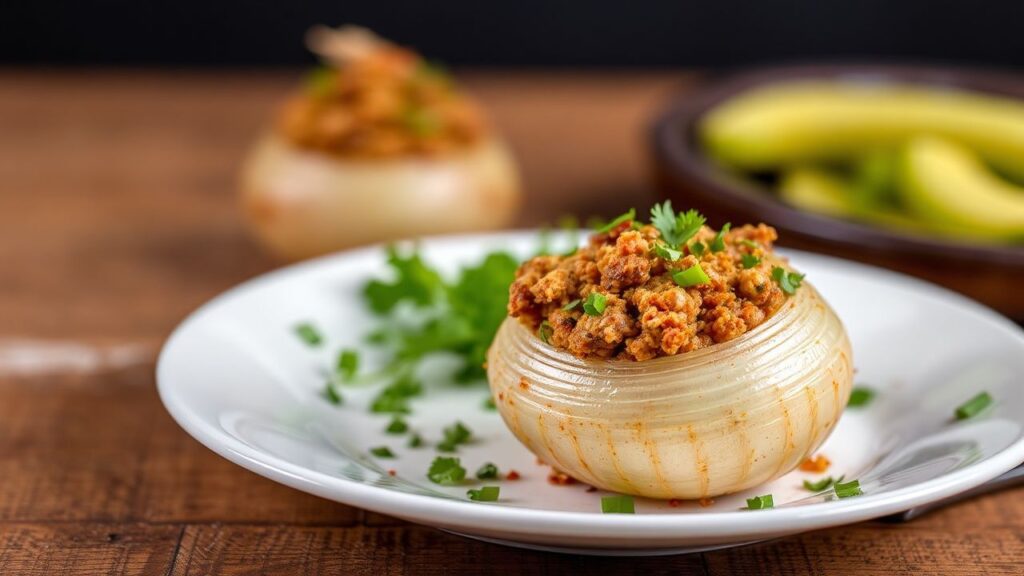
What Makes Savory Stuffed Onions So Good
Savory stuffed onions win because they combine two textures in one bite. The onion turns silky and sweet, while the meat filling stays hearty and aromatic.
That balance depends on method, not luck. When you hollow the onion carefully and bake it in sauce with steam, you get tender layers and a filling that stays juicy.
Ingredients for the Ground Meat and Spice Delight
Use sweet onions for the best contrast. Their natural sugars soften during baking and help round out the heat from spices.
You’ll also need cooked rice to improve moisture and bite. Rice absorbs fat and juices, so the filling stays cohesive instead of crumbly.
Core ingredients
- 4 large sweet onions (Vidalia or Walla Walla)
- 1 lb ground beef (85% lean)
- 1/2 cup cooked rice (long grain or basmati)
- 1 small carrot, finely grated
- 3 cloves garlic, minced
- 1/2 cup finely chopped fresh parsley
Spice and sauce layer
- 1 teaspoon ground cumin
- 1 teaspoon smoked paprika
- 1/2 teaspoon ground coriander
- 1/4 teaspoon ground cinnamon
- 1/2 teaspoon crushed red pepper flakes (adjust)
- 1/2 teaspoon ground black pepper
- 1 teaspoon sea salt
- 2 tablespoons olive oil, divided
- 1 cup tomato sauce (unsweetened)
- 1/4 cup water
Prep and Cook Time
Plan a little time to hollow the onions and assemble the filling. Once you start baking, the oven does most of the work.
This schedule aims for tender onion walls and fully cooked filling. Keep the covered baking stage for steam, then uncover to brown.
- Preparation: 25 minutes
- Cooking: 45 minutes
- Total Time: 1 hour 10 minutes
Yield and Difficulty
This recipe makes a generous main for family meals. It also works well for meal prep because the flavors deepen after resting.
The steps stay approachable if you handle the onion slowly. You’re not trying to rush the hollowing process.
- Serves: 4 generously
- Difficulty: Medium — approachable for confident home cooks
Step-by-Step Instructions for Juicy Stuffed Onions
Start by setting up your onions, a mixing bowl, and a baking dish. Keep a sharp paring knife ready for clean cuts.
Then follow the sequence: prep onions, sauté aromatics, mix filling, stuff, and bake. The order matters because you want cooked aromatics and spices before the filling goes into the onion cups.
1) Prepare the onion cups
- Peel and trim: peel the onions and slice off the tops. Keep tops nearby if they fit as lids.
- Hollow gently: cut a hollow pocket by removing the core and inner layers. Leave about a 1/2-inch thick wall so the cup holds its shape.
- Chop the removed onion: set the hollowed onion rings aside. Finely chop the removed onion cores for the filling.
2) Build the aromatics base
- Sauté: heat 1 tablespoon olive oil in a skillet over medium heat.
- Cook onions and garlic: add minced garlic, grated carrot, and chopped onion cores. Sauté until softened and fragrant, about 5 minutes.
If you want extra flavor, you can add the spices right after aromatics soften. Cumin and paprika bloom when warmed, which boosts aroma.
3) Mix the ground meat and spice filling
- Combine: in a large bowl, mix ground beef, sautéed aromatics, cooked rice, and parsley.
- Add spices: add cumin, smoked paprika, coriander, cinnamon, red pepper flakes, black pepper, and sea salt.
- Mix lightly: combine until evenly distributed. Avoid overmixing so the meat stays tender.
Ground beef flavor depends on fat and surface browning later in the bake. By keeping the texture gentle, you avoid a dense filling.
Beef composition matters here: higher-lean meat gives a firmer texture, while still staying juicy with tomato steam and rice.
4) Stuff and cap the onions
- Brush with oil: lightly brush onion interiors and exteriors with the remaining olive oil.
- Fill: pack each onion cavity with the meat mixture, pressing gently so it’s compact.
- Cap if possible: place reserved onion tops on each stuffed onion like a lid.
5) Bake in tomato sauce with steam
- Set up sauce: spread tomato sauce in the bottom of a baking dish.
- Arrange upright: place stuffed onions upright in the dish.
- Add water for steam: pour 1/4 cup water around the onions to boost tenderness.
- Cover and bake: cover tightly with foil and bake at 375°F (190°C) for 40 minutes.
- Brown tops: uncover and bake 10 more minutes until the tops show light browning.
- Rest: rest 5 minutes before serving so juices redistribute.
Baking works well for stuffed onions because the moist environment from sauce and steam softens vegetable walls while cooking the filling evenly.
Tips for Success (and Common Fixes)
Small details protect your end result. If your onions collapse, your walls likely got too thin.
If your filling looks dry, the rice amount or steam stage may need adjustment. You want moisture from both tomato sauce and the onion’s natural water content.
- Choose large, firm sweet onions with a flat base so they stand upright while baking.
- Finely grate carrot and finely chop onion cores for even flavor distribution in each bite.
- Mix gently to avoid compacting meat proteins, which can reduce tenderness.
- For gluten-free: use cooked quinoa or cauliflower rice as the binder instead of conventional rice.
- Make-ahead: assemble and refrigerate uncovered up to 4 hours. Bring closer to room temperature before baking for steadier cooking.
- For extra umami: stir 1 tablespoon tomato paste into the sauce base.
Onion sugars caramelize as heat builds. That sweet note is one reason this dish tastes balanced, even with bold spices.
Serving Suggestions That Keep It Appetizing
Serve savory stuffed onions hot so the onion layers stay soft and the meat stays juicy. Warm plates help the dish hold temperature.
Garnish to add brightness and aroma. Fresh parsley and a light drizzle of olive oil make the flavor feel cleaner.
Try pairing with creamy mashed potatoes, couscous, or a crisp green salad dressed with lemon vinaigrette. A spoon of tangy yogurt or labneh adds cool contrast to smoky paprika and cumin.
Olive oil also helps carry spice aroma, especially when you drizzle it right before serving.
Optional Nutrition Snapshot
Nutrient values vary by onion size, meat fat percentage, and how much filling each person eats. Still, this estimate gives a useful baseline for planning.
If you track macros, weigh the cooked filling portion before serving. That step improves accuracy for meal plans.
| Nutrient | Per serving |
|---|---|
| Calories | 370 kcal |
| Protein | 28 g |
| Carbohydrates | 22 g |
| Fat | 18 g |
Flavor Variations Without Losing the Core Identity
You can adjust the filling while keeping the stuffed onion structure. Small changes deliver new tastes without turning the recipe into something else.
Use these variations when you want a different cuisine vibe or a lighter option for weeknights.
Swap the meat
Ground turkey works well because it stays tender when you add rice and bake with steam. Ground lamb gives a more aromatic, richer profile.
Choose your meat based on the spice direction you want. For example, smoked paprika suits beef and lamb, while coriander works nicely with turkey.
Lamb and turkey behave differently with heat, so the same method matters more than exact flavor claims.
Swap the binder
If you reduce rice or switch it, compensate with slightly more sauce or a little extra steam. Otherwise, the filling may feel looser.
Quinoa adds a nutty texture, and cauliflower rice brings lighter volume while still holding moisture.
FAQ
Quick answers help you cook with confidence. These points target the moments that usually cause stuffing and baking problems.
If you want the best results, follow the baking cover-and-uncover timing and keep onion wall thickness consistent.
How do I know the filling is fully cooked?
The filling should be cooked through after 40 minutes covered plus 10 minutes uncovered. If you use a thermometer, ground meat should reach a safe internal temperature.
Resting for 5 minutes helps juices settle, so each onion cup stays neat when you serve.
Can I blanch the onions before stuffing?
Yes, but you should blanch only briefly if you choose to do it. A short soften makes hollowing easier and improves tenderness.
Even without blanching, baking with sauce and steam gives tender results when onion walls stay about 1/2 inch thick.
What onions work best for stuffed onions?
Sweet, large onions give the most reliable flavor. Their mildness complements cumin, paprika, and garlic without overpowering the filling.
Firm onions also stand upright better in the baking dish.
How can I make savory stuffed onions ahead of time?
Assemble and refrigerate uncovered for up to 4 hours. Let them sit at room temperature for a short time before baking.
This helps the dish cook evenly instead of taking longer in the center.
Are there vegetarian versions?
Yes. Replace ground meat with lentils or mushrooms, then keep the same spice profile and binder approach.
For a firmer bite, use cooked lentils or quinoa so the filling stays cohesive during stuffing.
What gives the dish its signature flavor?
The combination of cumin, smoked paprika, coriander, and garlic creates the warm, savory foundation. Tomato sauce and steam then round out the edges.
That mix of spice aroma and onion sweetness is what makes savory stuffed onions feel deeply satisfying.
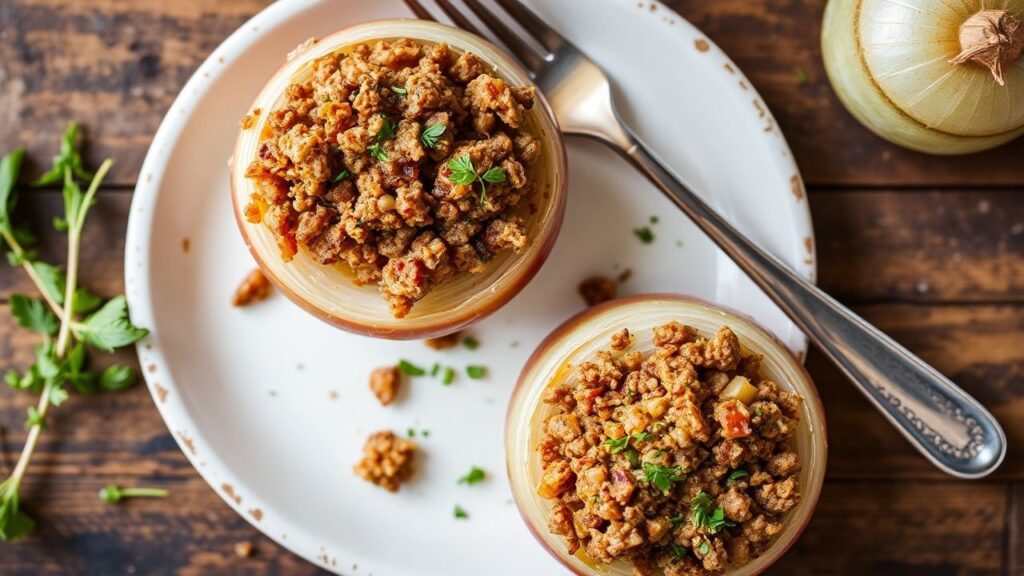
Whether you serve them as a hearty main or a standout side, these baked onion cups deliver warm spices, tender layers, and a filling that stays juicy from first bite to last. When you stick to the onion wall thickness, cover-and-bake timing, and gentle mixing, your results stay consistent every time.
Cumin and paprika rely on proper warming, and onions reward patient baking. Put those two truths together, and the dish practically cooks itself into something memorable.
See also: Savory stuffed onions