
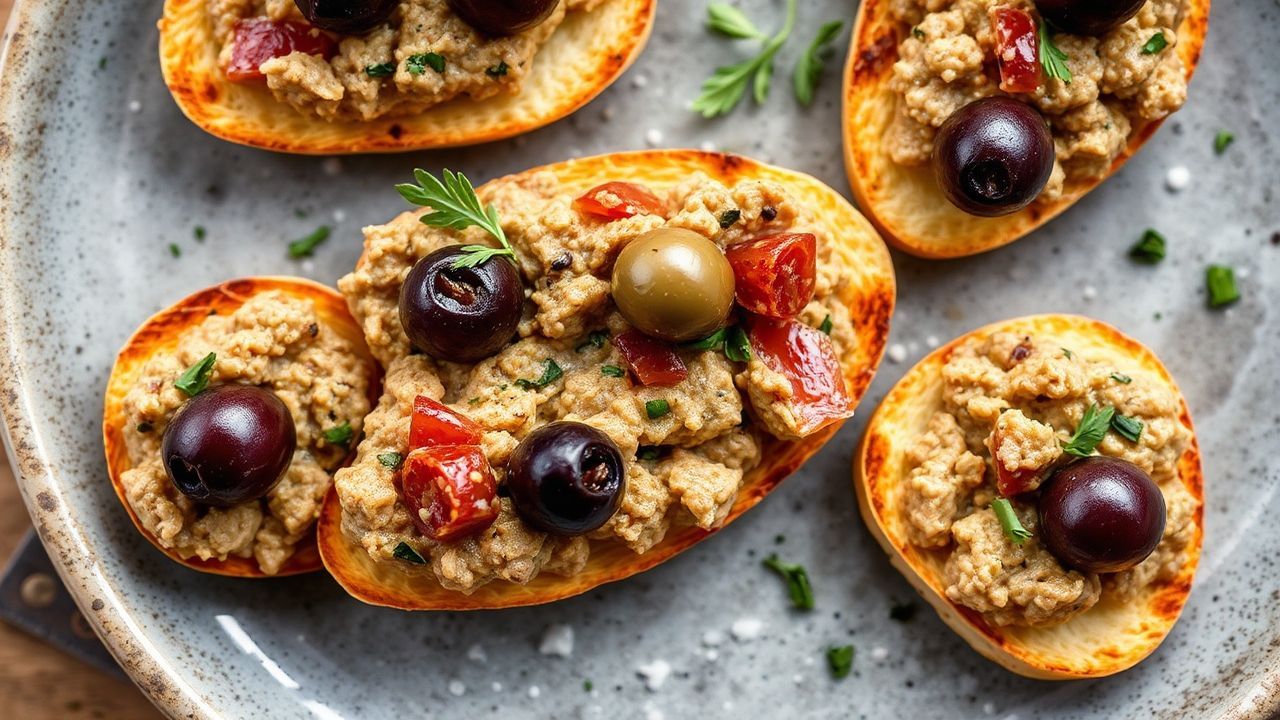
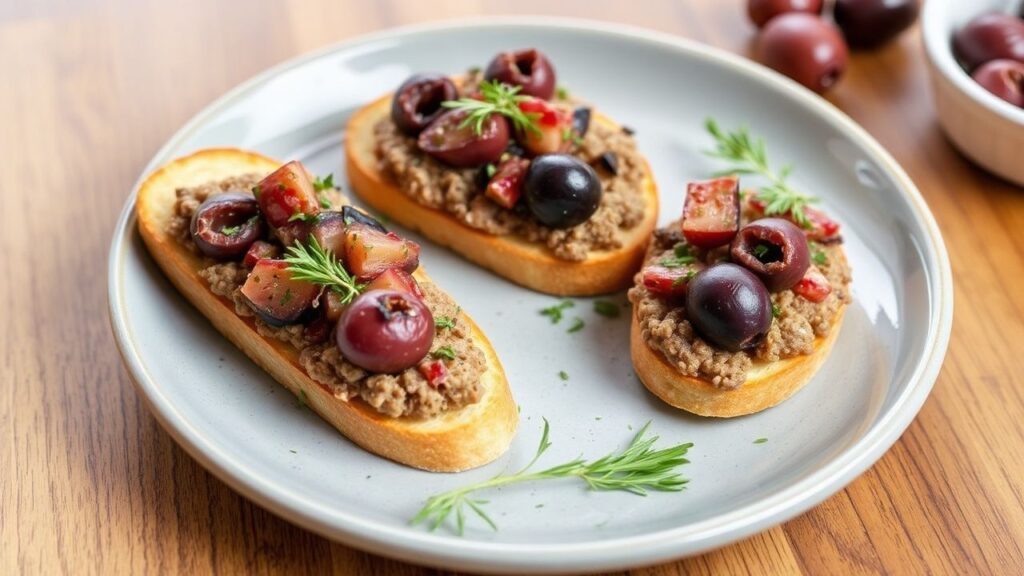
Imagine a small bite that carries the sun-soaked essence of the Mediterranean coast—briny olives, fragrant herbs, and bright citrus piled on crisp, golden crostini. Savory Olive Tapenade Crostini turns simple pantry staples into a bold, crowd-ready appetizer with a distinctly coastal flavor.
- Discovering the Rich Flavors Behind Savory Olive Tapenade
- Why the Flavor Works
- Prep and Cook Time
- Yield
- Difficulty Level
- Ingredients
- Instructions
- Expert Tips for Balancing Ingredients and Enhancing Mediterranean Flair
- Serving Suggestions to Elevate Your Tapenade Crostini Experience
- Q&A
- Q1: What exactly is tapenade, and why is it considered a Mediterranean classic?
- Q2: How do olives influence the flavor profile of the tapenade?
- Q3: What makes crostini the perfect canvas for tapenade?
- Q4: Can you share creative twists to elevate savory olive tapenade crostini?
- Q5: Is homemade tapenade challenging to prepare?
- Future Outlook
These crostini work because tapenade naturally concentrates flavor. You get a salty, olive-forward base, then citrus and herbs lift it. Add crunchy toasted bread, and the texture contrast makes every mouthful more satisfying.
At a Glance
- Savory Olive Tapenade Crostini combine briny olives, capers, herbs, and lemon on toasted bread.
- Short pulsing creates the ideal chunky tapenade texture—smooth is not the goal.
- They taste best at warm-room temperature, not straight from the fridge.
- They scale well for parties: bake bread ahead and assemble at the last minute.
Origin stories often vary by region, but the core idea stays consistent: Mediterranean cuisine uses bold flavors from olives, olive oil, and aromatic herbs. Tapenade-style spreads pair naturally with toasted bread, because bread soaks up flavor without losing crunch when you serve at the right moment.
Discovering the Rich Flavors Behind Savory Olive Tapenade
Savory Olive Tapenade Crostini center on a classic olive spread. You’ll taste a blend of briny olives, earthy capers, and savory herbs, then a clean citrus finish. That combination mirrors the way Mediterranean cooking balances salt, acidity, and aroma.
Tapenade gets depth from the way olives behave in a food processor. Finely chopped ingredients release juices, while chunky pieces keep texture and prevent the mixture from feeling flat. For background on olives as a staple, see olive and olive oil.
Why the Flavor Works
Olives provide natural salt and mild bitterness. Capers add a tangy bite that stays sharp even when the spread rests. Lemon juice then brightens the overall flavor and keeps the tapenade from tasting heavy.
To understand the Mediterranean logic of this balance, it helps to consider cuisine patterns that pair preserved or fermented ingredients with fresh acidity. For a useful overview of regional food traditions, read about the Mediterranean diet.
Prep and Cook Time
- Prep time: 15 minutes
- Cook Time: 10 minutes
- Total Time: 25 minutes
This schedule stays realistic because the tapenade needs mostly chopping and pulsing. The crostini just require quick baking until crisp. That makes Savory Olive Tapenade Crostini a strong option for both weeknight hosting and last-minute gatherings.
Yield
Serves 6 as an appetizer (about 2 crostini per person).
If you want a fuller board, you can stretch servings by making smaller crostini bites. Keep the tapenade consistent and scale the bread slices rather than changing the flavor profile.
Difficulty Level
Easy. You only need basic tools: a baking sheet and a food processor (or strong knife skills). No complex cooking steps matter here; the flavor is built from ingredients.
Most beginners do best by pulsing lightly at first. You can always pulse more, but you can’t easily undo over-processing.
Ingredients
- 1 cup Kalamata olives,pitted and roughly chopped
- 1/3 cup green olives,pitted and roughly chopped
- 2 tablespoons capers,rinsed and drained
- 2 cloves garlic,finely minced
- 3 tablespoons extra virgin olive oil,plus extra for brushing crostini
- 1 tablespoon fresh lemon juice
- 1 tablespoon fresh flat-leaf parsley,chopped
- 1 teaspoon fresh thyme leaves
- 1 teaspoon anchovy paste (optional, for extra umami)
- 1 baguette,sliced diagonally into 1/2 inch pieces
- Coarse sea salt,for seasoning
Choose olives with good flavor and minimal surface bitterness. If you notice excessive salt, you can rinse them briefly, then drain well. This keeps the tapenade lively rather than harsh.
For related culinary context on anchovies and their savory impact, see anchovy. If you prefer a fully vegetarian version, skip the anchovy paste and add a touch more lemon and herbs.
Instructions
- Prepare the crostini base: Preheat your oven to 375°F (190°C). Arrange baguette slices on a baking sheet. Brush both sides lightly with extra virgin olive oil. Sprinkle with a pinch of coarse sea salt.
- Bake the crostini: Toast for 8–10 minutes, flipping halfway. Cook until golden and crisp. Watch closely to avoid over-browning.
- Make the savory olive tapenade: In a food processor, combine Kalamata olives, green olives, capers, and garlic. Add lemon juice and anchovy paste if using. Pulse sparingly for a coarse, chunky texture.
- Finish the tapenade: Transfer the mixture to a bowl. Stir in extra virgin olive oil, chopped parsley, and thyme. Taste and adjust with more lemon juice or salt if needed.
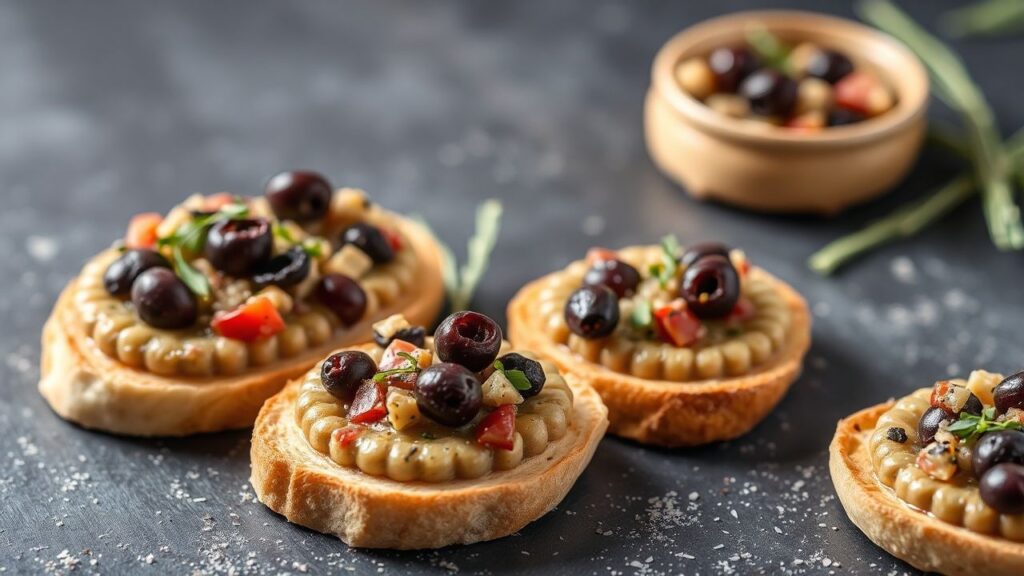
- Assemble and serve: Spoon tapenade onto warm crostini. Garnish with extra parsley or a light drizzle of olive oil.
Timing matters. Toast the bread, then assemble soon so the crostini stays crisp. If you need to hold them, keep tapenade separate and assemble right before guests start eating.
Pulse, taste, and adjust. Because olives vary by brand, the final balance can shift. This is normal, and it’s why tasting after pulsing is a key step for consistent results.
Expert Tips for Balancing Ingredients and Enhancing Mediterranean Flair
- Achieve perfect texture: Avoid over-processing. Chunky tapenade holds aroma and keeps a satisfying mouthfeel.
- Balance briny and fresh flavors: Lemon and herbs should lift the salty base, not mask it. Adjust gradually.
- Substitutions: If Kalamata olives aren’t available, use a mix of black and green olives for a similar briny profile.
- Make-ahead convenience: Prepare the tapenade up to 2 days ahead. Refrigerate tightly covered. Bring to room temperature before serving.
- Herb variations: Add a small amount of oregano or basil for a different regional note.
[TIP]Expert Insight: Pulse the tapenade in short bursts and scrape down the bowl between pulses. This gives you even chunks and prevents a “mushy center” that happens when ingredients settle.
Texture affects taste perception. Chunky tapenade often feels fresher because you notice olive pieces and herb bits separately. That separation also helps the lemon flavor read as brighter rather than sour.
Serving Suggestions to Elevate Your Tapenade Crostini Experience
Serve Savory Olive Tapenade Crostini with Mediterranean sides that add color and contrast. Marinated artichoke hearts and roasted red peppers bring sweetness and a gentle tang that pairs naturally with olives.
You can also build a simple board with sun-dried tomatoes, small bowls of extra virgin olive oil, and a few lemon wedges. This gives guests a chance to customize flavor intensity without making the meal feel complicated.
For drink pairings, keep it light and refreshing. Crisp sparkling water works well, and so do mild non-alcoholic citrus drinks. If you serve wine, choose something dry and not overly oaked so the olive notes stay clean.
For general bread guidance that helps you choose the best toast texture, reference baguette and crostini. Sturdy, crusty bread holds up best against the tapenade’s oil.
[WARNING]Pro-Caution: Don’t assemble hours ahead. Crostini lose crispness as moisture from the tapenade and olive oil softens the bread. If you must prep, toast the crostini early and keep the tapenade covered in the fridge until close to serving.
When you do assemble, keep portions consistent. A thick layer can overwhelm the crunch and turn the bite greasy. Aim for a generous spread that still shows bread edges.
| Nutrient | Per Serving (2 crostini) |
|---|---|
| Calories | 180 |
| Protein | 3g |
| Carbohydrates | 20g |
| Fat | 10g |
Nutrition values depend on olive choice, oil amount, and how thick you spread the tapenade. If you track macros, measure olive oil carefully and keep the lemon-to-olive ratio steady.
If you want to learn more about olives and their culinary history, consult olive. It helps explain why olives stay central across Mediterranean regions.
Q&A
Q1: What exactly is tapenade, and why is it considered a Mediterranean classic?
Tapenade is a flavorful olive-based spread made from chopped or processed olives and often combined with capers, olive oil, and aromatics. It’s popular because it concentrates savory flavor in a spoonable form.
Tapenade also travels well as a make-ahead spread, which fits Mediterranean hosting styles. For more background, see tapenade.
Q2: How do olives influence the flavor profile of the tapenade?
Olives supply salt, natural fats, and a spectrum of bitterness and fruitiness. Kalamata olives tend to feel tangy and briny, while other green olives may taste milder or more vegetal.
Because olive varieties differ, the final balance changes. Taste after pulsing and adjust with lemon and olive oil as needed.
Q3: What makes crostini the perfect canvas for tapenade?
Crostini provide crunch and a mild bread flavor. That matters because tapenade is bold and oily; the bread keeps the bite balanced.
Toast level also changes results. Golden edges usually stay crisp longer than pale toast, especially if you serve soon after assembling.
Q4: Can you share creative twists to elevate savory olive tapenade crostini?
Yes. Add chopped basil, a pinch of oregano, or a small handful of finely grated lemon zest. For extra texture, try a light sprinkle of toasted pine nuts or a few crumbled nuts on top.
If you enjoy stronger savoriness, a tiny amount of anchovy paste can deepen the olive taste. For general context, see anchovy.
Q5: Is homemade tapenade challenging to prepare?
No. Tapenade comes together quickly because it relies on chopping and mixing rather than cooking. Most time goes to pitting olives (if needed) and pulsing for the right texture.
You get best results by pulsing in short bursts, tasting, then adjusting. That simple loop produces a repeatable spread.
Future Outlook
Whether you serve Savory Olive Tapenade Crostini as a dinner-party starter or a weekend snack, the core flavor stays timeless. The briny olives, fresh herbs, and toasted bread combination feels modern because it’s simple, bold, and texture-forward.
As tastes shift toward faster prep and high-impact ingredients, tapenade-style spreads fit perfectly. They let you build flavor ahead of time, then deliver freshness at serving with warm crostini and room-temperature tapenade.
For a final check on culinary context, remember that Mediterranean staples often rely on olive oil, herbs, and preserved ingredients. That logic shows up again and again in dishes like these, which is why the flavor keeps working across decades.
If you want to explore the broader umbrella of Mediterranean food habits, Mediterranean diet offers a helpful framework for understanding why these ingredients pair so well.
See also: Olive Tapenade