
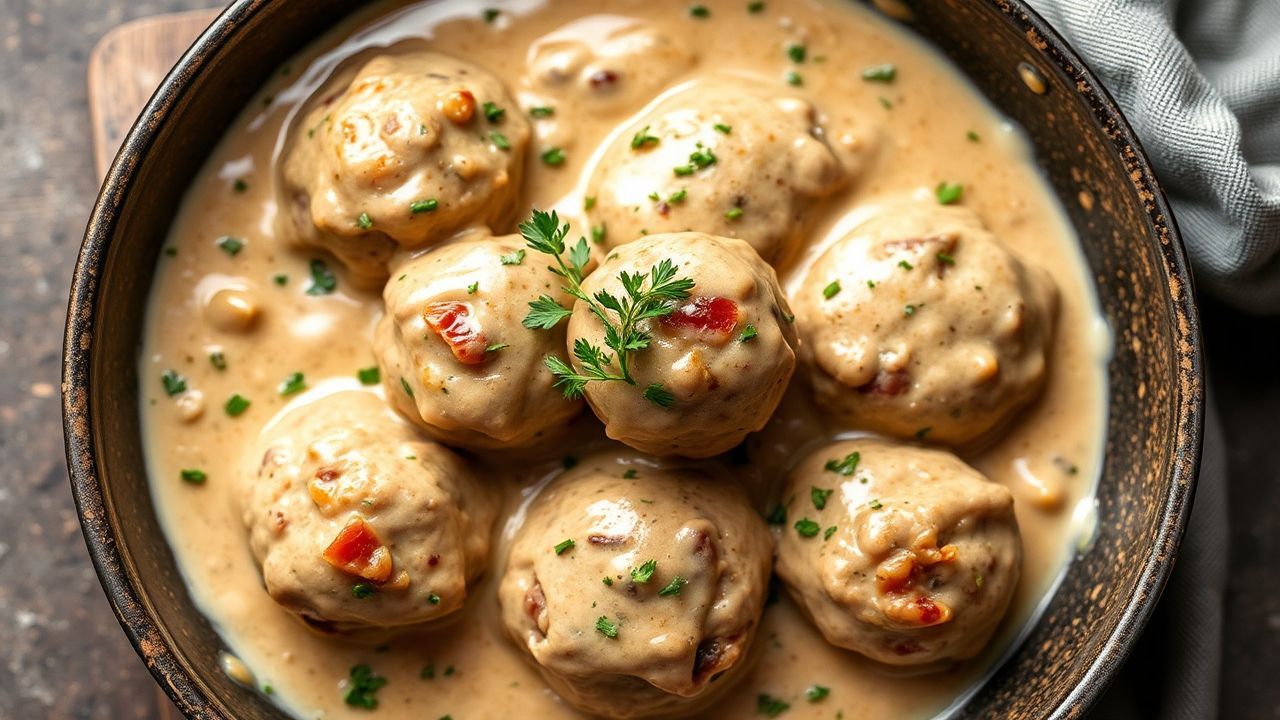
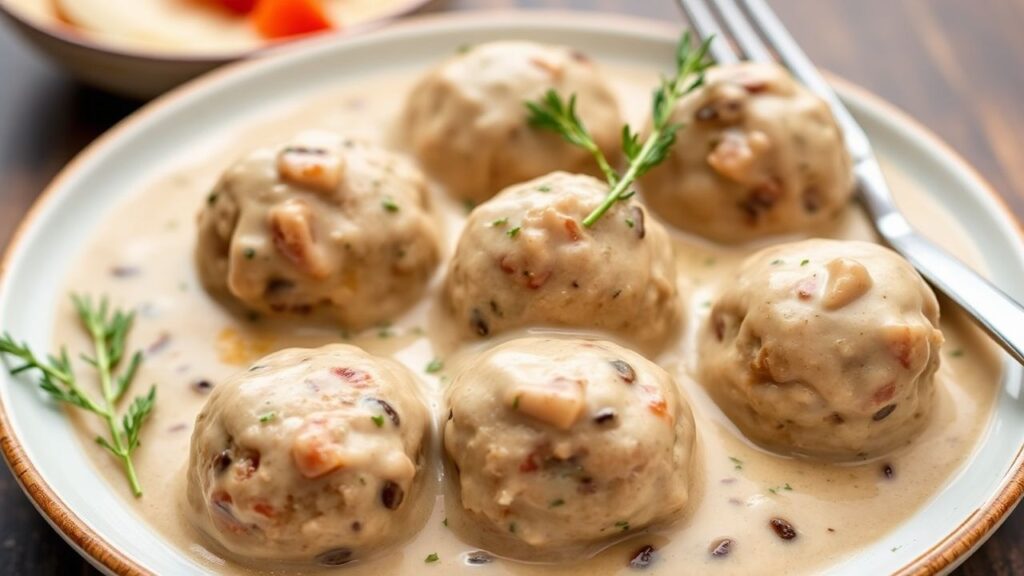
In low-carb cooking, keto turkey meatballs deliver the kind of comfort you want—plus the macros you can trust. These meatballs stay tender with almond flour and egg, then soak up a creamy mushroom sauce that tastes rich without adding sugar.
- Rich Keto Turkey Meatballs in Lush Creamy Mushroom Sauce
- Crafting the Perfect Keto Turkey Meatballs for Maximum Flavor
- Prep and Cook Time
- Yield
- Difficulty Level
- Ingredients
- For the Meatballs
- For the Creamy Mushroom Sauce
- Instructions
- Tips for Making This Keto-Amiable Dish a Weeknight Favorite
- Serving Suggestions
- Nutritional Information
- FAQ
- What makes these keto turkey meatballs work on a ketogenic diet?
- Why caramelize the mushrooms instead of just sautéing them briefly?
- Can I make the sauce ahead of time?
- How do I keep the meatballs tender?
- What mushrooms work best for this recipe?
- Future Outlook
- Lean protein + creamy sauce for real meal satisfaction on keto.
- Easy binder strategy: almond flour and egg replace breadcrumbs.
- Umami depth from caramelized mushrooms and garlic.
- Make-ahead friendly for faster weeknight dinners.
To keep flavors balanced, cook the meatballs in a hot skillet first. Then simmer them gently in the sauce until the centers cook through and the sauce clings to every bite. For ingredient science, it helps to understand how emulsions work in dairy sauces and why gentle heat protects texture (see emulsion).
Rich Keto Turkey Meatballs in Lush Creamy Mushroom Sauce
This recipe pairs ground turkey with herbs and aromatics to build a savory base. Next, it coats the meatballs in a buttery mushroom sauce made with heavy cream and chicken broth.
If you follow ketogenic guidelines, the key is staying consistent with low-carb ingredients. Almond flour acts as a binder while keeping the carb load lower than wheat-based crumbs (background: almonds).
Want a richer sauce? Caramelize mushrooms until they release moisture and turn golden. That browning step increases perceived depth through the Maillard process (see Maillard reaction).
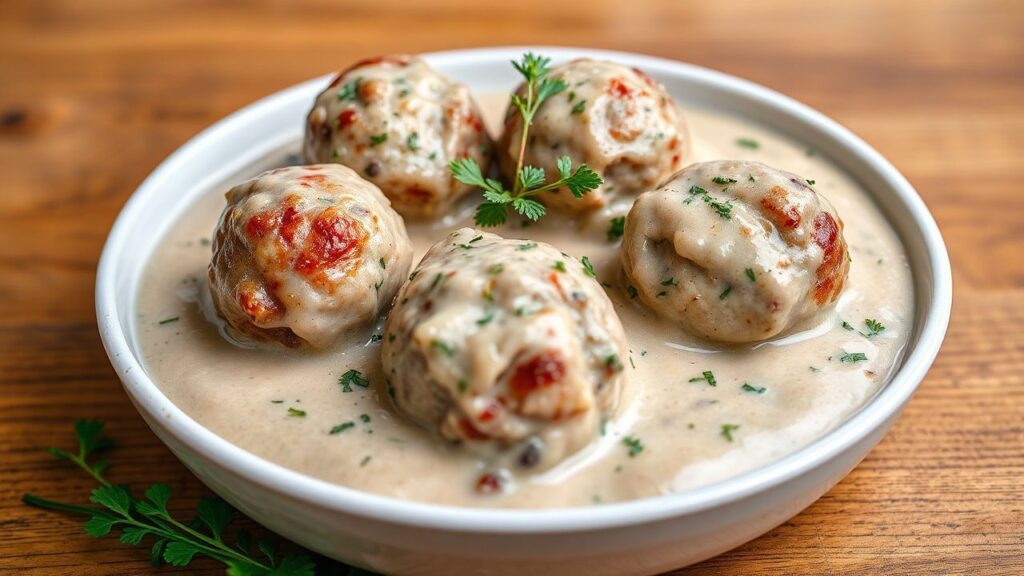
Crafting the Perfect Keto Turkey Meatballs for Maximum Flavor
Keto turkey meatballs work best when you control moisture and doneness. Ground turkey dries out faster than fattier meats, so you need a binder and careful cooking time.
This method uses almond flour and a beaten egg to bind. It also uses grated onion for moisture, then sears first to lock in flavor before the simmer.
For keto texture, avoid overmixing. Overworking the mixture tightens the protein structure and can make the final meatballs feel tougher. Turkey protein changes with heat, and proper cooking keeps them juicy (see turkey).
Prep and Cook Time
Plan about 20 minutes for prep. Cooking takes about 25 minutes, mostly split between searing and simmering.
Overall, expect roughly 45 minutes from start to finish. That timing fits busy weeknights while still delivering a sauce that tastes cooked down, not “poured on.”
Yield
This recipe makes enough for 4 generous servings. It’s portion-friendly for meal prep because the sauce clings well after reheating.
If you want leftovers, divide into containers right after simmering. Let the dish cool briefly, then refrigerate so the sauce thickens naturally.
Difficulty Level
Difficulty stays at easy to medium. You mainly manage three actions: mix, sear, then simmer.
As a result, even if you’re new to keto cooking, you can hit consistent results with steady heat and gentle stirring.
Ingredients
Use fresh herbs when possible. They boost aroma, which matters because keto meals rely on flavor intensity to satisfy without sugar.
Below are the ingredient lists for both the meatballs and the creamy mushroom sauce.
For the Meatballs
- 1 lb ground turkey (preferably 93% lean)
- 1/3 cup almond flour
- 1 large egg, beaten
- 2 cloves garlic, minced
- ½ small onion, finely grated
- 2 tbsp fresh parsley, chopped
- 1 tsp Italian seasoning
- ½ tsp smoked paprika
- ½ tsp salt
- ¼ tsp black pepper
- 2 tbsp olive oil for frying
For the Creamy Mushroom Sauce
- 8 oz cremini mushrooms, sliced thinly
- 2 tbsp unsalted butter
- 2 cloves garlic, minced
- 1 cup heavy cream
- ½ cup chicken broth (low sodium)
- 1 tsp Dijon mustard
- Salt and black pepper to taste
- Fresh thyme leaves for garnish
Instructions
Follow the steps in order so the sauce and meatballs finish at the same time. Use medium heat for searing, then reduce to low once the meatballs go into the sauce.
Keep batches small when searing. Crowding traps moisture and slows browning, which reduces flavor.
- Prepare the meatball mixture: In a large bowl, combine ground turkey, almond flour, beaten egg, minced garlic, grated onion, parsley, Italian seasoning, smoked paprika, salt, and pepper. Mix gently until just combined.
- Form the meatballs: Shape into about 16 equal-sized meatballs (about 1.5 inches). Place on a parchment-lined tray.
- Sear the meatballs: Heat olive oil in a large skillet over medium heat. Sear in batches until golden on all sides, about 8–10 minutes total. Transfer to a plate.
- Make the mushroom base: Add butter to the skillet and melt over medium heat. Sauté mushrooms until soft and caramelized, about 7 minutes, stirring often.
- Add garlic and deglaze: Stir in minced garlic for about 1 minute until fragrant. Pour in chicken broth and scrape up browned bits.
- Build the sauce: Stir in heavy cream and Dijon mustard. Simmer gently until slightly thickened, about 4–5 minutes. Season to taste.
- Combine and finish: Return meatballs to the skillet. Nestle them into the sauce, cover, and simmer on low for about 7 minutes until cooked through.
- Serve and garnish: Top with thyme leaves and serve immediately.
For sauce thickness, let it simmer a little after the cream goes in. If you boil aggressively, dairy can break or turn grainy, especially at higher heat. Gentle simmering protects the smooth texture you want (see milk).
Once you master that, the recipe becomes repeatable. You’ll notice the sauce gets thicker after resting because fats and dairy components re-emulsify as they cool slightly.
That uniformity helps at serving time. Each bite then balances tender turkey with mushroom umami and creamy dairy.
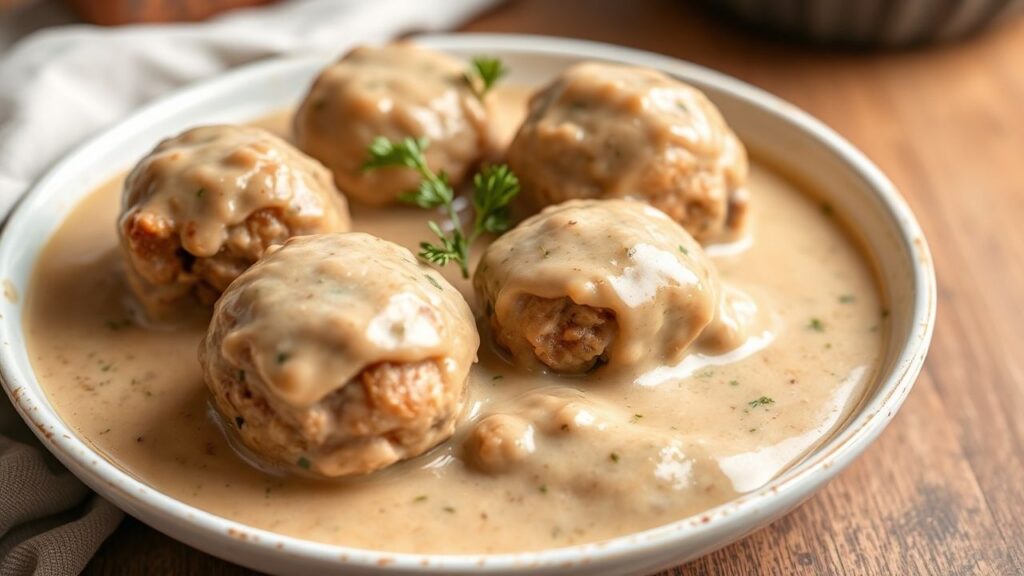
Tips for Making This Keto-Amiable Dish a Weeknight Favorite
Moisture matters most with lean turkey. Use grated onion and an egg, and keep mixing light so the mixture holds together without becoming dense.
Next, caramelize the mushrooms fully before adding garlic and broth. This step builds savory depth without relying on sugar.
- Moisture matters: Use grated onion and egg for tenderness. Mix gently to avoid tough meatballs.
- Almond flour magic: It binds without breadcrumbs and supports keto-friendly structure.
- Mushroom sauce mastery: Don’t rush browning. Let moisture cook off so the sauce tastes layered.
- Make ahead: Refrigerate cooked meatballs in the sauce, then reheat gently.
- Low-carb sides pairing: Serve with cauliflower mash, green beans, or a simple arugula salad.
- Internal reference: If you already make cauliflower mash, keep it keto-style using butter, cream, and seasoning.
- Health note: Turkey is widely used as a lean protein in balanced diets (see turkey as food).
Serving Suggestions
Serve these keto turkey meatballs over cauliflower mash for a classic comfort pairing. The mash soaks up mushroom sauce, so every forkful feels complete.
For extra crunch, add steamed asparagus or roasted Brussels sprouts on the side. Their natural bitterness cuts through rich cream, which improves overall flavor balance.
If you want a lighter plate, serve meatballs in bowls with extra sauce and a side salad. Choose crisp greens and a simple olive-oil vinaigrette to stay keto-friendly (see olive oil).
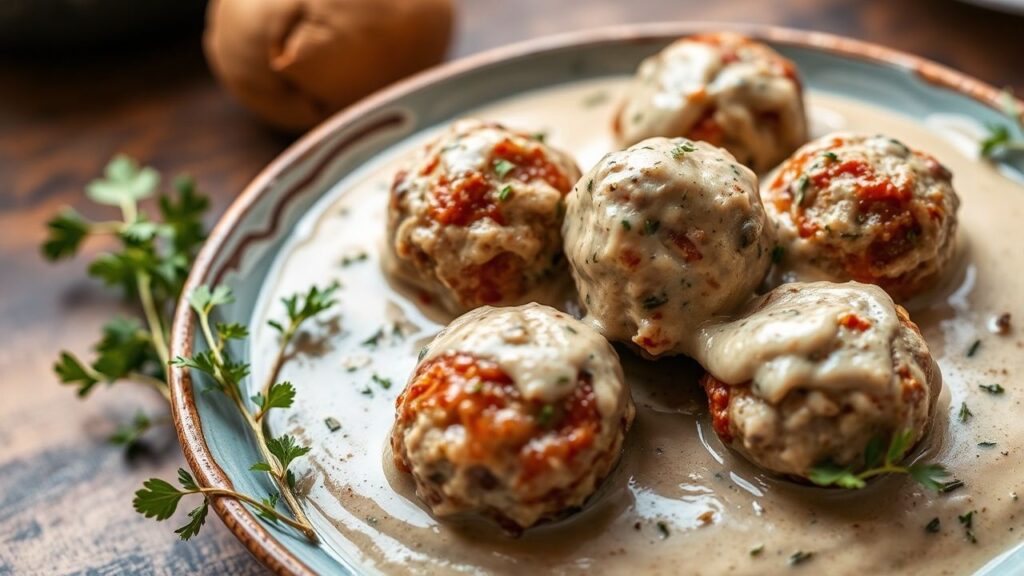
Nutritional Information
This meal fits a typical keto plate when you portion the meatballs and sauce evenly. Nutrition values below assume the listed ingredients and a serving split of about 4.
If you substitute brands, nutrition can shift slightly, especially with almond flour and broth. Always check labels for your specific products.
| Nutrition | Per Serving |
|---|---|
| Calories | 360 kcal |
| Protein | 32 g |
| Carbohydrates | 4 g net carbs |
| Fat | 22 g |
FAQ
Below are quick answers for common questions about keto turkey meatballs and the creamy mushroom sauce. Use these tips to keep texture and flavor consistent every time.
If you want the best results, follow the cooking order closely. Searing first and then simmering gently leads to the most even doneness.
What makes these keto turkey meatballs work on a ketogenic diet?
The recipe uses low-carb binders like almond flour and relies on protein-rich turkey. The sauce uses heavy cream and butter, which keep carbs low while boosting satisfaction.
Also, you avoid wheat-based breadcrumbs, so the carb load stays controlled. That’s the practical reason keto-friendly meatballs taste “normal” while still fitting low-carb targets.
Why caramelize the mushrooms instead of just sautéing them briefly?
Caramelizing mushrooms concentrates flavor as they cook down. That browning adds a deeper, savory taste that cream then carries across the dish.
Quick cooking leaves mushrooms watery and less flavorful. For real umami, give them time to release moisture and turn golden.
Can I make the sauce ahead of time?
Yes. Cook the sauce, cool it, then refrigerate in an airtight container. Reheat slowly on the stove and stir until smooth.
Because dairy sauces thicken as they cool, add a splash of broth or cream to loosen it if needed.
How do I keep the meatballs tender?
Mix gently and don’t overwork the turkey. Overmixing can make the final texture denser, especially with lean meats.
Then simmer the meatballs in the sauce. That gentle finishing step prevents dryness and keeps the centers juicy.
What mushrooms work best for this recipe?
Cremini (baby bella) mushrooms bring a strong, earthy flavor that matches well with creamy dairy. They also hold their shape during sautéing.
If you use button mushrooms, cook them a bit longer to drive off extra moisture. That helps the sauce stay thick and flavorful.
Future Outlook
Rich, creamy keto turkey meatballs fit well into a wider low-carb pattern: cook once, eat twice, and keep flavor high. With the same technique—sear, deglaze, and simmer—you can adapt this base to new herbs and vegetable sides.
Once you understand how heat affects turkey doneness and how simmering protects dairy texture, you gain control over results. That control matters more than fancy ingredients.
If you want to experiment, adjust mushroom variety or add herbs like thyme in the sauce. Keep the process steady and the sauce smooth, and your next dinner will follow the same success path.
See also: keto turkey meatballs