
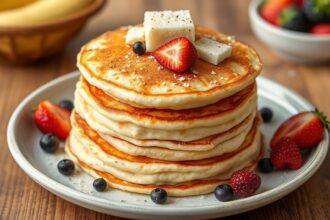


High-protein cottage cheese waffles turn a classic breakfast into a muscle-friendly meal. Cottage cheese brings a creamy curd texture and naturally supports higher protein per serving, especially when you use full-fat or low-fat versions with consistent nutrition labels.
- Why Cottage Cheese Changes Waffle Nutrition
- Ingredients for High-Protein Cottage Cheese Waffles
- Step-by-Step Instructions (Crisp on the Outside)
- Prep Time, Yield, and Difficulty
- Tips for Success (Texture, Moisture, and Make-Ahead)
- Serving Suggestions and Meal Pairings
- Nutritional Snapshot (Per Waffle)
- FAQ
- Can I use low-fat or full-fat cottage cheese?
- Why are my waffles soft instead of crisp?
- How do I make these waffles gluten-free?
- Can I make the batter ahead of time?
- How long do leftovers last?
- Expert Wrap-Up: Make It Yours
- Protein boost: Cottage cheese lifts protein compared with many standard waffle batters.
- Better texture: Ground oats help absorb moisture from curds.
- Simple process: Whisk, fold, cook until crisp, and serve hot.
- Flexible flavors: Keep it savory with herbs or sweet with fruit.
These waffles work for gym days, busy weekdays, and meal-prep routines. They also pair well with both high-protein toppings like Greek yogurt and balanced sides like berries or roasted vegetables.

Power-packed batter starts with the right base ratios. When you combine eggs with cottage cheese, you get structure from proteins and a tender crumb that still browns well in a waffle iron.
For protein science you can trust, think about casein, the main protein in dairy curd. Casein digests more slowly than some fast proteins, which can support satiety after breakfast for many people.
Why Cottage Cheese Changes Waffle Nutrition
Cottage cheese changes both the flavor and the nutrition profile of waffles. It adds moisture, mild tang, and protein without needing heavy syrups or large amounts of butter.
Protein density depends on the brand and fat level. Check your label for protein grams per serving, then match it to your goal; this keeps expectations realistic.
To understand the “sticky” hold and browning, remember that eggs and dairy proteins help set batter during cooking. Egg proteins also support the waffle’s firm yet tender bite, and that structure helps the waffles stay crisp longer.
Waffle crispness comes from moisture loss and starch gel formation at the right temperature. Ground oats also add fiber and help manage extra water from curds, which supports a less gummy center.
Another factor is cooking time. A waffle iron browns faster when the batter load and heat are stable, so aim for steady doneness instead of repeatedly opening the lid.
Ingredients for High-Protein Cottage Cheese Waffles
This ingredient set targets higher protein while keeping the batter easy to fold and cook. Use items you can find in most kitchens, then adjust for dietary needs.
Start with cottage cheese, eggs, and a flour + oat mix for structure. Add a small amount of baking powder to lift, then season with salt and pepper for balanced flavor.
For savory depth, optional garlic powder and cheddar work well. Choose add-ins you enjoy, but keep “wet extras” like salsa or fruit for topping, not batter.
- 1 cup cottage cheese (full-fat for creaminess or low-fat for fewer calories)
- 2 large eggs (room temperature)
- 1 cup all-purpose flour, sifted
- 1/2 cup rolled oats, finely ground
- 1 tsp baking powder
- 1/4 tsp salt
- 1/4 cup milk (dairy or unsweetened plant-based)
- 2 tbsp olive oil (or melted coconut oil)
- 1 tsp garlic powder (optional)
- 1/4 cup shredded sharp cheddar (optional)
- Freshly cracked black pepper, to taste
If you swap grains, keep an eye on water absorption. Oats expand and absorb more as they hydrate, and that can affect spread and crispness.
For a deeper food science reference, see starch. Starches thicken during heating, and that’s a big reason waffles set into a firm texture.
Step-by-Step Instructions (Crisp on the Outside)
This method stays simple and repeatable. You’ll preheat the waffle iron, mix wet ingredients, combine dry ingredients, then fold and cook.
Use a gentle fold, not aggressive stirring. Overmixing can develop tough gluten when you use all-purpose flour.
Prep and batter mixing
First, preheat the waffle iron and lightly grease it. Batter sticks less when the surface heats fully before cooking.
Whisk eggs until slightly frothy, then fold in cottage cheese. Keep some small curds for texture and visual appeal.
In a separate bowl, mix flour, ground oats, baking powder, salt, and garlic powder (if using). Then fold the dry mix into wet until just combined.
Add milk and oil last, then stir minimally. Stop as soon as the batter looks smooth with no dry flour patches.
For reference on why gentler mixing matters, consult gluten. Less development helps keep waffles tender instead of chewy.
Cook and serve
Portion about 1/2 cup batter per waffle, depending on your iron’s size. Close the lid and cook until golden brown and crisp.
Cooking usually takes 4–5 minutes, but follow your waffle iron model. If your first waffle browns too fast, reduce the next portion slightly or shorten cook time.
Remove waffles carefully, then place them on a rack. A cooling rack lets steam escape so the outside stays crisp.
Keep the oven warm (about low heat) while you finish cooking. Don’t stack waffles right away, or steam will soften their crust.
Also avoid long waits between batches. If batter sits for too long, oats can keep absorbing liquid and change the batter thickness.
Prep Time, Yield, and Difficulty
This recipe fits weekday cooking. You can mix batter quickly, then let the waffle iron do the work.
When you follow the fold-and-cook timing, you’ll get consistent browning and a stable texture.
Planning time: 10 minutes
Cooking time: 15 minutes
Total time: 25 minutes
Yield: Makes 4 large waffles (serves 4)
Difficulty Level: Easy. Suitable for beginners who want a reliable high-protein breakfast with minimal technique.
Tips for Success (Texture, Moisture, and Make-Ahead)
High-protein cottage cheese waffles succeed when you manage moisture. Cottage cheese adds liquid from the curd, so you need absorption and correct cooking.
Ground oats help absorb extra moisture and improve crumb stability. If you use rolled oats that aren’t finely ground, the batter may stay wetter and the waffles can turn soggy.
- Texture balance: Finely ground oats absorb moisture and support crisp edges.
- Make ahead: Prepare batter up to the night before and refrigerate, covered.
- Substitutions: For gluten-free, use a 1:1 gluten-free flour blend that includes a binder.
- Waffle crispness: Use a cooling rack and avoid stacking until fully cool.
For meal prep, allow waffles to cool before storing. Warm waffles trap steam in the container and reduce crispness on reheating.
If you want a nutrition reference you can trust, look at dietary fiber. Oats add fiber, which supports digestive health for many people.
Serving Suggestions and Meal Pairings
Serve these waffles hot with toppings that match your protein goal. Greek yogurt adds extra protein, while fruit improves flavor and helps balance savory richness.
For sweet options, try a spoon of Greek yogurt, a handful of berries, and a drizzle of honey if you want a light sweetness. For crunch, add nuts or seeds like chia.
For savory options, add avocado, chives, and a side of sautéed spinach or grilled mushrooms. The mild tang from cottage cheese pairs well with herbs and umami-rich vegetables.
You can also make them part of a complete plate. Pair with a fresh tomato-cucumber salad tossed in lemon vinaigrette, or add roasted vegetables for extra volume.
To support long-lasting energy, consider a balanced plate of protein, fiber, and healthy fats. That pattern aligns with basic nutrition principles used in many dietary guidelines.

For an on-the-go snack, pack waffles with yogurt on the side. Reheat in a toaster or oven so the outside stays crisp instead of chewy.
Nutritional Snapshot (Per Waffle)
Nutrition varies by brand and ingredient choices. Use this as a close estimate, then adjust after checking your product labels.
These values assume the ingredient quantities listed earlier and typical cooking loss. If you use different cheese fat levels or a plant-based milk, protein and calories will shift.
| Nutrient | Per Waffle |
|---|---|
| Calories | 210 kcal |
| Protein | 15 g |
| Carbohydrates | 18 g |
| Fat | 9 g |
If you want to understand how protein supports muscle repair, review protein. Muscle building depends on overall calories, training, and protein distribution across meals.
For athletes, consistent breakfast protein can make it easier to hit daily targets. Focus on what you can repeat week after week.
FAQ
Can I use low-fat or full-fat cottage cheese?
Yes. Full-fat often gives a richer taste and softer crumb, while low-fat can reduce calories. Either way, check the nutrition label for protein grams to match your goal.
Why are my waffles soft instead of crisp?
Soft waffles usually come from excess moisture or undercooking. Make sure oats are finely ground, don’t overfill the iron, and use a rack instead of stacking right away.
How do I make these waffles gluten-free?
Swap the all-purpose flour for a 1:1 gluten-free flour blend. Choose one that includes a binder, then keep the mixing gentle to avoid a tough or gummy batter.
Can I make the batter ahead of time?
Yes. Refrigerate covered overnight for convenience. After chilling, give the batter a quick stir and cook right away so the oats don’t fully absorb liquid.
How long do leftovers last?
Store cooked waffles in an airtight container in the refrigerator for up to 3 days. For longer storage, freeze for up to 1 month, then reheat in a toaster or oven to restore crispness.

When you treat the waffle iron like a heat tool and manage moisture in the batter, high-protein cottage cheese waffles stay crisp, satisfying, and easy to repeat. Use the tips above, pick toppings you enjoy, and keep your breakfast consistent with your protein targets.
Expert Wrap-Up: Make It Yours
You can fine-tune these waffles without changing the core method. If you want a sweeter profile, add cinnamon and vanilla to the batter and top with fruit or yogurt.
If you prefer savory, add garlic powder and cheddar, then finish with herbs and sautéed vegetables. Keep the cooking time steady, and your waffles will come out crisp and protein-forward.
For more on food structure and cooking behavior, explore protein denaturation. Heat changes egg and dairy proteins, which helps set the waffle’s final texture.

See also: cottage cheese waffles