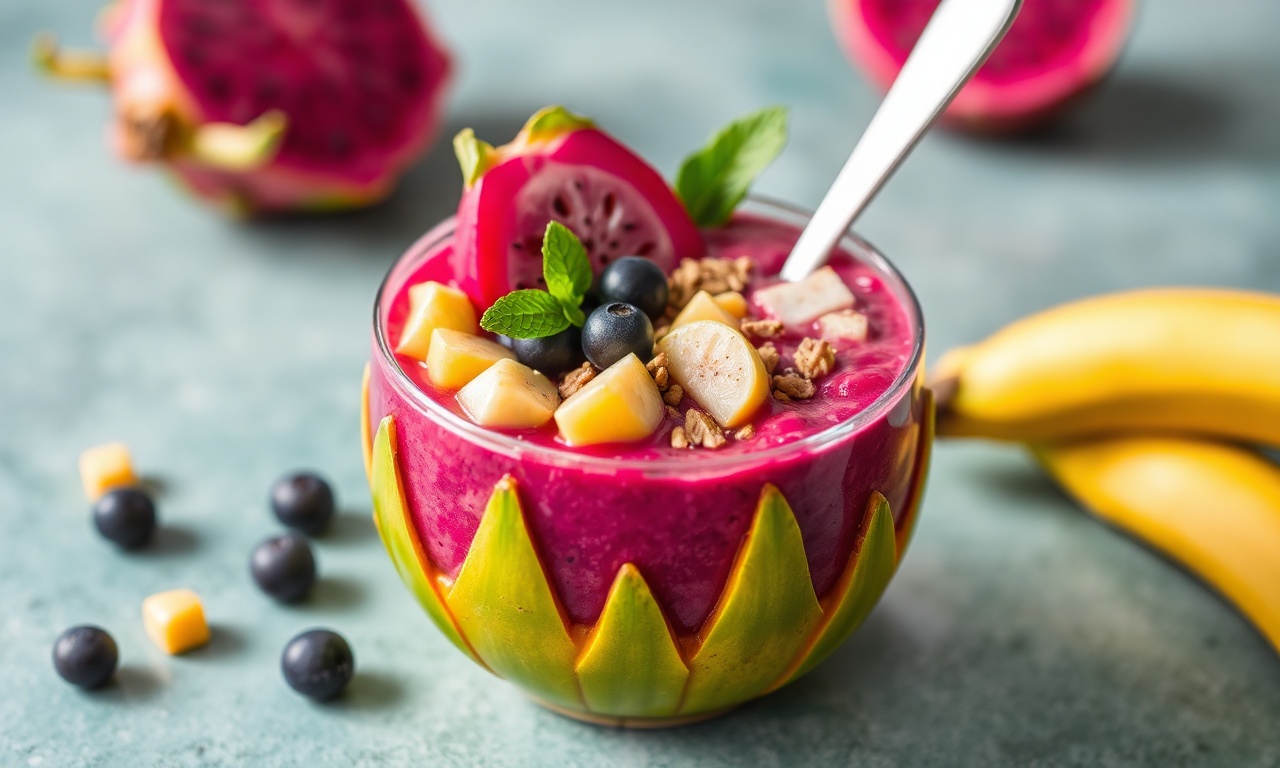
Beautiful Thick Pitaya Smoothie Bowl = a thick, creamy dragon fruit base that feels like a treat and works like a smart breakfast. Pitaya’s mild sweetness and tiny crunching seeds blend well with frozen fruit, so your bowl stays naturally flavorful without needing heavy additives.
At a Glance
- Thick texture: use frozen fruit and a high-speed blender to avoid watery bowls.
- Balanced flavor: banana and mango add sweetness while pitaya keeps a bright, tangy edge.
- Better toppings: chia, coconut, and berries improve texture and satiety.
- Make-ahead: blend the base up to 24 hours in advance for faster mornings.
Dragon fruit (pitaya) is often described as a “superfruit,” but the practical win here is how it behaves in smoothies: it blends into a smooth puree and brings a striking magenta color. For nutrition context, you can look at the general background on fruits and antioxidants in antioxidants, plus the fruit’s botanical basics in dragon fruit.
In this recipe, you’ll learn how to build a thick pitaya smoothie bowl and then upgrade it with toppings that add crunch, chew, and bright pops. You’ll also get a reliable method for selecting fruit, adjusting thickness, and serving without losing that fresh, vivid look.
Why a Thick Pitaya Smoothie Bowl Works
A smoothie bowl should feel thick enough to hold toppings. That means you need enough frozen solids and the right blending technique to create a stable puree that doesn’t separate fast.
Pitaya contributes flavor and color, while frozen banana and mango do most of the texture work. If you want a more nuanced flavor, add ginger or turmeric, then let the toppings carry the final contrast.
Flavor profile you can actually taste
Pitaya tastes mildly sweet with a gentle tang. When you blend it with banana, the sweetness reads softer and the bowl feels more dessert-like.
Mango adds a tropical aroma, while coconut milk makes the base round and creamy. If you enjoy spicy notes, ginger adds warmth without overpowering the fruit.
Texture science (simple version)
Frozen fruit creates ice crystals that break down into a thicker blend. If your base feels thin, you usually added too much liquid or used fruit that wasn’t frozen enough.
Chia seeds also help with mouthfeel. They thicken slightly as they hydrate, which supports the “spoonable” texture that makes smoothie bowls satisfying.
Ingredients for a Creamy Pitaya Base
This thick pitaya smoothie bowl recipe makes 2 generous bowls. It uses ingredients that blend fast and hold texture, so your toppings stay on top instead of sinking.
Choose ripe pitaya for best flavor. For extra creaminess, use coconut milk; for a lighter bowl, swap in unsweetened almond or oat milk.
Main fruit and dairy alternatives
- 1 large ripe pitaya (dragon fruit), peeled and cubed
- 1 frozen banana, sliced
- 1/2 cup frozen mango chunks
- 1/2 cup coconut milk (or almond milk for a lighter option)
Thickening and flavor boosters
- 1 tablespoon chia seeds
- 1 teaspoon raw honey or maple syrup (optional)
- 1/2 teaspoon freshly grated ginger
- 1/4 teaspoon ground turmeric (optional)
Chia seeds supply natural fiber and help thicken liquids. If you want general background, see chia for a quick overview of this seed’s role in nutrition and hydration.
Pro note: The pitaya flesh contains lots of water. That’s why your frozen banana and mango matter so much for thickness.
Instructions: Make It Thick, Smooth, and Spoonable
Start by preparing pitaya cubes. Then blend in the right order so the base turns smooth quickly and stays thick enough for toppings.
Follow these steps closely, then adjust with small liquid changes. You’ll get a consistent bowl with less trial and error.
Step-by-step method
- Prepare the pitaya: Cut the dragon fruit in half, scoop the flesh, and cube it for easier blending.
- Blend the base: Add pitaya cubes, frozen banana, mango, and coconut milk to a high-speed blender. Blend until smooth and creamy. If needed, add a splash of milk—just one tablespoon at a time.
- Add boosters: Add chia seeds, honey or maple (if using), ginger, and turmeric. Blend again briefly until evenly mixed.
- Check texture: Your mixture should be scoopable like thick sorbet. If it’s too thick, loosen with 1–2 tablespoons milk. If it’s too thin, add a handful of frozen mango or a few ice cubes and blend again.
- Serve immediately: Pour into chilled bowls and top right away for the best contrast and freshness.
Thickness troubleshooting
If your bowl turns runny, you likely blended with too much liquid or used fruit that wasn’t fully frozen. Return the mixture to the blender and add frozen pieces before blending again.
For extra stability, chill the bowls and keep the base moving toward serving speed. Thick pitaya smoothie bowls taste best when they’re cold and fresh, not when they sit warm while you plate.
Toppings That Match the Pitaya Flavor
Toppings turn a simple puree into a full meal with better texture. Aim for contrast: creamy base plus crunchy flakes, chewy fruit, and bright seeds.
Pick 3–5 toppings so the bowl stays balanced. Too many elements can dilute the flavor of pitaya and make the bowl harder to eat.
Crunch, chew, and color
Try toasted coconut flakes for crunch, goji berries for chew, and pomegranate seeds for bright bursts. Add sliced kiwi or fresh berries to deepen the tropical vibe.
For a darker contrast, sprinkle raw cacao nibs. If you want nutty richness, add chopped roasted almonds or cashews. A small drizzle of honey or a spoon of almond butter also boosts aroma.
How to build visual balance
Spread toppings in sections. Use circles, stripes, or alternating rows so every bite includes both fruit and crunch.
Keep heavier toppings in small amounts and reserve delicate toppings—like thin fruit slices—for the top layer so they stay visually fresh.
Nutritional Snapshot (Per Serving Estimate)
Nutrition varies by ingredient brands and portion sizes, but this recipe is designed to stay moderate for a smoothie bowl. The chart below assumes the ingredient amounts listed earlier.
For general reading on dietary components, you can compare carbohydrates, fat, and protein to see why fruit, seeds, and milk choices change the final numbers.
| Nutrient | per Serving |
|---|---|
| Calories | 180 kcal |
| Protein | 3 g |
| Carbohydrates | 38 g |
| Fat | 4 g |
Chef’s Notes for Better Results
Small choices make a big difference with thick pitaya smoothie bowls. Use these notes to improve creaminess, flavor, and consistency.
Keep an eye on fruit ripeness and blending timing. That’s how you prevent a bowl that looks great but eats watery.
Substitutions that keep the texture
- Milk swap: Replace coconut milk with oat or cashew milk for a different flavor and still-solid blending results.
- Sweetness control: If pitaya is very ripe, you may skip honey or maple. Taste first.
- Seed boost: Add hemp seeds or ground flaxseed alongside chia for extra texture and nutrition.
Make-ahead and storage
- Base prep: Blend the base up to 24 hours ahead and store in an airtight container in the fridge.
- Before serving: Stir well, then add 1–2 tablespoons milk if needed to restore scoopable thickness.
- Best quality: For peak flavor and color, serve as soon as possible after blending.
Fruit selection tips
Choose pitaya that feels fresh and evenly colored. Avoid overly soft spots and dark patches, since they can taste fermented and affect the smoothie bowl’s brightness.
For general fruit ripeness and texture logic, see ripening. Then use your senses: color, firmness, and mild aroma usually guide the best results.
Serving Ideas for a Full Breakfast Bowl
Use this thick pitaya smoothie bowl as a base for a balanced breakfast. Add toppings that bring fiber and healthy fats, then keep portions reasonable.
If you want a more filling bowl, add a scoop of plain yogurt or a spoon of nut butter on top. That helps satiety without changing the core pitaya flavor.
For a simple topping lineup, aim for one crunchy element, one chewy fruit, and one seed or nut. This approach improves mouthfeel in every bite.

FAQ
Is pitaya smoothie bowl supposed to be thick or pourable?
Thick. A thick pitaya smoothie bowl holds toppings and keeps a scoopable texture. Use frozen banana and mango, then adjust liquid slowly until it feels like thick sorbet.
Can I use frozen dragon fruit instead of fresh?
Yes. Frozen dragon fruit works well and helps you get a consistent chill. Use the same blending steps, and adjust thickness with small liquid changes.
How do I make the color look extra vivid?
Serve immediately after blending and keep bowls chilled. If you add turmeric, use a small amount so it supports warm color without dulling the bright magenta.
What are the best toppings for texture?
Use a mix: crunchy toasted coconut flakes, chewy goji berries, and bright pomegranate seeds. Finish with chia or cacao nibs for extra contrast.
Is this recipe vegan and gluten-free?
It can be vegan and gluten-free if you use plant-based milk and check that any sweeteners or add-ins have no hidden allergens. With the listed ingredients, it naturally fits those diets.
See also: Pitaya Smoothie