
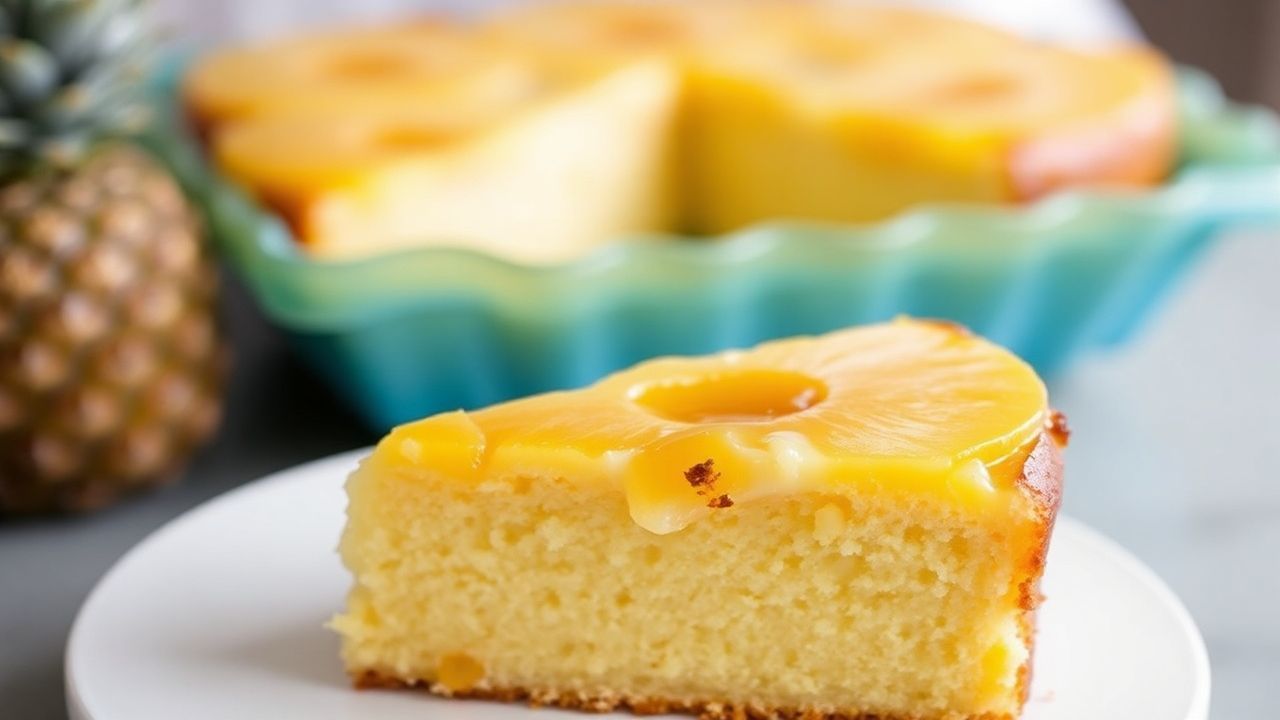
There’s something undeniably captivating about pineapple upside-down cake—the glistening caramelized fruit, the tender crumb, and the clean mix of sweet and tang. Now pair that classic comfort with plant-based ingredients, and you get vegan pineapple upside-down cake: a tropical dessert that tastes like sunshine and bakes reliably at home.
- Choosing Pineapples for Vegan Pineapple Upside-Down Cake
- Mastering a Moist Vegan Cake Batter
- Crafting the Caramel Glaze for Vegan Pineapple Upside-Down Cake
- Assembling and Baking the Cake
- Flipping, Serving, and Keeping the Topping Glossy
- At a Glance
- Prep and Cook Time
- Yield
- Difficulty Level
- Ingredients
- Instructions
- Chef’s Notes
- Serving Suggestions
- Q&A: Vegan Pineapple Upside-Down Cake
- What makes pineapple upside-down cake “upside-down,” and how does that change with vegan baking?
- Which ingredients keep vegan pineapple upside-down cake moist?
- How do I get glossy caramel topping without dairy?
- Fresh pineapple or canned pineapple—what works better?
- How do I flip the cake without ruining the fruit arrangement?
- Can I add extra tropical flavors like lime or coconut?
- Wrapping Up
Below, you’ll follow a tested method for building a glossy caramel layer, layering fruit, and baking a moist cake without eggs or dairy. You’ll also learn timing cues for flipping, so the top stays intact and the caramel keeps its shine.
- Use ripe pineapple for the right texture and natural sweetness.
- Cook caramel briefly and pour hot so it sets into a glossy topping.
- Fold batter gently to keep the vegan crumb soft.
- Rest before flipping to protect fruit placement.
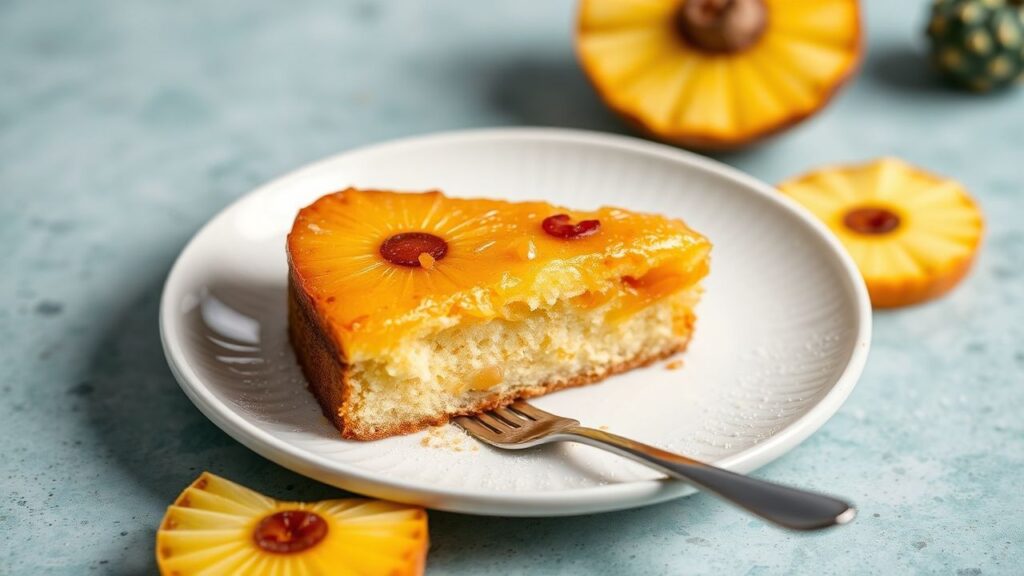
Start by assembling ingredients and setting up your pan. Then you’ll build the topping first, arrange pineapple rings second, and finish by layering batter. This order matters because caramel needs heat to flow, and fruit needs to bond as the cake bakes.
For best results, use a 9-inch round cake pan. If your pan is dark or nonstick, reduce baking by 2–3 minutes, since color forms faster on the outside.
Choosing Pineapples for Vegan Pineapple Upside-Down Cake
Pineapple quality determines both flavor and mouthfeel in vegan pineapple upside-down cake. Choose fruit that smells sweet near the base and gives slightly when you press the body. Very firm pineapples taste less sweet, while overly soft ones release too much juice.
Cut pineapple into about 1/2-inch rings for even caramel coverage. When rings vary in thickness, some pieces float while others sink, which can blur the classic pinwheel look.
Fresh pineapple works beautifully, but canned pineapple can also deliver consistent results. If you use canned, drain well and pat the rings lightly with a paper towel to avoid watery topping.
To understand why pineapple sugar and acidity change as it ripens, you can review general fruit ripening background on ripening. The practical takeaway: aim for “sweet and springy,” not rock-hard or mushy.
Mastering a Moist Vegan Cake Batter
To keep the crumb tender without eggs or dairy, you need two things: moisture and structure. In vegan baking, moisture often comes from plant milk and fruit-based binders like applesauce or mashed banana, while structure comes from flour plus a leavening system.
Use unsweetened plant-based milk (oat or almond) plus unsweetened applesauce (or ripe mashed banana). Whisk just until smooth. Overmixing develops excess gluten in wheat flour, which can make the cake feel dense.
For lift, combine flour with baking powder and a small amount of baking soda. Add a bit of apple cider vinegar to boost reaction and help the batter rise more evenly. This approach aligns with general chemistry of acid-base reactions described at acid–base reactions.
When you fold, stop as soon as no dry streaks remain. The batter should look thicker than pancake batter, but still pourable. That texture helps it settle over the fruit layer.
Crafting the Caramel Glaze for Vegan Pineapple Upside-Down Cake
The caramel layer gives this cake its signature glossy top. Keep the heat gentle and cook only until the mixture bubbles and thickens slightly. If you cook too long, sugar can turn bitter and harden.
In a saucepan, melt vegan butter with coconut sugar (or brown sugar), then stir in maple syrup for flavor depth. Cook for about 3–4 minutes, stirring often, until it coats the spoon lightly.
Then pour the caramel into the pan while it’s still fluid. Arrange pineapple rings right away so they press into the syrup and seal on the bake.
Caramel behavior depends on sugar melting and water evaporation. If you want a quick science reference, check caramelization and sugar. For cooking, rely on visual cues: bubbling plus a thicker, shiny look.
[TIP]Expert Insight: Taste-testing caramel while cooking is risky because it’s very hot. Instead, judge doneness by texture: when bubbles slow and the mixture clings to a spoon, you’re ready to pour.
Keep a heat-safe pitcher or ladle ready so you can pour evenly. Uneven caramel creates uneven browning and can trap pineapple unevenly.
Assembling and Baking the Cake
Assemble in a clean sequence: caramel first, pineapple second, batter third. This order prevents gaps between fruit and topping and helps the cake release cleanly.
Arrange rings in overlapping circles. Leave a small center gap if you plan to add a cherry or second fruit center. Press each ring lightly into the warm caramel.
Mix dry ingredients separately, then whisk wet ingredients separately. Combine and fold gently. Spread batter over pineapple and smooth the top so it bakes evenly.
Bake at 350°F / 175°C for about 38–42 minutes. Check doneness with a toothpick in the center; it should come out with a few moist crumbs, not wet batter.
[WARNING]Pro-Caution: Avoid opening the oven during the first 25 minutes. The temperature drop can cause uneven rise, which may pull batter away from the fruit layer and weaken the final flip.
Once baked, rest the cake for 10 minutes. This short cooling window lets caramel set slightly so it doesn’t flood when you invert.
Flipping, Serving, and Keeping the Topping Glossy
The flip is where many cakes succeed or fail. Use a serving plate larger than your pan. Place the plate on top, hold both securely, and invert in one smooth motion.
If any pineapple sticks, gently nudge it back into place while the topping is warm. Caramel loosens as it cools, but it still stays pliable for a few minutes.
Let the cake cool at least 20 minutes for the cleanest slices. Serve slightly warm for the best aroma and soft crumb. Then add toppings like coconut whipped cream or a light dusting of toasted coconut flakes.
For an additional flavor layer, consider a pinch of cinnamon or nutmeg in the batter. Keep spices subtle so pineapple remains the main note.
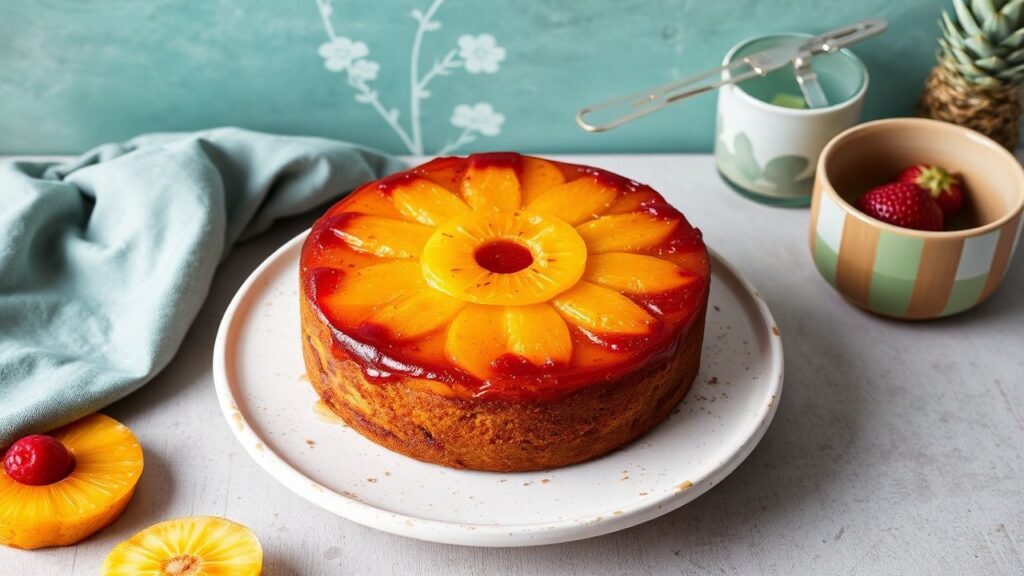
At a Glance
These quick checks help you nail vegan pineapple upside-down cake from pan to plate.
Use them while you bake, not after the cake cools.
- Rings: 1/2-inch thickness for even caramel absorption.
- Caramel: bubble + thicken slightly; pour hot.
- Batter: fold gently; stop once combined.
- Flip: rest 10 minutes; invert confidently.
Prep and Cook Time
Plan your bake so the caramel and topping stay in sync with timing.
This schedule fits most home ovens.
- Prep Time: 20 minutes
- Cook Time: 40 minutes
- Total Time: 1 hour
Yield
This recipe makes a cake that serves about eight slices.
It also keeps well enough for a second day treat.
Serves 8 delightfully portioned slices.
Difficulty Level
The method feels simple once you follow the order of steps.
You mainly need patience with caramel timing and a careful flip.
Medium — approachable for bakers ready to elevate their vegan dessert repertoire.
Ingredients
Gather everything before you start. Warm caramel moves fast.
Use fresh pineapple when you can, and drain canned pineapple thoroughly if you choose it.
- 1 fresh ripe pineapple, peeled, cored, and sliced into ½-inch rings
- ½ cup coconut sugar
- ¼ cup vegan butter or refined coconut oil
- 2 tbsp pure maple syrup
- 1 ½ cups all-purpose flour, sifted
- 1 cup unsweetened plant-based milk (oat or almond recommended)
- ½ cup unsweetened applesauce
- 1 cup cane sugar
- 2 tsp baking powder
- ½ tsp baking soda
- 1 tsp vanilla extract
- ½ tsp fine sea salt
- 1 tbsp apple cider vinegar
Instructions
Follow the sequence closely. It keeps the caramel glossy and the crumb tender.
If you’re new to flipping cakes, do a dry run by setting your plate in position before you invert.
- Prepare the caramel glaze: In a saucepan over medium heat, melt the vegan butter and coconut sugar together, stirring constantly. Add maple syrup and cook until the mixture bubbles and thickens slightly (about 3–4 minutes). Remove from heat and pour evenly into a 9-inch round cake pan, tilting to coat the bottom.
- Arrange pineapple rings: Place pineapple slices onto the warm caramel glaze in overlapping concentric circles. Press lightly so they sit snugly in the topping.
- Mix dry ingredients: In a large bowl, whisk the flour, cane sugar, baking powder, baking soda, and salt until evenly combined.
- Combine wet ingredients: In a separate bowl, whisk the plant-based milk, applesauce, vanilla extract, and apple cider vinegar.
- Create the batter: Pour wet ingredients into dry ingredients and gently fold until just combined. Avoid overmixing.
- Pour batter over pineapples: Spread batter evenly over the pineapple layer. Smooth the top with a spatula.
- Bake: Bake at 350°F (175°C) for 38–42 minutes. Insert a toothpick in the center; it should come out with a few moist crumbs.
- Cool and invert: Rest in the pan for 10 minutes. Run a knife around the edges to loosen. Invert onto a serving plate, keeping the pineapple and caramel on top.
Chef’s Notes
These adjustments help you customize flavor and texture without breaking the structure.
Use them to match your pantry and schedule.
- Ingredient substitutions: Swap applesauce for mashed ripe banana for a slightly different fruity undertone.
- Make-ahead: This cake tastes great the next day. Store covered at room temperature or refrigerate for up to 3 days.
- Gluten-free option: Use a 1:1 gluten-free baking flour blend. Choose a blend with a binder for best crumb structure.
- Caramel tip: Once fully melted and bubbling, don’t stir constantly. Keep movement gentle to prevent grainy sugar.
- Presentation: Add toasted walnuts or sliced almonds on the caramel layer before baking for extra crunch.
Serving Suggestions
Warm slices taste best because caramel aroma rises as the cake relaxes.
Pair with coconut-based cream for a classic tropical profile.
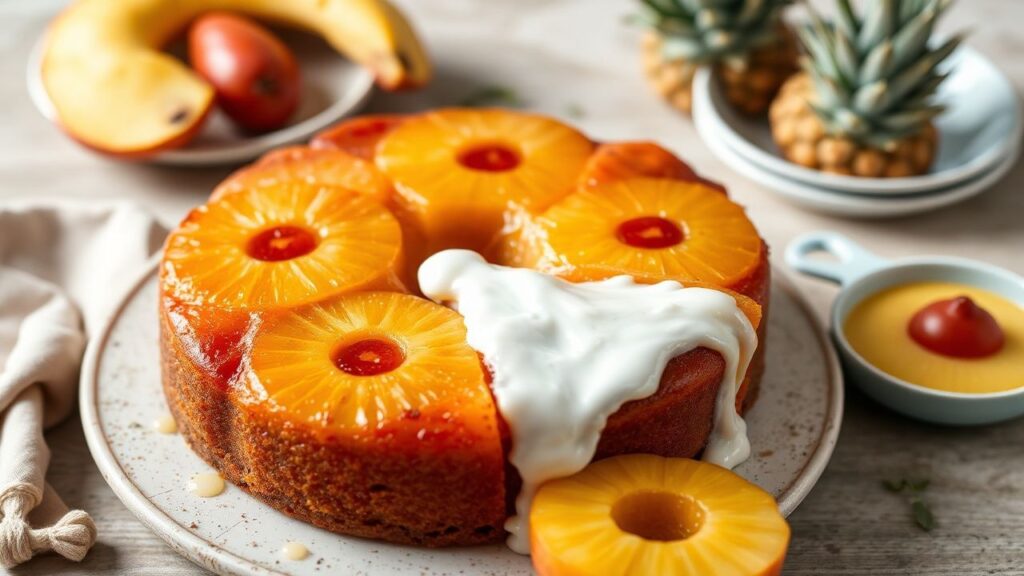
Serve slightly warm with a scoop of vegan coconut ice cream or whipped coconut cream. Add fresh mint sprigs or edible flowers for color. For extra gloss, drizzle a little warm maple syrup or a thin vegan caramel over each slice just before serving.
| Nutrient | Per Serving |
|---|---|
| Calories | 310 kcal |
| Protein | 3 g |
| Carbohydrates | 55 g |
| Fat | 7 g |
Ready to build more tropical desserts? You can explore flavor pairings and cooking basics on veganism and baking, then apply the same structure-and-timing logic to other fruit cakes.
Q&A: Vegan Pineapple Upside-Down Cake
Quick answers for the moments that usually cause doubts—fruit, caramel, flipping, and substitutions.
Use these notes to correct issues while the cake is still warm and workable.
What makes pineapple upside-down cake “upside-down,” and how does that change with vegan baking?
It’s “upside-down” because you bake with pineapple and caramel at the bottom of the pan first, then invert the cake after baking. The vegan version keeps the method the same, but it replaces eggs and dairy with plant-based binders and leavening-friendly ingredients to maintain a tender crumb.
Which ingredients keep vegan pineapple upside-down cake moist?
Moisture comes from plant milk and applesauce (or ripe banana), while fat from vegan butter or coconut oil helps create a soft texture. Pineapple also contributes juice and acidity, which supports a flavorful, springy crumb when combined with proper baking time.
How do I get glossy caramel topping without dairy?
Use a sugar-and-fat caramel base made with vegan butter or coconut oil plus coconut sugar and maple syrup. Cook just until bubbling and slightly thickened, then pour into the pan while hot. Heat drives flow, and proper thickness helps the caramel set into a shiny layer.
Fresh pineapple or canned pineapple—what works better?
Fresh pineapple gives the brightest aroma and firmest texture. Canned pineapple works well too, especially when you drain and pat it dry to prevent a watery topping. Either choice can deliver a great result if you keep ring thickness consistent and follow baking time closely.
How do I flip the cake without ruining the fruit arrangement?
Let the cake rest about 10 minutes so the topping firms slightly. Then run a knife around the edges, place a plate over the pan, and invert confidently in one motion. If a slice shifts, fix it immediately while the caramel still feels warm and pliable.
Can I add extra tropical flavors like lime or coconut?
Yes. Lime zest in small amounts brightens the fruit notes, and toasted coconut adds texture. Keep additions moderate so they don’t overpower pineapple’s caramel sweetness.
Wrapping Up
A well-baked vegan pineapple upside-down cake brings together three dependable factors: ripe fruit, correctly cooked caramel, and gentle batter handling. When you follow the timing cues—especially caramel thickness and the 10-minute rest—you get a glossy top and a tender, sliceable crumb.
Make this cake for a weekend gathering or a weeknight treat, then watch the fruit spiral hold its shape. With each bake, you’ll fine-tune sweetness and texture to match your oven and your pineapple preference.
See also: vegan pineapple upside-down