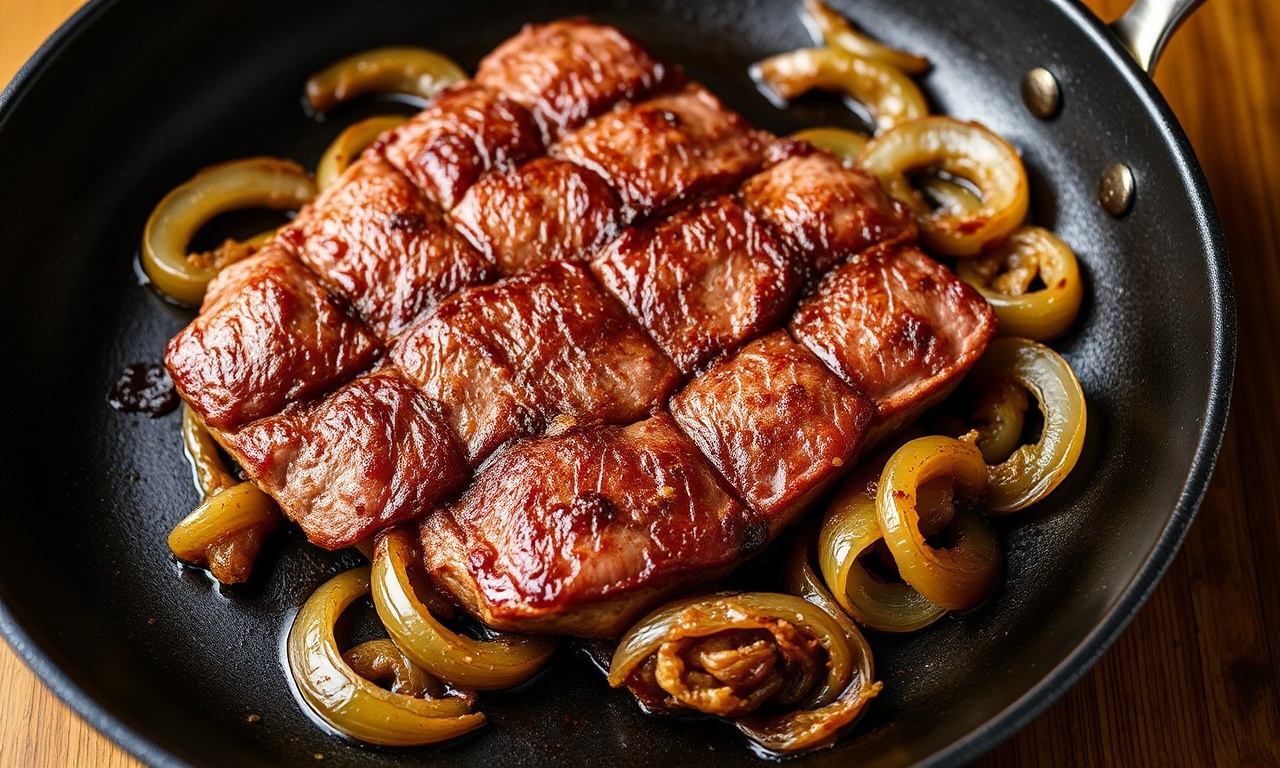
Thin steak rewards control. You can brown the surface hard and keep the interior tender if you manage heat, timing, and moisture. This 20-minute pan-sear thin steak method uses caramelized onions to build sweet, savory skillet flavor fast.
- At a Glance: The 20-Minute Skillet Formula for Thin Steak
- Fast, Juicy Thin Steak with Caramelized Onions—The 20-Minute Plan
- What You Need (and What Matters Most for Thin Steak)
- Best steak thickness and cut choices
- Onion choice: sweet reliability
- Skillet and heat range for caramel and crust
- Ingredients for 2 (20-Minute Skillet Method)
- Step-by-Step Instructions (Order That Protects Thin Steak Texture)
- 1) Prep for fast cooking
- 2) Caramelize the onions (medium-low, patient stirring)
- 3) Remove onions, then sear steak at higher heat
- 4) Sear times that match thin steak
- 5) Butter-baste for finish, not for long cooking
- 6) Rest briefly and slice correctly
- How to Get the Best Crust (Browning Control Checklist for Thin Steak)
- Dry surface beats extra seasoning
- Do not overcrowd the skillet
- Caramelize onions at the right pace
- Know when to stop cooking thin steak
- Flavor Variations That Keep the Same Thin Steak Method
- Serving Ideas That Match Thin Steak
- Time, Skill, and Yield
- Nutrition Snapshot (Estimate)
- FAQ: 20-Minute Pan-Sear Thin Steak with Onions
- Caramelize first for steady sweetness, then sear at higher heat.
- Dry the surface to prevent steaming and protect crust quality.
- Space the steak so the pan stays hot and browning stays even.
- Slice against the grain for tenderness in every bite.
At a Glance: The 20-Minute Skillet Formula for Thin Steak
This recipe fits a tight schedule without turning out pale or gray. The skillet stays your main tool, and the timing stays simple.
Onions cook longer and work like a flavor base. Steak cooks fast on high heat, so you control doneness with short sear times.
What makes this thin steak work in a pan
Thin cuts heat through quickly. That matters because browning forms at the surface while the center holds tenderness.
When you preheat properly and sear briefly, you lose less moisture. Less moisture loss means a juicier result.
Fast, Juicy Thin Steak with Caramelized Onions—The 20-Minute Plan
Thin steak cooks quickly, so you rely on technique, not patience. You get strong browning on the outside while the center stays juicy because the sear time stays short.
Caramelized onions add a second layer of flavor. They need steady time at medium-low to build sweetness through gradual breakdown and browning.
- Cook onions first so they caramelize before the steak hits the pan.
- Dry the steak for faster browning and less steaming.
- Sear without crowding to protect skillet temperature and crust quality.
- Rest briefly, then slice against the grain to keep every bite tender.
Why thin steak sears so well in a skillet
Thin cuts—flank, skirt, flat iron, or top sirloin—heat through quickly. That matters because surface browning forms while the center reaches target doneness.
Using a hot pan and short sear times also helps. The steak spends less total time at high heat, which reduces moisture loss.
For the chemistry behind surface browning, see Maillard reaction. This is the same process that builds deep crust flavor when you dry the steak and manage pan temperature.
Why onions taste “restaurant” in this pairing
Onions start watery, then soften as heat increases. As they cook down, sugars concentrate and the skillet turns sweet-savory.
As onions brown, they also leave browned bits (fond) in the pan. Fond boosts aroma and flavor, especially when you keep the pan hot during the steak sear.
If you want a quick structure reference, see onion. Knowing the basic changes helps you time caramelization with fewer guesses.
What You Need (and What Matters Most for Thin Steak)
You do not need fancy equipment. You need a wide skillet, reliable heat control, and ingredients that brown predictably.
This approach stays consistent because it matches ingredient needs to your burner settings. Onions need gentle, steady heat. Steak needs high heat for a short window.
Best steak thickness and cut choices
Use steaks around 1/2-inch thick. Thin steak sears fast, so timing feels easier when you stay focused.
It also means overcooking can happen quickly. You must watch minutes and color, not just vibes.
Good options include flank, skirt, flat iron, hanger-style slices, or thin-cut sirloin. These cuts tolerate quick cooking and reward clean slicing for tenderness.
To understand structure that affects chew, see meat. Grain direction and muscle fibers change how the steak feels on your fork.
Onion choice: sweet reliability
Yellow onions caramelize predictably and balance beef well. Sweet onions also work, but they can brown faster because their sugar profile shifts sooner.
Start with yellow onions for the most consistent caramel color and flavor depth. Then adjust heat if you notice rapid edge darkening.
Skillet and heat range for caramel and crust
Use a skillet wide enough that steak pieces have room. Cast iron holds heat well. Stainless steel also works if you preheat thoroughly.
If your pan runs cool, you get gray meat and pale onions. Browning needs surface temperature, not just time in the pan.
For general heat behavior in cooking, see cooking. Heat transfer rules explain why preheating and spacing change results.
Ingredients for 2 (20-Minute Skillet Method)
Keep ingredients simple and purposeful. Onions deliver most of the sweet depth, while steak delivers richness through searing and crust formation.
Use enough salt to season the interior, not just the surface. Fast cooking needs seasoning that already works by the time heat hits.
Shopping list
Steak: 2 thin-cut steaks (about 6–8 oz each), ~1/2-inch thick
Onions: 2 large yellow onions, thinly sliced
Seasoning and finishing
Kosher salt (plus extra for finishing), black pepper, and smoked paprika (optional). Add butter, olive oil, smashed garlic, thyme, and lemon wedges for brightness.
Smoked paprika adds warmth and color. Use it lightly so caramelized onions stay sweet instead of turning harsh.
Step-by-Step Instructions (Order That Protects Thin Steak Texture)
The sequence matters more than fancy steps. Caramelize onions first because they need longer, steadier heat than steak.
Then sear steak at higher heat so the outside browns while the interior stays juicy. This pacing supports a true 20-minute goal from skillet start to plate.
1) Prep for fast cooking
Pat the steaks very dry with paper towels. Dry surface moisture becomes steam, and steam blocks browning.
Season both sides with kosher salt and black pepper. If you use smoked paprika, add it now, then let the steaks sit 8–10 minutes at room temperature.
2) Caramelize the onions (medium-low, patient stirring)
Heat 1 tablespoon olive oil plus 1 tablespoon butter in a wide skillet over medium-low. Add onions and a pinch of salt, then stir to coat.
Cook 20–25 minutes, stirring often at first. Aim for deep golden brown and a sweet smell.
Reduce heat if edges darken too quickly. Onions should brown from sugar concentration, not from scorch.
3) Remove onions, then sear steak at higher heat
Transfer onions to a plate. Increase heat to medium-high and add the remaining olive oil.
Wait until the oil shimmers before adding steak. Add smashed garlic and the steaks, then leave them still for the first sear.
Do not move the steaks early. Movement breaks contact, and broken contact slows crust formation.
4) Sear times that match thin steak
Cook about 2 minutes on the first side, then flip. For medium-rare, sear another 60–90 seconds; for closer to medium, add 30–60 seconds.
Every stove runs differently, so judge by feel and color. If you use a thermometer, target roughly 130–135°F (54–57°C) for medium-rare and about 140°F (60°C) for medium.
For safe technique basics, see meat thermometer. Temperature control supports repeatable results.
5) Butter-baste for finish, not for long cooking
Lower heat to medium-low. Add 1 tablespoon butter and thyme, then tilt the pan and spoon melted butter over the steak for about 20–30 seconds.
This step adds flavor and sheen without extending the cook. Butter browns fast, so keep it brief and watch closely.
6) Rest briefly and slice correctly
Move steak to a cutting board and rest 5 minutes. Thin steak does not need a long rest, but a short rest helps juices settle so slicing stays clean.
Slice thinly against the grain. Cutting across muscle fibers reduces chew and keeps the browned surface feeling tender even when cooking stays fast.
For grain and muscle behavior, see meat as a quick refresher.
After you remove onions, wipe or scrape the pan only if burned bits threaten to turn bitter. Otherwise, leave some fond. Fond supports deeper skillet flavor.
Then sear right away. The fastest step stays the most controllable step because you stop the cook the moment the crust looks right.
How to Get the Best Crust (Browning Control Checklist for Thin Steak)
Crust quality depends on three levers: surface dryness, pan temperature, and space/airflow in the pan. When one lever fails, you get gray meat and watery onions.
Use this checklist during cooking. You fix problems in the moment, not after the plate is already served.
Dry surface beats extra seasoning
Pat steaks dry before seasoning. If the surface looks wet, the pan steams the meat instead of browning it.
Also, do not cover the steak while it rests. Moisture needs an escape route, or the exterior softens.
Do not overcrowd the skillet
Overcrowding drops skillet temperature fast. When temperature falls, browning slows and juices sit on the surface longer.
If the pan feels tight, cook in batches. Two small sears beat one crowded sear for texture and flavor.
Caramelize onions at the right pace
Onions caramelize best when water cooks off gradually. Medium-low heat gives you time for sugars to concentrate without burning the crust too fast.
Stir more at the start, then stir more gently later. Gentle stirring preserves browned bits that add depth to the sauce.
Know when to stop cooking thin steak
Thin steak moves from juicy to overcooked quickly. Keep sear times short and stop based on doneness timing, not color alone.
Carryover cooking continues for about a minute after removal. That is why resting briefly helps you land closer to target doneness.
Flavor Variations That Keep the Same Thin Steak Method
You can change seasonings while keeping the core sequence. Onions still cook first, then the steak sears last. That order protects texture and keeps your 20-minute skillet rhythm.
Use these swaps for variety without losing reliability. The method stays the same, so results stay predictable.
Add a splash of acidity at the end
Finish the onions with lemon juice after removing from heat. Acid brightens sweetness and cuts beef richness.
Or deglaze after searing with a teaspoon of water or lemon juice. Spoon the quick deglaze over the steak to avoid extra cooking time.
Swap thyme for a different aromatic
Thyme pairs naturally with beef. You can also use rosemary briefly during butter-basting, or oregano for a more Mediterranean direction.
Fresh herbs look great, but aroma does the heavy lifting here. Butter-basting carries scents across the browned surface.
Spice options: smoky vs. warm
Smoked paprika adds warmth and color. For heat, add a pinch of cayenne or chili flakes, but stay light so onion sweetness does not get buried.
For a milder plate, skip smoked paprika and lean on black pepper and garlic. You keep focus on caramelized onion flavor and beef crust.
Serving Ideas That Match Thin Steak
This pairing works best with sides that catch onion juices or add crunch. You need contrast: tender steak, sweet onions, and a side that balances richness.
Pick sides you can prepare quickly. The steak timing does not allow long waits.
Quick sides
Garlic mashed potatoes soak up pan flavors well. Roasted asparagus adds earthy freshness. A crisp green salad with bright vinaigrette cuts through fat.
If you want bread, choose sturdy toasted baguette slices. Drippings and crunch keep the plate satisfying.
Plating that looks great fast
Spoon onions over the sliced steak or place them beside it. Either way, keep onions warm but do not drown the crust.
Finish with thyme and lemon wedges. Lemon boosts table aroma and makes the dish taste fresher.
Time, Skill, and Yield
This recipe sits in the “weeknight dependable” range. With practice, you keep the full process to about 20 minutes from skillet start to plated meal.
You only need moderate skill. The real learning curve comes from timing caramelized onions and the thin steak sear so both land perfectly.
Overview
Prep: 10 minutes
Cook: 10 minutes (after onions caramelize)
Total: ~20–30 minutes depending on onion browning pace
Yield: Serves 2
Nutrition Snapshot (Estimate)
Nutrition depends on the steak cut, fat level, and how much oil and butter you use. Still, estimates help you plan portions.
Use these numbers as practical guidance, not medical advice.
Typical estimate per serving
Calories: ~410 kcal
Protein: ~38 g
Carbohydrates: ~10 g
Fat: ~25 g
FAQ: 20-Minute Pan-Sear Thin Steak with Onions
What makes thin steak ideal for pan-searing?
Thin steak heats through quickly, so you brown the outside while the center stays juicy. Short sear times limit moisture loss and reduce the risk of overcooking.
This also speeds up workflow. You can keep onions and thin steak on the right timelines without rushing the sear.
Should I caramelize onions before or after searing?
Caramelize onions first. Onions need steady time to soften and brown, while steak needs fast heat exposure.
If you reverse the order, thin steak overcooks while you wait for onion color and sweetness. The skillet rhythm breaks.
How do I prevent tough, chewy thin steak?
Dry the surface, sear quickly, and stop before the steak passes your doneness target. Overcooked thin steak turns chewy fast because there is less time cushion.
Then slice against the grain. That cut direction shortens muscle fiber resistance and improves tenderness.
How can I get restaurant-level browning at home?
Preheat the skillet fully and keep the steak spaced out. Use enough oil for heat transfer, and avoid moving the steak during the first sear.
For browning fundamentals, see Maillard reaction again. The process rewards dryness and real surface heat.
Can I use a different onion type?
Yes. Yellow onions deliver classic sweetness and dependable browning. Sweet onions also work, but they can darken faster.
Watch color closely and lower the heat if you see rapid edge darkening. Adjust the pace, not the method.
Why does my pan taste bitter after cooking?
Bitter flavor usually comes from burned fond. Stir onions gently to avoid scorching, and scrape only if pieces look blackened or acrid.
If fond tastes fine, leave it. Browning supports deeper flavor instead of bitterness.
See also: pan-sear steak