
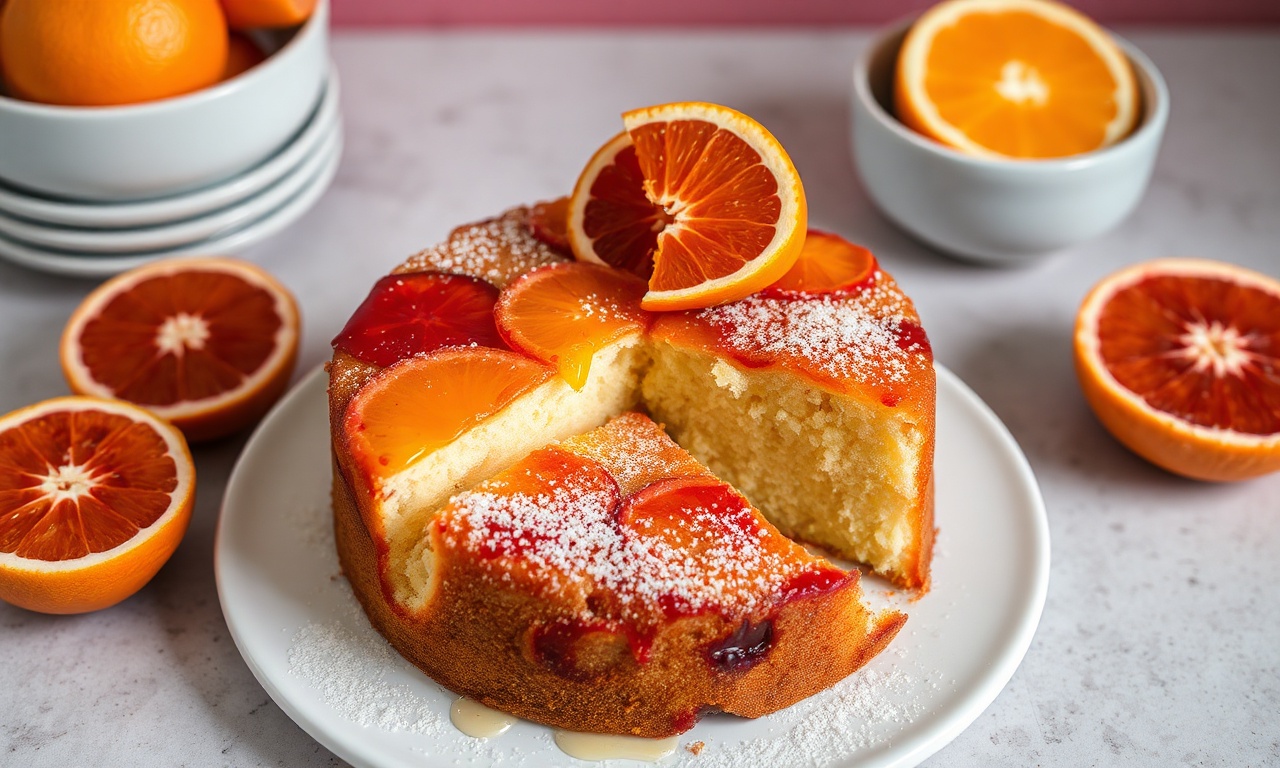
Blood orange upside-down cake turns the familiar upside-down format into something brighter, deeper, and more elegant. You get jewel-toned fruit, a buttery caramel glaze, and a cake crumb that stays tender even the next day.
- The Flavor Chemistry Behind Blood Orange Upside-Down Cake
- Why caramelized sugar tastes richer (and looks better)
- Blood orange prep: pith removal prevents bitterness
- What Makes This Cake Different From Other Upside-Down Styles
- Ingredients You Actually Need (With Practical Substitutions)
- Step-by-Step: How to Bake a Perfect Inverted Caramel Topping
- Make the caramel topping (the part that decides everything)
- Arrange oranges for a “no-gap” pattern
- Mix the cake batter without toughening the crumb
- Assemble and bake
- Cooling and Inverting Without Breaking the Cake
- Expert-Level Tips for Citrus Aroma and Extra Gloss
- Serving Ideas That Match the Flavor Profile
- Make-Ahead, Storage, and Reheating
- Troubleshooting Guide (So You Don’t Lose the Glaze)
- Nutrition Snapshot (Per Serving)
- FAQ
- Citrus flavor builds twice: in the topping and in the batter via zest.
- Caramel success is repeatable when you control heat and timing.
- Glassy orange slices happen when you slice cleanly and lay them tightly.
- Make-ahead works: flavors meld as the caramel settles.
This dessert feels like sunshine on a plate, but the real magic comes from technique. When caramel meets fruit, it creates a glossy coating that keeps the oranges juicy and boosts sweetness without dulling their tang. The result looks restaurant-level, yet the method stays home-kitchen friendly.
The Flavor Chemistry Behind Blood Orange Upside-Down Cake
Blood oranges bring more than color. Their flavor often blends citrus brightness with subtle berry-like notes, which makes the caramel taste more complex than standard orange toppings. If you use fresh zest and properly prepared slices, the aroma stands out the moment the cake warms.
The upside-down style matters because heat drives flavor into two layers at once. During baking, the caramel thickens and the fruit releases juices. Those juices mingle with melted sugar and butter, then seep slightly into the cake top, adding natural syrupy richness.
Why caramelized sugar tastes richer (and looks better)
Caramel is mostly a controlled sugar transformation, plus butter’s contribution of emulsified fat and aroma. As sugar melts and heats, it changes from crystalline granules into an amber syrup with deeper, toasted notes. You can read more about the basics of caramelization here: caramelization.
In this cake, you cook the sugar just until it turns golden. That timing protects the caramel from bitterness. Then you stir in butter off-heat so the mixture emulsifies smoothly, giving you a shiny topping that sets evenly once the cake cools.
Blood orange prep: pith removal prevents bitterness
The white pith under the peel can taste bitter and drying. Removing it helps the topping taste clean and sweet rather than sharp. For more background on citrus components, see citrus.
Slicing also affects the final look. Thin, even slices distribute in a tight pattern so you get a consistent “jewel” surface when inverted. If slices vary in thickness, the thicker ones can dominate while thinner ones may dry out.
What Makes This Cake Different From Other Upside-Down Styles
Classic upside-down cakes often rely on pineapple or cherries. This version centers blood oranges, which shift the flavor profile from tropical sweet toward citrus-bright and subtly floral. That difference makes it feel more refined for spring gatherings and just as welcome on winter weekends when blood oranges peak.
It also bakes like a hybrid between a fruit cake and a butter cake. The batter stays light because you cream butter and sugar for air, and you add liquids in measured steps. You then pour the batter over the fruit layer so the cake sets without disturbing your topping pattern.
A nod to the French “gâteau renversé” idea
Upside-down fruit cakes connect to French baking traditions. The general concept—baking a cake with fruit in the pan and inverting before serving—shows up across many cultures. For a high-level historical overview of French desserts, you can explore French cuisine.
What you’re doing here stays true to that tradition, but you tailor the flavor and technique for blood oranges. The goal is not only to cover the bottom with fruit, but to create a caramel glaze that binds it all together.
Ingredients You Actually Need (With Practical Substitutions)
You don’t need fancy baking supplies. You do need accurate measurements and a few ingredient qualities. Use room-temperature eggs and buttermilk so the batter emulsifies and bakes with a smooth crumb.
For best results, use a 9-inch round pan and either a metal skillet or a cake pan that holds heat well. Metal conducts heat efficiently, which helps the fruit layer caramelize and set.
Topping ingredients
3 large blood oranges, thinly sliced, pith removed. Remove any seeds as you slice. Slice as evenly as you can for the prettiest surface.
3/4 cup granulated sugar for the caramel base. Use unsalted butter so you control salt in the final flavor.
4 tbsp unsalted butter, diced, for a glossy, cohesive caramel.
Cake ingredients
1 1/2 cups all-purpose flour, sifted for a lighter crumb. Sifting also helps you avoid flour lumps that can bake into dry patches.
2 tsp baking powder and 1/4 tsp fine sea salt for structure and balance. Too much salt dulls sweetness; too little makes the caramel feel flat.
3/4 cup unsalted butter, softened, plus 1 cup granulated sugar for creaming. The creaming step creates volume and a tender, even crumb.
3 large eggs, room temperature. Add them one at a time for smooth batter. If your eggs feel cold, let them sit until they reach room temp.
1 tsp pure vanilla extract and zest of 1 blood orange. The zest boosts aroma beyond the topping so every slice smells like citrus.
1/2 cup buttermilk, room temperature. Buttermilk adds moisture and slight tang, which helps the cake taste balanced next to caramel sweetness.
Substitutions that keep the flavor honest
If you can’t find blood oranges, you can use navel oranges. Cara Cara oranges also work and often keep a rosy interior. For a different citrus depth, Seville oranges work well too, but you may want to reduce added zest slightly because Seville can taste more intense.
Want a lighter approach? Replace part of the sugar in the batter with an equal amount of brown sugar for deeper molasses notes. It won’t taste identical to blood-orange caramel, but it pairs well with citrus.
If you need a dairy swap, use a high-quality non-dairy buttermilk equivalent (or mix plant milk with a small amount of acid). Keep the same liquid amount to preserve cake texture.
Step-by-Step: How to Bake a Perfect Inverted Caramel Topping
Start with the topping because timing matters. You need the caramel ready and smooth before you lay oranges down. Then you bake and cool just long enough for caramel to set.
Preheat the oven to 350°F (175°C). Grease your pan lightly. Even though you’ll invert the cake, a thin coating helps you release any caramel edges.
Make the caramel topping (the part that decides everything)
Place sugar in your skillet or pan over medium heat. Stir constantly with a heatproof spatula until the sugar melts and turns amber. This usually takes 6–10 minutes depending on your stove.
When the syrup looks like smooth amber liquid, remove the pan from heat. Stir in diced butter quickly. The mixture should turn glossy and slightly thicker.
Immediately spread the caramel across the bottom so it forms an even base. Work fast—caramel cools and thickens quickly.
Arrange oranges for a “no-gap” pattern
Lay blood orange slices on top of the caramel in tight overlapping rows. Aim for full coverage, because the cake’s inversion makes gaps obvious. If you see bare spots, adjust while the caramel still looks fluid.
Press lightly so slices sit in the caramel. Don’t crush them—just ensure contact so juices release evenly while baking.
Mix the cake batter without toughening the crumb
In a bowl, whisk flour, baking powder, and salt. Set aside. In a large mixing bowl, cream softened butter and sugar until pale and fluffy, about 3–4 minutes with a hand or stand mixer.
Add eggs one at a time, beating well after each. Then add vanilla and blood orange zest. The batter will smell strongly citrus after mixing, which is a good sign your zest is fresh and aromatic.
Alternate dry ingredients and buttermilk in two or three additions. Start and end with the flour. Mix on low just until combined. Overmixing can tighten gluten and lead to a cake that feels dry.
Assemble and bake
Pour the batter over the oranges and use a spatula to smooth the top. Spread carefully so you keep the fruit pattern intact.
Bake for 35–45 minutes, usually 38–42 minutes for a 9-inch pan. The cake is ready when a toothpick near the center comes out clean and the edges look lightly golden.
While it bakes, keep the oven door closed. Temperature swings can cause uneven rise and affect the final crumb.
Cooling and Inverting Without Breaking the Cake
Cooling helps the caramel set and keeps slices from sliding. Let the cake cool in the pan for 15 minutes. If you flip too early, caramel can stay liquid and fruit can shift.
Run a knife around the edges to loosen. Then place a plate on top of the pan and invert in one smooth motion. Lift the pan carefully—do not shake aggressively.
How to rescue the cake if it sticks
If a few orange slices cling to the pan, don’t panic. Lift them gently with a butter knife and place them back on top. The cake will still taste excellent, and most guests won’t mind minor rearrangements.
If caramel hardens too much, warm the bottom of the pan for 15–20 seconds before trying again. Heat re-softens sugar, making it easier to release.
Also, use oven mitts. Upside-down cakes rely on gravity, and a hot pan can slip if your grip isn’t secure.
Expert-Level Tips for Citrus Aroma and Extra Gloss
Small adjustments make a big difference with fruit cakes. Citrus can fade if you overbake or use zest that isn’t freshly zested. Follow these techniques to keep flavor bright and the top glossy.
If you want an extra shine, brush the top with a thin honey glaze after inversion. Use a light hand; thick syrup can make the fruit look wet rather than glossy.
Control sweetness so the tang stays present
Caramel can easily turn cloying if you push it too dark. Stop at golden amber for a clean sweetness that supports citrus tang. You can also reduce batter sugar by 2 tbsp if your blood oranges taste very mild.
For a balanced bite, keep the pith trimmed. Pith bitterness increases as the caramel heats, which can push the final flavor harsh instead of bright.
Get the best slice structure
Because this cake includes a fruit layer, it can feel slightly “saucy” when first cut. Let it cool fully for neat slices. For serving, warm slices for 10–15 seconds in the microwave or for a few minutes at room temperature.
When you cut, use a sharp knife and wipe between slices. Caramel and zest stick to blades, and wiping keeps the fruit pattern crisp.
Serving Ideas That Match the Flavor Profile
Serve this cake slightly warm for the best aroma. When heat softens the caramel, it releases citrus notes that feel brighter and more layered. Cold cake tastes good, but warm cake feels more “sun-kissed.”
A classic pairing is vanilla bean ice cream or lightly sweetened whipped cream. The cream cools the caramel and highlights fruit acidity. For tea lovers, Earl Grey or a mild black tea works well because bergamot complements citrus.
Elegant garnish options
Add powdered sugar for contrast, or place a few thin orange rounds on the platter. A tiny sprig of mint or thyme looks fresh and adds a herbal note that supports citrus.
If you want crunch, sprinkle toasted sliced almonds on top right before serving. The nuttiness rounds out caramel sweetness without stealing focus.
Make-Ahead, Storage, and Reheating
This cake tastes even better after resting. Cover it tightly and store at room temperature for up to two days. The caramel settles into the cake top, making each slice slightly more moist and cohesive.
For longer storage, refrigerate in an airtight container for up to 4 days. Chill changes the texture—caramel firms up—so rewarm slices gently before serving.
How to reheat for the best texture
Warm a slice for 10–20 seconds in the microwave, or let it sit at room temperature for 20–30 minutes. Avoid long reheats that dry the cake.
If you want the fruit layer to look glossy again, reheating briefly helps the caramel soften on the surface.
Troubleshooting Guide (So You Don’t Lose the Glaze)
Most upside-down cake issues come from a small set of controllable problems. Use this guide to fix the most common causes.
Caramel burns or tastes bitter
Burnt caramel usually happens when sugar cooks too long or the heat runs too high. Next time, use medium heat and keep stirring. Pull the pan as soon as you reach golden amber.
If the caramel already turned dark, you can start over. Bitter caramel spreads through the fruit layer, and no amount of zest will fully fix it.
Fruit slides off the top
Fruit slides when caramel doesn’t set before inversion. Cool longer in the pan and invert carefully in one steady motion.
Also, ensure your slices overlap closely. Gaps give fruit room to shift.
Cake center stays underbaked
If your toothpick shows wet batter, bake 3–5 minutes longer. Ovens vary, and blood orange juice can add slight moisture at the surface.
For even baking, place the pan in the center rack and avoid crowded ovens.
Nutrition Snapshot (Per Serving)
Expect a moderately rich dessert because it uses butter and sugar for both caramel and cake structure. Nutrition will vary by slice size and exact fruit yield, but this estimate helps you plan.
Approximate per serving: ~330 kcal, Protein: ~4 g, Carbohydrates: ~45 g, Fat: ~15 g.
If you serve smaller slices, the calorie impact drops quickly because the flavor is concentrated in the caramel-fruit layer.
FAQ
Can I use frozen blood orange slices?
Fresh slices work best for clean pattern and glossy caramel. Frozen slices often release extra liquid and can make the caramel less stable. If you use frozen, thaw fully and pat dry, then assemble quickly.
How do I keep the caramel from sticking to the pan?
Use a well-seasoned metal pan or a lightly greased pan. Let the cake cool 15 minutes before inverting. If needed, warm the pan bottom briefly to loosen hardened caramel.
What’s the best way to remove the pith efficiently?
Use a sharp knife and work slowly around the orange, removing the white pith while leaving as much fruit as possible. You can also use a citrus peeler for shallow removal, then tidy with a paring knife.
Why does my cake taste flat even though it smells citrusy?
Flat taste often comes from under-salting, under-baking, or caramel cooked too lightly. Use the full salt amount, bake until the center sets, and cook caramel to a clear golden amber.
When is blood orange season?
Blood oranges typically peak in cooler months, commonly from late winter into early spring, depending on region and variety. If you buy ahead, store fruit in the crisper drawer and zest only what you plan to use the same day.
See also: blood orange