
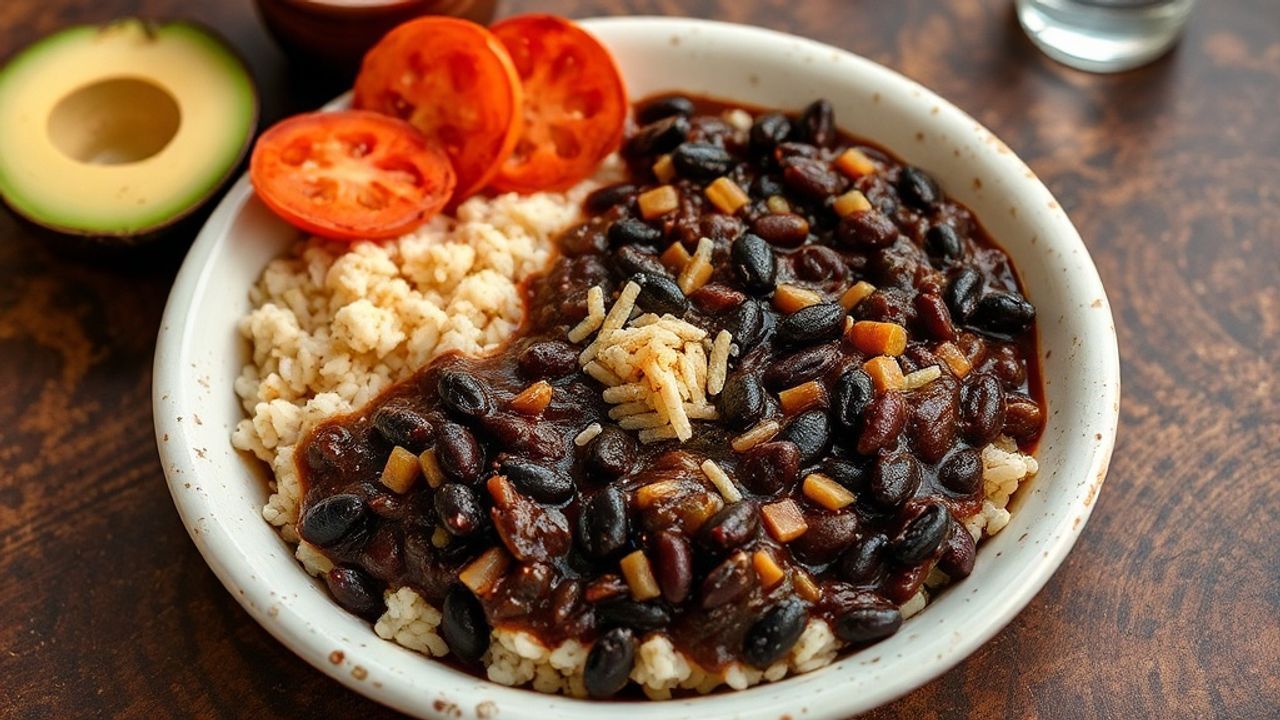
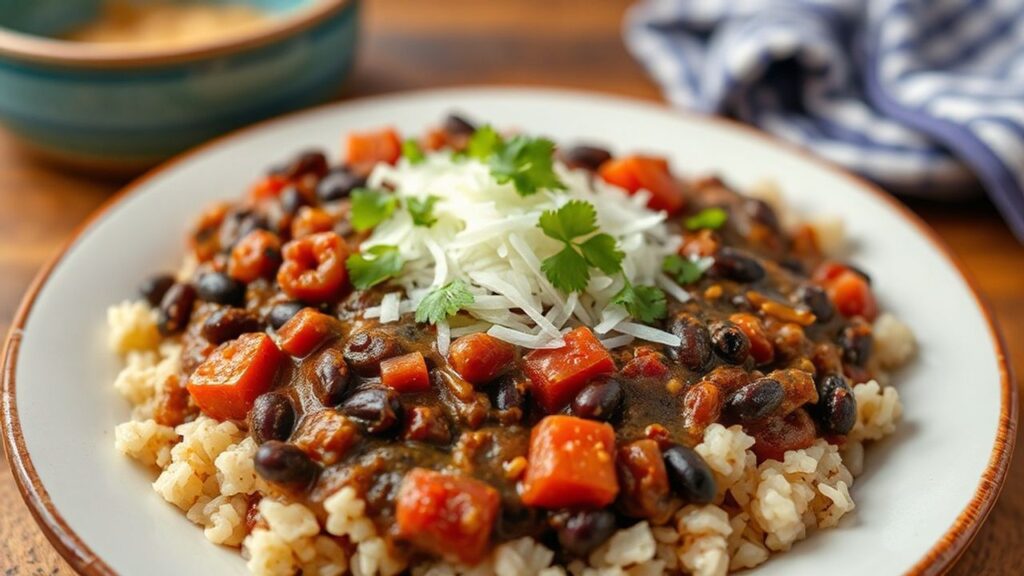
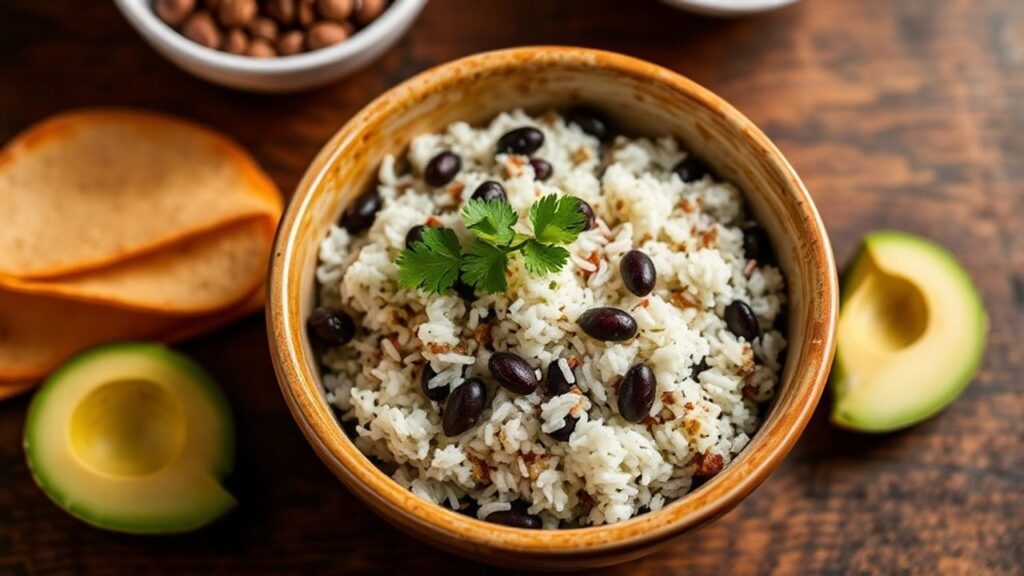
Moros y Cristianos stands as Cuba’s iconic black bean and rice medley, a dish whose flavors reflect history and technique. This recipe-driven guide explains authentic preparation, ingredient choices, and service suggestions so home cooks can reproduce that deep, smoky taste.
- Moros y Cristianos: Overview and Historical Roots
- Prep and Cook Time for Moros y Cristianos
- Essential Ingredients for Moros y Cristianos
- Mastering Moros y Cristianos: Step-by-Step Instructions
- Pro Tips for Serving and Pairing Moros y Cristianos
- Chef’s Notes, Variations, and Practical Adjustments
- Nutritional Considerations
- Common Questions (FAQ)
- What is Moros y Cristianos and why is the name significant?
- Can I make Moros y Cristianos with canned beans?
- How do I keep beans intact while ensuring the rice absorbs their flavor?
- Is Moros y Cristianos the same as other beans-and-rice dishes?
- Where can I learn more about the ingredients and their origins?
- Key taste: earthy black beans folded into fragrant rice.
- Technique: make a proper sofrito and cook rice in bean broth.
- Time: soak beans overnight; active cook time about 1 hour 15 minutes.
- Serve: pairs with roast pork, fried plantains, or as a vegetarian main.
Moros y Cristianos means more than ingredients; it embodies a culinary dialogue of culture and method. The dish blends black beans and rice so the rice absorbs the beans’ seasoned liquid for unity of flavor.
Moros y Cristianos: Overview and Historical Roots
The name Moros y Cristianos references the historic contrast of black beans and white rice and ties to Iberian history and Caribbean adaptation. For historical context, see Reconquista and how cultural terms migrated into New World foodways.
This recipe sits firmly in the tradition of Cuban cuisine, where African, Spanish, and Caribbean practices converge. The technique relies on a seasoned sofrito, careful bean simmering, and rice cooked to absorb flavor.
Prep and Cook Time for Moros y Cristianos
Preparation: 20 minutes active plus overnight soaking when using dried beans. Soaking shortens bean cook time and improves texture.
Cooking: about 1 hour 15 minutes depending on bean tenderness; total time around 1 hour 35 minutes. Yields approximately six servings of a hearty side or main.
Essential Ingredients for Moros y Cristianos
Use quality staples for authentic results: dried black beans, long-grain white rice, onions, green pepper, garlic, cumin, oregano, bay leaf, and tomato paste. Broth or reserved bean cooking liquid deepens the flavor better than plain water.
Key proteins or textures—pork drippings, smoked ham, or chorizo—can add savory depth but the vegetarian form highlights the bean-rice balance. For botanical context on the common bean, consult Phaseolus vulgaris.
Mastering Moros y Cristianos: Step-by-Step Instructions
Start by preparing beans and sofrito separately so each component finishes at peak texture and flavor. Timing lets the rice absorb a richly seasoned bean broth for uniform seasoning.
Follow a stepwise plan: simmer beans until tender, prepare a concentrated sofrito, combine beans and rice, then finish low and slow until rice is tender. This controlled sequencing prevents mushy beans or undercooked rice.
Bean Preparation
Drain soaked black beans and simmer with a bay leaf until tender but still intact; about 40–50 minutes depending on bean age. Reserve the cooking liquid; it becomes the primary cooking medium for the rice.
If using canned beans, reduce added salt and simmer briefly to marry spices into the liquid. Use the can liquid sparingly and substitute low-sodium broth when necessary to control sodium.
Rice Technique
Rinse long-grain white rice until water runs clear to remove excess starch and keep grains separate. Add rice to the sofrito and bean liquid, bring to a gentle simmer, cover tightly, and cook without stirring for 20–25 minutes.
After cooking, rest covered five minutes and then fluff. This rest allows steam to finish the grains evenly and prevents a heavy, gummy texture.
Pro Tips for Serving and Pairing Moros y Cristianos
Plate Moros y Cristianos as a main or hearty side; it pairs exceptionally with roast pork, fried plantains, or simple sautéed greens. Garnish with fresh cilantro or green onions and serve with lime wedges for a brightness contrast.
For beverages, a crisp, citrus-forward drink like a classic mojito or a dry white wine complements the dish’s earthy tones. Toasted sesame or a drizzle of garlic mojo adds a final aromatic lift when desired.
Resting the dish overnight develops flavor and makes reheating simple for meal prep. Rewarm gently with a splash of broth to restore moisture and texture.
Chef’s Notes, Variations, and Practical Adjustments
Swap long-grain white rice for jasmine for aroma or brown rice for fiber, but adjust liquid ratios and cooking time accordingly. Brown rice requires more liquid and longer cooking—plan for at least 10–15 additional minutes and a bit more broth.
For a meaty variation, render diced smoked ham or chorizo into the sofrito for added fat and umami. Vegetarians can intensify umami with a splash of soy sauce or mushroom stock while keeping the dish plant-based.
When substituting canned beans, watch sodium content and reduce added salt. Test final seasoning at the end rather than mid-cook to avoid oversalting when broths or canned products are in use.
Nutritional Considerations
This classic plate provides a balanced macronutrient profile: complex carbohydrates from rice, plant protein and fiber from black beans, and modest fat depending on added oils or animal products. Typical portioning yields about 310 kcal with a healthy mix of nutrients.
Increase fiber and micronutrients by adding extra vegetables or using brown rice. Beans also supply iron and folate, and pairing with vitamin C sources (lime, cilantro) improves non-heme iron absorption.
Common Questions (FAQ)
What is Moros y Cristianos and why is the name significant?
Moros y Cristianos translates to “Moors and Christians,” a folkloric reference to black beans and white rice. The name reflects an evocative metaphor and historical interplay that traveled from Iberia to the Caribbean; see the dedicated article on Moros y Cristianos for cultural context.
Can I make Moros y Cristianos with canned beans?
Yes. Use low-sodium canned beans and reduce added salt. Rinse canned beans to remove excess sodium and simmer briefly to meld flavors before combining with rice.
How do I keep beans intact while ensuring the rice absorbs their flavor?
Simmer beans until tender but firm, reserve the cooking liquid, and combine with the rice so the rice steams in that seasoned liquid. Avoid excessive stirring after addition to protect bean shape and preserve separate grains.
Is Moros y Cristianos the same as other beans-and-rice dishes?
Not exactly. The hallmark of Moros y Cristianos is cooking rice together with a concentrated bean broth and sofrito so that flavors integrate. The specific spice profile and sofrito technique define the Cuban variant compared with other regional preparations.
Where can I learn more about the ingredients and their origins?
For additional reading on beans, rice, and the culinary context, consult relevant encyclopedia resources on common beans, rice, and broader material on Cuban cuisine.
Moros y Cristianos lets home cooks practice precise technique and reward patience with a dish that tastes greater than the sum of its parts. Follow timing, respect the sofrito, and let the rice absorb the bean broth for an authentic, balanced medley.
See also: Moros y Cristianos