
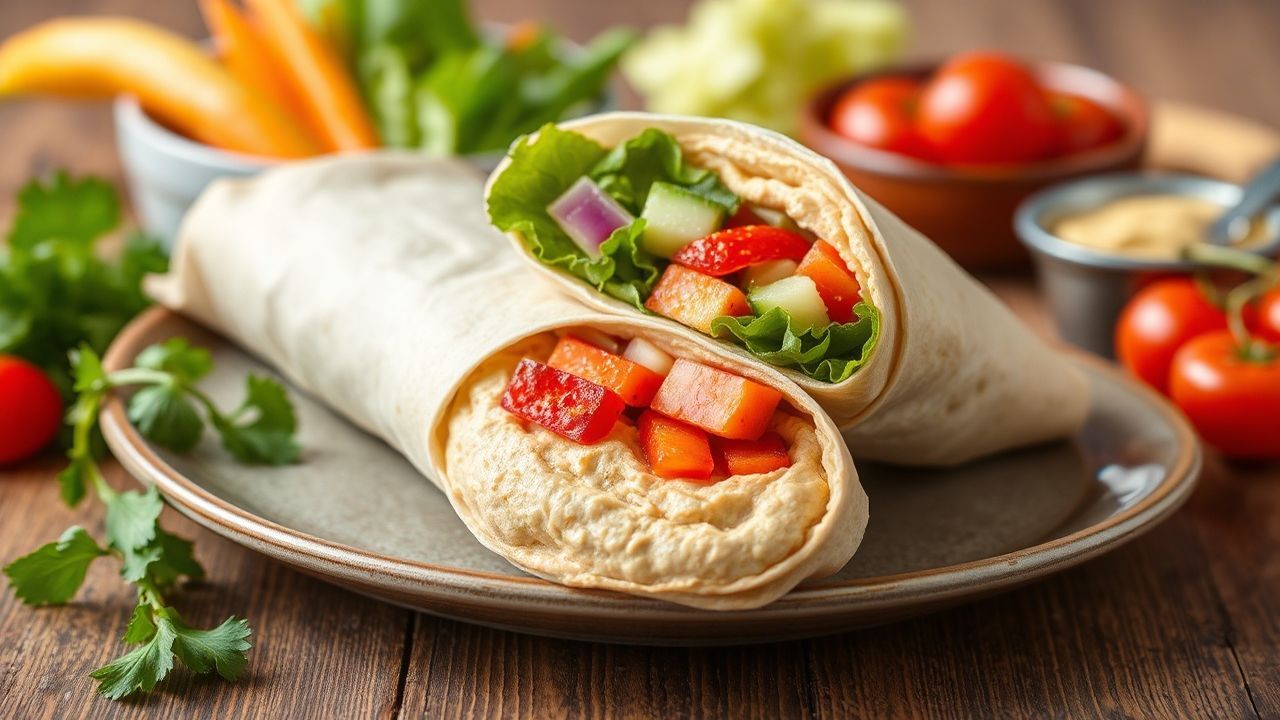
Fresh Mediterranean Veggie & Hummus Wraps: Healthy & Easy can fit into a tight schedule and still deliver real nutrition. You get fiber from vegetables, plant protein from chickpeas, and healthy fats from olive oil—all in a handheld meal.
- Choosing the Perfect Fresh Vegetables for Maximum Flavor and Nutrition
- Crafting the Ideal Hummus Spread to Elevate Your Wrap
- Tips for Rolling and Serving Wraps That Stay Fresh and Delicious
- Creative Additions to Customize Your Mediterranean Veggie Wraps
- Prep and Cook Time
- Yield and Difficulty
- Ingredients
- Instructions
- Chef’s Notes
- Serving Suggestions for a Complete Mediterranean Plate
- FAQ
At a Glance
- Build flavor by starting with hummus, then layering crisp vegetables.
- Prevent sogginess with drier fillings and tight rolling.
- Use fresh lemon, garlic, and cumin for a classic Mediterranean taste.
- Prepare ahead safely by storing components separately or wrapped individually.
These wraps work for lunch boxes, weeknight dinners, and post-workout meals. They also keep their texture better than many heavier sandwiches when you follow a simple assembly order.
Choosing the Perfect Fresh Vegetables for Maximum Flavor and Nutrition
The backbone of Fresh Mediterranean Veggie & Hummus Wraps: Healthy & Easy is fresh, crunchy produce. Aim for vegetables that feel firm and look vibrant, because freshness directly impacts taste and mouthfeel.
Choose cucumbers with crisp skin, tomatoes that are juicy but not watery, and bell peppers with a clean, sweet crunch. For extra texture, add thinly sliced radishes or shredded carrots. For more nutrition, include leafy greens like spinach or arugula.
Seasonal produce usually tastes better and may cost less. If you can, check local farms or farmers markets and pick items at peak ripeness.
If you want a Mediterranean flavor direction, keep your veggie mix colorful and balanced. Consider herbs and aromatics too, such as parsley, dill, or mint, since they pair naturally with hummus.
For background on how Mediterranean diets emphasize plant variety, see Mediterranean diet.
Crafting the Ideal Hummus Spread to Elevate Your Wrap
A smooth, well-seasoned hummus makes the entire wrap taste intentional. Start with chickpeas and build flavor with tahini, lemon juice, olive oil, garlic, cumin, and salt.
Blend until creamy, but not gluey. If the mixture feels thick, add a small splash of water and blend again until it spreads easily.
For a quick reference on chickpeas and their nutritional profile, review chickpea. Protein and fiber from chickpeas help these wraps feel filling.
Tahini brings a nutty richness. Olive oil adds a familiar Mediterranean note and improves overall flavor harmony with vegetables.
Flavor Options That Still Stay “Mediterranean”
You can customize hummus without losing the classic feel. Add smoked paprika for a gentle warmth or add extra lemon for brightness.
If you prefer a thicker dip, use less added water. If you want spreadable hummus for thin wraps, increase water slightly so it spreads in an even layer.
For culinary context about cumin in Mediterranean cooking, see cumin.
Tips for Rolling and Serving Wraps That Stay Fresh and Delicious
Even great ingredients can turn soggy if you assemble them poorly. Layer hummus first, then place drier vegetables on top while keeping wetter items near the center.
Use a tight roll. When you pack the filling close to the tortilla edge and tuck firmly, the wrap holds shape and stays easier to eat.
Best Layering Order for Crunch
Start with hummus across the surface, leaving a border around the edges. Then add greens, followed by crunchy vegetables like cucumber, carrots, and peppers.
Place tomatoes and any juicy add-ins in the center, not on the outer layer. If tomatoes seem very wet, drain and pat them dry.
Make-Ahead Storage Without Texture Loss
If meal prep is your goal, assemble carefully. Wrap each piece tightly in parchment or foil, then store in an airtight container in the refrigerator.
For the best crunch, keep the hummus and vegetables separate until you’re ready to roll. This small step keeps moisture from soaking into the tortilla.
For general food safety and storage guidance principles, you can reference food safety from the basics of refrigeration and handling.
Creative Additions to Customize Your Mediterranean Veggie Wraps
Once the base is right, you can customize these wraps for different tastes. Add crunch, saltiness, or herbs depending on what you crave.
For crunch, try toasted pine nuts or slivered almonds. For a briny Mediterranean note, include crumbled feta or chopped olives. Add herbs like mint or dill for a fresh lift.
Simple Swaps for Dietary Preferences
Want a vegan-friendly version? Use a plant-based feta alternative or add a small amount of nutritional yeast for savory depth. Keep the hummus recipe the same.
For gluten-free needs, use gluten-free tortillas or wrap the filling in lettuce leaves. You’ll still get that Mediterranean flavor profile.
To understand more about olives as a Mediterranean staple, see olive.
Also, avoid over-saucing. A little tahini-lemon drizzle works well, but thick dressings can overwhelm the tortilla texture. Keep sauces on the side if you plan to store wraps.
When you add grilled vegetables, cool them fully before assembly. Hot fillings can create steam that makes tortillas lose crispness.
Prep and Cook Time
This recipe focuses on speed while keeping flavor high. Most prep work happens while you slice vegetables and blend hummus.
If you add optional roasted or grilled vegetables, you’ll get extra depth. Still, the overall workflow stays simple and beginner-friendly.
- Prep time: 15 minutes
- Cook time (optional roasting/grilling): 10 minutes
- Total time: 25 minutes (or less for no-cook)
Yield and Difficulty
This recipe makes enough for 4 generous wraps. Each wrap is filling because hummus plus vegetables bring both protein and fiber.
Difficulty stays easy, even if you’ve never made hummus before. You can blend store-bought hummus too, but the homemade version tastes brighter.
Ingredients
Use whole, fresh ingredients to keep the flavor clean. This ingredient list gives a classic Mediterranean veggie balance.
You can scale amounts based on your appetite. Just keep the hummus-to-veggie ratio steady so every bite includes creamy spread.
- 4 large whole wheat or spinach tortillas
- 1 cup canned chickpeas, drained and rinsed
- 2 tablespoons tahini
- 2 tablespoons fresh lemon juice
- 1 tablespoon extra virgin olive oil, plus more for drizzling
- 1 garlic clove, minced
- 1/2 teaspoon ground cumin
- 1 cup cucumber, thinly sliced
- 1 cup tomatoes, diced
- 1/2 cup red bell pepper, julienned
- 1/2 cup shredded carrots
- 1/4 cup red onion, thinly sliced
- 1 cup fresh baby spinach or arugula
- Salt and black pepper to taste
- Optional: toasted pine nuts, fresh parsley, crumbled vegan feta, sumac
Instructions
Follow these steps in order so your wraps stay tidy and easy to eat. The key is consistent layering and tight rolling.
Work quickly once you start assembling. Fresh vegetables hold texture best when you roll and serve right away.
- Prepare the hummus: In a food processor, combine chickpeas, tahini, lemon juice, olive oil, garlic, cumin, and a pinch of salt. Blend until smooth. Add 1–2 tablespoons water only if needed to reach a spreadable texture. Taste and adjust salt and lemon.
- Prep vegetables: Wash and slice cucumbers, tomatoes, bell peppers, shredded carrots, and onions thinly. Thin slices help you get even bites.
- Warm tortillas: Warm tortillas in a dry skillet over medium heat for 15–20 seconds per side. This makes them pliable.
- Assemble wraps: Spread hummus on each tortilla, leaving about 1 inch of border for rolling. Add spinach or arugula, then cucumbers, tomatoes, bell peppers, carrots, and onion. Keep the tomato area centered.
- Season and garnish: Add salt and black pepper. Finish with optional pine nuts, parsley, vegan feta, or sumac for brightness.
- Roll tightly: Fold in the sides, then roll from the bottom up. Wrap each roll in parchment or foil if making ahead.
- Serve: Slice diagonally to show layers. Drizzle olive oil or serve tahini-lemon sauce on the side.
Chef’s Notes
These notes help you get the best texture and flavor on the first try. Use them like a checklist while you cook.
Small adjustments—like draining tomatoes and controlling sauce volume—make a big difference in wrap quality.
- Make ahead: Make hummus and chop vegetables up to a day in advance. Store each component airtight to protect flavor and texture.
- Substitution tip: For gluten-free, use gluten-free tortillas or lettuce wraps. Keep slices thin so the roll stays compact.
- Prevent sogginess: Pat tomatoes dry after dicing, especially if they’re very juicy.
- Adding warmth: If you grill zucchini or eggplant, cool it before adding to the wrap to avoid steam.
Serving Suggestions for a Complete Mediterranean Plate
These wraps shine with simple sides. Choose foods that match the bright, fresh Mediterranean style without adding heavy moisture.
Try a crisp Greek salad, or serve with tabbouleh for extra herbs and lemon. If you want something light and refreshing, add cucumber and lemon as a simple side salad.
To learn about traditional Mediterranean grains used in salads, see quinoa.
Finish with a squeeze of lemon and a pinch of sumac or za’atar if you like bold aroma. Pair with sparkling water, unsweetened iced tea, or mint tea for a clean, energizing meal.
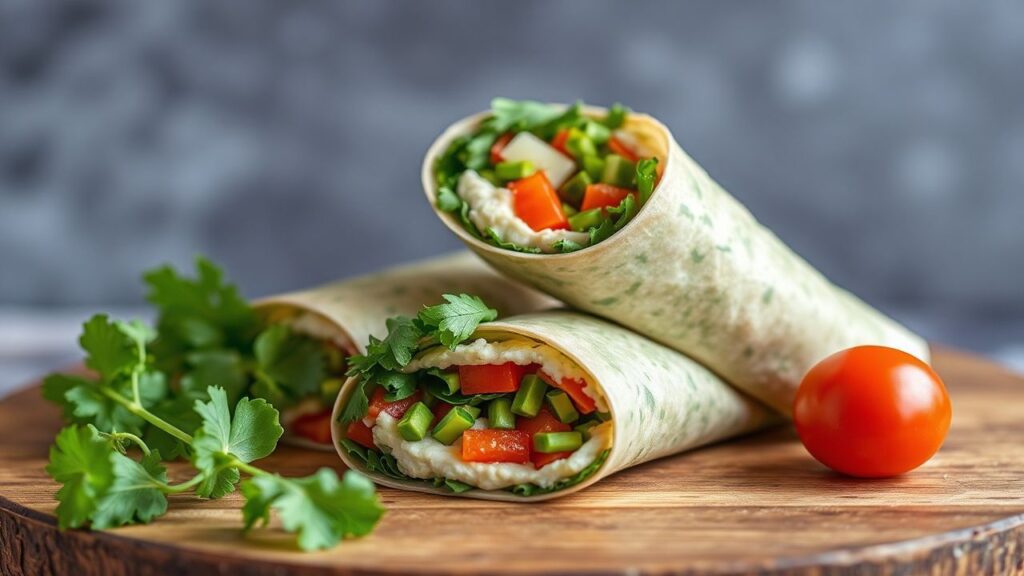
For more Mediterranean-inspired ideas, explore Mediterranean cuisine. It helps you understand why these ingredients—olive oil, herbs, vegetables, and legumes—work together.
FAQ
If you’re still deciding how to pack, store, or customize your wraps, these answers will help you act fast and cook confidently.
Each response targets real kitchen problems like sogginess, flavor balance, and timing.
What makes Fresh Mediterranean Veggie & Hummus Wraps: Healthy & Easy a healthy choice?
They combine fiber-rich vegetables with protein and fiber from chickpeas. Olive oil and tahini add healthy fats that help you feel satisfied without relying on processed sauces.
Which vegetables work best for crunch?
Use cucumbers, carrots, bell peppers, and thinly sliced red onion. For greens, spinach or arugula works well because it stays crisp when layered correctly.
How do I keep tortillas from getting soggy?
Spread hummus first, then layer drier vegetables over the top. Place tomatoes in the center and pat them dry if needed. For meal prep, store components separately when possible.
Can I make the hummus ahead of time?
Yes. Make the hummus up to a few days ahead and store it airtight in the refrigerator. Stir before using to restore a smooth texture.
Are there dairy-free or gluten-free options?
For dairy-free, choose vegan feta or skip it and add extra herbs. For gluten-free, use gluten-free tortillas or lettuce wraps to keep the wrap structure intact.
Conclusion: Fresh Mediterranean Veggie & Hummus Wraps: Healthy & Easy are simple, fast, and genuinely satisfying. With the right veggie mix, well-seasoned hummus, and smart layering, you get a clean Mediterranean flavor in every bite.
Roll them for lunch, pack them for travel, or serve them after training. When you treat moisture like a variable you control, these wraps stay fresh, flavorful, and easy to repeat.
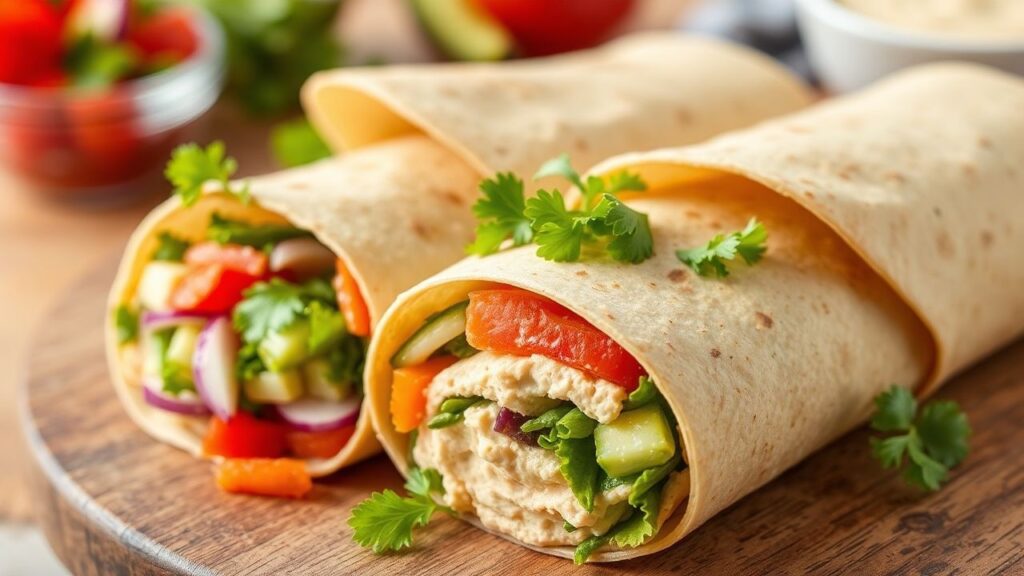
See also: Fresh Mediterranean Veggie