
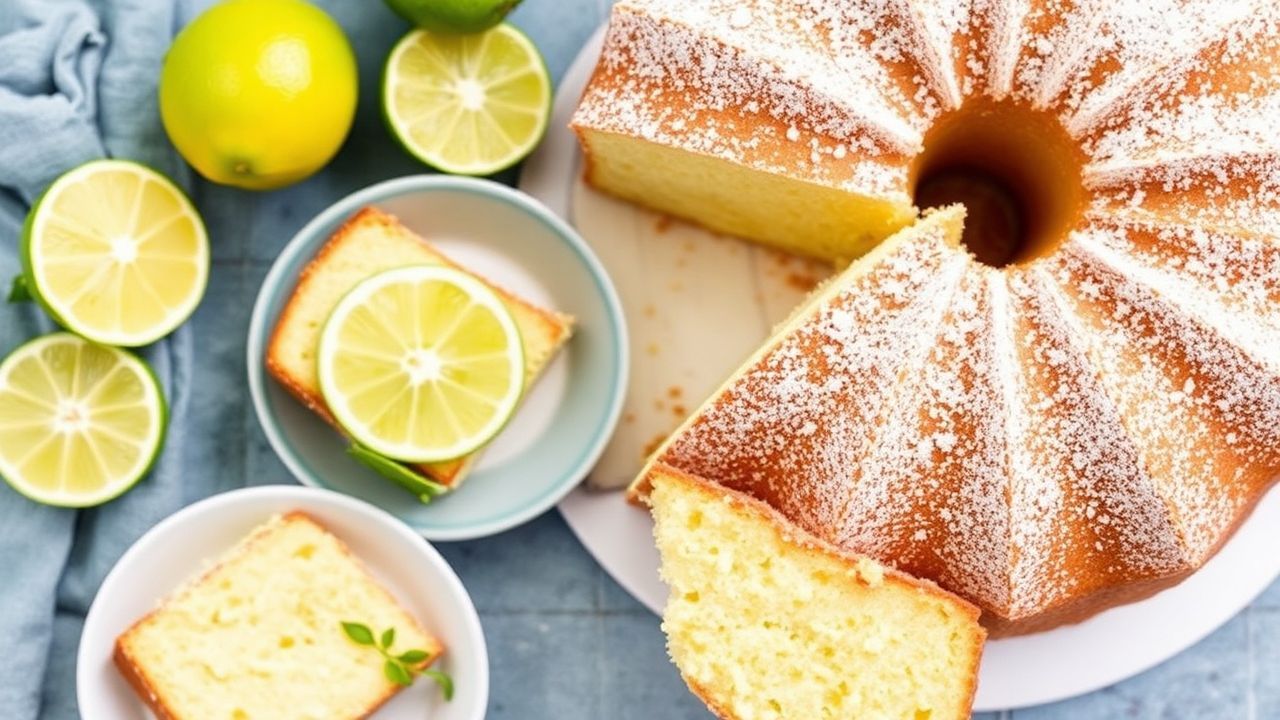
Key lime pound cake delivers a rare pairing: buttery density with bright, tangy lift. When you balance fresh zest, real lime juice, and a properly creamed base, the result tastes like citrus sunshine—clean, fragrant, and never flat.
- What Makes Key Lime Pound Cake Different (and Why It Works)
- Ingredients You Need for a 9-Inch Key Lime Pound Cake
- Step-by-Step: How to Bake the Best Key Lime Pound Cake
- Prep and Pan Setup
- Mixing the Batter Without Toughening It
- Fold in Dry and Sour Cream in Alternation
- Bake Time and Doneness Signals
- Optional Lime Syrup and Glaze Ideas (Choose One)
- Troubleshooting: Cracks, Dryness, and Weak Lime Flavor
- Serving Ideas That Make This Cake Look—and Taste—Premium
- Storage, Make-Ahead Strategy, and Freezing
- Key Lime Pound Cake Recipe (9-Inch)
- FAQ
Florida-style key lime flavor has a distinct profile. It leans floral and tart rather than purely sharp. That difference matters, because pound cake is a “structure” dessert; once the crumb sets, your lime notes need to be layered, not just added at the end.
- Fresh zest provides aroma and citrus oils that box mixes can’t match.
- Room-temperature ingredients help you emulsify for a smoother, tighter crumb.
- Sour cream adds moisture and tenderness while balancing acidity.
- Gentle baking prevents dryness and keeps the cake moist at the center.
What Makes Key Lime Pound Cake Different (and Why It Works)
Classic pound cake relies on butter, sugar, eggs, and flour for a rich, dense texture. Key lime pound cake keeps that backbone, then adds citrus character through both zest and juice. Zest carries oils and strong aroma, while juice adds acidity that sharpens sweetness.
That acidity also interacts with dairy. Sour cream’s lactic tang and acidity help the batter stay tender, and they soften the crumb as the cake bakes. For background on why citrus and acidity change baked flavor perception, see citric acid.
The Flavor Math: Zest vs. Juice
Zest and juice do different jobs. Zest acts like fragrance—tiny amounts create a big lift because lime oils distribute through the batter. Juice acts like a flavor driver—small changes to quantity can swing the cake from refreshing to puckering.
If you use only juice, you risk a cake that tastes sharp but not aromatic. If you use only zest, the cake may taste bright but not “balanced.” The best results come when zest leads and juice follows, supporting the citrus note without overpowering the butter.
Why Pound Cake Crumb Needs Careful Mixing
Pound cake batter can turn tough if you overmix once flour hits the bowl. Flour hydrates as you mix, and extra mixing builds more gluten than you need. You want structure, but you don’t want chew.
For the science behind gluten development in wheat-based batters, refer to gluten. Your goal is a smooth batter that looks consistent, then stop mixing as soon as flour disappears.
Ingredients You Need for a 9-Inch Key Lime Pound Cake
This recipe makes one 9-inch pound cake, sliced into about 10–12 servings. It uses a traditional base but adds citrus in a way that supports moisture and clean flavor.
Choose ingredients with the same intent you bake with: real, fresh, and room temperature whenever possible. Pound cake texture improves when butter and eggs emulsify well.
Core Dry Ingredients
Use all-purpose flour for a classic crumb. Sift it for better mixing and fewer lumps. Add a small amount of baking powder to help lift without turning the cake airy.
Use fine salt to sharpen flavor. Salt doesn’t make food taste salty; it makes flavors taste clearer. If you want more grounding on how leavening works in baked goods, visit baking powder.
Wet Ingredients That Control Texture
Softened unsalted butter and granulated sugar create the cake’s tender crumb through creaming. You beat air into the mixture, then eggs and dairy stabilize that structure. Sour cream boosts tenderness and moisture while keeping the tang in balance.
For citrus, you’ll use key lime zest and strained key lime juice. Key limes are small and aromatic; regular limes still work, but the final fragrance changes.
Fresh Citrus Technique: Zest Like a Pro
Zest only the green outer layer. The white pith underneath tastes bitter, and bitterness shows up clearly in dense cakes like pound cake. Use a microplane so you harvest oils without scraping too deep.
Handle zest quickly. Citrus oils fade as zest sits exposed. If you want to understand how aroma compounds behave, see essential oils.
After zesting, juice the limes and strain to remove seeds and pulp. Pulp adds texture, but it can also create uneven tang. For a smoother finish, strain and keep only the juice.
Step-by-Step: How to Bake the Best Key Lime Pound Cake
Good pound cake comes from steady steps, not complicated ones. Follow the order carefully and keep your batter smooth. When you do, you get a cake that rises evenly and slices clean.
Preheat fully before baking. A stable oven temperature supports even lift and fewer cracks.
Prep and Pan Setup
Preheat your oven to 350°F (175°C). Grease and flour a 9-inch bundt or loaf pan thoroughly. Pound cake clings more than lighter cakes, so focus on getting into corners and ridges.
If your pan tends to stick, consider adding a thin layer of parchment in the base for loaf pans. Bundt pans benefit from extra greasing because the cake’s density can trap residue.
Mixing the Batter Without Toughening It
Whisk flour, baking powder, and salt in a bowl. Set it aside so the dry ingredients distribute evenly. Next, cream butter and sugar until pale, fluffy, and noticeably lighter, usually 4–6 minutes.
Add eggs one at a time. After each egg, beat until you don’t see streaks. Scrape the bowl often. Then mix in zest so the oils spread through the batter.
Fold in Dry and Sour Cream in Alternation
Combine dry ingredients and sour cream alternately. Start with flour, then sour cream, then flour again, ending with flour. Mix just until the batter looks uniform.
Finally, stir in lime juice and vanilla. Acid and flavor stay strongest when you mix briefly at the end rather than long at the start.
Bake Time and Doneness Signals
Pour batter into the pan and smooth the top. Bake for 55–65 minutes until a toothpick near the center comes out clean or with only a few moist crumbs. Rotate the pan halfway for even browning.
Cracks happen when the top sets faster than the inside. A steady temperature helps. If your oven runs hot, bake closer to 325°F (160°C) and extend time slightly.
Cool the cake in the pan for about 15 minutes, then invert onto a wire rack. Let it cool fully before glazing. Warm cake can dissolve glaze and soften the crumb too much.
Optional Lime Syrup and Glaze Ideas (Choose One)
Pound cake tastes great plain, but a light syrup or glaze can elevate the citrus punch. Use one option so the cake doesn’t become overly wet.
Keep the syrup thin so it soaks without pooling. Glaze should be pourable but not runny.
Quick Lime Syrup (Moisture Boost)
Stir equal parts sugar and lime juice in a small saucepan over low heat until the sugar dissolves. Poke holes in the warm cake and brush or spoon syrup over the top.
Let it set before slicing. This method improves moisture through the first slice and adds a brighter citrus finish.
Classic Key Lime Glaze (Sweet-Tart Finish)
Whisk powdered sugar with enough key lime juice to create a thick drizzle. Add zest for extra aroma if you want. Drizzle on fully cooled cake.
For a thicker look, let glaze sit for a minute before pouring. For a glossy shine, drizzle while slightly warm.
Troubleshooting: Cracks, Dryness, and Weak Lime Flavor
If you bake often, you’ll face occasional issues. Most problems come from oven temperature, mixing, or citrus handling—not from the recipe.
Use these fixes to adjust without wasting time or ingredients.
Why Your Cake Cracks on Top
Cracks can happen when the top bakes faster than the inside. Common causes include oven temperature running hot, overmixing, or too much leavening action.
Try baking at 325°F (160°C) next time if cracks appear early. Also, avoid opening the oven door often. Temperature swings can trigger uneven set.
Why Your Cake Tastes Dry
Dry pound cake usually comes from overbaking or cutting too soon. Dense cakes keep baking after you remove them because residual heat continues setting the crumb.
Start checking at 50 minutes. Use the toothpick test near the center, and pull the cake when it comes out clean with a few moist crumbs. Then cool fully.
Why Lime Flavor Feels Weak
Weak flavor can come from stale limes or timid zesting. Lime aroma is volatile—fresh zest gives you the biggest payoff. If you used pre-bottled lime juice, expect less brightness.
Use zest from fresh fruit and strain the juice. If you need extra lift, increase zest slightly (not juice) so you keep the flavor clean without adding extra acidity that can dry the crumb.
Serving Ideas That Make This Cake Look—and Taste—Premium
Key lime pound cake already looks impressive with green flecks of zest. Your job is to serve it in ways that highlight contrast: warm cake with cool toppings, tart with creamy, dense with airy.
Keep portions generous. Pound cake holds flavor well and stays satisfying after the first bite.
Simple, High-Impact Garnishes
Dust with powdered sugar for a classic finish. Add thin lime slices for fragrance and color. If you want crunch, sprinkle toasted coconut or crushed pistachios.
For a creamy pair, serve with vanilla ice cream or sweetened whipped cream. The cold dairy temp amplifies citrus brightness without making it taste sour.
Make It a Dessert Plate
Try a plate with a slice of cake, a spoon of lime curd (if you like), and a few fresh berries. Berries add natural acidity and visual pop.
If you’re exploring citrus desserts broadly, you’ll find many flavor parallels with lime based sweets—though key lime specifically brings its own aromatic edge.
Storage, Make-Ahead Strategy, and Freezing
Pound cake keeps well because it has a rich crumb and moderate moisture. It also tastes better after a rest, which gives the citrus time to settle into the cake structure.
Always cool completely before wrapping. Moisture trapped under warm wrap can soften the crust.
Room Temperature and Refrigeration
Wrap the cake tightly and store at room temperature for up to 2 days. For longer storage, refrigerate up to 1 week. Refrigeration slightly firms the texture, but it also helps the flavors stay fresh.
Bring slices to near room temperature before serving for the best mouthfeel.
Freezing for Later
Wrap tightly in plastic wrap, then foil, and freeze up to 2–3 months. Thaw in the refrigerator overnight, then set out for 20–30 minutes before eating.
If you glaze, consider glazing after thawing for the cleanest look.
Key Lime Pound Cake Recipe (9-Inch)
Use this recipe as your baseline. Once you nail it, you can tweak the glaze strength, add extra zest, or swap toppings while keeping the crumb consistent.
When you follow the steps closely, you’ll get a tender, sliceable pound cake with vivid citrus aroma.
Ingredients
Dry: 1 1/2 cups all-purpose flour (sifted), 1 tsp baking powder, 1/4 tsp fine sea salt.
Wet: 1 cup unsalted butter (room temperature), 1 1/4 cups granulated sugar, 4 large eggs (room temperature), 2 tbsp finely grated key lime zest, 1/4 cup fresh key lime juice (strained), 1/2 cup sour cream (room temperature), 1 tsp vanilla extract.
Instructions
Preheat oven to 350°F (175°C). Grease and flour a 9-inch bundt or loaf pan thoroughly. Whisk flour, baking powder, and salt in a bowl.
Cream butter and sugar until pale and fluffy (4–6 minutes). Add eggs one at a time, mixing well and scraping the bowl. Fold in lime zest.
Mix in flour and sour cream alternately, starting and ending with flour. Stir in lime juice and vanilla last. Pour into pan and smooth the top.
Bake 55–65 minutes, rotating at the halfway mark. Cool in pan 15 minutes, invert onto a wire rack, and cool fully.
FAQ
Can I use regular limes instead of key limes?
Yes. Regular Persian limes deliver great flavor, but they taste different. Key limes are more aromatic and tart, so you may want to zest a bit more if you switch to regular limes.
How do I stop the cake from drying out?
Don’t overbake. Start checking around 50 minutes. Pull the cake when a toothpick shows a few moist crumbs, then cool on a rack so steam doesn’t keep cooking the center.
Why must eggs and sour cream be at room temperature?
Cold ingredients can cause the batter to look curdled or uneven. Room-temperature eggs and sour cream blend smoothly, which supports a consistent crumb and better moisture retention.
What’s the best way to zest limes for pound cake?
Use a microplane and zest only the green outer layer. Avoid the white pith because it adds bitterness. Zest right before mixing so aroma stays strong.
Can I make this cake ahead of time?
Yes. Bake up to 2 days ahead and wrap tightly at room temperature. For best taste, serve after resting so the citrus flavor distributes evenly through the crumb.
See also: Key lime pound cake