


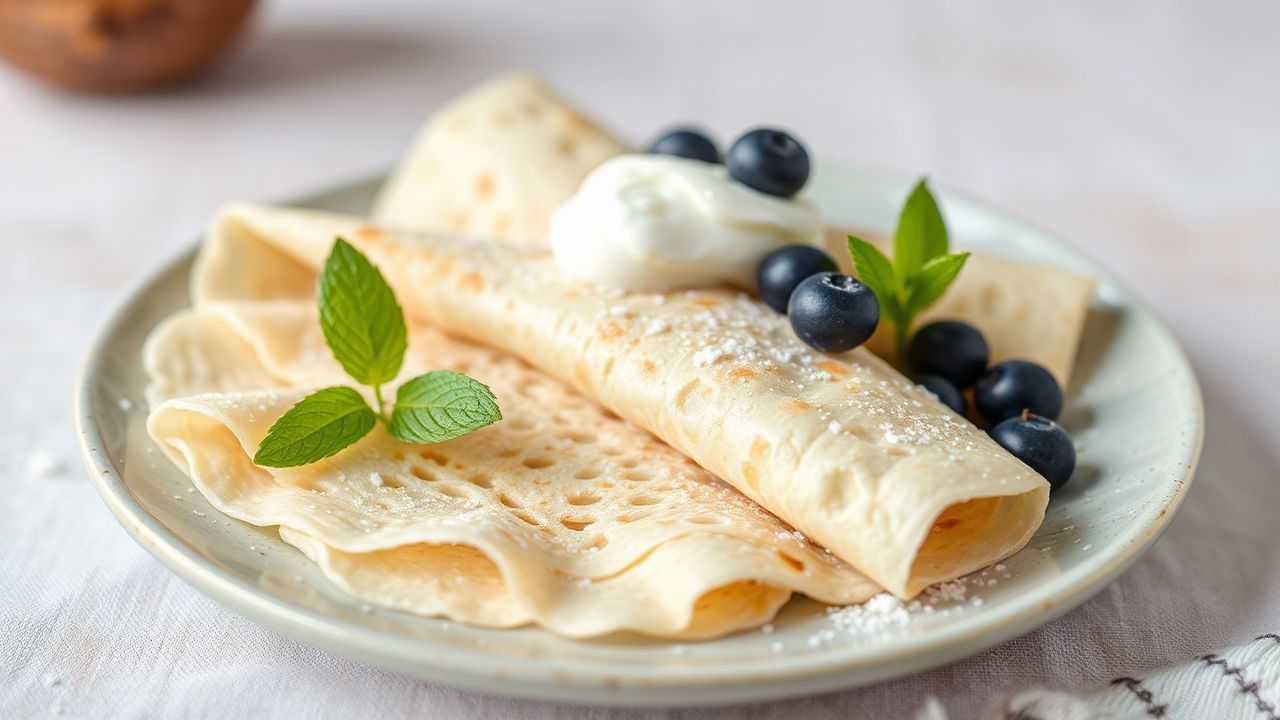
Delicate lacy rice crepes with creamy coconut milk bring a light, elegant texture to breakfast. The thin batter creates lace-like edges as it cooks, while coconut milk adds a silky, tropical richness. This is a gluten-free crepe method that still tastes indulgent and feels special.
- What Makes Lacy Rice Crepes with Creamy Coconut Milk Different?
- Prep and Cook Time
- Yield and Difficulty Level
- Ingredients for Delicate Lacy Rice Crepes with Creamy Coconut Milk
- Instructions: How to Cook Lacy Rice Crepes
- 1) Whisk the batter
- 2) Rest the batter for better lace
- 3) Heat the pan and grease lightly
- 4) Pour and swirl for a thin layer
- 5) Cook the first side without browning
- 6) Flip gently and finish
- 7) Repeat and maintain the pattern
- 8) Stack and serve
- Tips for Success with Lacy Rice Crepes
- Serving Suggestions for Lacy Rice Crepes with Creamy Coconut Milk
- Nutritional Note (Per Crepe Approximate)
- FAQ
At a Glance
- Lacy texture: Thin spread plus proper heat makes the holes and lacy rim.
- Gluten-free: Rice flour hydrates and sets into a tender crepe.
- Coconut richness: Full-fat coconut milk gives softness and flavor.
- Best results: Rest the batter for a smooth, pourable consistency.
These crepes work because rice flour behaves differently from wheat. It sets gently, so the center stays tender even when you keep the crepe paper-thin. Meanwhile, coconut milk carries natural sweetness and fat, which improves pliability for rolling or folding.
To understand why the pattern forms, it helps to think about steam. When the batter is thin, steam escapes through small gaps and creates tiny bubbles that turn into the signature lace marks. If you cook too hot, the batter browns before the lacy look fully develops.
What Makes Lacy Rice Crepes with Creamy Coconut Milk Different?
These crepes trade wheat flour for fine rice flour, which keeps the crumb light. You still get a delicate bite, but you avoid the elastic chew that wheat can create. For background, see rice flour.
Coconut milk also changes the cooking behavior. The fat and proteins help the batter stay smooth and tender, especially when you rest it. For general dairy-fat alternatives, you can review coconut milk.
Prep and Cook Time
Plan around a short mixing step and a longer rest. Resting matters here because rice flour needs time to hydrate fully. Hydrated flour thickens evenly, so the batter spreads thin without tearing.
You will spend most of your time cooking each crepe in batches. Keep heat medium and adjust as you go, because different pans hold heat differently. Use the times below as a realistic guide for home kitchens.
- Preparation: 15 minutes
- Resting time: 30 minutes
- Cooking: 20 minutes
- Total: 65 minutes
Yield and Difficulty Level
This recipe makes about 10–12 crepes (4-inch diameter). Smaller pans yield more crepes, while larger pans reduce the count. Either way, your goal stays the same: thin, even layers with a lacy edge.
Difficulty: Medium. You must watch batter flow and pan heat. If the batter feels thick, the crepe will turn dense and lose the lace effect. If heat runs high, edges brown too quickly.
Ingredients for Delicate Lacy Rice Crepes with Creamy Coconut Milk
Gather ingredients first, then measure carefully. Sifting rice flour helps prevent gritty bits and supports a smoother batter. For general flour handling, you can review flour.
Use full-fat coconut milk for the best texture. Lighter versions can produce crepes that tear or cook too fast. Also, keep oil use light so the crepe surface stays thin and crisp at the rim.
- 1 cup rice flour, sifted
- 1 ⅓ cups full-fat coconut milk, well shaken
- 1 large egg, lightly beaten
- 2 tablespoons coconut sugar (optional, for subtle sweetness)
- ¼ teaspoon fine sea salt
- 2 tablespoons vegetable oil (for batter and cooking)
- Extra vegetable oil or coconut oil for greasing the pan
Instructions: How to Cook Lacy Rice Crepes
Follow each step in order. The batter step and resting step shape your final texture, so don’t rush. Then you’ll focus on heat and speed during cooking.
As you work, keep a small bowl of batter and stir it lightly if it thickens. Rice flour can settle, and gentle stirring keeps the pour consistent from crepe to crepe.
1) Whisk the batter
In a mixing bowl, combine sifted rice flour, coconut sugar, and sea salt. Gradually add coconut milk while whisking continuously to prevent lumps.
Add the beaten egg and 2 tablespoons vegetable oil. Whisk until the batter looks smooth and flows like light cream. If you see tiny flour clumps, strain once for extra smoothness.
2) Rest the batter for better lace
Cover the bowl and let it rest for at least 30 minutes at room temperature. Resting lets rice flour absorb moisture, which improves spread and reduces tearing.
During the rest, the batter thickens slightly. That helps create a thin but stable layer, so the rim forms the delicate lace pattern rather than collapsing.
3) Heat the pan and grease lightly
Heat a non-stick crepe pan or small skillet over medium heat. Give the pan a full minute to warm evenly before you cook the first crepe.
Lightly brush the surface with oil using a paper towel. Too much oil can make the crepe greasy and dull the lace edge. Too little oil causes sticking, so adjust after the first test crepe.
4) Pour and swirl for a thin layer
Ladle about 2 tablespoons batter into the pan. Immediately swirl in a circular motion so the batter spreads into a thin, even circle.
Work quickly but smoothly. A thin layer supports steam release, and that steam helps create the lace-like holes around the edge.
5) Cook the first side without browning
Cook undisturbed for 1–2 minutes until the edges lift slightly and the surface sets. The crepe should not brown much on the first side.
When the batter sets, the lace holes become more visible as steam escapes. If your crepe browns early, lower heat and reduce cook time.
6) Flip gently and finish
Use a thin spatula to flip the crepe. Cook the second side for about 30 seconds to 1 minute, just until lightly golden.
The second side usually browns more because it cooks faster once the crepe is set. Keep your motion light so you don’t tear the delicate rim.
7) Repeat and maintain the pattern
Repeat with the remaining batter, adjusting heat as needed. Re-grease lightly between crepes if the pan starts to look dry.
If the lace pattern weakens, your batter may be too thick or your heat may be too low. Stir the batter and aim for steady medium heat.
8) Stack and serve
Stack crepes on a plate with parchment paper between layers. This step prevents sticking and keeps crepes flexible.
Serve warm or at room temperature. Warm crepes taste best with fruit, honey, or coconut cream because the flavors bloom as the fat softens.
When you nail batter flow, the crepe becomes forgiving. You can pour again even if the first one looks a little uneven. With practice, you will get a lacy edge on nearly every crepe.
Also watch for lumps. Lumps can create thick spots that cook unevenly. If you notice grainy texture, sift rice flour again next time and whisk longer during the batter step.
Tips for Success with Lacy Rice Crepes
Use these tips to fine-tune results. Small changes in batter thickness and pan temperature produce big differences in lace texture. Since each stove and pan behaves uniquely, treat the cooking minutes as guidelines, not rules.
Remember that rice crepes rely on gentle handling. Stir the batter often, grease lightly, and flip only when the first side fully sets.
- Consistency is key: Batter should flow easily. If it looks too thick, add 1–2 teaspoons coconut milk and whisk.
- Don’t skip resting: Resting supports hydration and a tender, flexible crepe.
- Pan selection: A well-seasoned non-stick pan helps the crepe release cleanly.
- Use a paper towel: Apply a thin veil of oil rather than pouring oil.
- Make-ahead: Refrigerate stacked crepes up to 2 days. Reheat gently in a warm pan to restore softness.
Serving Suggestions for Lacy Rice Crepes with Creamy Coconut Milk
Lacy rice crepes with creamy coconut milk pair well with both sweet and savory flavors. Because coconut milk has a gentle sweetness, fruit and warm spices work naturally. For more on crepes as a food category, see crepe.
For a classic Southeast Asian-inspired breakfast, fill crepes with coconut whipped cream and tropical fruit. Mango, pineapple, and passionfruit complement coconut without overpowering the crepe’s delicate texture.
Try a light sprinkle of toasted sesame seeds or edible flowers for contrast. The lace rim already gives visual detail, so toppings should add taste and aroma rather than heavy sweetness. Keep fillings modest so the crepes fold cleanly.
For savory options, use a herb spread and a tangy coconut chutney. You can also serve with a mild coconut curry dip on the side. For spice context, you can read curry.
To keep the signature look, roll or fold carefully. When you cut and serve immediately, the lace edge stays crisp and photogenic. When you assemble ahead, rewarm briefly so the crepe becomes pliable again.
Nutritional Note (Per Crepe Approximate)
Nutrition varies based on portion size and the exact brand of coconut milk. Still, the table below gives a useful ballpark for planning. For general reference on macronutrients, see macronutrients.
These crepes stay relatively light because they rely on thin layers rather than thick dough. Add fillings to increase calories, so keep that in mind when pairing sweet toppings or rich dips.
| nutrient | Per Crepe (approximate) |
|---|---|
| Calories | 80 kcal |
| Protein | 1.2 g |
| Carbohydrates | 9.5 g |
| Fat | 3.8 g |
FAQ
What makes rice flour an ideal choice for delicate lacy crepes?
Rice flour creates a thin, tender structure because it hydrates and sets without wheat gluten. That helps the crepe stay light and foldable. It also gives the lace edge a crisp, delicate look when cooked at steady medium heat.
For more background on the ingredient itself, see rice flour.
How does creamy coconut milk improve flavor and texture?
Coconut milk adds fat and natural sugars, which improves mouthfeel and helps the batter taste rich. It also supports tenderness so the crepe stays pliable after cooking. When you rest the batter, coconut milk distributes evenly for consistent cooking.
You can review general properties of coconut milk to understand why it works so well in thin batters.
Are these lacy rice crepes gluten-free?
Yes. This recipe uses rice flour and contains no wheat flour. As long as your other ingredients are gluten-free (like sugar and coconut milk brands), the crepes can fit a gluten-free diet.
Still, check labels because cross-contact can happen in some packaged products.
Can I prepare the batter ahead of time?
Yes. Resting is important, and chilling can extend freshness. If you refrigerate the batter, stir again before cooking because rice flour may settle.
Let the batter sit 5–10 minutes at room temperature before you cook for best flow.
What fillings work best with these crepes?
Sweet fillings like mango, pineapple, coconut cream, and honey pair well with the crepe’s gentle coconut flavor. For savory choices, use herb spreads, coconut chutney, or a mild coconut curry dip.
For general pairing ideas, you can explore crepe variations and serving styles.
See also: lacy rice crepes