
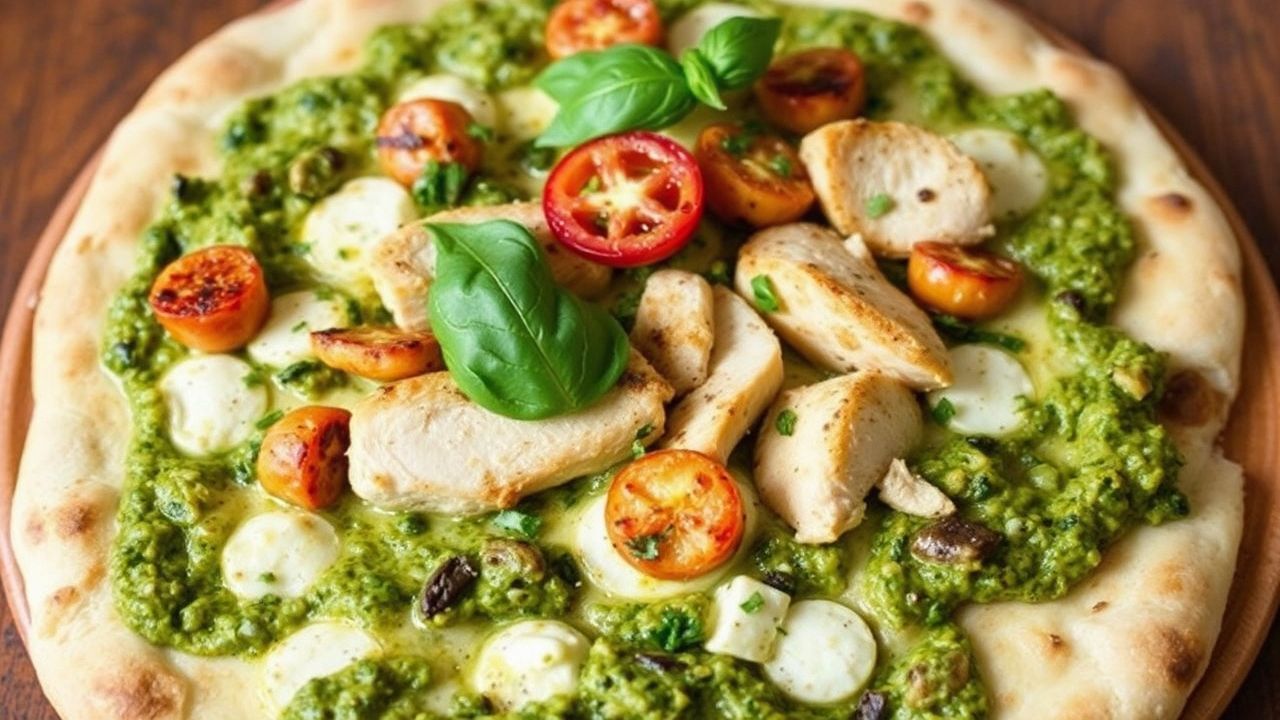
Italian pesto chicken flatbread pizza works when you treat it like three jobs in one: build a pesto base, cook tender chicken with browning, and bake the flatbread hot enough to stay crisp. When you do all three well, you get a pizzeria-style slice that still fits a weeknight rhythm.
- Why This Italian Pesto Chicken Flatbread Pizza Always Tastes “Fresh”
- Ingredients That Matter (And What to Watch For)
- Pesto Basics: Basil, Oil, Nuts, Garlic, Parmesan
- Chicken Marinade: Bright + Adhesive, Not Heavy
- Flatbread Choice: Thin, Sturdy, Oven-Friendly
- Toppings: Tomatoes, Onion, and Arugula Timing
- Step-by-Step: Build the Pizza Without Sogginess
- 1) Make the Pesto (Fast, But Controlled)
- 2) Marinate and Sear the Chicken
- 3) Prep the Oven Like a Pizza Shop
- 4) Assemble: The Thin-Layer Rule
- 5) Bake and Finish
- 7-Minute Upgrades That Make This Recipe Feel “Restaurant”
- Upgrade 1: Toast Pine Nuts for 3 Minutes
- Upgrade 2: Preheat the Baking Sheet
- Upgrade 3: Cook Chicken Until It’s Just Golden
- Upgrade 4: Grate Mozzarella for Even Melt
- Upgrade 5: Add Arugula at the End
- Upgrade 6: Use Controlled Tomato Amounts
- Upgrade 7: Finish With a Tiny Olive Oil Drizzle
- Exact Recipe: Italian Pesto Chicken Flatbread Pizza
- Troubleshooting: Fix the Most Common Problems
- Serving Ideas That Match the Flavor
- FAQ
- Thin pesto layer prevents sogginess and keeps crisp edges.
- Hot oven + quick bake melts mozzarella without steaming the crust.
- Brief chicken marinade adds brightness and seasoning, even with short cook times.
- Arugula after baking preserves peppery bite and color.
Why This Italian Pesto Chicken Flatbread Pizza Always Tastes “Fresh”
This pizza tastes vibrant because pesto carries strong herb aroma, fatty richness, and salt in one spoonful. Chicken adds savory depth and browned flavor through the Maillard reaction, especially when you sear hot and don’t overcook.
Flatbread acts like a fast-cooking platform. It browns quickly, so you can melt cheese and warm toppings without turning everything into a soft, wet stack. If you manage moisture and timing, the pizza holds structure.
To ground the flavor logic, pesto depends on emulsified oil, herbs, garlic, nuts, and cheese working together. Learn the traditional components and how pesto is typically structured via pesto.
The Flavor Team: Pesto, Chicken, Mozzarella, and Flatbread
Pesto supplies basil-forward brightness plus garlic and nutty depth. The olive oil helps the flavors cling to cheese and chicken, so every bite tastes “cohesive” instead of separate.
Chicken does two things: it brings protein and it creates browned edges that feel like pizza-shop cooking. Thin slices help the chicken cook through fast, so the bake doesn’t dry it out.
Mozzarella melts readily, which helps it bind toppings to the flatbread. For pizza-style results, use a shredding or tearing method that creates even melting instead of big clumps.
Flatbread gives the crunch. Your job is to keep it dry enough to crisp while the cheese melts. That’s mostly a moisture-management problem.
Ingredients That Matter (And What to Watch For)
You can keep the ingredient list fairly simple, but small upgrades make a noticeable difference. The best results come from fresh basil flavor, well-seasoned chicken, and a pesto spread you can control.
Before you shop, decide how you’ll handle pesto thickness and chicken texture. If you spread too thick or bake too long, the crust loses crispness.
Pesto Basics: Basil, Oil, Nuts, Garlic, Parmesan
Start with a classic pesto structure: basil, olive oil, garlic, pine nuts, and Parmesan. Pine nuts toast quickly, so you get aroma without turning them bitter. If you want background on basil’s role as an aromatic herb, review basil.
For Parmesan, choose a salty, aged cheese so the pesto tastes lively even after baking. You can use Parmesan cheese as a reference for its traditional role in Italian cooking.
Chicken Marinade: Bright + Adhesive, Not Heavy
Use lemon juice and a few dried herbs/spices to season the chicken quickly. Lemon adds brightness, while oregano and garlic powder bring a savory Italian profile.
Marinate briefly—about 20 to 30 minutes. That timing works because thin slices absorb flavor faster than thick cuts. You also avoid chicken that tastes “cured” or overly acidic.
Flatbread Choice: Thin, Sturdy, Oven-Friendly
Pick flatbreads that can handle high heat without turning gummy. Thin naan-style breads often work, but plain pizza dough or flatbread rounds give you the most predictable crisping.
Preheating the oven and using a hot baking sheet can improve crispness. If your flatbread tends to steam, a preheated surface helps evaporate moisture faster.
Toppings: Tomatoes, Onion, and Arugula Timing
Cherry tomatoes add sweetness and acidity. Use halved tomatoes so they distribute evenly without dumping too much juice onto the crust.
Thin red onion adds bite. Add arugula after baking so it stays green, crisp, and peppery instead of wilting into the cheese.
Step-by-Step: Build the Pizza Without Sogginess
Follow this order to protect texture. Make pesto first, marinate chicken while the oven preheats, cook chicken quickly, assemble right away, then bake for the shortest time that melts cheese and browns edges.
Think of the workflow like a timer system. You’re aiming for “assembly to oven” with minimal waiting, because moisture starts to soften the crust the moment pesto touches it.
1) Make the Pesto (Fast, But Controlled)
Toast pine nuts in a dry pan over medium heat for 2 to 4 minutes. Stir constantly and pull them as soon as they smell nutty and turn lightly golden.
Blend basil, garlic, toasted pine nuts, Parmesan, and a pinch of salt. Then drizzle in olive oil while blending until smooth. If you prefer visible basil specks, pulse instead of blending fully.
Expert Insight: Pine nuts go from “toasty and aromatic” to “slightly bitter” fast. Toast in short bursts, and remove them from the pan immediately when they look golden—residual heat keeps cooking. [/TIP]
2) Marinate and Sear the Chicken
Slice chicken thinly so it cooks evenly. Toss it with olive oil, lemon juice, oregano, garlic powder, salt, and pepper, then let it sit 20 to 30 minutes in the fridge.
Sear in a hot skillet over medium-high heat. Cook until golden and cooked through, then move it to a plate to rest briefly. If slices vary in thickness, you’ll need to pull thinner pieces a bit earlier.
For food-safety guidance and general background on chicken doneness, you can consult chicken.
3) Prep the Oven Like a Pizza Shop
Preheat to 425°F (220°C) and give the oven time to fully reach temperature. Place a baking sheet inside while the oven heats if you want extra crisping from direct heat.
Hot oven heat matters because flatbread cooks quickly. The goal is short cooking, not slow baking. Short cooking keeps chicken tender and reduces steaming.
4) Assemble: The Thin-Layer Rule
Lay flatbreads on a baking sheet. Spread pesto in a thin, even layer—just enough to flavor every bite.
Add shredded mozzarella next, then chicken, then tomatoes and onion. Keep toppings low-profile so the cheese melts and the crust still browns.
Pro-Caution: Don’t overload pesto or toppings. Extra sauce holds water against the flatbread, which turns a crisp crust into a soft base. If you want more flavor, add a light second drizzle after baking instead. [/WARNING]
5) Bake and Finish
Bake 10 to 12 minutes, checking around minute 10. Stop when cheese melts and edges turn lightly crisp.
Top with arugula immediately so it wilts in seconds, not minutes. Finish with a little extra Parmesan and serve right away for best texture.
7-Minute Upgrades That Make This Recipe Feel “Restaurant”
Most people treat flatbread pizza like a normal pizza. The fast-cooking crust punishes mistakes quickly. These small upgrades protect crispness and boost flavor without extra complexity.
Upgrade 1: Toast Pine Nuts for 3 Minutes
Even if your pesto is homemade, pine nuts often get ignored. Toasting adds nutty aroma and deeper flavor that stays present after baking.
Keep pine nuts in motion while toasting. If you let them sit, they can burn in under a minute.
Upgrade 2: Preheat the Baking Sheet
A preheated sheet transfers heat instantly when the flatbread lands. That early blast helps set the crust before pesto moisture spreads.
This step matters most if your flatbread is thinner or if you used very juicy tomatoes.
Upgrade 3: Cook Chicken Until It’s Just Golden
Searing adds flavor, but overcooking dries chicken and makes it chewy. Aim for golden edges and cooked-through centers, then rest briefly.
If you slice chicken very thin, keep the skillet hot and cook in shorter batches.
Upgrade 4: Grate Mozzarella for Even Melt
Shredded mozzarella melts more evenly than large chunks. Even melt helps the toppings “stick” so slices hold together.
If your mozzarella looks wet, pat it lightly with a paper towel before assembling.
Upgrade 5: Add Arugula at the End
Arugula tastes best when heat barely touches it. Adding it after baking preserves peppery freshness and stops it from turning limp.
Sprinkle it in a small mound across each slice so diners get greens in every bite.
Upgrade 6: Use Controlled Tomato Amounts
Tomatoes add flavor but also add water. Halve them and distribute lightly, then let baking do the rest.
If tomatoes are very juicy, salt them lightly for 5 minutes, then blot before topping.
Upgrade 7: Finish With a Tiny Olive Oil Drizzle
A thin drizzle after baking rounds out basil and helps flavors taste richer. Use less than you think—you want aroma, not grease.
For a quick refresher on olive oil’s culinary role, see olive oil.
Exact Recipe: Italian Pesto Chicken Flatbread Pizza
This recipe makes two 10-inch flatbread pizzas or one larger family-style set of flatbread rounds. You’ll get crisp edges when you keep the pesto layer thin and bake quickly.
Time: ~65 minutes total (including marination). Yield: Serves 4 (sliced into quarters or wedges).
Ingredients
Pesto sauce
2 cups packed fresh basil leaves
1/2 cup extra-virgin olive oil
1/3 cup pine nuts, toasted
2 cloves garlic, minced
1/2 cup freshly grated Parmesan
Salt and black pepper, to taste
Chicken marinade
2 boneless, skinless chicken breasts (~12 oz), sliced thin
2 tbsp olive oil
1 tbsp lemon juice
1 tsp dried oregano
1 tsp garlic powder
Salt and pepper, to taste
Pizza build
2 large flatbreads (~10-inch)
1 cup shredded mozzarella
1/2 cup cherry tomatoes, halved
1/4 cup thinly sliced red onion
Fresh arugula, for topping
Extra Parmesan, optional
Instructions
Toast pine nuts, then blend basil, garlic, pine nuts, Parmesan, salt, and pepper. With the blender running, drizzle in olive oil until smooth. Set aside.
Marinate chicken 20 to 30 minutes. Sear in a hot skillet until golden and cooked through, then rest briefly.
Preheat oven to 425°F (220°C). Spread a thin layer of pesto on each flatbread, add mozzarella, then chicken, tomatoes, and onion.
Bake 10 to 12 minutes until cheese melts and edges crisp. Top with arugula right away, finish with extra Parmesan, and serve immediately.
Troubleshooting: Fix the Most Common Problems
Even good recipes fail when moisture and time drift. Use these fixes when your first attempt isn’t crisp enough or your chicken isn’t tender.
Most issues connect to the same causes: too much sauce, too much topping weight, or baking longer than needed.
Problem: Crust Turns Soft
Reduce pesto thickness and keep mozzarella evenly spread, not piled. Also limit watery toppings and bake as soon as you assemble.
If your oven runs cool, your bake time may slip longer than planned. Use an oven thermometer if crisping has been inconsistent.
Problem: Chicken Feels Dry
Sear faster, then pull chicken as soon as it turns golden. Thin slices cook quickly, so don’t leave them in the pan to “get extra done.”
Also avoid marinating too long with lots of lemon. For this style, 20 to 30 minutes works best.
Problem: Cheese Doesn’t Melt Evenly
Shred or tear mozzarella so it melts across the surface. Big chunks can stay firm while the edges bake longer.
Keep the pizza’s layer thickness low so heat reaches toppings quickly.
Serving Ideas That Match the Flavor
Pesto chicken flatbread pizza already tastes bright, salty, and herb-forward. Pair it with sides that cut richness and add crunch.
A simple lemon vinaigrette salad works well because acidity lifts basil and makes each bite feel lighter.
If you want a refresher on vinaigrette structure and why acidity helps balance rich flavors, see vinaigrette.
Quick Pairings
Try a salad with arugula, shaved fennel, and lemon. Or serve roasted vegetables like zucchini and peppers for a warmer, sweeter contrast.
For drinks, choose something dry and not too sweet so basil notes don’t clash.
FAQ
Can I use store-bought pesto for this flatbread pizza?
Yes. Store-bought pesto works well. Still spread it thin so the flatbread crisps instead of steams, and taste before adding extra salt because many pestos already contain enough Parmesan.
What’s the best way to keep the crust crisp?
Preheat the oven to 425°F (220°C), assemble quickly, and bake right away. Use a thin pesto layer and don’t overload tomatoes or onions with extra moisture.
Can I swap chicken for another protein?
Yes. You can use sliced turkey, cooked sausage, or even grilled mushrooms. For any swap, keep slices thin and pre-cooked so the pizza doesn’t require long baking.
When should I add arugula?
Add arugula right after baking. Heat wilts it quickly, so late topping keeps its peppery bite and bright green color.
How long can I store leftover pesto chicken flatbread pizza?
Store leftovers in the fridge in an airtight container for up to 2 to 3 days. Reheat in a hot oven or toaster oven to restore crispness as much as possible.
See also: pesto chicken