
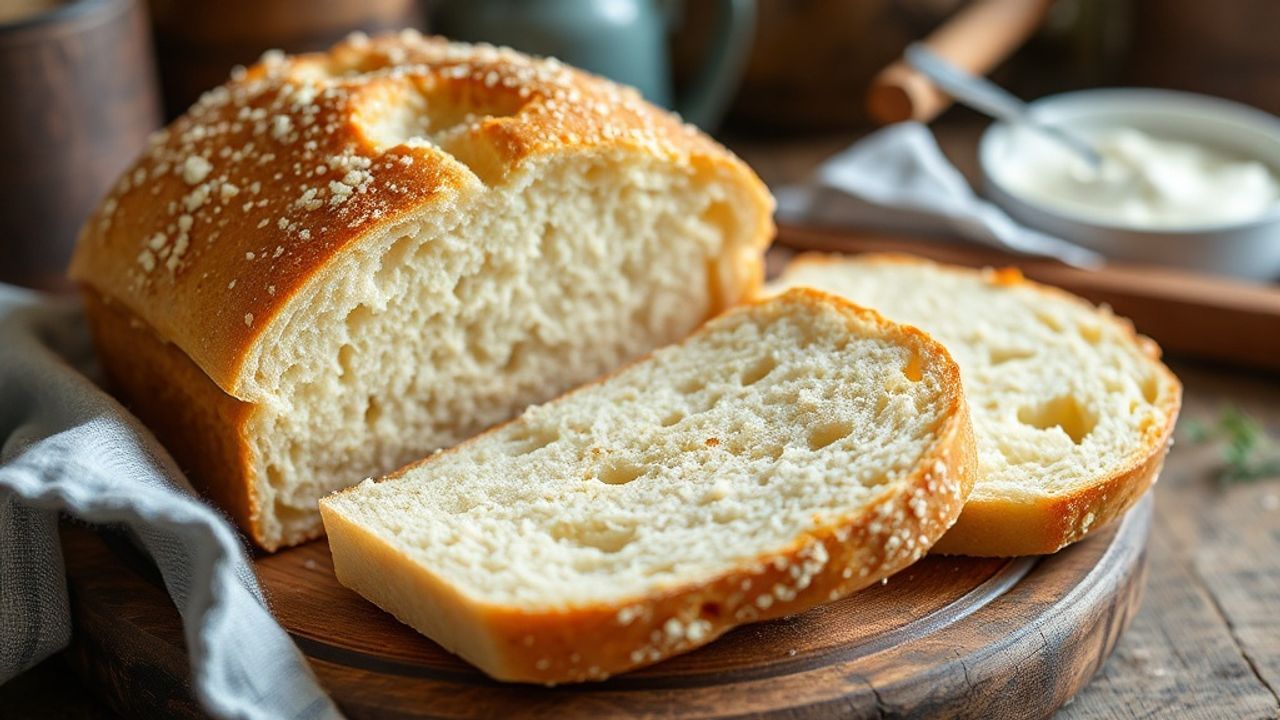
Soda Bread remains one of the most reliable, quick breads a home baker can master. This traditional Irish loaf uses a simple chemical reaction between baking soda and an acidic liquid to rise, so timing and ingredient ratios matter more than long fermentation.
- Quick to make: Ready from bowl to table in under an hour.
- Minimal ingredients: Flour, baking soda, salt, and buttermilk are core.
- Versatile: Sweet or savory variations suit many meals.
- Heritage bread: A living link to Irish baking practice and culture.
Soda Bread: Prep and Cook Time
Prep: 10 minutes. Cook: 35–40 minutes. This timing makes soda bread ideal for same-day fresh baking.
High oven heat produces a crisp crust while a hollow tap confirms doneness. For reliability, always preheat the oven to 425°F (220°C) and use a baking sheet or preheated cast-iron surface for even browning.
Ingredients for Soda Bread
Use strong all-purpose flour or a blend that contains some higher-protein flour for better structure. Measure flour by spooning into the cup and leveling; overpacking adds too much flour and yields a dry crumb.
Essential ingredients: flour, baking soda, fine salt, and cold buttermilk. Optional items like raw sugar, dried fruit, or oats adapt the loaf to taste.
Optional Add-ins for Soda Bread
For texture, fold in rolled oats or whole-grain flour. For flavor, incorporate currants, caraway seeds, or chopped herbs to suit savory or sweet preparations.
Keep additions to a moderate percentage of the total flour by weight—usually no more than 20–25%—to preserve proper hydration and rise.
Step-by-Step Soda Bread Instructions
Preheat to 425°F (220°C). In a large bowl, whisk flour, baking soda, and salt to ensure even distribution of leavening. A consistent mix prevents salt pockets and uneven rise.
Make a well, pour in cold buttermilk, and mix until a shaggy dough forms. Lightly knead on a floured surface—five to eight strokes—then shape into a round about 1.5–2 inches thick and score a deep cross to control expansion.
- Preheat: 425°F (220°C). Prepare a baking sheet or cast-iron skillet.
- Mix: Combine sifted flour, baking soda, and salt.
- Add liquid: Stir in cold buttermilk until just combined.
- Knead lightly: Five to eight turns; retain a slightly sticky dough.
- Shape and score: Form a round and cut a deep cross across the top.
- Bake: 35–40 minutes until golden and hollow-sounding when tapped.
- Finish: Brush with melted butter if desired and cool 20 minutes on a rack before slicing.
Techniques to Nail Texture and Crust
Texture depends on correct hydration and gentle handling. Overmixing develops gluten and yields a tough crumb, while under-hydration gives a dense, crumbly loaf.
To achieve a crisp crust, bake at high heat on a preheated surface. Scoring deeply permits steam to escape and encourages a controlled rise rather than random splits.
Serving Suggestions and Pairings
Soda bread pairs well with butter, sharp cheeses, and soups. Serve slices warm for the best mouthfeel and crumb resilience.
For breakfast, toast slices and dress with honey or jam. For a savory platter, offer sliced soda bread alongside smoked fish, soft cheeses, and pickled vegetables to balance richness and salt.
Regional Variations of Soda Bread
Across Irish provinces, small differences reflect local grain and pantry habits. Some recipes fold in oats or use a portion of whole-wheat flour to increase nuttiness and fiber.
Sweet versions add currants or raisins; savory takes include herbs or cheese. These variations preserve the method while adapting flavor—an approach seen in traditional recipes documented across Irish culinary records and celebrations like St. Patrick’s Day.
Practical Tips for Reliable Bakes
Maintain active, consistent technique: accurate measuring, cold liquid, minimal kneading, and a hot oven. These variables are the control points for predictable results.
Test doneness by tapping the bottom for a hollow sound or check internal temperature of about 205°F (96°C). Resting the loaf on a rack for 20 minutes finishes gelatinization and stabilizes crumb structure.
Nutrition Snapshot
The nutrition profile of a typical slice will vary by ingredients, but a plain soda bread slice often contains moderate carbohydrates and low fat, making it a straightforward energy source at meals.
Adjusting with whole-grain flour, seeds, or oats increases fiber and micronutrient presence. Keep portion control in mind when serving with high-fat accompaniments like butter or cream cheese.
| Nutrition (per slice) | Amount |
|---|---|
| Calories | 160 kcal |
| Protein | 4 g |
| Carbohydrates | 32 g |
| Fat | 1.5 g |
For more recipe variations and curated guides, see our traditional Irish bread recipes and our practical baking tips pages for technique primers and troubleshooting suggestions.
At-Home Troubleshooting
If the crumb is gummy, the loaf likely needed more bake time or higher heat. Confirm full bake with a hollow tap or thermometer reading before concluding the bake.
If the loaf is too dry, reduce flour slightly next bake and reduce mixing. Precise weighing of flour and adjusting by feel will improve consistency across bakes.
FAQ
How does baking soda make soda bread rise?
Baking soda reacts with the acid in buttermilk to produce carbon dioxide gas. That gas forms bubbles that lift the dough quickly during baking, creating the characteristic open, tender crumb of soda bread.
Can I make soda bread without buttermilk?
Yes. Use milk plus 1 tablespoon of lemon juice or vinegar per cup, set for five minutes to curdle. This creates the acidity needed to activate the baking soda and mimic traditional buttermilk behavior.
How do I store leftover soda bread?
Wrap cooled loaves tightly and store at room temperature for one to two days. For longer storage, slice and freeze in an airtight container for up to one month and toast directly from frozen.
Can I use whole-wheat flour in soda bread?
Yes, but substitute up to 25–30% whole-wheat flour initially to maintain a tender crumb. Whole grains absorb more liquid, so adjust buttermilk slightly if the dough feels dry.
Why score a cross on top of soda bread?
Scoring controls the expansion pattern and ensures even heat penetration to the loaf’s center. Tradition also attributes symbolic meaning to the cross, but functionally it directs steam release for a cleaner bake.
For authoritative background on ingredient science, refer to the Wikipedia entry for Irish soda bread and to leavening chemistry at the baking soda page. Use these sources to deepen procedural understanding and to cross-check traditional regional differences.
See also: Soda Bread