
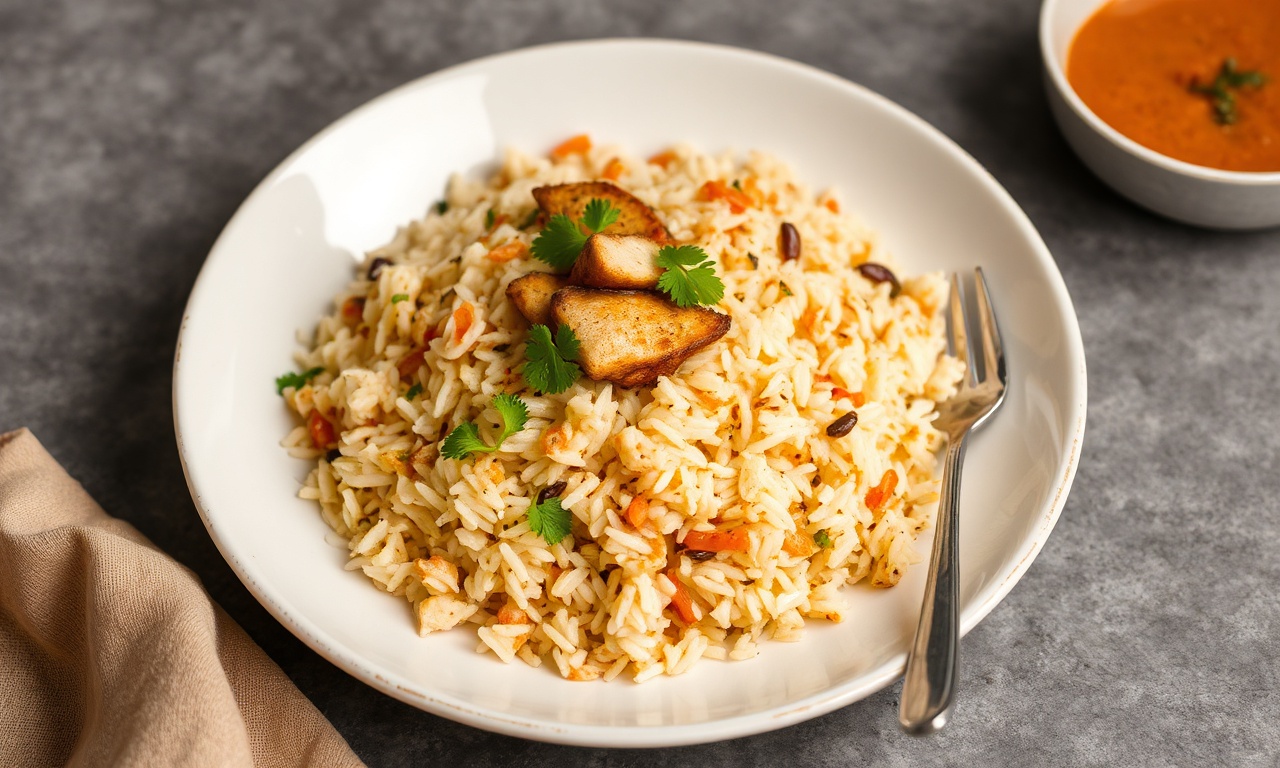
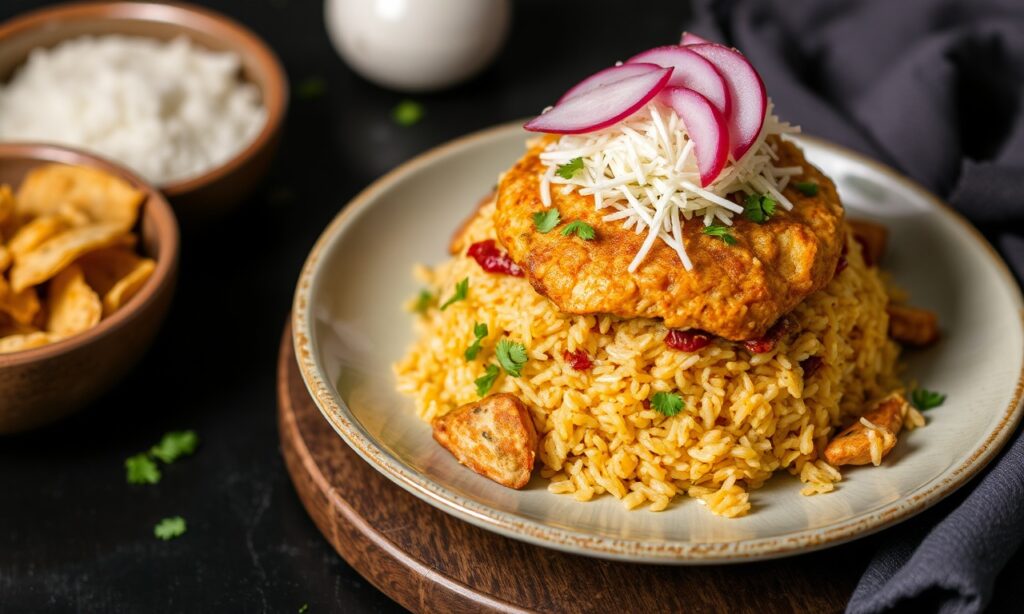
Hyderabadi Layered Rice & Chicken Pilaf is one of Hyderabad’s most loved dum-style meals. You get fragrant basmati, juicy marinated chicken, and warm spice notes in every bite.
- Exploring the Origins and Cultural Significance of Hyderabadi Layered Rice
- Mastering the Art of Spices and Marinades for Depth of Flavor
- Step by Step Guide to Preparing Perfectly Fluffy Chicken Pilaf
- 1) Marinate the Chicken
- 2) Parboil the Rice
- 3) Prepare Fried Onions
- 4) Layer the Rice and Chicken
- 5) Dum Cooking (Slow Steam)
- 6) Rest and Serve
- Chef’s Notes and Tips for Success
- Rice Soaking and Grain Texture
- Marination Time and Moisture
- Heat Control During Dum
- Fried Onions and Aroma Layering
- Saffron Use for Color and Fragrance
- Make-Ahead Strategy
- Pairing Suggestions and Serving Tips to Elevate Your Culinary Experience
- FAQ
It’s also widely associated with Hyderabadi biryani, where slow steaming locks in aroma and texture. In this guide, you’ll cook it with reliable timing and clear layering steps.
At a Glance
- Layering matters: chicken juices season the rice from top to bottom.
- Dum heat matters: low, steady steaming prevents dry rice.
- Timing matters: parboil to about 70% so grains finish cooking in the pot.
- Flavor balance matters: yogurt, spice, and saffron milk should complement, not overpower.
Exploring the Origins and Cultural Significance of Hyderabadi Layered Rice
Hyderabadi Layered Rice & Chicken Pilaf developed in royal kitchens where cooks treated rice as a centerpiece. Over time, the dish became a signature of Hyderabad’s food culture and festive cooking.
You’ll notice the mix of culinary influences that shaped the Deccan region. Persian-influenced cooking traditions often show up in dum steaming and layered presentation, while local spices define the flavor profile.
To understand why rice cooks so well in sealed pots, it helps to know how dum cooking works. For background on the rice grain used in biryani, see basmati rice.
For spice history and usage patterns in South Asian cooking, also review spices. That context makes the method feel less mysterious and more repeatable in your kitchen.
Mastering the Art of Spices and Marinades for Depth of Flavor
The core flavor of Hyderabadi Layered Rice & Chicken Pilaf starts with marinade. Use yogurt for tang and moisture, then balance it with ginger-garlic, chili, turmeric, and garam masala.
Next, build aroma with whole spices. Cardamom, cloves, bay leaves, and cinnamon perfume the rice while they also help the chicken marinade taste complete.
When you grind or measure spices, keep consistency. If your garam masala blend tastes sharp or stale, your final pilaf tastes the same way. For a reference on common spice types, check garam masala.
Saffron milk gives the signature golden fragrance. For more on saffron’s culinary role, refer to saffron.
Prep and Cook Time
Plan your schedule before you start. This dish needs marination time, parboiling time, and dum cooking without rushing.
- Preparation: 25 minutes
- Marination: 3 hours (minimum), overnight best
- Cooking: 45 minutes (includes dum)
- Total: Approximately 4.5 hours
Yield
This recipe serves about 6 generous portions. If you need smaller servings, keep the layering depth and adjust only the rice quantity.
Use a wide pot so you can spread layers evenly. Even coverage helps the rice finish at the same pace.
Difficulty Level
Medium—it rewards focus. You must manage parboiling and heat control, but the steps are straightforward.
If you’ve cooked rice pilaf before, you can do this. The difference is the sealed dum stage and the careful layering.
Ingredients
Use fresh aromatics and thick yogurt for best results. If possible, choose basmati grains that stay separate after cooking.
Below is the core ingredient list for Hyderabadi Layered Rice & Chicken Pilaf. Adjust salt only after you taste the marinade.
Chicken Marinade
- 1.5 lbs (700g) chicken, cut into pieces
- 1 cup plain yogurt, thick and fresh
- 2 tbsp ginger-garlic paste
- 1 tsp turmeric powder
- 2 tsp Kashmiri red chili powder
- 1 tbsp fresh lemon juice
- 2 tsp garam masala powder, freshly ground
- Salt to taste
- 3 tbsp vegetable oil
Rice and Layering
- 3 cups long-grain basmati rice, rinsed and soaked for 30 minutes
- 4 cups water
- 3 tbsp ghee (clarified butter)
- 1 large onion, thinly sliced and fried until golden brown
- 1/2 tsp saffron strands soaked in 1/4 cup warm milk
- 4–5 green cardamom pods
- 4 cloves
- 2 bay leaves
- 1-inch cinnamon stick
- Fresh coriander and mint leaves for garnish
Additional
- 1 tbsp rose water or kewra water (optional, for fragrance)
- Salt as needed for rice
For an overview of how rice varieties behave, see rice. It helps you understand why parboiling is so important for grain texture.
Step by Step Guide to Preparing Perfectly Fluffy Chicken Pilaf
Follow these steps in order. Each one supports the next stage, so you avoid clumping and undercooked grains.
Keep your pot ready for layering and dum cooking. When you start building layers, work calmly and consistently.
1) Marinate the Chicken
In a large bowl, mix yogurt, ginger-garlic paste, turmeric, chili powder, lemon juice, garam masala, salt, and oil. Add the chicken and coat thoroughly.
Cover and refrigerate for at least 3 hours. Overnight gives deeper flavor because the spice acids and fats travel into the meat.
2) Parboil the Rice
Boil water with cardamom, cloves, bay leaves, and cinnamon. Add salt, then add the soaked basmati rice.
Cook until rice reaches about 70% doneness. You should see slight firmness in the center; drain and keep aside.
3) Prepare Fried Onions
Fry sliced onion in hot oil or ghee until deep golden and crisp. Stir often so the edges don’t burn.
Drain on paper towels so excess oil won’t pool in the pot. This step improves aroma and gives texture contrast.
4) Layer the Rice and Chicken
Use a wide heavy-bottom pot or Dutch oven. Spread half the chicken evenly, then sprinkle half the fried onions and scatter coriander and mint.
Add half the parboiled rice, drizzle half the saffron milk, and add rose water if using. Repeat with the remaining chicken, onions, herbs, and rice. Finish with saffron milk and ghee.
For background on sealed-pot cooking, you can read about biryani. It clarifies why dum heat keeps layers moist and aromatic.
5) Dum Cooking (Slow Steam)
Cover with a tight lid. Seal the edges with dough or a clean cloth if you want an extra-tight steam seal.
Cook on very low heat for 35–40 minutes. If the bottom browns too quickly, use a heat diffuser or place a flat griddle under the pot.
6) Rest and Serve
Turn off the heat and rest the covered pot for 10 minutes. Then fluff gently with a fork to keep grains intact.
Serve with extra fried onions and fresh mint. A light garnish adds aroma without changing the core spice balance.
Chef’s Notes and Tips for Success
Small choices decide whether Hyderabadi Layered Rice & Chicken Pilaf tastes restaurant-level. Use these controls to stay consistent.
When you repeat this recipe, keep notes on your rice brand and spice strength. That’s how your texture and aroma improve over time.
Rice Soaking and Grain Texture
Don’t skip soaking basmati rice. Soaking hydrates the grain and helps it cook evenly.
If grains split often, your parboil time might be too long. Aim for 70% doneness so dum finishes the rest.
Marination Time and Moisture
The longer the chicken marinates, the more flavorful it becomes. Overnight often tastes smoother because spices disperse through yogurt.
Also keep chicken cold during marination. That keeps texture stable and prevents off odors.
Heat Control During Dum
Low heat keeps steam steady inside the sealed pot. That gentle environment helps chicken tenderize without drying.
If you’re using a thin pan, increase the time slightly but keep heat low. Heavy cookware supports even steaming.
Fried Onions and Aroma Layering
Caramelized onions add sweetness and crunch. Don’t skip them—however, don’t overdo the oil either.
Drain fried onions well so they stay crisp. In the pot, excess oil can make rice feel heavy.
Saffron Use for Color and Fragrance
Saffron milk should be warm, not boiling. Heat gently helps saffron release color and aroma.
If saffron is unavailable, a small amount of turmeric can add color, but aroma will differ. For saffron background, see saffron.
Make-Ahead Strategy
You can prepare the marinade and fried onions ahead of time. This reduces stress when you build the final pot.
Cook the pilaf close to serving time. Rice holds best when you rest it briefly and serve hot.
Pairing Suggestions and Serving Tips to Elevate Your Culinary Experience
Hyderabadi Layered Rice & Chicken Pilaf pairs well with cooling and tangy sides. These balance the warm spices and rich chicken fat.
Start with raita for cooling. Use plain yogurt, grated cucumber, a pinch of roasted cumin, and chopped mint.
For a simple reference on yogurt in cooking, you can check yogurt. It helps explain why yogurt cools spice intensity.
Salads and Chutneys
A crisp salad with onions, lemon, and green chilies cuts through richness. Keep it fresh and lightly salted.
Mint chutney also works because it adds fresh herbal notes. It complements coriander and mint inside the rice layers.
Serving for Best Texture
Use a large shallow serving tray. Portion from the top layers first so steam textures stay intact.
Garnish with fresh cilantro, mint, and extra fried onions. Then serve with naan or millet flatbreads if you want a hearty meal.
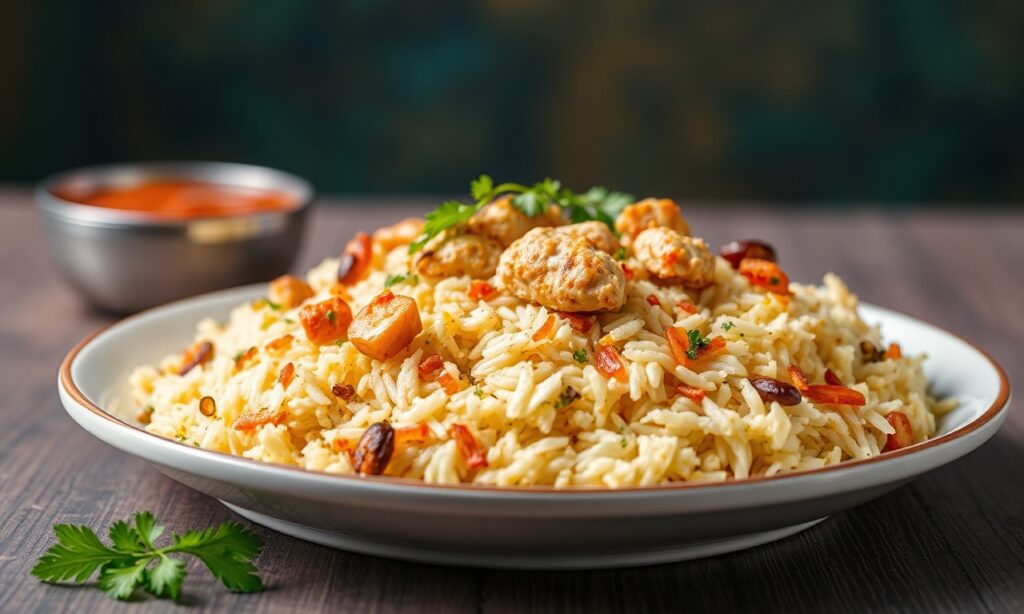
| Nutrient | Per Serving |
|---|---|
| Calories | 520 kcal |
| Protein | 38 g |
| Carbohydrates | 52 g |
| Fat | 16 g |
For more on how cooking methods affect food texture, read steaming. Dum cooking uses steam pressure in practice, so the concept links directly to this dish.
FAQ
What makes Hyderabadi Layered Rice & Chicken Pilaf different from other pilafs?
The layering method and dum steaming create distinct seasoned layers. Marinated chicken infuses the rice, while saffron milk and fried onions add aroma and texture.
Other pilafs may skip sealed steaming, which limits how deeply flavors soak into the rice.
Which spices matter most for the authentic flavor profile?
Whole spices like cardamom, cloves, bay leaves, and cinnamon set the aromatic base. Ground spices in the marinade—garam masala, turmeric, and chili—build depth.
Saffron milk rounds out the flavor with a floral, warm finish.
How do I know the rice is parboiled enough?
Cook the rice until it’s about 70% done. The grains should bend slightly but still have a firm center.
If rice turns fully soft before draining, it will overcook during dum and lose separation.
Can I use bone-in chicken or boneless chicken?
You can use either. Bone-in chicken often tenderizes well during dum because it releases flavor into the layers.
For boneless pieces, keep an eye on dum timing and avoid extra-high heat so the chicken stays juicy.
What’s the best way to fix dry rice?
Dry rice usually comes from too much heat or insufficient steam. Next time, seal the lid more tightly and cook on lower heat.
You can also reduce parboil time slightly, so dum finishes the grains without drying them out.
See also: Hyderabadi Layered