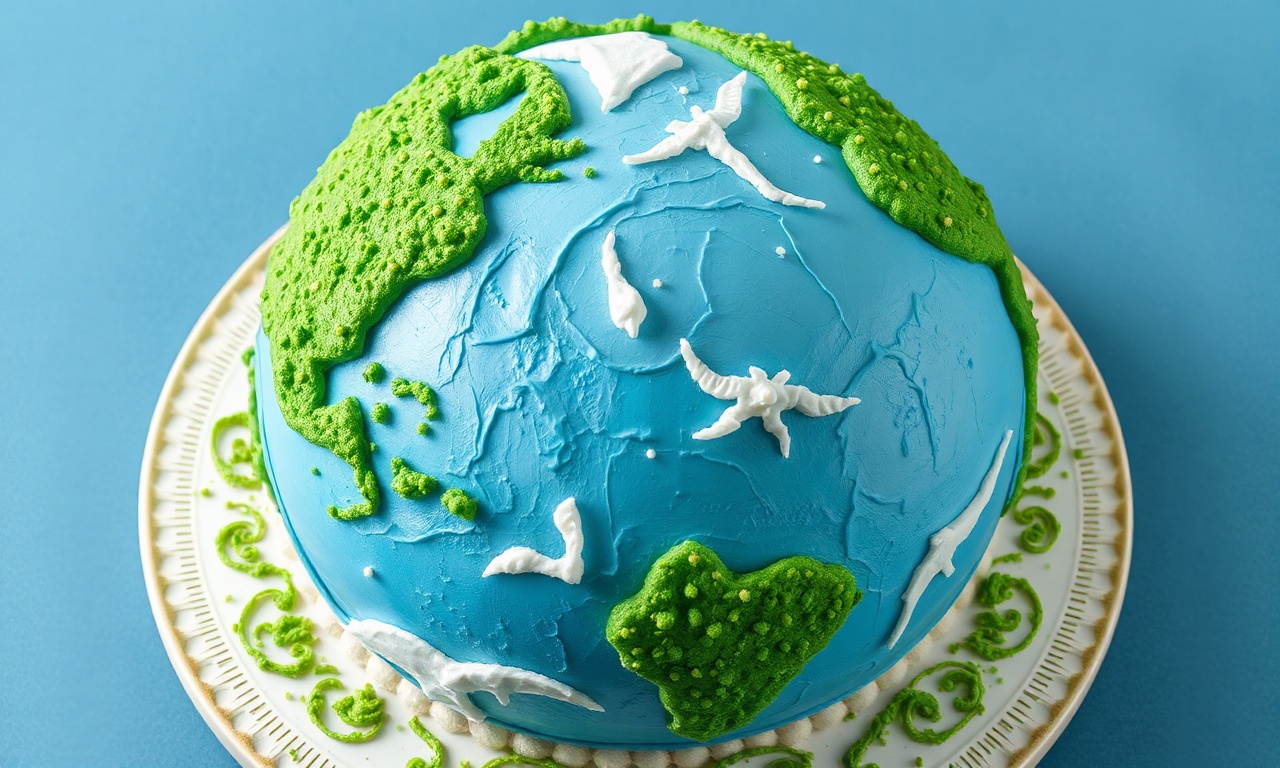
Every year, Earth Day invites you to pause, reflect, and celebrate the planet that sustains every flavor and feeling in your life. A globe cake turns that message into something guests can taste, share, and remember.
- Earth Day Globe Cake Overview
- Prep and Cook Time
- Yield and Difficulty
- Ingredients
- Step-by-Step Instructions
- Creative Decoration Ideas for a Realistic Earth
- Chef’s Notes and Tips for Success
- Serving Suggestions
- Nutrition Snapshot
- FAQ: Globe Cake Earth Day
- What tools do I need to shape a globe cake?
- Can I make the globe cake without special cake pans?
- Which flavors match blue and green frosting?
- How do I keep natural food coloring from making the batter bitter?
- Can this cake be made dairy-free and gluten-free?
- Wrapping Up
At a Glance
- Globe look, simple bake: two layers + easy carving (no special mold needed).
- Earth colors: blue/green tinting and smooth frosting swirls for oceans and continents.
- Seasonal choices: organic staples and optional plant-based accents to support sustainability.
- Decorate fast: edible flowers, herbs, and berries for texture and contrast.
You can make a homemade Earth Day globe cake that looks like the world and tastes like a celebration. This recipe uses straightforward mixing steps, then focuses on clean frosting coverage and realistic globe details.
First, you’ll build a tender base, then color the batter in two tones. Next, you’ll whip frosting to a spreadable consistency and apply smooth swirls that mimic the Earth’s surface. If you follow the timing cues, your globe cake will slice cleanly and hold its shape.
Earth Day Globe Cake Overview
A globe cake is a themed layered cake shaped to resemble Earth. Many bakers start with round layers and carve a gentle dome, because it works with standard pans and common tools.
This design fits Earth Day well because it mirrors themes of planet care and natural beauty. When you use food coloring sparingly and focus on texture, the cake looks polished without heavy coatings or complicated fondant work.
For the science-friendly “ocean and land” effect, think in map layers: oceans in blue, continents in mixed greens and browns, and ice accents in pale tones. If you want a guide to how Earth is structured, see Earth.
When you choose ingredients, consider that local and seasonal produce often changes with the calendar. This is similar to how food systems and growing seasons vary across climates; for background, review seasonality.
Prep and Cook Time
Plan your schedule before you start mixing. Cooling time matters because frosting locks in best when the cake layers feel cool to the touch.
Readiness: 40 minutes
Baking: 30 minutes
Assembly and Decoration: 45 minutes
Total: Approximately 1 hour 55 minutes
Yield and Difficulty
This globe cake recipe makes enough servings for a gathering. You can slice thicker pieces for celebrations or thinner pieces for a dessert table.
Yield: Serves 12–16 guests
Difficulty Level: Medium — ideal for bakers comfortable with layered cakes and careful decorating.
Ingredients
Use room-temperature eggs and cold frosting components for the best texture. Also, sift flour for a lighter crumb, especially when you color batter.
Cake base
- 2 cups organic all-purpose flour, sifted
- 1 ½ tsp baking powder
- ½ tsp baking soda
- ¼ tsp fine sea salt
- ¾ cup unrefined cane sugar
- ¾ cup organic coconut oil, melted & cooled
- 3 large free-range eggs
- 1 cup unsweetened almond milk
- 2 tsp pure vanilla extract
- Blue and green natural food coloring (plant-based options like spirulina powder or butterfly pea extract)
Frosting
- 1 ½ cups organic full-fat coconut cream, chilled
- ¼ cup organic maple syrup
- 1 tsp pure vanilla extract
- 1 tbsp freshly squeezed lemon juice
Decoration
- Fresh edible flowers, herbs (mint, lavender), and crushed nuts (optional)
- Assorted fresh berries (blueberries, raspberries) for garnish
Step-by-Step Instructions
Read each step before you begin. This reduces pauses, keeps batter consistent, and helps your globe cake bake evenly.
1) Preheat and prep pans
Preheat your oven to 350°F (175°C). Grease and line two 8-inch round cake pans with parchment paper.
2) Mix dry ingredients
In a large bowl, whisk together flour, baking powder, baking soda, and salt until evenly combined.
3) Mix wet ingredients
In a separate bowl, beat the eggs and sugar until pale and creamy. Slowly whisk in melted coconut oil until the mixture looks smooth.
4) Combine wet mix
Mix in almond milk and vanilla extract. Stir gently so you don’t add extra air that can affect rise and texture.
5) Fold into dry
Fold wet into dry using a spatula. Mix just until combined, then stop to protect a tender crumb.
6) Color two batter portions
Divide batter evenly into two bowls. Add natural blue coloring to one and green coloring to the other, then blend gently.
7) Bake blue and green layers
Pour blue batter into one pan and green batter into the other. Smooth tops and bake for 28–30 minutes, until a toothpick comes out clean.
8) Cool completely
Cool cakes in pans for about 10 minutes, then unmold and cool fully. Frosting needs a cool surface to prevent sliding.
9) Make frosting
Whip chilled coconut cream with maple syrup, vanilla, and lemon juice until light and fluffy. Add a spoonful more lemon juice if you want extra brightness.
10) Shape for the globe
Level each cake with a serrated knife. Stack layers, then carve into a gentle dome if you want a true globe silhouette.
11) Apply crumb coat
Cover the cake with a thin crumb coat. Chill for 20 minutes so the final layer sticks cleanly.
12) Finish the globe look
Add a final smooth frosting layer. Use swirls and curved spatula strokes to suggest oceans and the outline of continents.
For globe-inspired swirls, picture how Earth rotates and shows different “views.” If that helps you visualize contours, you may enjoy Earth rotation.
To keep the overall theme coherent, match your decoration to the color story. Keep berries for “coastlines and land” accents, and use herbs for “forest texture” around the base.
Creative Decoration Ideas for a Realistic Earth
Decoration should add texture, not weight. Focus on a few high-contrast elements: oceans (blue), land (green and brown tones), then small edible details.
Use edible flowers in blue and white to suggest clouds or distant haze. Scatter berries near the “continents” so each slice looks alive, not flat.
For forests, use crushed pistachios or pumpkin seeds as a textured layer. If you want a base-level understanding of how climates shape vegetation, read climate.
To create a sunlight shimmer, dust a light edible pearl powder over select peaks. Apply it after your frosting sets so the shimmer stays on top instead of blending in.
Chef’s Notes and Tips for Success
Small choices make the difference between a beautiful globe cake and a messy one. Use these notes to prevent common texture problems.
For a gluten-free version, substitute flour with a certified gluten-free blend. Start with the same amount, then adjust liquid by a tablespoon only if the batter looks thick or dry.
Natural food colorings perform best when you add them gradually. Mix gently so the batter stays airy, and test color intensity on a small teaspoon before tinting the whole bowl.
This cake freezes well for future Earth Day plans. Wrap layers tightly, then thaw in the fridge overnight before frosting to avoid condensation and grainy frosting.
If you want a richer frosting, blend 2 tablespoons of organic cashew butter into the whipped coconut cream. Taste as you go, because cashew can add a subtle sweetness and thicker mouthfeel.
When you choose herbs and flowers, remember that not every plant is safe to eat. Stick to known edible varieties, and avoid flowers treated with pesticides. For guidance on plant safety and general botany terms, see Plant.
Serving Suggestions
Serve your globe cake like a centerpiece, not just a dessert. A clean board and neat slice presentation keep the theme strong from first glance to last bite.
Place the cake on a simple wooden board or eco-friendly cake stand. Add herbal iced tea such as mint or chamomile on the side for a refreshing pairing.
Garnish each slice with a mint sprig or a delicate edible flower. Then add a few berries on the plate, so each guest gets a balanced mix of ocean-blue and land-like texture.
If you’re hosting outdoors, keep the frosting cool and transport the cake in an insulated cooler. Heat softens coconut frosting quickly, and it may slip if the room runs warm.
Nutrition Snapshot
Use this as an estimate for planning portions. Actual numbers vary based on brand choices, slice size, and how much frosting you apply.
Nutrient (Per Serving, 1/12 cake)
| Nutrient | Per Serving (1/12 cake) |
|---|---|
| Calories | 320 |
| Protein | 5g |
| Carbohydrates | 40g |
| Fat | 15g |
FAQ: Globe Cake Earth Day
What tools do I need to shape a globe cake?
You can do it with two round pans, a serrated knife, and an offset spatula. For best results, use a gentle hand when carving so the dome stays smooth and stable.
Can I make the globe cake without special cake pans?
Yes. Bake two round layers, stack them, and carve a dome shape. This method works well because frosting fills small gaps and helps the surface look spherical.
Which flavors match blue and green frosting?
Vanilla and lemon pair well because they feel light and clean next to colorful toppings. If you prefer chocolate, keep frosting lighter so the colors still look fresh on the surface.
How do I keep natural food coloring from making the batter bitter?
Add pigments gradually and taste test a tiny amount if needed. Use small amounts to reach the right shade, and balance with lemon in the frosting for brightness.
Can this cake be made dairy-free and gluten-free?
Dairy-free works with coconut cream frosting and plant-based milks. For gluten-free, use a certified gluten-free flour blend and adjust liquid only if the batter looks too thick.
Wrapping Up
When the final slice hits the plate, your Earth Day message becomes real. This globe cake turns care for the planet into a joyful moment you can share with friends and family.
This Earth Day, build a dessert that looks like Earth and tastes like celebration. Let every crumb remind you that small choices—ingredients, prep habits, and mindful hosting—add up to better days.
If you want to keep the theme going, serve the cake with simple, reusable serving pieces. Then share a short note with guests about one practical way to protect the planet they just helped celebrate.
Earth Day originated as a public way to raise awareness and encourage action. Your globe cake fits that spirit by making sustainability and respect feel personal and delicious.
See also: Globe cake