
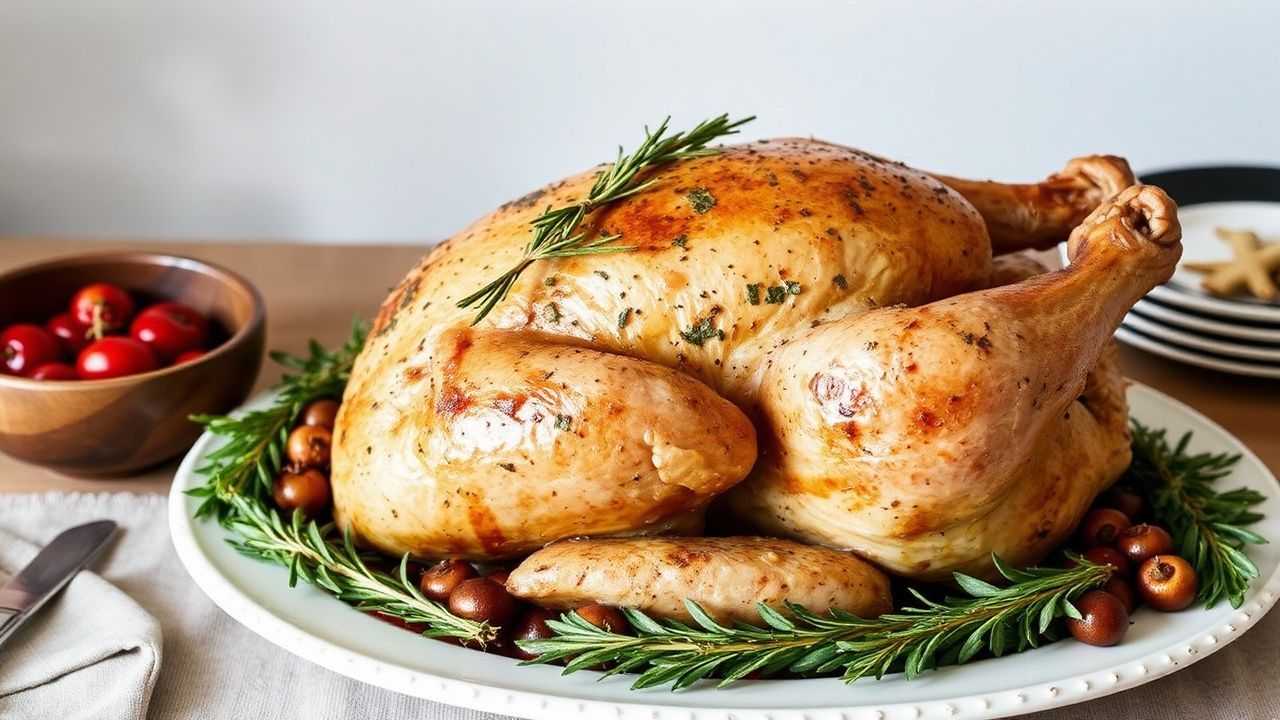
As the holiday season approaches, kitchens fill with warm, inviting aromas. At the center of many gatherings sits turkey, a bird people associate with abundance and shared time. This year, choose Herb-Roasted Holiday Turkey to turn a familiar centerpiece into a fragrant, herb-forward meal.
- Selecting Aromatic Herbs for a Herb-Roasted Holiday Turkey Infusion
- Mastering Herb Roasting for Juicy and Flavorful Results
- Crafting a Custom Herb Blend to Elevate Your Festive Feast
- Tips for Preparing and Resting Your Turkey to Maximize Aromatic Impact
- Prep and Cook Time
- Yield
- Difficulty Level
- Ingredients
- Instructions
- Chef’s Notes & Tips for Success
- Serving Suggestions
- FAQ
- What makes a herb-roasted turkey different from a traditional roast?
- How do I prevent herb paste from burning on the outside?
- Can I use dried herbs instead of fresh?
- How long should I let the turkey rest after roasting?
- Which sides pair best with an aromatic herb-roasted turkey?
- Wrapping Up
At a Glance
- Fresh herbs release stronger aroma oils during roasting.
- Herb paste under the skin boosts flavor deep in the meat.
- Overnight air-drying improves crisp skin and herb adhesion.
- Resting 20–30 minutes keeps slices juicy and aromatic.
Infuse your turkey with a balanced mix of rosemary, thyme, sage, and parsley. Slow roasting brings the herbs together into a savory fragrance your guests will remember. Follow a few precise steps, and your holiday table will feel truly special.
Selecting Aromatic Herbs for a Herb-Roasted Holiday Turkey Infusion
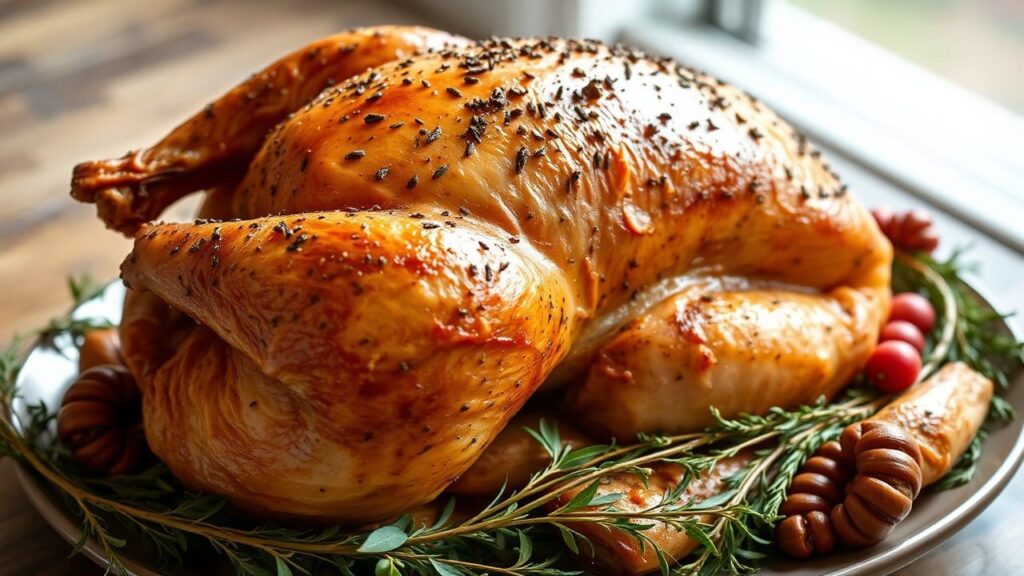
Herb-Roasted Holiday Turkey works because herbs contribute both flavor compounds and aroma compounds. When the turkey heats in the oven, those volatile oils spread through the bird and help create a lasting holiday scent.
Start with reliable classics: rosemary, thyme, sage, and parsley. Rosemary adds a piney note, thyme brings a warm, savory herbal background, sage adds earthy depth, and parsley gives a clean, green finish. For grounding flavors, rosemary and thyme pair naturally with turkey’s mild taste. Learn more about herb biology and aroma sources in rosemary.
Next, add one supportive herb for complexity. Tarragon can add subtle anise-like lift, while marjoram offers sweet, comforting warmth. If you want a more aromatic blend, add crushed garlic or a touch of lemon zest to sharpen the overall profile.
Choose herbs with vibrant green leaves and no wilted sections. Fresh herbs usually hold more aroma oils than dried herbs, which matters for a herb-forward roast. If you need an herb safety reference while planning your prep, review herb basics for how herbs function in cooking.
Mastering Herb Roasting for Juicy and Flavorful Results
Juiciness comes from temperature control, fat distribution, and resting. For Herb-Roasted Holiday Turkey, the key step is placing herb paste under the skin so the flavors stay in contact with the breast meat.
Begin by gently lifting the skin over the breast. Spread a portion of your herb paste directly onto the breast meat, then rub the rest over the skin. This creates both an internal and external flavor layer, which helps aroma feel “built-in” rather than only surface-deep.
Roast at about 325°F / 160°C for steady, even cooking. Aim for the breast to reach 160°F / 71°C, then rest the turkey. Turkey continues cooking slightly during the rest, and the moist interior sets as temperatures stabilize.
For the most accurate timing, use a calibrated meat thermometer. If you want the science behind safe internal temperatures and temperature guidance, see meat thermometer. Baste with pan drippings every so often, but don’t open the oven constantly. Warm air loss slows your roast and can flatten crisping.
To boost fragrance, lightly bruise herb leaves before mixing. Gentle bruising helps oils release during roasting. As the paste heats, edges darken and deepen. That browning effect forms richer savory notes and a stronger holiday aroma.
Crafting a Custom Herb Blend to Elevate Your Festive Feast
A custom herb blend turns your Herb-Roasted Holiday Turkey from “seasoned” into “distinct.” Build the paste as a cohesive mixture: herbs for aroma, garlic for savory punch, salt for extraction, and olive oil to bind and spread.
Use this balanced framework. Combine fresh rosemary, thyme, sage, and Italian flat-leaf parsley. Add marjoram for extra warmth, plus minced garlic. Then add kosher salt and freshly cracked black pepper so every slice tastes evenly.
For the binder, use extra virgin olive oil. This helps you form a spreadable paste and improves coverage under the skin. For bright lift, add zest of 1 lemon if your flavor style matches a fresh, citrus-forward profile.
If you enjoy pairing herbs with classic aromatics, you can also learn more about culinary aromatics and flavor building in flavor. The goal stays simple: balance woodsy, herbal, savory, and a slight brightness.
[TIP]Expert Insight: If your paste looks too thick to spread, add 1–2 teaspoons more olive oil. Thin enough paste spreads evenly under skin, which usually improves both aroma distribution and bite consistency.
When you mix, aim for a thick paste rather than a runny sauce. A paste stays in place under the skin and won’t drain off during roasting. Cover the bird evenly so seasoning feels consistent from top to bottom.
Tips for Preparing and Resting Your Turkey to Maximize Aromatic Impact
Preparation sets the stage for a crisp exterior and strong herb adhesion. For Herb-Roasted Holiday Turkey, start by patting the bird dry with paper towels. Dry skin helps herb paste grip and supports browning in the oven.
Loosen the skin over the breast carefully. Create small pockets and distribute the herb paste under the skin. Then rub the remaining paste on top so both aroma and flavor hit from two directions.
Air-dry the turkey uncovered in the refrigerator for at least 12 hours. This step reduces surface moisture and helps crisping. It also keeps the paste from sliding, especially on breast skin where you want even contact.
[WARNING]Pro-Caution: Don’t rinse raw poultry. Rinsing can spread bacteria through splashes and increases cleanup risk. Instead, keep handling clean, pat dry, and use separate utensils and boards for raw and cooked food.
After roasting, rest the turkey for 20–30 minutes. Resting allows juices to redistribute so slices stay moist. It also gives aroma time to settle and blend, so the herb fragrance feels round rather than sharp.
Carve thoughtfully. Slice against the grain for tender texture. Finish with fresh herb sprigs and a light squeeze of lemon if you want the citrus brightness to stand out. If you want guidance on resting and meat texture, you can review resting (cooking).
Prep and Cook Time
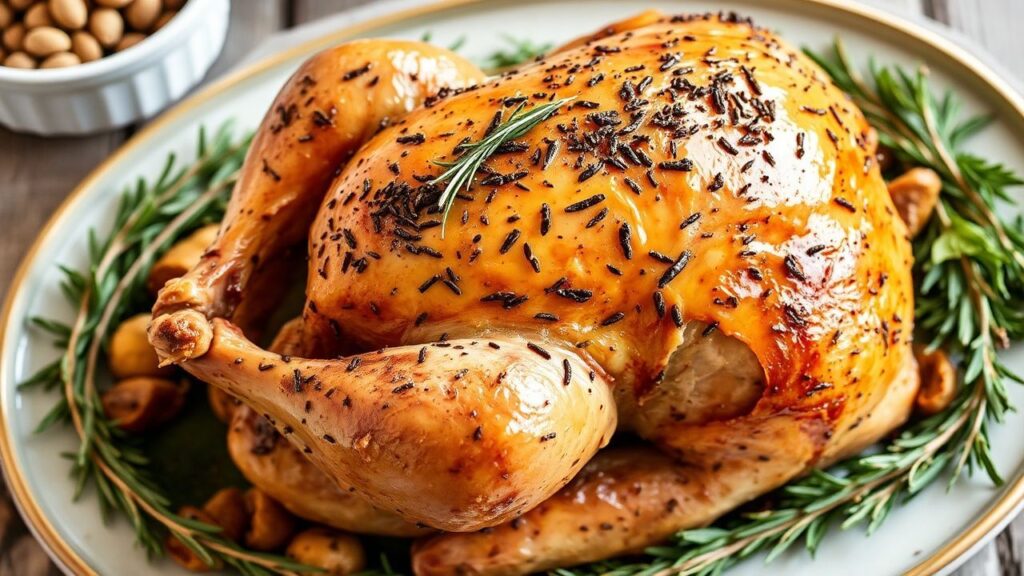
Plan ahead so the turkey can air-dry and flavor the interior. Overnight prep helps skin crisp and supports herb paste adhesion.
Preparation: 20 minutes + 12 hours resting (overnight)
Cooking: 3 to 3½ hours (depending on size)
Resting: 20–30 minutes before carving
Yield
This recipe serves a typical holiday group. It works well when you expect guests to return for seconds.
Serves: 8–12
Difficulty Level
You need planning and attention near the end of roasting. Temperature checks help you avoid dryness and keep the herb aroma intact.
Difficulty: Medium
Ingredients
Use fresh herbs when possible for the best aroma output. Keep garlic and salt consistent so the paste tastes balanced.
• 1 whole fresh turkey (12–14 lbs), thawed
• 2 tablespoons fresh rosemary, finely chopped
• 1 tablespoon fresh thyme leaves, stripped
• 1 tablespoon fresh sage, minced
• 2 tablespoons Italian flat-leaf parsley, chopped
• 1 teaspoon dried marjoram
• 1 large garlic clove, minced
• 1 teaspoon kosher salt
• ½ teaspoon freshly cracked black pepper
• ¼ cup extra virgin olive oil
• Zest of 1 lemon (optional)
• 2 medium onions, quartered (roasting bed)
• 2 carrots, cut into chunks (roasting bed)
• 2 celery stalks, cut into chunks (roasting bed)
Instructions
Follow each step in order for the cleanest results. You’ll build flavor under the skin, roast evenly, and rest before carving.
1) Prepare the herb paste: Mix rosemary, thyme, sage, parsley, marjoram, garlic, salt, pepper, olive oil, and lemon zest (optional) until you form a thick paste.
2) Prep the turkey: Remove giblets if present, then pat dry thoroughly. Loosen the skin over the breast by sliding your hand between skin and meat carefully.
3) Apply the herb paste: Spread about two-thirds under the skin and rub the rest over the exterior for even flavor.
4) Refrigerate: Place turkey uncovered on a rimmed tray and chill for at least 12 hours.
5) Preheat oven: Heat to 325°F (160°C). Add onions, carrots, and celery to the roasting pan as a bed.
6) Roast the turkey: Put turkey breast-side up on the vegetable bed. Insert a thermometer into the thickest breast area. Roast until breast hits 160°F (71°C), basting with pan drippings every 45 minutes.
7) Rest: Tent loosely with foil and rest 20–30 minutes.
8) Carve and serve: Slice against the grain, garnish with fresh herbs and lemon wedges, and serve immediately.
Chef’s Notes & Tips for Success
Small adjustments can make a big difference in flavor and timing. Use these notes to stay confident on roast day.
• Make it ahead: Herb paste can be prepared up to 2 days ahead and kept refrigerated.
• Substitutions: If you use dried herbs, start with about 1/3 the amount and adjust to taste. Dried herbs concentrate faster.
• Extra aromatics in the cavity: Add halved lemons, a few herb sprigs, and garlic for extra fragrance during roasting.
• Thermometer tip: A probe thermometer reduces guesswork and helps you stop at the right temperature.
• Golden skin: For crisping, finish at 400°F for the final 10–15 minutes if the skin needs extra browning.
Serving Suggestions
Herb-roasted turkey pairs well with rich sides and tangy accents. Aim for a mix of creamy, roasted, and bright flavors to balance the bird.
Serve with mashed potatoes, roasted root vegetables, and cranberry relish. Garnish the platter with rosemary sprigs and thin lemon slices. For more festive cooking ideas, visit our Holiday Side Dishes Guide. For additional herb flavor education, you can also reference garlic and lemon from reputable background sources.
| Nutrient | Per serving (Approx.) |
|---|---|
| Calories | 350 kcal |
| Protein | 45 g |
| Carbohydrates | 2 g |
| Fat | 15 g |
For more holiday inspiration from related posts on our site, check Holiday Sauces and Gravy & Drippings Tips. Herb paste and pan drippings work especially well together, so pairing these guides can extend your meal planning.
FAQ
What makes a herb-roasted turkey different from a traditional roast?
A traditional roast relies on salt, heat, and aromatics. A Herb-Roasted Holiday Turkey adds a concentrated herb paste under the skin, so flavor and aroma spread through the meat as it cooks.
How do I prevent herb paste from burning on the outside?
Roasting at 325°F keeps browning gradual and reduces scorching. If herbs start to darken too quickly, loosely tent with foil for the final portion of roasting.
Can I use dried herbs instead of fresh?
Yes. Use about one-third the amount of dried herbs versus fresh, then mix thoroughly into the oil so flavor distributes evenly.
How long should I let the turkey rest after roasting?
Rest for 20–30 minutes. This window supports juice redistribution and helps the herb aroma feel more integrated in each slice.
Which sides pair best with an aromatic herb-roasted turkey?
Choose creamy and roasted sides plus something bright, like cranberry relish. That balance complements the savory herb notes and keeps the meal lively.
Enjoy turning your holiday turkey into a fragrant celebration of herbs and slow roasting. With careful prep, steady heat, and a proper rest, Herb-Roasted Holiday Turkey delivers both comfort and memorable aroma.
Wrapping Up
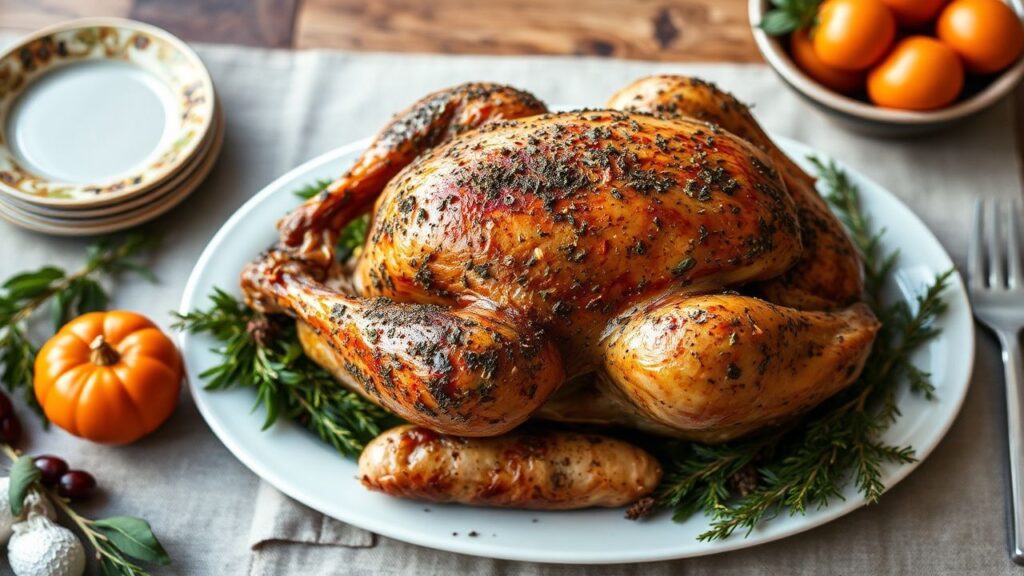
When you build flavor with herb paste under the skin, you create a turkey that tastes as good as it smells. Herb-Roasted Holiday Turkey rewards patience with deeper aroma, better coverage, and a crisp, herb-kissed exterior.
Plan your herbs, roast to the right internal temperature, and rest before carving. Then serve with sides that match the season—creamy comfort, roasted depth, and bright tang—so every bite feels balanced and festive.
See also: Herb-Roasted