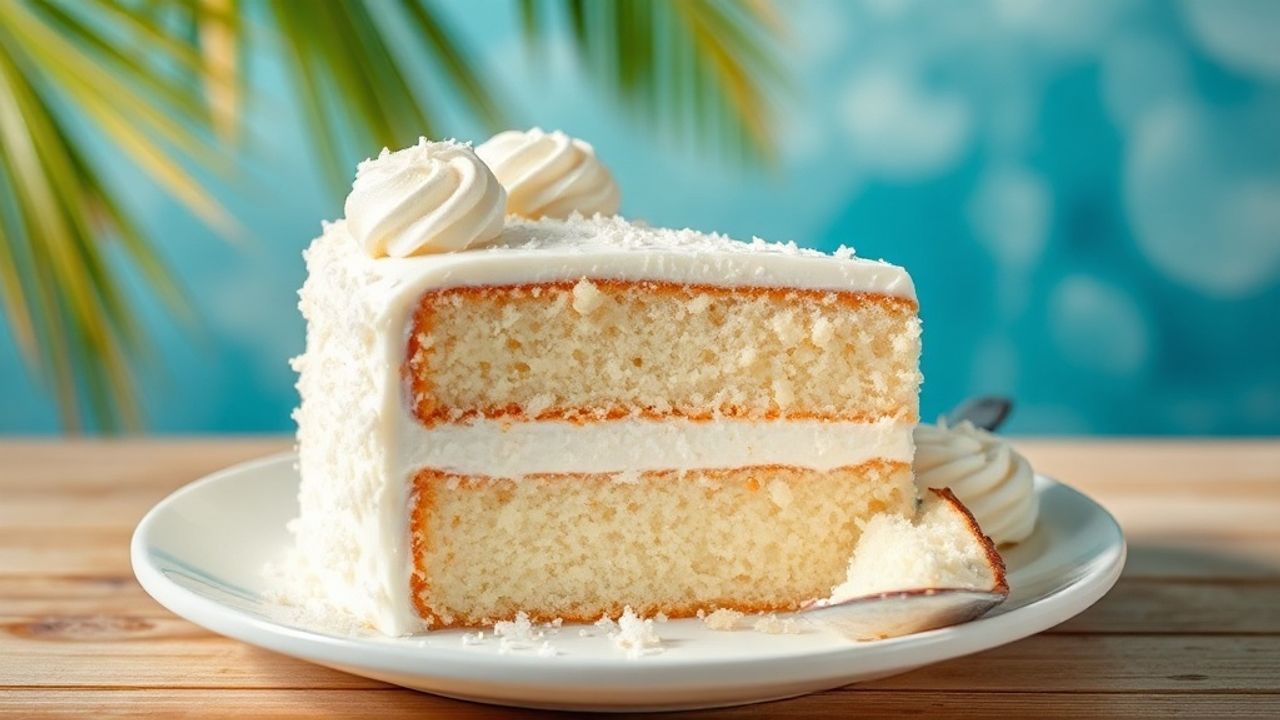
Imagine a dessert that transports you to a sunlit shore: this coconut cake delivers tender layers and a cloud-like frosting that capture tropical flavor in every bite. The recipe balances coconut milk, shredded coconut, and careful mixing to produce a moist, delicate crumb that melts on the tongue.
- Key takeaway 1: Use full-fat coconut milk and fresh shredded coconut for pronounced coconut flavor.
- Key takeaway 2: Proper creaming and gentle folding ensure a light, airy texture without overworking gluten.
- Key takeaway 3: Toasted coconut flakes add contrast and visual appeal while improving mouthfeel.
Coconut Cake: Prep and Cook Time
Preparation: 20 minutes. Baking: 35–40 minutes. A short resting time improves sliceability and finish.
Plan for cooling and decorating as part of total time; cooling prevents the frosting from sliding and preserves layer integrity. Use a timer and an oven thermometer to maintain consistent results for any coconut cake.
Coconut Cake: Yield and Difficulty
This recipe yields 12 generous slices and suits bakers with intermediate skill in layered cakes and frosting. It requires attention to aeration, but the techniques are straightforward when followed precisely.
If you prefer fewer layers, halve the batter for two 8-inch pans and adjust baking time. A scale and consistent pan depth help produce even tiers for a clean, professional finish.
Coconut Cake Ingredients
Use high-quality staples: sifted all-purpose flour, baking powder, unsalted butter, eggs at room temperature, and real vanilla. Replace part of the liquid with full-fat coconut milk to deepen flavor and improve mouthfeel.
Key coconut elements: sweetened or unsweetened shredded coconut for texture and toasted coconut flakes for garnish. Select fresh or frozen shredded coconut rather than dessicated options to retain moisture in the crumb.
- 2 ½ cups all-purpose flour, sifted
- 1 tbsp baking powder
- ½ tsp salt
- 1 cup unsalted butter, softened
- 1 ¾ cups granulated sugar
- 4 large eggs, room temperature
- 1 tsp pure vanilla extract
- 1 cup coconut milk (shake well before measuring)
- ½ cup buttermilk
- 1 ½ cups shredded coconut, divided
For the frosting, use a stable buttercream base adjusted with coconut milk and fold in shredded coconut for a consistent flavor profile. Reserve toasted flakes to garnish so you retain contrast between soft frosting and crunchy topping.
Instructions: Mixing and Baking
Preheat the oven to 350°F (175°C). Grease three 8-inch pans and line the bottoms with parchment for even release and clean edges.
Whisk dry ingredients in a bowl and set aside. Cream butter and sugar for 4–5 minutes until pale and aerated; this step traps air that expands during baking and yields a light crumb.
- Add eggs one at a time, beating well after each addition, then stir in vanilla.
- Alternate adding dry mix with coconut milk and buttermilk, beginning and ending with the dry mix.
- Fold in 1 cup shredded coconut gently with a spatula to avoid deflating the batter.
- Divide batter evenly, bake 35–40 minutes until a toothpick comes out clean, then cool on wire racks.
- Make frosting by beating softened butter, then gradually adding powdered sugar, coconut milk, and vanilla until smooth.
- Assemble layers with an even layer of frosting between tiers and press remaining shredded coconut onto the exterior.
Mixing Details
Use low speed when combining liquids and dry ingredients to avoid gluten development that leads to toughness. Always stop mixing when the last streaks of flour disappear.
Check doneness at the lower end of the time range if pans are shallow; a reliable oven thermometer provides repeatable results. Allow the cakes to cool before frosting to avoid melting the buttercream.
Texture and Technique for a Delicate Crumb
Achieving a delicate crumb requires precise balance between fat, liquid, and aeration. Proper creaming of butter and sugar introduces microbubbles that expand during baking and create a tender structure in each slice of coconut cake.
Folding shredded coconut into batter adds chew without collapsing structure when done gently. Reserve an extra tablespoon of flour to coat very wet shredded coconut; this prevents pockets of moisture and results in uniform crumb.
After the tip, rest the assembled cake in the fridge for 20–30 minutes before final smoothing to firm the buttercream. Chilled frosting holds piped shapes and reduces shedding of shredded coconut when sliced.
Choosing the Finest Ingredients
Select canned coconut milk labeled as full-fat with minimal stabilizers for a natural mouthfeel. Fresh or high-quality frozen shredded coconut retains oils and aroma that define a classic coconut cake.
Use pure vanilla extract rather than imitation for a complex background note that complements coconut without competing. For subtle amplification, a tablespoon of light rum or coconut liqueur folded into the batter adds depth without overwhelming the cake.
After the warning, verify ingredient labels if you adapt the recipe for dietary restrictions. Substituting plant-based butter or gluten-free flour requires formula adjustments and may change texture.
Decorating and Serving Suggestions
The classic finish uses a snowy buttercream and pressed shredded coconut to create an island-like presentation. Toasted coconut flakes add golden contrast and a crunchy element that improves eating texture.
Garnish with tropical fruit slices or edible flowers for color and acidity that balances the cake’s sweetness. Serve the coconut cake chilled or at room temperature depending on personal preference and venue conditions.
Nutrition and Portioning
Estimate per-serving nutrition for portion control and menu planning; a typical slice of this coconut cake registers around 420 kcal depending on frosting thickness. Adjust portion sizes for events where multiple desserts are offered.
For dietary variants, replace dairy components with plant-based alternatives and experiment with gluten-free flour blends that mimic protein and starch ratios of all-purpose flour. Document any changes to ensure consistent outcomes.
| Nutrient | Per Serving |
|---|---|
| Calories | 420 kcal |
| Protein | 5 g |
| Carbohydrates | 55 g |
| Fat | 18 g |
Further Reading and Reference Links
For fundamentals on the ingredient central to this cake, review the botanical and culinary notes on coconut. Learn about structural principles in baked goods on the cake page.
To understand heat transfer and its effect on crumb set, consult the baking overview at the baking article. These references support method choices and ingredient roles used in the coconut cake.
FAQ
How do I store leftover coconut cake?
Wrap the cake or place it in an airtight container and refrigerate for up to four days. Bring slices to room temperature for 20–30 minutes before serving to recover flavor and soften the buttercream.
Can I make the coconut cake ahead of time?
Yes. Bake the layers up to two days ahead and freeze them wrapped in plastic and foil for longer storage. Thaw in the refrigerator overnight and assemble the next day to reduce final-day workload.
What gives the best coconut flavor?
Full-fat canned coconut milk and freshly shredded coconut provide the most pronounced coconut character. Toasted flakes offer toasted-nut notes that contrast the cake’s sweetness.
How can I adapt the recipe for dietary needs?
Replace dairy with equivalent plant-based fats and use gluten-free flour blends that match the protein-starch ratio of all-purpose flour. Test small batches to tune hydration and baking time when making substitutions.
Why does my cake sometimes turn dense?
Overmixing after adding dry ingredients or under-creaming butter and sugar commonly causes a dense crumb. Measure precisely, mix only until combined, and maintain correct oven temperature to avoid density issues.
Enjoy baking and refining your technique; precise methods and quality ingredients turn a simple recipe into a memorable coconut cake that showcases tropical flavor and delicate texture.
See also: coconut cake