


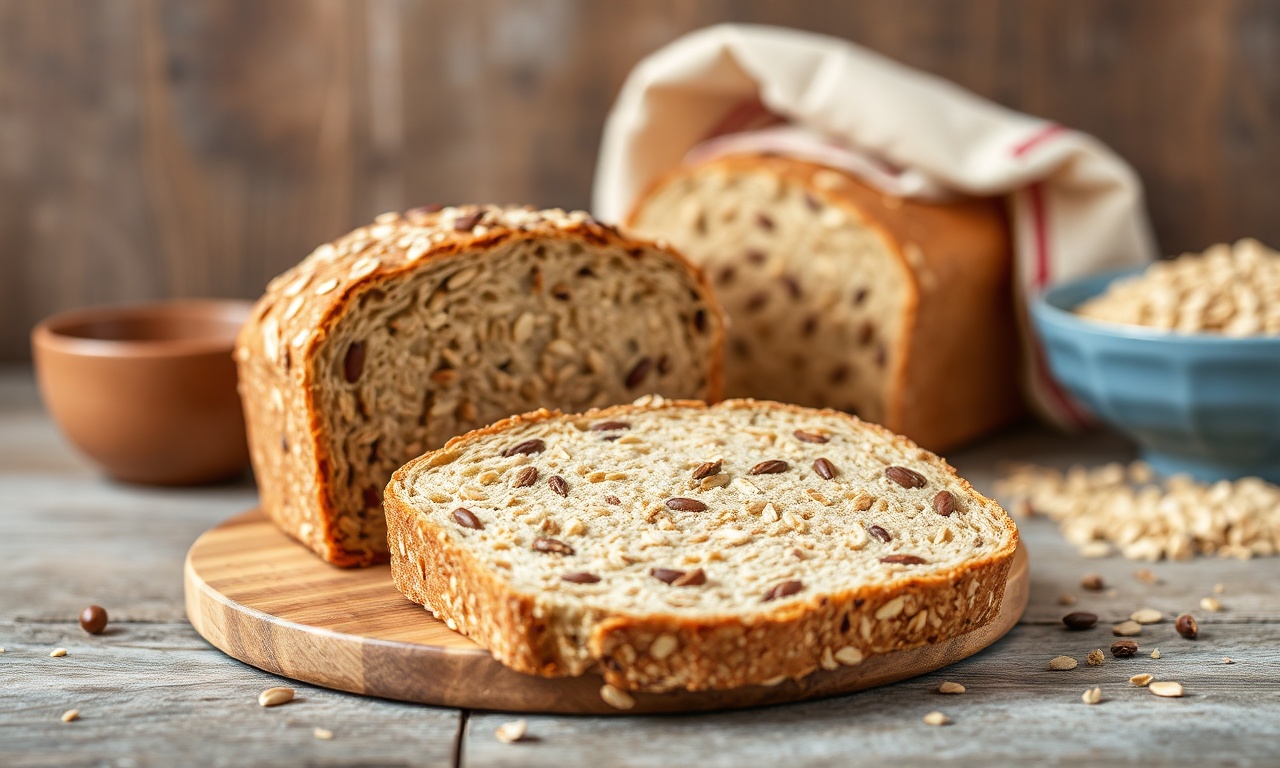
Why “Healthy Multigrain” Bread Can Be More Than a Label
Healthy multigrain bread earns its reputation when it uses real whole grains plus seeds—not just marketing terms. The biggest difference comes from what happens to bran and germ during milling.
- Why “Healthy Multigrain” Bread Can Be More Than a Label
- The Grain Science Behind a Better Multigrain Crumb
- Ingredients You Need for a 9×5 Healthy Multigrain Loaf
- Equipment and Setup That Prevents Dense Loaves
- Step-by-Step: How to Bake the Perfect 9×5 Healthy Multigrain Loaf
- 1) Activate the Yeast
- 2) Mix Dry Ingredients Thoroughly
- 3) Combine to Form a Shaggy Dough
- 4) Knead for Strength Without Over-Flouring
- 5) First Rise (About 60 Minutes)
- 6) Shape Into a 9×5 Loaf
- 7) Second Rise (30–40 Minutes)
- 8) Bake Until the Bottom Sounds Hollow
- ⚠️ Pro-Caution Pro-Caution: Rye Dough Feels Different—Use That to Adjust, Not Panic
- Cooling and Slicing: The Step Most People Skip
- Hydration, Crumb, and Flavor Tweaks (So You Can Make It Your Own)
- Storage and Reheating for Freshness That Actually Holds
- How to Serve This Loaf for Daily Health Wins
- FAQ
Whole grains keep their natural fiber, minerals, and fats, which support better texture and slower digestion. If you choose the right mix of flours and seeds, the loaf tastes richer and stays fresh longer.
- Fiber comes from whole grains, not from “multigrain” wording.
- Seeds add crunch and visual texture that holds up in sandwiches.
- Hydration controls crumb when rye and barley join the mix.
- Proper cooling prevents gummy slices.
The Grain Science Behind a Better Multigrain Crumb
A multigrain loaf works when gluten development and starch gelatinization balance each other. Wheat flour builds the gluten network, while rye and barley mainly add flavor and complexity.
Rye’s fermentation behavior differs because its dough structure forms differently than wheat-only dough. That often means the dough feels stickier and less stretchy, even when it’s healthy and properly kneaded.
To understand why fiber changes how bread feels in the mouth, review how whole grains retain their bran layers. This matters for both hydration needs and the final chew. For a helpful baseline, see whole grain.
Seeds also change the bake. They release oils when toasted, but they don’t act like flour. So they can’t replace gluten strength—use them for flavor, not structure. For background on grain nutrition and fiber, check dietary fiber.
Ingredients You Need for a 9×5 Healthy Multigrain Loaf
This recipe makes one 9×5-inch loaf with a hearty, nutty flavor and a moist crumb. You’ll taste the oats first, then the rye and barley round it out with a deeper grain note.
Use accurate measures. Flour absorption shifts with weather, brand, and how finely rye or barley gets milled. If you want consistent results, weigh ingredients when possible.
Core Dough Ingredients
Warm water (105–110°F / 40–43°C) wakes up yeast fast without killing it. Yeast turns sugars into gas, which expands the dough during rises.
Honey or maple gives yeast a small boost and supports browning, but it does not create a sweet bread. If you prefer, use the same amount of any similar sweetener.
Whole-Grain Flour Blend
Your flour mix drives the “healthy multigrain” profile. This blend uses whole wheat for reliable gluten, plus rye and barley for flavor and fiber.
Oats add body and help create a tender crumb. For general context on why grains differ, you can reference oats.
Seed Mix for Crunch and Aroma
Mixed seeds make the loaf look beautiful and taste toasted. Toast them briefly so they smell nutty instead of raw or grassy.
Seeds won’t “melt” into dough like flour. They stay as texture, so keep the quantity balanced—enough to notice, not so much that the crumb turns dry.
Recipe Ingredients List
Liquid + yeast
1 1/2 cups warm water (105–110°F)
2 1/4 tsp active dry yeast (1 packet)
2 tbsp honey or maple syrup
Grains + seeds
1/4 cup rolled oats
1/4 cup mixed seeds (sunflower, flax, pumpkin)
1/2 cup whole wheat flour
1/2 cup rye flour
1/2 cup barley flour
1 cup bread flour
Other
1 1/2 tsp salt
2 tbsp olive oil
Optional: 2 tbsp wheat germ or flaxseed meal
Equipment and Setup That Prevents Dense Loaves
Healthy multigrain bread rewards preparation. Before you mix, place tools where you can reach them fast, because multigrain dough can become sticky quickly.
You also want a warm rise area. Yeast performs best when the dough stays between cool and comfortably warm—not hot enough to damage yeast.
Tools Checklist
Use a 9×5-inch loaf pan, a mixing bowl, and a rack for cooling. A kitchen scale helps, especially with rye and barley flour.
A digital thermometer also helps for water temperature and internal baking checks. If you don’t have one, rely on the yeast activation steps instead.
Seed Toasting Method
Toast seeds in a dry skillet for 2–4 minutes. Stir often so they don’t burn, then cool them before mixing.
When toasted correctly, seeds smell warm and nutty. That aroma comes through in the finished slice, especially after the loaf cools.
Step-by-Step: How to Bake the Perfect 9×5 Healthy Multigrain Loaf
Follow the order closely. Multigrain dough behaves differently than all-white flour dough because whole grains absorb more water and rye can feel less elastic.
Plan for two rises. Total rise time usually lands around 1 hour 30 minutes, but your room temperature can shift that.
1) Activate the Yeast
Combine warm water, honey, and yeast in a large bowl. Stir gently and wait 5–7 minutes until the mixture looks foamy.
If you see no foam, your water may be too hot, too cold, or your yeast may be old. Fix it by repeating with fresh yeast before you add flour.
2) Mix Dry Ingredients Thoroughly
Whisk whole wheat flour, rye flour, barley flour, bread flour, oats, seeds, salt, and optional wheat germ. Breaking up clumps helps you hydrate evenly.
Rye and barley flours can hide dry pockets. Even hydration creates a smoother crumb and fewer gummy streaks.
3) Combine to Form a Shaggy Dough
Add dry ingredients to the yeast mixture gradually. Stir until you form a shaggy dough with no major dry flour left.
Don’t aim for perfect smoothness at this stage. You will knead next to build the gluten structure.
4) Knead for Strength Without Over-Flouring
Knead 8–10 minutes on a lightly floured surface. Rye dough stays stickier than wheat-only dough, so limit extra flour.
Stop when the dough becomes smooth and elastic. It should feel tacky, not stiff and dry.
Then place the dough in an oiled bowl. Turn it once so the surface stays coated and doesn’t dry out during the rise.
Cover with a clean towel or lid and let it ferment in a warm spot. This fermentation builds flavor and improves the loaf’s tenderness.
5) First Rise (About 60 Minutes)
Let the dough rise until it doubles. If it rises slowly, keep it warmer and give it more time instead of adding more flour.
Whole-grain dough can look less dramatic than white dough. Watch for volume increase and a softer feel, not just a perfect “doubling” look.
6) Shape Into a 9×5 Loaf
Gently punch down to release large gas bubbles. Shape into an oval or rectangle, then place seam-side down in a greased 9×5 pan.
When you shape, keep tension on the surface. That helps the loaf rise evenly and keeps the top from splitting.
7) Second Rise (30–40 Minutes)
Cover loosely and rise until the dough puffs just above the rim. If it over-rises, the loaf can collapse when it hits heat.
If it’s under-risen, the crumb may stay tight. Aim for a springy dough that holds a slight indentation when lightly pressed.
8) Bake Until the Bottom Sounds Hollow
Preheat the oven to 375°F (190°C). Bake for 35–40 minutes until the crust turns deep golden and feels firm.
For a classic doneness check, remove the loaf and tap the bottom. A hollow sound usually means the interior starches have set.
⚠️ Pro-Caution
Pro-Caution: Rye Dough Feels Different—Use That to Adjust, Not Panic
Rye dough can feel stickier and less stretchy than wheat-only dough. That doesn’t automatically mean you need more flour.
If you add lots of flour, you fight the hydration you built into the recipe. Instead, knead a little longer and aim for tacky smoothness, not a dry ball.
Cooling and Slicing: The Step Most People Skip
Rye dough can feel stickier and less stretchy than wheat-only dough. That doesn’t automatically mean you need more flour.
If you add lots of flour, you fight the hydration you built into the recipe. Instead, knead a little longer and aim for tacky smoothness, not a dry ball.
Cooling and Slicing: The Step Most People Skip
Cool the loaf completely on a rack. Slicing early traps steam inside and can turn the crumb gummy.
During cooling, starches firm up and moisture redistributes throughout the loaf. That creates cleaner slices and better toast quality later.
If you’re curious how starch and gelatinization relate to baking texture, you can review starch gelatinization.
How to Slice for the Best Texture
Use a sharp serrated knife. Cut only when fully cool for slices that hold seeds without crumbling.
If you plan sandwiches, slice after cooling and keep the loaf sealed at room temperature for the first day.
Hydration, Crumb, and Flavor Tweaks (So You Can Make It Your Own)
Multigrain baking often becomes your personal balance of softness, chew, and moisture. Whole grains drink more water, and rye absorption can shift week to week.
Use small adjustments so you don’t throw off the dough structure. One tablespoon of water can change the crumb more than you expect.
Hydration Check
If the dough feels stiff, add 1 tablespoon water at a time. Knead 1–2 minutes after each adjustment so the flour fully absorbs.
If the dough feels like paste, add flour in tiny pinches only after kneading. Over-flouring tends to create dense crumb.
Seed Texture Strategy
Toast seeds lightly for crunch. If you want a softer bite, use fewer seeds or chop larger seeds into smaller flakes.
Chopped seeds spread more evenly and make every slice look balanced.
Make-Ahead Option
You can refrigerate the dough after the first rise for more flavor. Cold fermentation deepens grain sweetness and reduces yeast sharpness.
Then bring the dough to room temperature before shaping. Cold dough rises more slowly, so plan the timing.
Storage and Reheating for Freshness That Actually Holds
Healthy multigrain bread tastes best within a few days. Store it airtight once fully cooled to prevent staling.
Room temperature storage works for about 2–3 days. For longer freshness, freeze slices and thaw when you need them.
Best Storage Methods
Keep the loaf in a bread bag or airtight container. Avoid leaving it uncovered, which dries the crust and softens the crumb unevenly.
For frozen slices, toast directly from frozen. This method revives aroma and improves texture fast.
How to Serve This Loaf for Daily Health Wins
Healthy multigrain bread works best when you treat it like a foundation, not a side. Pair it with proteins and healthy fats to stabilize hunger.
Seeds already add texture, so choose toppings that don’t fight the crumb. Think creamy, spreadable, and savory.
Top Serving Ideas
Try it with nut butter, avocado, or eggs. Mild cheeses also pair well because they highlight the rye and oat notes.
For lunch, use it for open-faced sandwiches with roasted vegetables. The seed flecks help toppings stick and keep every bite interesting.
FAQ
What makes multigrain bread “healthy” compared to regular bread?
Healthy multigrain bread uses whole grains and often seeds that keep fiber-rich bran and germ. Regular white bread uses refined flour, which removes much of the natural fiber and nutrients.
Is multigrain bread always high in fiber?
No. “Multigrain” only means multiple grains appear somewhere in the recipe. Check the ingredient list for whole-grain flours and visible seeds to confirm fiber density.
Can I substitute gluten-free flours in this recipe?
Not 1:1. This loaf relies on gluten from wheat bread flour to trap gas and shape the crumb. Use a gluten-free bread formula designed for that goal, then adjust liquids and seeds accordingly.
Why does my rye dough turn out dense?
Density often comes from under-proofing, over-flouring, or uneven hydration. Rye dough also feels stickier, so don’t compensate with lots of extra flour. Give the rises time and watch dough puff, not just clock time.
How should I store multigrain bread to keep it fresh?
Cool the loaf fully, then store it airtight at room temperature for 2–3 days. For longer storage, freeze slices and toast from frozen to restore texture and aroma.
See also: healthy multigrain