


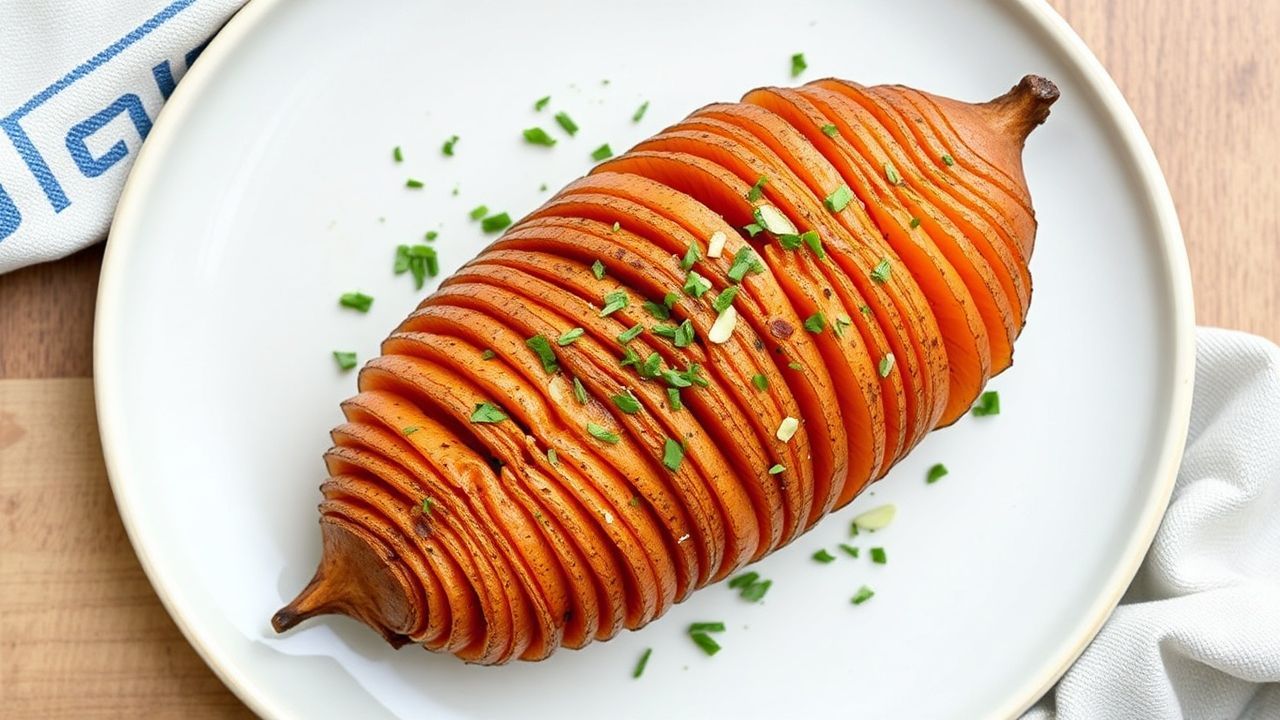
Flavorful hasselback sweet potatoes with herbs turn a simple root into a dinner centerpiece. Thin, accordion-like slices roast in layers, so oil, salt, and herbs reach every bite.
- Choosing the Perfect Sweet Potatoes for Hasselback Cooking
- Mastering the Art of Slicing for Maximum Flavor Absorption
- Herb Infusions That Turn Sweet Potatoes into a Gourmet Delight
- Roasting Method: Crisp Edges, Tender Centers
- Serving Suggestions That Make the Dinner Feel Special
- Chef’s Notes & Tips for Success
- Q&A: Flavor and Technique Questions
- Slice smart: use guides to prevent cutting through.
- Season in the gaps: herb oil brushed between slices boosts flavor.
- Roast for contrast: crisp edges with a tender interior.
- Finish for shine: a brief broil and a short rest lock in texture.
In this guide, you’ll learn how to choose the right sweet potatoes, slice safely, and build an herb infusion that tastes restaurant-level. You’ll also get clear timings, a reliable method, and serving ideas that pair well with busy weeknight plans.
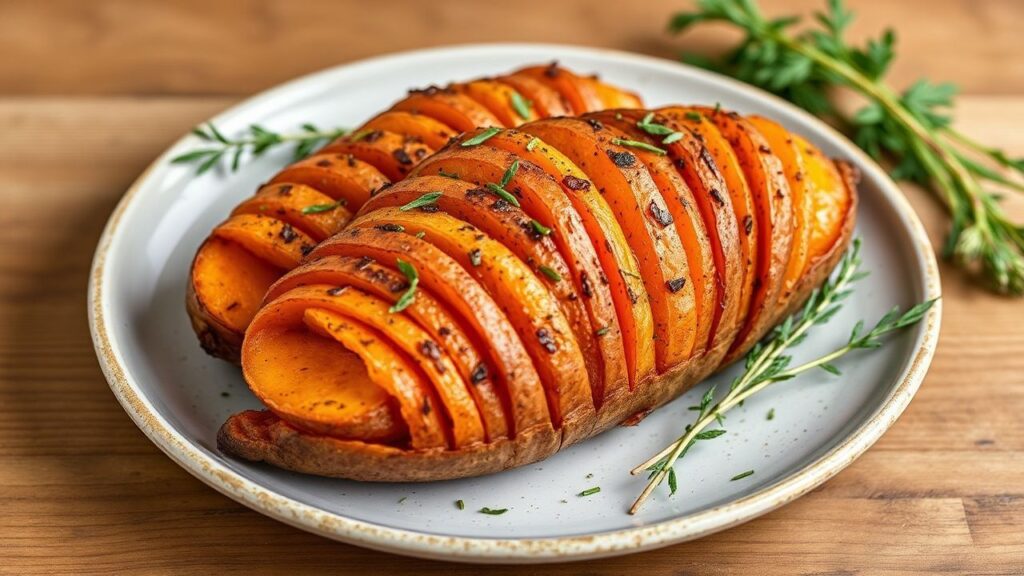
Choosing the Perfect Sweet Potatoes for Hasselback Cooking
Start with sweet potatoes that look dense and firm. Choose tubers that feel heavy for their size, with smooth skin and no soft spots. Those traits usually mean a sweeter, less watery interior once roasted.
For best results, go for medium to large sweet potatoes so the slices stay thick enough to hold structure. Look for orange-fleshed varieties when you want a naturally sweet profile that pairs well with rosemary, thyme, and garlic.
If you want more background on the ingredient itself, you can review sweet potato basics, including variety differences and common culinary uses. Understanding the crop helps you choose the flavor level you want.
Also consider moisture and shape. Long, even shapes slice faster and roast more uniformly, which protects your fan pattern from burning at the tips.
Mastering the Art of Slicing for Maximum Flavor Absorption
The Hasselback method depends on one skill: consistent slices that stop above the base. Set each sweet potato on a stable cutting board. Then place chopsticks or wooden spoons on both sides as slicing guides so your knife can’t cut all the way through.
Cut at about 1/8 inch (3 mm) intervals. Keep the knife steady and let the blade do the work. When your slices open into a fan, you create pockets that hold herb oil and salt during roasting.
Because the slices stay attached, heat cooks the interior while the edges crisp. That texture contrast comes from surface dehydration and browning, which you can connect to general Maillard reaction principles.
Move slowly near the base. If you accidentally cut through, you can still roast, but the potato may spread more and reduce the “accordion” look.
Herb Infusions That Turn Sweet Potatoes into a Gourmet Delight
Build a simple herb oil that flavors the gaps, not just the surface. Combine extra-virgin olive oil with minced garlic, chopped rosemary, and thyme. Add lemon zest for brightness and a pinch of black pepper for depth.
Brush the mixture generously between each slice. Use a pastry brush or spoon and aim for full coverage across the cuts. When oil reaches every pocket, the potatoes crisp better and taste more seasoned in each forkful.
For a food-science anchor, remember that fats carry flavor compounds and help herbs toast gently in the oven. If you want the broader chemistry, check olive oil properties and culinary behavior. It explains why olive oil works so reliably with herbs and garlic.
For variation, add sage and a light dusting of smoked paprika. Smoked paprika adds a gentle heat and smoky note without overpowering sweet potato’s natural sweetness.
Roasting Method: Crisp Edges, Tender Centers
Preheat the oven to 425°F (220°C). Line a baking sheet with parchment for easy cleanup and place the sweet potatoes spaced apart. Airflow matters here because steam trapped under the potato slows browning.
Roast for 40–45 minutes. About halfway through, brush again with the remaining herb oil. This second coat re-seasones the surface and boosts browning on the raised edges.
If you want to understand why spacing helps, tie it to general convection airflow principles. Even without a convection fan, hot air still moves around each potato and dries the surface more evenly.
For extra crisp edges, broil for the last 2–3 minutes. Keep a close watch because garlic and herbs brown quickly at high heat.
Prep and Cook Time
Preparation: 15 minutes. This includes slicing, guiding with chopsticks, and brushing the herb oil between cuts.
Cooking: 40–45 minutes. Finish with an optional 2–3 minute broil for extra crispness.
Yield
Serves: 4 as a hearty side dish. If you’re feeding a larger group, double the recipe and use two pans.
Serve one medium potato per person if you want a substantial side with greens or roasted vegetables.
Difficulty Level
Easy to Medium: The only “practice” step is slicing evenly. Once you master the guide technique, the rest stays simple.
You don’t need fancy equipment beyond a sharp knife and chopsticks or wooden spoons as guides.
Ingredients
- 4 medium sweet potatoes, washed and dried
- 3 tbsp extra-virgin olive oil
- 3 cloves garlic, minced
- 2 tsp fresh rosemary, finely chopped
- 2 tsp fresh thyme, finely chopped
- 1 tsp lemon zest, finely grated
- Salt and black pepper, to taste
- Optional garnish: fresh parsley, microgreens, toasted pine nuts
Instructions
- Preheat your oven to 425°F (220°C) and line a baking sheet with parchment paper.
- Slice each sweet potato using two chopsticks or wooden spoons as guides. Cut about 1/8 inch apart, stopping just above the base.
- Mix the herb oil: stir olive oil, minced garlic, rosemary, thyme, lemon zest, salt, and black pepper.
- Brush between slices with the herb oil. Make sure oil reaches the cuts and covers the surface.
- Arrange potatoes on the baking sheet with space around each one for better airflow.
- Roast for 40–45 minutes, brushing once mid-cook. Edges should turn golden and crisp.
- Rest 5 minutes before serving. Resting helps the interior finish cooking and improves slice cohesion.
Serving Suggestions That Make the Dinner Feel Special
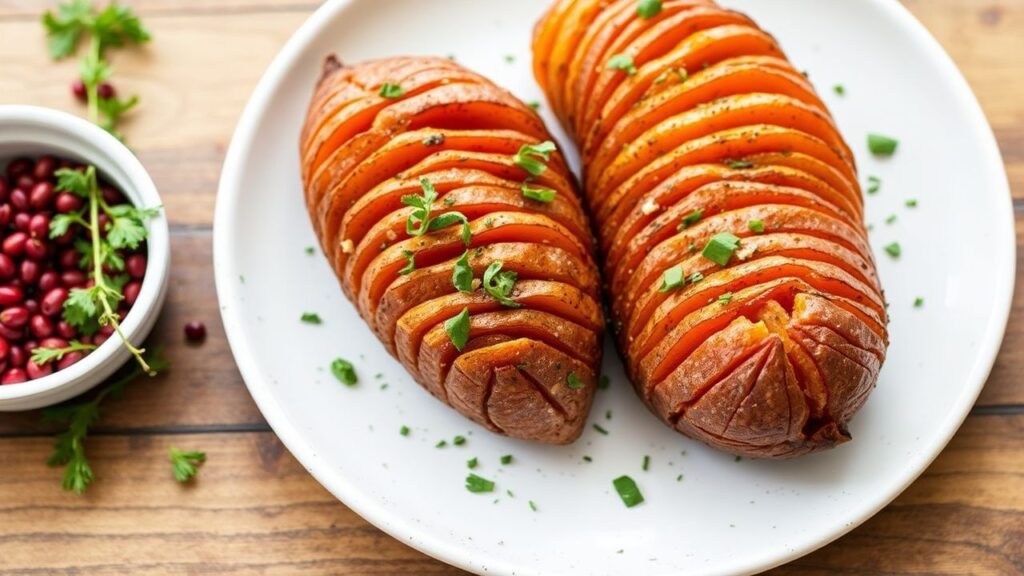
These potatoes work as a main-side centerpiece. Plate them warm, then garnish with parsley or microgreens for a fresh, green contrast. Toasted pine nuts add crunch and a light buttery flavor.
For creamy balance, serve with a spoonful of Greek yogurt or dairy-free yogurt on the side. For tang, add lemon juice to the yogurt and lightly salt it.
To pair with other dishes, match flavors with similar notes: herbs, citrus, and a bit of salt. A lemon vinaigrette salad or roasted seasonal vegetables provide the crunch and freshness that complements the tender inside.
If you need ideas for serving sweet potatoes with greens, consider browsing salad concepts and vinaigrette basics. Simple combinations often taste more “designed” than complicated ones.
Chef’s Notes & Tips for Success
If you struggle with slicing, use a serrated knife. It grips the skin and helps keep cuts even without forcing the blade.
Adjust herbs to your preference. Rosemary and thyme create classic savory depth, while sage adds earthiness that pairs naturally with sweet flavors.
For a sweet-savory finish, brush with a thin layer of honey or maple syrup during the last 5 minutes. The sugars caramelize quickly, so keep an eye on browning to avoid burnt spots.
For storage, cool leftovers fully, then refrigerate. Reheat in a hot oven so the edges stay crisp. If you microwave, you soften the exterior and lose much of the fan-slice crunch.
Q&A: Flavor and Technique Questions
Quick answers help you troubleshoot before you roast. Use these notes to refine texture, flavor, and timing for your kitchen.
Q1: What makes hasselback sweet potatoes a standout side dish?
The thin fan slices create more surface area, so the outside crisps while the center stays tender. When you brush herb oil between the slices, every forkful carries flavor—not just the top layer.
Q2: How do I prevent cutting all the way through?
Place chopsticks or wooden spoons on both sides of the potato. Slice down until the knife hits the guides, then stop. This keeps the base intact so the potato fans open during baking.
Q3: Which herbs pair best with sweet potatoes?
Rosemary, thyme, and sage work especially well because they bring piney, earthy aroma. Lemon zest adds a bright lift that balances the sweet potato’s natural sugars.
Q4: Can I prep hasselback sweet potatoes ahead of time?
You can slice them ahead and store them in cold water for a short time to slow browning. Drain well, then pat dry before brushing herb oil and roasting.
Q5: Why do my edges turn soft instead of crisp?
Soft edges usually come from overcrowding or skipping the oil coverage between slices. Space the potatoes on the pan and brush again mid-roast for better browning.
Final takeaway: Flavorful hasselback sweet potatoes with herbs deliver crisp edges, tender centers, and deep seasoning in every slice. When you follow the guide-slicing method and brush herb oil into the gaps, the dinner upgrade happens fast.
If you want a confident next step, roast one test potato first. Once you match your oven’s browning speed, you’ll get repeatable results for any weeknight or gathering.
See also: hasselback sweet potatoes