

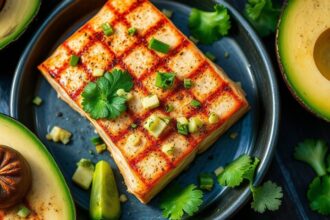
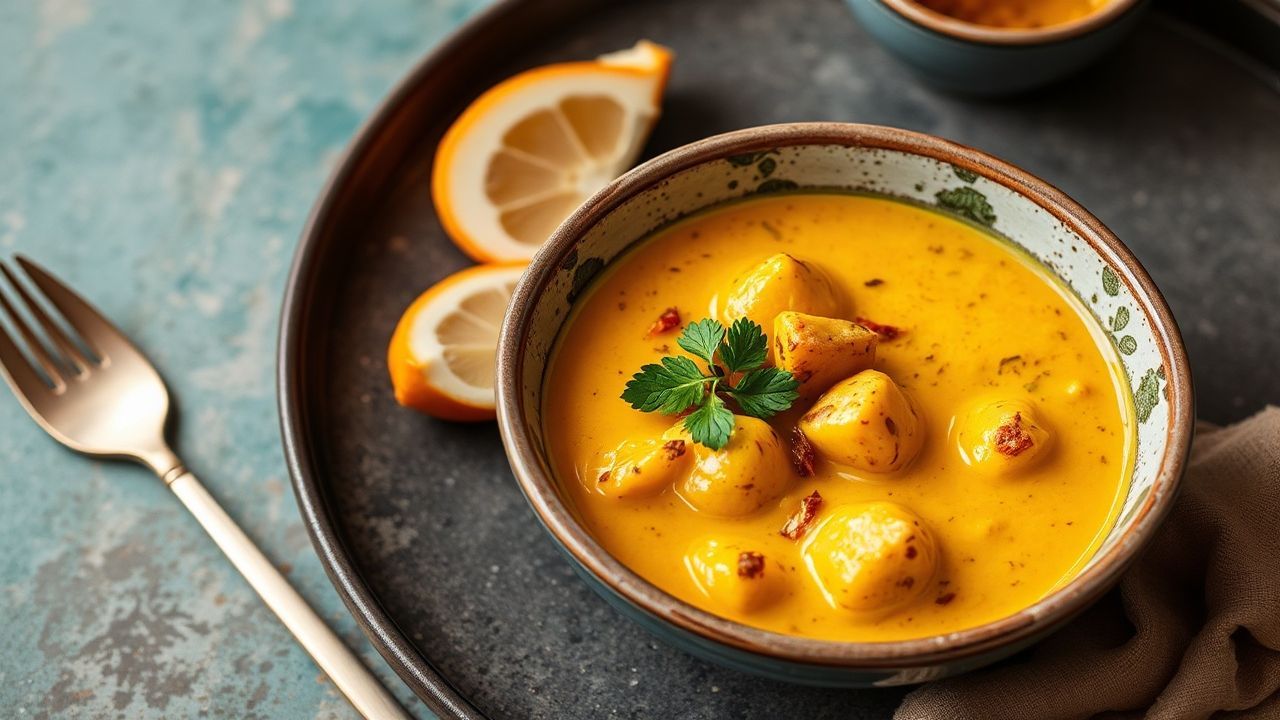
In plant-based cooking, Creamy Vegan Thai Yellow Curry stands out for its warm spice profile and silky texture. This dairy-free Thai yellow curry uses creamy coconut milk and tender potatoes for a bowl that feels cozy and filling.
- Creamy Vegan Thai Yellow Curry With Potatoes: What Makes It Special?
- Mastering Creamy Potato Texture for Ultimate Comfort
- Pick the right potato, then simmer with control
- Optional tofu or chickpeas: texture without disrupting the base
- Choosing Plant-Based Ingredients for Rich Yellow Curry Flavor
- Start with aromatics that match Thai yellow curry style
- Umami and balance: soy sauce or tamari plus a touch of sweetness
- Tips for Serving and Pairing Your Creamy Curry Bowl
- Prep and Cook Time
- Yield
- Difficulty Level
- Ingredients (Creamy Vegan Thai Yellow Curry with Potatoes)
- Instructions
- Chef’s Tips for Success
- Serving Suggestions
- FAQ: Creamy Vegan Thai Yellow Curry With Potatoes
- What makes Creamy Vegan Thai Yellow Curry different from other Thai curries?
- Why is this curry vegan?
- How do potatoes make the curry taste creamier?
- Can I adjust the vegetables or protein?
- How do I store and reheat leftovers?
- Key Takeaways
To get the best results, you need two things: balanced curry seasoning and proper potato simmering. When you manage heat and cut size, the sauce thickens naturally and stays smooth.
At a Glance
- Flavor focus: turmeric-forward yellow curry with coconut creaminess.
- Texture key: starchy potatoes for a thick, spoon-coating sauce.
- Umami support: soy sauce or tamari for deeper savory flavor.
- Serving move: jasmine rice to soak up curry without getting mushy.
Creamy Vegan Thai Yellow Curry With Potatoes: What Makes It Special?
Creamy Vegan Thai Yellow Curry gives you classic Thai comfort without dairy. Yellow curry usually feels milder than red or green curry, so it works well for weeknights and casual spice levels.
The curry gets its golden color from turmeric and its creamy body from coconut milk. If you want background on turmeric and its cooking uses, see turmeric.
For aroma, the dish relies on curry paste or yellow curry powder plus ginger and lemongrass. When you bloom spices briefly, you release fragrant oils that taste fuller in the final sauce.
If you want to understand why spices change flavor with heat, read spice. This helps you time the toasting step so it boosts aroma instead of creating bitterness.
Aromatic layers you can taste in every spoonful
Thai yellow curry flavors come from layered aromatics. Start by sautéing onion, then add garlic, ginger, and lemongrass until fragrant.
After that, toast the curry powder briefly. This step builds a deeper base flavor before you add liquids and vegetables.
Why potatoes belong in this curry
Potatoes add thickness and body without dairy. As they simmer, their starch disperses into the coconut sauce, which naturally thickens the curry.
Choose starchy varieties for the creamier feel. Learn more about potatoes to understand how starch affects texture while cooking.
Mastering Creamy Potato Texture for Ultimate Comfort
To nail creamy potatoes, control simmer strength and cube size. If you boil hard, the outside can break while the inside stays uneven.
Use a gentle simmer instead. That keeps the sauce stable and helps potatoes cook evenly through.
Pick the right potato, then simmer with control
Yukon Gold potatoes work well because they balance creaminess and structure. Russet potatoes also work, but they can soften faster if you over-simmer.
When you simmer in coconut milk, keep the heat moderate. Coconut milk behaves more smoothly at lower simmering temperatures, so the sauce stays glossy.
If you want a clear reference for how starchy ingredients cook, you can review starch. It explains why starch release thickens sauces.
For coconut milk’s role in creamy texture, use coconut milk as a quick background source.
Optional tofu or chickpeas: texture without disrupting the base
If you add tofu, fold it in near the end. Warm it through gently so it absorbs curry flavor without turning spongy.
For chickpeas, longer simmering helps them soak up sauce. Potatoes remain the texture anchor, so keep their cooking time steady.
If you want to reference tofu basics, see tofu. It gives useful context for how soy-based protein behaves in cooking.
Choosing Plant-Based Ingredients for Rich Yellow Curry Flavor
Ingredient quality shapes curry flavor in two ways. First, it boosts aromatic depth from fresh ginger and lemongrass. Second, it controls how creamy the coconut base tastes.
Use full-fat coconut milk and a curry powder you trust. Also choose fresh aromatics instead of old, dried ginger if you can.
Start with aromatics that match Thai yellow curry style
Onion, garlic, and fresh ginger build the foundation. Lemongrass adds a citrusy edge that keeps the curry from tasting flat.
If you want a reference for lemongrass, visit lemongrass. It helps you pick stalks that smell strong and fresh.
Umami and balance: soy sauce or tamari plus a touch of sweetness
Thai-style curries balance salt, spice, and a small amount of sweetness. Soy sauce or tamari adds savory depth without fish sauce.
Add maple syrup or palm sugar in small amounts. The goal is balance, not sweetness overload.
For science-backed context on savory flavor, read umami. It supports why a small salt boost makes spices taste more rounded.
Why this balance works
- Salt: sharpens spice perception and makes aromatics pop.
- Sweetness: softens turmeric and curry powder edge.
- Coconut milk: smooths heat so the curry tastes creamy.
[WARNING] Pro-Caution: Don’t over-toast curry powder. If it smells burnt or turns too dark, it can taste bitter, and coconut milk won’t fully fix that harshness.
Also avoid a hard boil. Rapid boiling can push coconut fats to separate and create a grainy texture.
Tips for Serving and Pairing Your Creamy Curry Bowl
Serving choices control how creamy the curry feels. If you spoon curry over rice, each grain should catch sauce without turning soggy.
Jasmine rice works because it stays fluffy. That texture makes it easier to scoop and keeps curry flavors bright.
Best bases for soaking up creamy sauce
Jasmine rice is the classic match. Quinoa works too if you want added protein, but rice usually gives the most traditional mouthfeel.
If you want a food science reference for rice behavior, use rice.
Garnishes that lift flavor fast
Top with fresh cilantro and lime right before serving. The herbs add a green, clean finish, and lime adds acidity that cuts through coconut richness.
If you want crunch, add roasted peanuts or toasted coconut flakes. That contrast makes each bite feel more complete.
For a quick reference on how taste changes with acids, see acid. It explains why lime brightens creamy sauces.
Prep and Cook Time
Plan your time so the curry stays relaxed on the stove. You’ll start with aromatics, then simmer until potatoes turn fork-tender.
Use gentle heat and stir when needed to protect the sauce texture.
- Preparation Time: 15 minutes
- Cook Time: 30 minutes
- Total Time: 45 minutes
Yield
This recipe makes about 4 hearty portions. It works well for family dinners and easy meal prep.
The curry reheats well because potatoes and coconut base stay cohesive. The sauce thickens slightly as it cools, so you may need a splash of broth when reheating.
Difficulty Level
Easy to Medium—you’ll get the best results with simple timing control. Most work goes into chopping aromatics and monitoring a gentle simmer.
You don’t need advanced technique. Focus on blooming curry powder, simmering potatoes evenly, and tasting for balance.
Ingredients (Creamy Vegan Thai Yellow Curry with Potatoes)
- 3 tbsp yellow curry powder (high-quality blend)
- 1 tbsp coconut oil or neutral cooking oil
- 1 large onion, finely chopped
- 3 garlic cloves, minced
- 1 inch fresh ginger, peeled and grated
- 2 stalks lemongrass, bruised and cut into pieces
- 1 can (14 oz) full-fat coconut milk
- 3 cups vegetable broth
- 4 medium Yukon Gold potatoes, peeled and cubed
- 1 large carrot, sliced diagonally
- 1 red bell pepper, sliced into strips
- 1 block (14 oz) firm tofu, pressed and cubed (optional)
- 2 tbsp soy sauce or tamari
- 1 tbsp maple syrup
- 1 kaffir lime leaf (optional)
- Fresh cilantro, chopped for garnish
- Fresh lime wedges for serving
- Steamed jasmine rice for serving
Instructions
- Prepare aromatics: Heat coconut oil in a large pot over medium heat. Add onion and sauté until translucent, about 5 minutes.
- Bloom the curry base: Stir in garlic, ginger, and bruised lemongrass. Cook until fragrant, about 2 minutes.
- Toast the curry powder: Sprinkle in yellow curry powder. Stir gently for 45–60 seconds to release aroma without burning.
- Add liquids and vegetables: Pour in coconut milk and vegetable broth. Stir to combine, then add potatoes, carrot, bell pepper, and kaffir lime leaf (if using). Bring to a gentle simmer.
- Simmer until tender: Simmer uncovered, stirring occasionally, until potatoes and carrots are fork-tender, about 20 minutes. Keep heat moderate to protect coconut texture.
- Incorporate protein (optional): If using tofu, fold it in during the last 5 minutes so it warms through and absorbs curry flavor.
- Season to taste: Add soy sauce or tamari and maple syrup. Adjust salt and sweetness until the curry tastes balanced.
- Finish and garnish: Remove lemongrass pieces and kaffir lime leaf. Ladle over jasmine rice and top with cilantro and lime wedges.
Chef’s Tips for Success
Small technique choices raise your curry from “good” to “restaurant-style.” You control that outcome with timing, heat level, and taste checks.
These tips help keep potatoes creamy and the sauce smooth.
- Use fresh spices: Choose curry powder with a clean aroma. Toast briefly so the flavor stays round.
- Potato variety matters: Yukon Gold delivers a creamy bite and thickens sauce without falling apart.
- Make ahead and reheat: Flavor often improves after a day. Reheat gently and add broth if it thickens too much.
- Plant-based protein options: Swap tofu for chickpeas or tempeh if you like. Add them at the right time for best texture.
- Adjust spice level: Add fresh chili or a pinch of cayenne for heat. Then fine-tune with lime and a small touch of sweetness.
Serving Suggestions
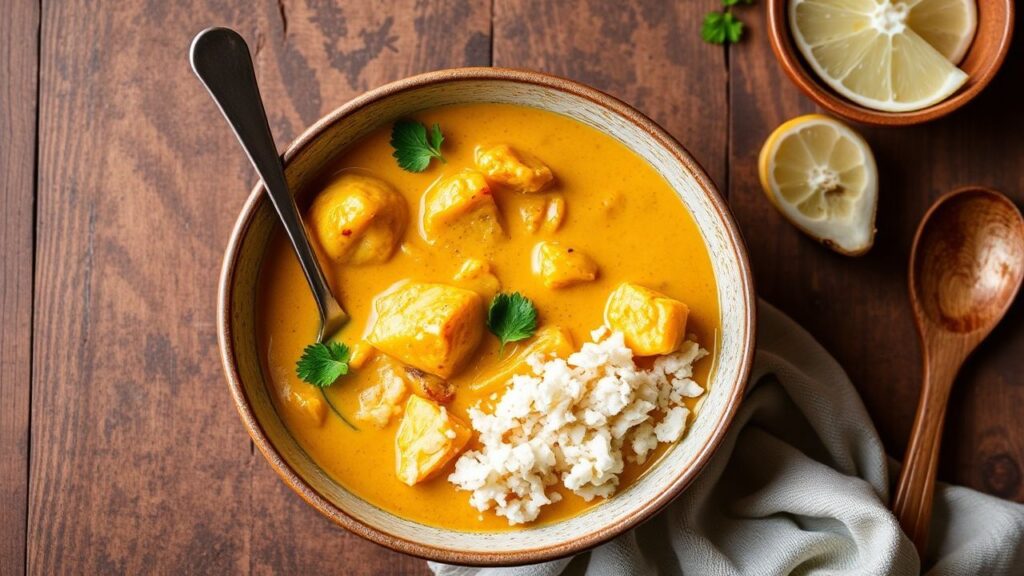
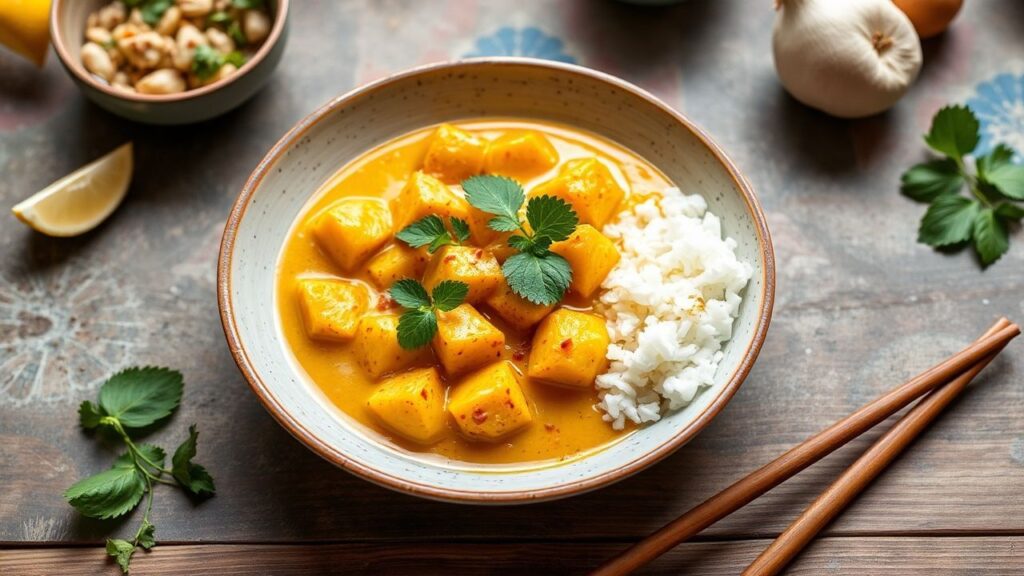
Serve Creamy Vegan Thai Yellow Curry in wide bowls. Place jasmine rice underneath, then spoon curry on top so sauce spreads and clings to the grains.
Finish with fresh cilantro and a lime squeeze. For sides, try a light cucumber salad or steamed bok choy to balance richness.
Want a refreshing drink pairing? Try lemongrass iced tea or sparkling coconut water. The citrusy notes and gentle sweetness cut through coconut richness.
If you want broader culinary context for Thai curries, reference Thai cuisine.
| Nutrient | Per Serving |
|---|---|
| Calories | 380 kcal |
| Protein | 12 g |
| Carbohydrates | 45 g |
| Fat | 18 g |
For background on curry as a broader category, see curry. It helps you place Thai yellow curry within spiced, sauce-based traditions.
That wider view also makes it easier to adjust ingredients. You can treat curry as a flavor system: fat, aromatics, spice, and seasoning.
FAQ: Creamy Vegan Thai Yellow Curry With Potatoes
What makes Creamy Vegan Thai Yellow Curry different from other Thai curries?
Yellow curry tends to taste milder and more earthy than red or green curries. It also leans on turmeric-forward warmth and then smooths everything with coconut milk.
That combination creates comfort with a fragrant finish, not a heavy bite.
Why is this curry vegan?
This version uses coconut milk as the creamy base and skips animal products. It uses soy sauce or tamari for savory depth instead of fish sauce.
Fresh aromatics and spices carry the flavor, so the curry stays rich without dairy or meat.
How do potatoes make the curry taste creamier?
Potatoes release starch as they simmer. That starch thickens the coconut sauce and helps it coat each bite.
Starchy potato varieties also hold their shape better, so you get a creamy mouthfeel without turning the curry watery.
Can I adjust the vegetables or protein?
Yes. Add vegetables like carrots, bell peppers, or green beans. For protein, tofu, tempeh, or chickpeas work if you add them at the right time.
Keep potatoes as the main texture anchor so the curry stays thick and cohesive.
How do I store and reheat leftovers?
Store leftovers in an airtight container in the fridge for up to 3 days. Reheat gently over low heat to protect coconut texture.
If it thickens too much, stir in a splash of broth or coconut milk until it loosens to your liking.
Key Takeaways
Creamy Vegan Thai Yellow Curry delivers a balanced, turmeric-kissed sauce with naturally thickened potato creaminess. Gentle simmering and fresh garnishes help it taste bright and cozy at the same time.
For weeknights or meal prep, this method stays reliable. Toast briefly, simmer softly, taste for salt and sweetness, then serve over jasmine rice.
Make this bowl your go-to Thai-inspired vegan dinner. Adjust spice and add-ins to match your pantry while keeping the same core technique.

See also: Golden Vegan Thai Yellow Curry