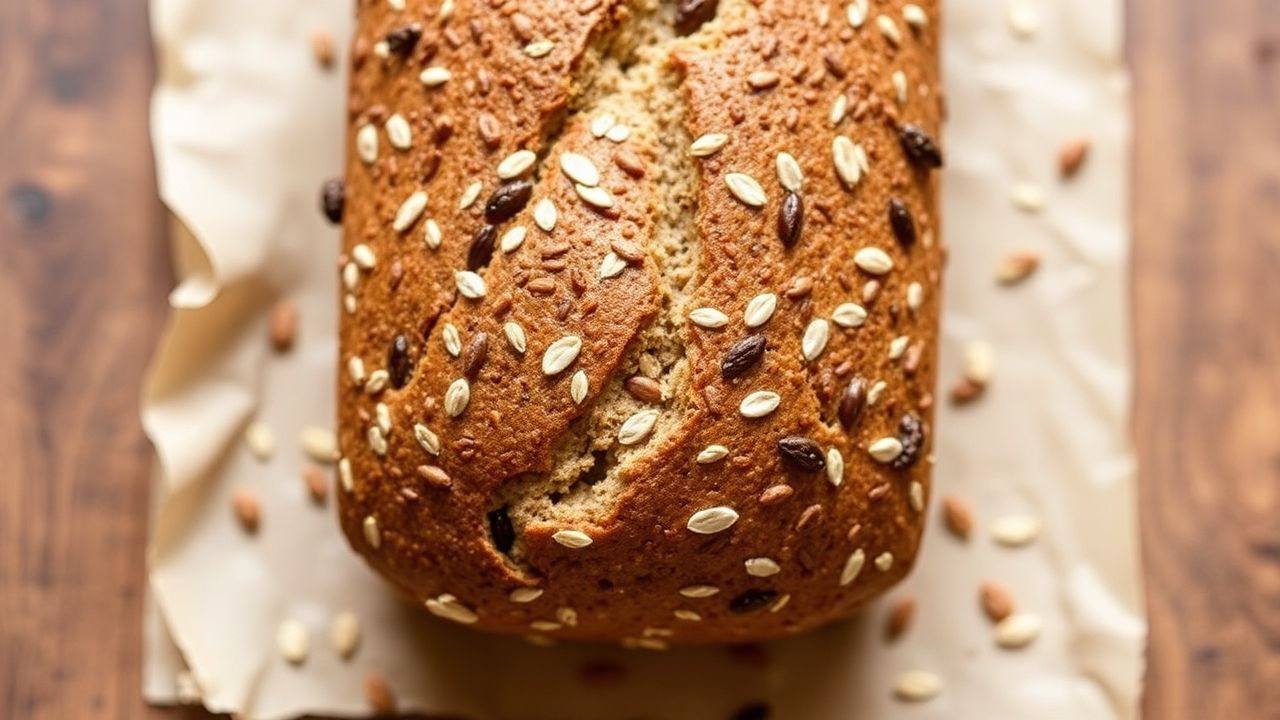
Few breads feel as comforting as fresh toast. When you follow a gluten-free routine, a well-built oat and seed loaf can deliver that same warmth with steady nutrition.
- Wholesome Gluten-Free Oat & Seed Bread: What Makes It Work
- Prep and Cook Time
- Yield
- Difficulty Level
- Ingredients
- Instructions
- Tips for Success
- Serving Suggestions
- Nutritional Information (per slice)
- Q&A
- Q1: What makes oat and seed bread a wholesome gluten-free option?
- Q2: How do I confirm my oats are truly gluten-free?
- Q3: Why add seeds to gluten-free dough instead of keeping it plain?
- Q4: Can I use oat flour alone for gluten-free bread?
- Q5: How do I get moist, soft slices every time?
- Final Thoughts
At a Glance
- Certified gluten-free oats protect flavor and safety.
- Ground oats + starch help structure without wheat.
- Soaked chia or flax improves moisture and sliceability.
- Gentle mixing supports a lighter crumb.
If you want a loaf that tastes hearty and feels tender, this method focuses on hydration, binding, and crumb set. You’ll learn how to shape a dependable gluten-free crumb using ingredients that work together.
Think of this as practical gluten-free baking, not guesswork. Oats bring fiber and a mild, nutty base, while seeds add crunchy texture and healthy fats. Together, they create a loaf that holds up for breakfast, snacks, and meal prep.
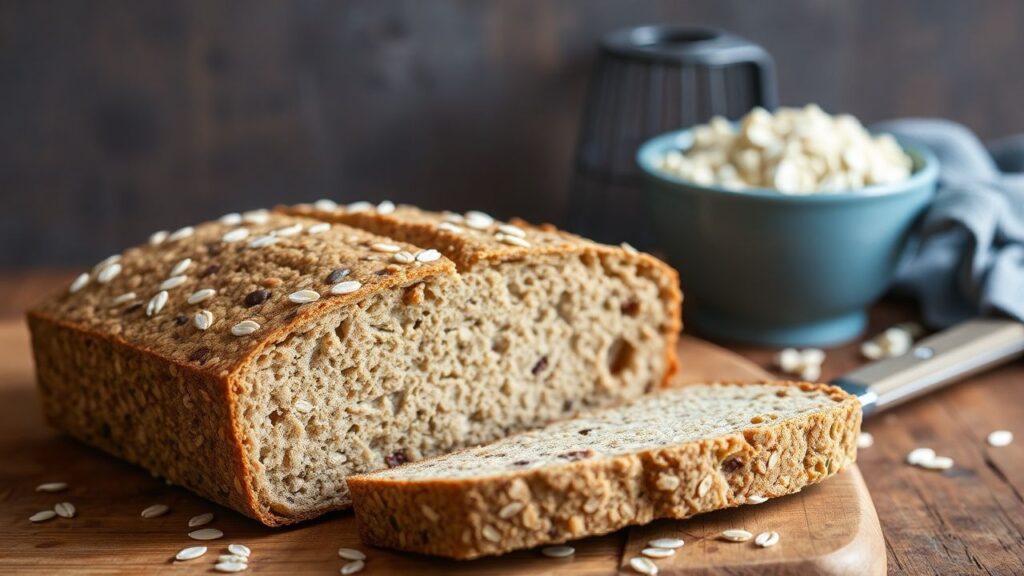
Wholesome Gluten-Free Oat & Seed Bread: What Makes It Work
This loaf uses oats plus a gluten-free flour mix to mimic the job wheat usually does: trapping air and setting the crumb. Since gluten-free batters lack gluten’s stretch, you must rely on starches, fiber, and gels.
Oats provide natural beta-glucan fiber, which supports a hearty bite. Seeds add fat and minerals, and they also help with moisture retention when they’re paired with chia or flax gel. For background reading on oats and nutrition, see oats.
For more on why gluten-free breads behave differently, review gluten-free diets. Understanding the goal helps you bake with intention: you want structure, moisture, and even browning.
Prep and Cook Time
Use this schedule to plan your day and avoid rushing the cooling step. Gluten-free crumb sets as it cools, so you get better slices when you give it time.
Prep Time: 20 minutes
Cook Time: 45–50 minutes
Total Time: 1 hour 10 minutes
Yield
This recipe makes one medium loaf that slices well for sandwiches and toast. If you want smaller portions, freeze extra slices right after cooling.
Makes: 1 medium loaf (10–12 slices)
Difficulty Level
Expect a learning curve, but the process stays straightforward. If you measure carefully and avoid overmixing, results improve fast.
Difficulty: Medium
Ingredients
Choose ingredients that match a gluten-free label standard. Certified gluten-free oats matter because cross-contact happens during harvest and processing.
For seed basics and fat content, seeds and their natural oils explain why freshness affects taste and shelf life.
- 1 ¾ cups certified gluten-free rolled oats (finely ground into oat flour)
- 1 cup brown rice flour
- ½ cup tapioca starch
- 2 tsp baking powder
- 1 tsp baking soda
- 1 tsp sea salt
- 2 tbsp chia seeds (soaked in 6 tbsp water for 10 minutes)
- ¼ cup sunflower seeds
- 2 tbsp pumpkin seeds
- 3 tbsp flaxseeds (whole or ground)
- 1 tbsp sesame seeds
- 1 ½ cups unsweetened plant-based milk (almond or oat milk)
- 2 tbsp apple cider vinegar
- ¼ cup olive oil (or melted coconut oil)
- 3 tbsp pure maple syrup
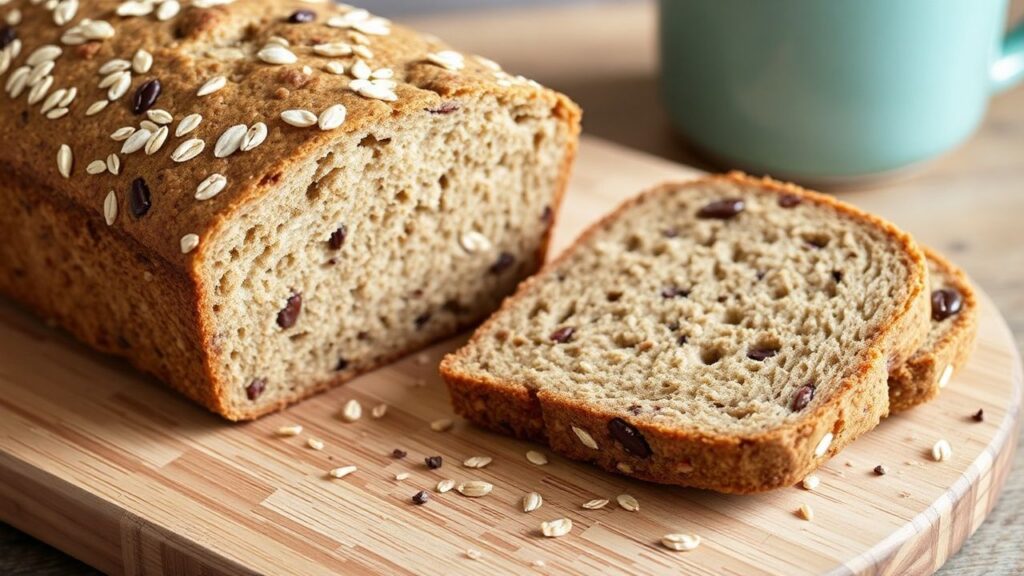
Instructions
Follow each step in order. Gluten-free batter sets quickly once starches hydrate, so your timing affects the crumb.
Also, remember that ovens vary. If your oven runs hot, reduce heat slightly or extend the bake by a few minutes, then check early.
- Prepare the flax and chia egg substitute: In a small bowl, combine 2 tbsp chia seeds with 6 tbsp water. Stir well and set aside to gel for at least 10 minutes.
- Preheat your oven to 350°F (175°C) and line a 9×5-inch loaf pan with parchment paper or grease lightly.
- Make oat flour: Pulse gluten-free rolled oats in a food processor until fine but not powdery, similar to whole wheat flour.
- Mix dry ingredients: In a large bowl, whisk oat flour, brown rice flour, tapioca starch, baking powder, baking soda, and sea salt.
- Add seeds: Stir in sunflower, pumpkin, flaxseeds, and sesame seeds. Reserve a small handful for topping.
- Combine wet ingredients: Whisk soaked chia gel, plant-based milk, apple cider vinegar, olive oil, and maple syrup until smooth.
- Blend wet and dry: Pour wet into dry. Fold gently with a spatula until just combined. Overmixing can make the crumb gummy.
- Transfer batter: Spoon thick batter into the pan and smooth the top. Sprinkle reserved seeds on top.
- Bake: Bake 45–50 minutes. Check doneness with a toothpick: it should come out clean or with a few moist crumbs.
- Cool properly: Cool in the pan for 15 minutes, then move to a wire rack. Cooling sets the crumb so slices stay neat.
For a deeper look at how baking chemistry supports rise, see baking powder and baking soda.
When you use starch like tapioca, it thickens as it warms. That’s why doneness checks matter. If you pull the loaf too early, it can collapse as it cools.
Now focus on repeatable texture. Your goal is a thick batter, even distribution of seeds, and a loaf that browns without drying out.
Tips for Success
Small adjustments create big gains in gluten-free bread. Use these tips to lock in a tender crumb and a stable slice.
- For an airy crumb: Sift brown rice flour and tapioca starch before mixing. Finer particles hydrate faster, which can improve structure.
- Customize seeds wisely: Swap pumpkin for hemp, or add crushed walnuts for crunch. Keep total seed volume similar for balanced moisture.
- Moisture balance: Olive oil plus chia gel supports softness. If your loaf looks dry at the end, reduce bake time slightly next batch.
- Watch oven temperature: Use an oven thermometer. Reliable heat prevents overbrowning while the center finishes baking.
For general storage guidance, remember that seeds contain oils that can oxidize over time. Freshness affects flavor and texture. See fat for the basics on why oils change with age.
If you want better slicing, wait until the loaf cools fully. Gluten-free crumbs set during cooling, and warm bread tends to smear.
Serving Suggestions
Serve this loaf as you would any hearty bread. Start with simple spreads so you can taste the oat base and seed crunch.
Try it with avocado spread, nut butter, or a light drizzle of maple. For a savory meal, top slices with mashed chickpeas, lemon zest, and chopped herbs.
Because it’s naturally fiber-forward, it pairs well with breakfast bowls. Add it next to soup for a satisfying meal texture and easy portion control.
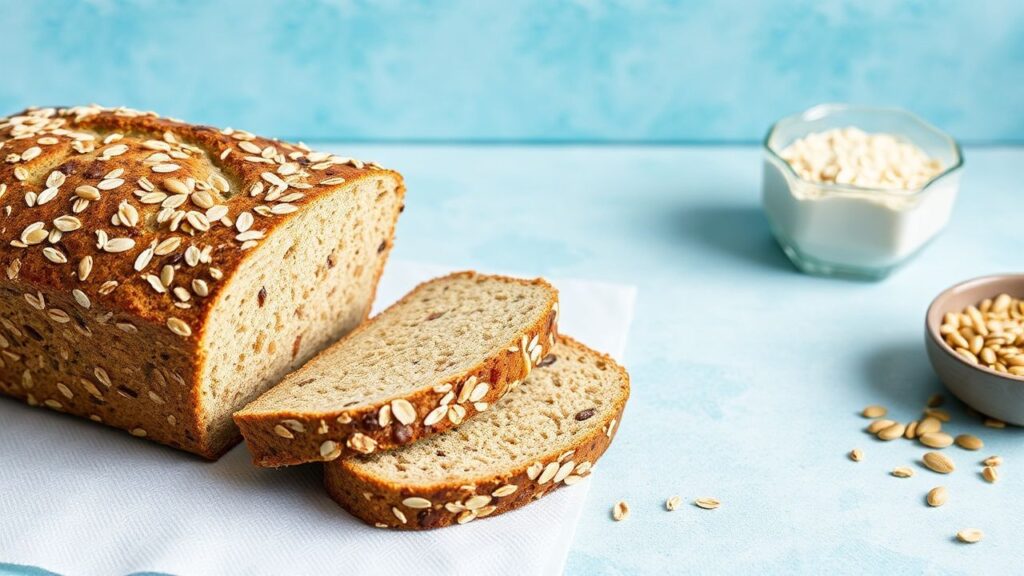
Nutritional Information (per slice)
Nutrition can vary based on brands of oats, milk, and oil. Use the numbers below as an estimate for planning.
| Nutrient | Amount |
|---|---|
| Calories | 150 kcal |
| Protein | 5 g |
| Carbohydrates | 22 g |
| Fat | 6 g |
| Fiber | 4 g |
If you track fiber intake, oats and seeds can help you reach daily targets. For more on fiber and digestion basics, see dietary fiber.
Q&A
Use this section when you hit common gluten-free bread questions. Quick answers help you avoid repeat batches and wasted ingredients.
Q1: What makes oat and seed bread a wholesome gluten-free option?
Certified gluten-free oats provide a stable base, and seeds add healthy fats plus minerals. With chia gel and a starch blend, the loaf holds moisture and structure without wheat.
Q2: How do I confirm my oats are truly gluten-free?
Look for oats labeled certified gluten-free. This label reduces cross-contact risk during processing, which matters for people who must avoid gluten strictly.
Q3: Why add seeds to gluten-free dough instead of keeping it plain?
Seeds boost flavor and texture, and they help retain moisture through their natural oils and water interactions. In gluten-free baking, moisture retention improves sliceability.
Q4: Can I use oat flour alone for gluten-free bread?
Oat flour alone often lacks enough structure for a stable loaf, since gluten-free dough needs extra binding and thickening. Pair oats with starches or add a gel-forming ingredient like chia or flax to improve crumb set.
Q5: How do I get moist, soft slices every time?
Hydrate your mix properly and avoid overmixing. Also, cool the loaf fully before slicing, and test doneness a few minutes early to prevent dryness.
Final Thoughts
Baking gluten-free oat and seed bread rewards patience and clean technique. You’ll notice better texture when you measure carefully, fold gently, and cool the loaf fully.
Once you master this template, you can fine-tune seeds, sweetness, and toppings while keeping the crumb consistent. Keep notes on batter thickness and bake time, and your next loaf will get even better.
See also: gluten-free