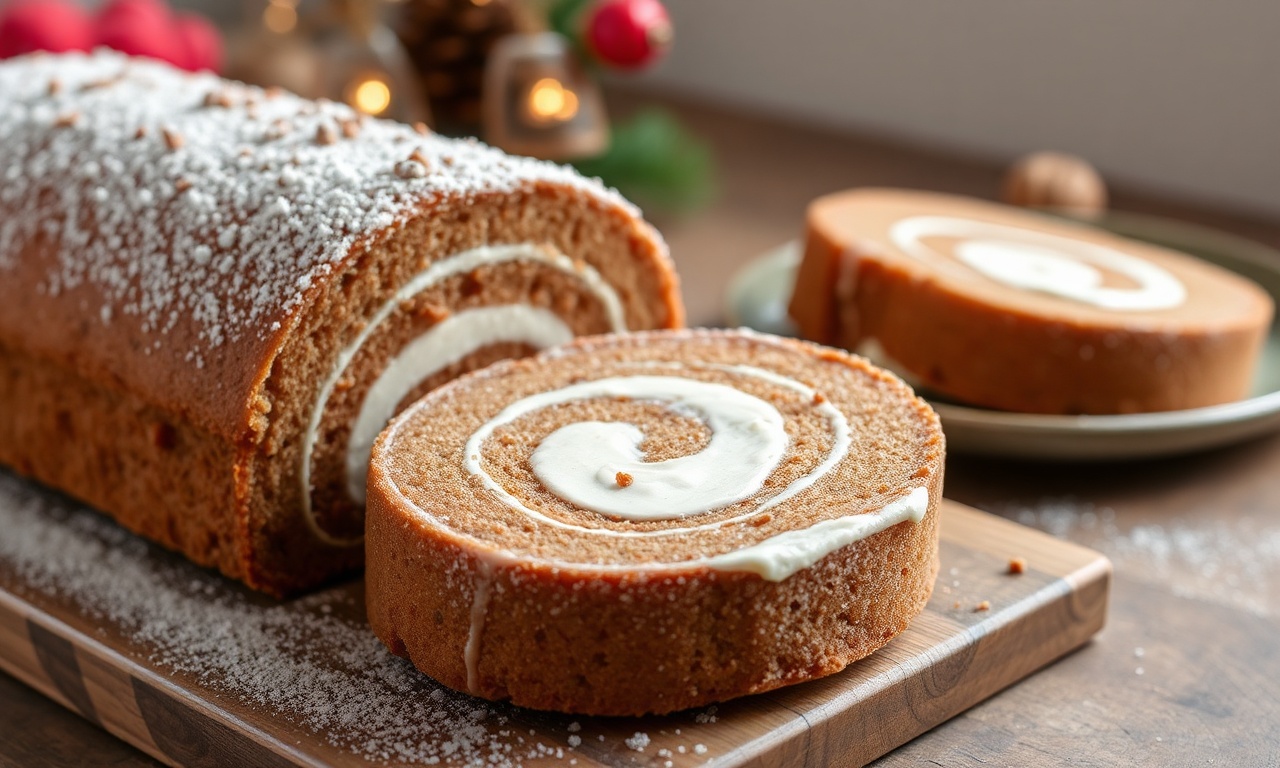
As the air turns crisp and winter baking fills the kitchen, a gingerbread roll cake delivers real holiday comfort. This dessert blends classic gingerbread spice with a light rolled sponge, so every slice shows a neat spiral and a soft, tender crumb.
- Texture: A properly whipped egg base gives you a rollable, airy sponge.
- Spice balance: Cinnamon, ginger, cloves, and nutmeg create warm flavor without bitterness.
- Rolling method: Roll warm, then fill only after cooling to reduce cracking.
- Make-ahead: Let the finished cake rest so flavors meld and the filling sets.
Because gingerbread flavor depends on spice ratios, this recipe focuses on dependable technique. You’ll learn how to beat, fold, bake, and roll so the cake stays flexible through the entire process.
What Makes a Gingerbread Roll Cake Special?
A gingerbread roll cake stands out because it pairs two skills: sponge cake aeration and a tight, even spiral. Traditional gingerbread usually leans dense and chewy, while a rolled sponge stays light and lets the spices feel brighter.
Spices matter just as much as method. Ginger, cinnamon, and cloves each carry distinct aroma compounds, which is why grinding and measuring consistently helps the flavor stay stable across batches. For background on how these spices work, see cinnamon, ginger, and clove.
For the best gingerbread roll results, treat the sponge like a delicate canvas. When you avoid overmixing and stop folding once the batter turns smooth, the cake bakes with the elasticity you need for rolling.
Prep and Cook Time
Plan your schedule around the rolling step and cooling time. The bake itself stays short, but proper cooling protects your spiral and keeps the filling from melting.
- Planning: 20 minutes
- Cooking: 15 minutes
- Cooling: 30 minutes
- Total: about 1 hour 5 minutes
This timing works well for a standard 10×15 inch jelly roll pan. If you use a different pan size, check doneness early so you don’t dry out the sponge.
Yield and Difficulty
This gingerbread roll cake makes 8–10 slices, depending on how thick you cut. It’s ideal for holiday dessert platters, office gifting, or a family gathering where people want a slice they can serve fast.
Difficulty: Medium. You control the outcome through careful folding and steady rolling, not through advanced baking equipment.
Ingredients for Gingerbread Roll Cake
Use room-temperature eggs for the best foam. Foam stability affects how easily the sponge rolls and how smoothly it slices later.
Measure spices accurately. Ground spices can vary by brand, so even small changes can shift the balance from warm to sharp.
- 1 cup all-purpose flour, sifted
- 1 tsp baking powder
- 1 tsp ground cinnamon
- 1/2 tsp ground ginger
- 1/4 tsp ground cloves
- 1/4 tsp ground nutmeg
- 1/4 tsp salt
- 4 large eggs, room temperature
- 3/4 cup granulated sugar
- 1/4 cup unsalted butter, melted and cooled
- 1 tsp pure vanilla extract
- Powdered sugar for dusting
For science-backed baking basics, flour structure plays a key role in sponge behavior. If you want a quick refresher, read about flour.
Filling Options That Elevate Your Gingerbread Roll Cake
The filling gives you most of the “holiday dessert” feeling. Pick a filling that complements the spice heat without overpowering the sponge.
Keep your filling consistency thick enough to spread, but soft enough to smear into the spiral. If your filling feels runny, chill it briefly before assembly.
Classic Cinnamon Cream Cheese Filling
Mix cream cheese, powdered sugar, cinnamon, and vanilla until smooth. The tang pairs well with warm gingerbread notes and adds a creamy mouthfeel.
Use this option when you want strong flavor contrast and a classic holiday dessert profile. For general context on cream-based fillings, see cream cheese.
Maple Whipped Mascarpone
Whip mascarpone with powdered sugar and pure maple syrup. Add a pinch of cinnamon for extra warmth and a glossy, slice-friendly finish.
This filling feels lighter than cream cheese and highlights maple sweetness. For more on mascarpone, read mascarpone.
Spiced Pumpkin Butter
Spread pumpkin butter over the cooled sponge for a smoother, spiced layer. Pumpkin butter adds natural sweetness and a gentle spice roundness.
Because pumpkin butter can be thicker than cream fillings, warm it slightly so it spreads without tearing the sponge. Learn more about the fruit base behind many fall flavors via pumpkin.
Step-by-Step Instructions
Work in a calm rhythm. Gingerbread roll cake success comes from even baking and gentle handling right after the sponge comes out of the oven.
Keep a clean kitchen towel ready for rolling. Dust it with powdered sugar so the sponge releases easily when you invert and roll.
- Preheat your oven to 350°F (175°C). Line a 10×15 inch jelly roll pan with parchment, then lightly grease the parchment so the cake lifts cleanly.
- Sift flour, baking powder, salt, cinnamon, ginger, cloves, and nutmeg into a bowl. Stir well so the spices distribute evenly.
- Beat eggs and sugar on high speed for about 5–7 minutes. You want a thick, pale foam that holds ribbons for a few seconds.
- Fold dry ingredients into the egg mixture in three additions. Use a spatula and stop as soon as you see no flour streaks.
- Add butter and vanilla and fold gently until combined. This keeps the sponge tender instead of tough.
- Spread batter evenly in the pan. Smooth the top so the sponge bakes at the same thickness across the sheet.
- Bake for 12–15 minutes. The sponge should spring back lightly, and a toothpick should come out with no wet batter.
- Roll while warm: invert the cake onto a powdered towel, peel off parchment carefully, then roll tightly from a short edge. Let it cool rolled.
- Fill and reroll: unroll gently, spread your filling evenly, then reroll without the towel. Dust with powdered sugar or drizzle a thin glaze for polish.
To understand why this method works, remember that egg foam and gentle folding create the elastic structure. Baking sets that structure quickly, so you must roll while the cake still feels pliable.
Tips for Success and Pro Tricks
Small timing shifts can change the sponge texture. Aim for a bake that sets the cake but keeps it flexible.
If your sponge seems tight or dry, roll it sooner next time. A longer bake pulls out moisture and reduces elasticity, which increases the risk of cracks.
To keep rolling smooth, dust the towel and use steady pressure. Start rolling from the short edge and keep the spiral tight but not strained.
- Airy sponge: Beat until pale and thick. Aeration drives the roll texture.
- Folding technique: Overmixing deflates foam and makes the sponge dense.
- Rolling: Roll warm, cool rolled, then fill after unrolling.
- Make-ahead: Bake the sponge up to a day ahead. Cool, wrap, and fill the next day for cleaner slices.
- Flavor flexibility: Adjust spice intensity to match your filling. For example, sweeter fillings pair well with slightly higher ginger.
For deeper context on how heat and leavening affect baking, you can review baking powder. This helps explain why measured lifts stay consistent batch to batch.
Serving Suggestions
Serve your gingerbread roll cake at slightly cool room temperature. Too cold can make fillings feel firm, while too warm can soften the spiral.
Cut with a sharp serrated knife. Wipe the blade between slices for clean edges and crisp spiral lines.
For a holiday presentation, dust with powdered sugar and add simple garnishes like cranberries or rosemary sprigs. Keep non-edible decor clearly labeled so guests know what to remove.
Pair the cake with warm drinks such as spiced chai, hot apple cider, or ginger tea. The spice notes in the beverage mirror the gingerbread aroma, so the flavor feels cohesive from first bite to last sip.
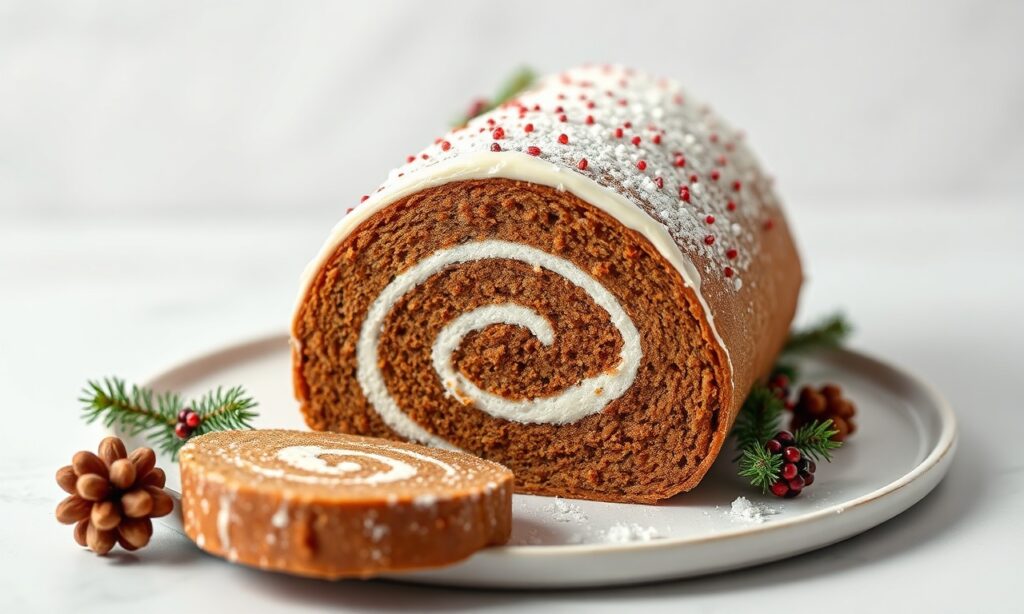
| Nutrient | Per Serving |
|---|---|
| Calories | 280 kcal |
| Protein | 5 g |
| Carbohydrates | 38 g |
| Fat | 10 g |
For more holiday baking ideas using spice-forward flavors, build your menu around ginger, cinnamon, and warm winter aromatics. If you want guidance on spice history and origins, visit spice and food spices for useful background.
FAQ
Why does my gingerbread roll cake crack when I roll it?
Cracks usually come from cooling the sponge unrolled, overbaking, or rolling too gently after the cake cools. Roll while warm, bake until just set, and handle with a dusted towel.
If you notice dryness, reduce bake time by 1–2 minutes next attempt. A slightly underbaked sponge often rolls more smoothly.
Can I use molasses or brown sugar instead of granulated sugar?
You can swap part of the sugar, but keep the total sweetness similar so the foam doesn’t collapse. Molasses adds moisture, which can change batter thickness and bake time.
For best results, test a small batch first. Aim for a sponge that still springs back and feels elastic.
How far in advance can I make this dessert?
Bake the sponge up to one day ahead, wrap it well, and store at room temperature. Fill and reroll the next day for clean slices and fresh flavor.
Once filled, refrigerate if your filling includes cream cheese or mascarpone. Serve after 20–30 minutes at room temperature.
What filling works best if I want a less sweet roll cake?
Use a tangier cream cheese filling with less powdered sugar, or choose pumpkin butter with a lighter spread. You can also thin whipped fillings slightly to avoid a heavy sweetness layer.
Start with a moderate amount of filling, then build only if you want more richness.
How do I keep the spiral looking neat when slicing?
Chill the filled roll for 20–30 minutes before slicing. Cold filling firms up, so the spiral holds its shape when you cut.
Use a serrated knife, slice with one steady motion, and wipe the blade between cuts.
See also: gingerbread roll cake