
Fresh tuna & avocado poke bowls deliver a clean, modern take on Hawaiian tradition. This guide helps you choose the right fish, prep the rice, and build a balanced bowl with bright toppings.
- What Makes Fresh Tuna & Avocado Poke Bowls Special?
- Essential Ingredients for a Fresh Tuna & Avocado Poke Bowl
- Prep and Cook Time
- Yield and Difficulty Level
- Ingredients List (Fresh Tuna & Avocado Poke Bowls)
- Instructions: How to Make Fresh Tuna & Avocado Poke Bowls
- Step 1: Prepare the Tuna
- Step 2: Marinate Briefly
- Step 3: Season and Protect the Avocado
- Step 4: Assemble the Bowl
- Step 5: Add Crunch and Finish
- Tips for Success: Creamy Avocado and Clean Tuna Texture
- Poke Sauce Variations for Tuna & Avocado Bowls
- Serving Suggestions: Build Visual Appeal and Better Texture
- Q&A: Fresh Tuna & Avocado Poke Bowls
- What is a fresh tuna poke bowl, and why do people love it?
- How do I choose tuna that’s safe for raw serving?
- Why does marinating time matter for poke texture?
- How ripe should the avocado be for poke?
- Can I make a poke bowl gluten-free?
- Key Takeaways
- Use sashimi-grade tuna and keep it cold until serving.
- Build flavor with shoyu/tamari, sesame oil, ginger, and lime.
- Keep texture by adding avocado last and finishing with crunch.
- Customize easily with classic poke sauce or spicy mayo.
In the vibrant world of raw-and-fresh bowls, few meals hit the sweet spot like tuna and avocado. You get tender fish, creamy avocado, crisp vegetables, and a salty-sour finish that makes every spoonful feel fresh. Originating in Hawaii, poke became popular worldwide because it works for both quick lunches and impressive dinners.
Whether you cook for one or meal-prep for the week, mastering the key parts pays off. Focus on fish safety, clean cuts, and a strong base of seasoned rice. Then you can turn your bowl into a flavor system you repeat every time you crave something light and satisfying.
What Makes Fresh Tuna & Avocado Poke Bowls Special?
Fresh tuna and avocado poke bowls stand out because they combine raw seafood with bright, simple seasonings. The goal stays consistent: let high-quality tuna taste like itself while the sauce adds depth.
Poke centers on diced fish, usually marinated briefly. You can learn the broader food context by reading about poke, including its Hawaiian roots and modern variations.
Essential Ingredients for a Fresh Tuna & Avocado Poke Bowl
Start with two anchors: sushi-grade tuna (often sold as sashimi-grade) and ripe avocado. Then add a rice base plus toppings that create contrast in taste and texture.
For rice, use short-grain sushi rice because it holds together well. If you want background on rice types, review rice and how cooking changes texture. For the tuna and marinade, use ingredients tied to classic umami flavors like soy sauce and ginger.
Base: Sushi Rice and a Light Seasoning
Cook or warm sushi rice, then let it cool slightly. Hot rice can warm the tuna and soften toppings fast.
Season rice lightly if you like, but keep the bowl balanced. Use a neutral base so the tuna marinade and toppings stay clear and distinct.
Protein: Tuna Selection and Handling
Choose tuna that the seller labels for raw consumption. That label matters because raw seafood must meet stricter handling standards.
To understand the broader fish-food safety concept, you can reference fish and general food handling practices. Keep tuna cold, minimize time at room temperature, and plate promptly.
Prep and Cook Time
This bowl stays fast if you stage ingredients first. Most of the work is prep and assembly, not cooking.
- Preparation: 15 minutes
- Assembly: 10 minutes
- Total Time: 25 minutes
Yield and Difficulty Level
This recipe makes enough for a satisfying meal for two people. It also scales well if you’re hosting.
Serves: 2 generous portions
Difficulty: Easy to Medium
Ingredients List (Fresh Tuna & Avocado Poke Bowls)
Use the exact amounts below for a classic, balanced bowl. If you love extra crunch, add cucumber or radish on top.
Keep your marinade ingredients simple so the tuna flavor remains the star.
- 8 oz sushi-grade fresh tuna, cut into ½-inch cubes
- 1 large ripe avocado, peeled, pitted, and cubed
- 2 cups cooked short-grain sushi rice, cooled
- 2 tbsp soy sauce (use tamari for gluten-free)
- 1 tbsp toasted sesame oil
- 1 tbsp finely chopped green onion
- 1 tsp freshly grated ginger
- 1 tsp toasted sesame seeds
- ½ tsp chili flakes (optional, for spice)
- 1 tsp mirin (optional, adds mild sweetness)
- 1 tbsp freshly squeezed lime juice
- Salt, to taste
- Optional toppings: cucumber, radish, edamame, seaweed salad
Instructions: How to Make Fresh Tuna & Avocado Poke Bowls
Follow the steps in order. Chilled tuna needs brief marination, while avocado tastes best when it stays fresh and firm.
Work cleanly and stage ingredients so assembly stays quick.
Step 1: Prepare the Tuna
Start with sushi-grade tuna. Pat it dry with paper towels, then cut it into uniform ½-inch cubes for even texture.
If you want more context about seafood preparation methods, see sashimi. Keep the tuna cold through the whole process.
Step 2: Marinate Briefly
In a bowl, combine soy sauce (or tamari), sesame oil, grated ginger, mirin (optional), lime juice, and chili flakes. Toss tuna cubes gently so you coat all pieces.
Marinate for about 5–10 minutes. Longer times can change the fish texture more than you want in poke.
Step 3: Season and Protect the Avocado
Cube ripe avocado gently. Add a pinch of salt and a splash of lime juice to slow browning and lift flavor.
Avocado is an oily, creamy fruit used often in fresh dishes. For ingredient background, review avocado and how ripeness affects texture.
Step 4: Assemble the Bowl
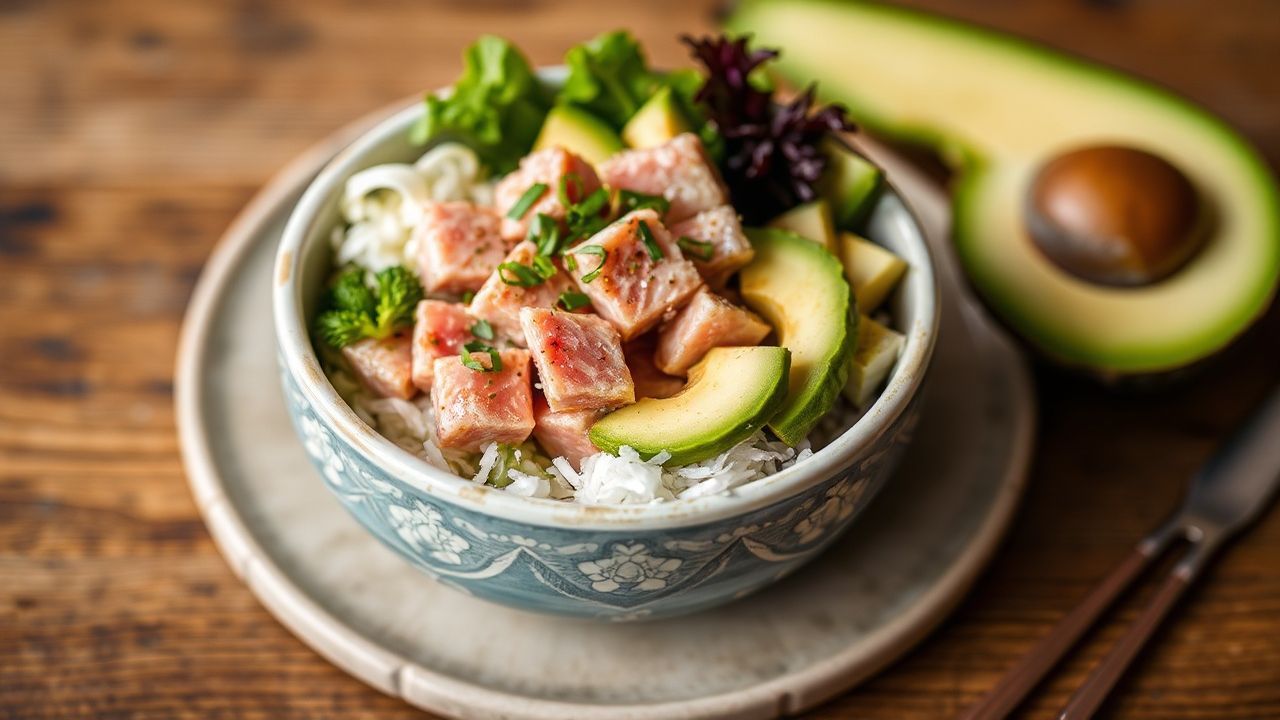
Place sushi rice into two bowls. Add marinated tuna and avocado side by side so each bite includes contrast.
Keep the colors layered: rice for neutral base, tuna for deep red, avocado for bright green. This makes the bowl easier to eat and more appealing.
Step 5: Add Crunch and Finish
Top with toasted sesame seeds and chopped green onion. Add cucumber, radish, or edamame for crunch and freshness.
If you use seaweed salad, add it at the end. Seaweed brings briny flavor and a different chew, which helps the bowl stay satisfying.
Serve promptly. Poke bowls taste best when fish and rice stay cool and toppings remain crisp.
Tips for Success: Creamy Avocado and Clean Tuna Texture
Small choices make a big difference here. You control texture with timing and temperature.
[TIP]Expert Insight: For the best bite, keep your rice cool but not icy, and marinate tuna only until the edges look glossy. This creates flavor without turning the cubes soft.
Then focus on avocado handling. Cut and season avocado right before assembly so it stays creamy and not watery.
[WARNING]Pro-Caution: Only eat tuna raw if it comes labeled for raw consumption and you can keep it cold up to serving time. If your tuna smells strong or looks dull after cutting, discard it.
For sauce, keep it balanced. Sesame oil adds aroma, while lime and soy add sharpness and salt. Too much acid can also change tuna texture.
Poke Sauce Variations for Tuna & Avocado Bowls
You can customize poke sauce without losing the classic profile. Start with shoyu/tamari and add heat or sweetness gradually.
For broader background on soy-based flavor, you can explore soy sauce. That helps you understand why even small changes in salt matter.
Classic Shoyu-Style
Use soy sauce, sesame oil, ginger, and a bit of lime. Add chili flakes if you want gentle heat.
This version highlights tuna sweetness and lets avocado round out the finish.
Spicy Mayo Style
Mix mayo with sriracha, then drizzle lightly. The sauce adds richness, so use it in a thin layer over the bowl.
Keep the tuna marinade lighter so the overall bowl tastes fresh instead of heavy.
Sweet Pineapple Ponzu-Style
Add finely chopped pineapple to a ponzu-like base (citrus plus soy). Sweetness can lift the tuna flavor, especially with fresh cucumber.
When you add fruit, keep it cold and add it last. Fruit juices can thin sauces quickly if you prep early.
Serving Suggestions: Build Visual Appeal and Better Texture
Serve your bowl layered and tidy. Use small piles for toppings, not one mixed mound, so each bite stays balanced.
Create texture with crunchy items like cucumber, radish, or edamame. For a gentle reference on seaweed as a category of ingredients, check seaweed.
If you want a finishing crunch, include furikake or toasted sesame seeds. These also bring an extra umami layer without adding more wetness.
Pair the bowl with a clean drink. A simple iced green tea or citrus-forward mocktail works well because it cuts richness.
| Nutritional Element | Per Serving |
|---|---|
| Calories | 420 kcal |
| Protein | 35 g |
| Carbohydrates | 28 g |
| Fat | 15 g |
If you want to go deeper on balanced bowl building, review key principles like ingredient freshness, texture contrast, and sauce restraint. Those choices affect flavor more than fancy add-ons.
Q&A: Fresh Tuna & Avocado Poke Bowls
These quick answers address the most common questions people ask before they try poke at home. Use them to cook with confidence.
What is a fresh tuna poke bowl, and why do people love it?
A poke bowl is diced raw fish served with rice, vegetables, and bold seasonings. People love it because you get fresh flavor plus easy customization for heat, crunch, and sauce.
How do I choose tuna that’s safe for raw serving?
Buy from a trusted supplier that labels tuna for raw consumption. Keep it cold from purchase to cutting, and use it soon after you open the package.
Why does marinating time matter for poke texture?
Acid and salt can change fish texture. Marinate only briefly (about 5–10 minutes) so the tuna stays tender without turning mushy.
How ripe should the avocado be for poke?
Choose avocado that yields slightly to gentle pressure. It should feel creamy but not collapse, so cubes stay intact when you serve.
Can I make a poke bowl gluten-free?
Yes. Use tamari instead of soy sauce, and check any pre-made sauces you add. Also watch for hidden gluten in toppings and condiments.
Key Takeaways
Fresh tuna & avocado poke bowls work because you control three things: quality, timing, and balance. Choose the right tuna, keep the bowl cool, and build layers with crisp toppings.
Once you nail that formula, variations come naturally. Keep the tuna marinade short, add avocado at the last moment, and finish with crunch so every bite feels fresh.
See also: fresh tuna