

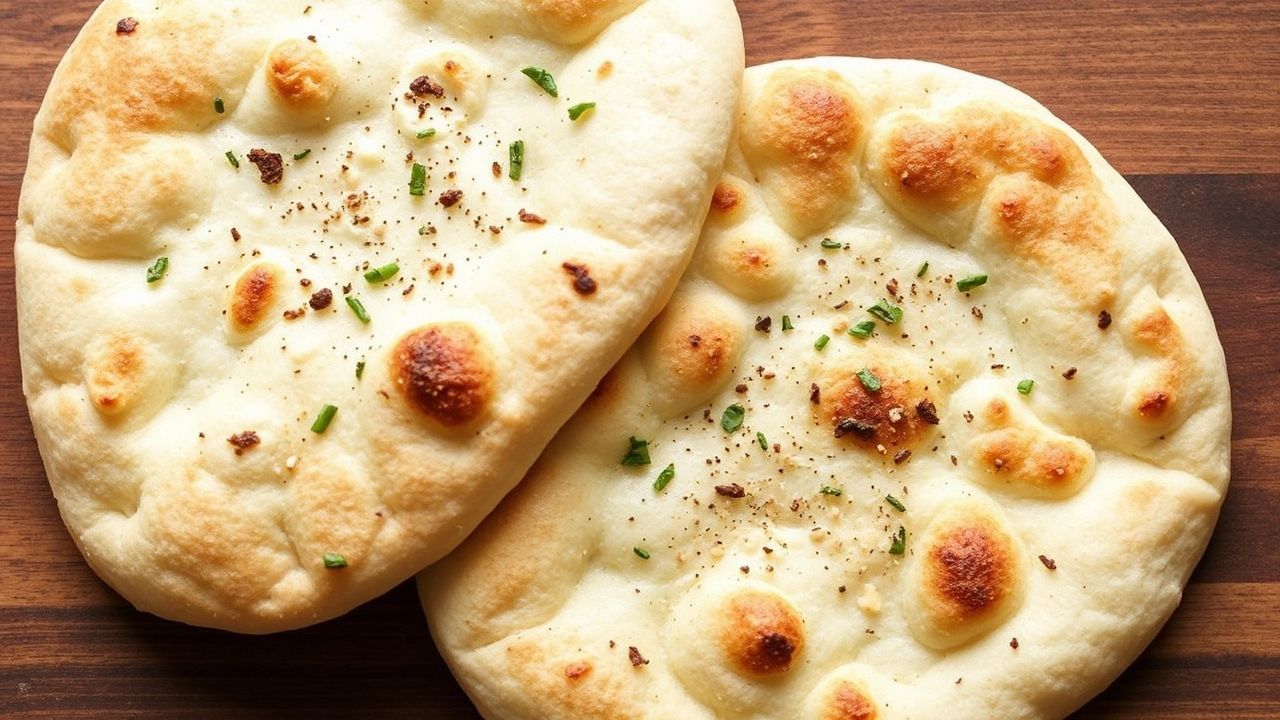
Fluffy naan in 30 minutes is possible when you skip yeast and rely on baking powder, yogurt, and smart heat control. This easy yeast-free bread recipe gives you soft, pillowy naan that works for curries, scooping, and quick meals.
- Prep and Cook Time
- Yield and Difficulty
- Choosing the Right Ingredients for Soft, Tender Naan
- Ingredients for Yeast-Free Naan
- Step-by-Step Guide: Mix, Rest, Shape, and Cook
- Tips and Tricks for Classic Naan Flavor at Home
- Serving Suggestions
- Q&A: Fluffy Naan Made Simple
- 1) What makes this naan recipe different from traditional naan?
- 2) Can I get fluffy naan without yeast?
- 3) What are the key ingredients for yeast-free naan?
- 4) Is this recipe gluten-free?
- 5) How do I cook naan for the best char and softness?
- Closing Remarks
- No yeast: leavening comes from baking powder plus baking soda.
- Short timeline: mix, rest 30 minutes, cook, then serve.
- Better texture: yogurt adds tenderness and helps the crumb stay soft.
- Classic finish: a hot skillet and a quick butter or ghee brush create the signature aroma.
Traditional naan often uses yeast, which needs time for fermentation. Here, the dough relies on chemical leaveners and rested hydration, so you still get air pockets and a tender bite. You also avoid the stress of proofing while keeping the flavor you expect from oven-like flatbreads.
For the best results, treat naan like a quick-cook bread, not like a dense flatbread. Keep your pan hot, roll your rounds evenly, and brush after cooking while the bread is still steaming. If you want the science behind the lift, see baking powder and how it reacts with moisture and heat.
Prep and Cook Time
Plan for a calm, hands-on cooking session. You mix in minutes, rest the dough briefly, and cook each naan quickly over high heat.
Preparation: 15 minutes
Resting time: 30 minutes
Cooking time: 10 minutes
Total: 55 minutes
Yield and Difficulty
This recipe makes enough for sharing. It scales well if you need more rounds for a family dinner.
Yield: 6 medium-sized naan breads
Difficulty level: Easy
Choosing the Right Ingredients for Soft, Tender Naan
Soft naan starts with good flour and correct leavening. All-purpose flour gives structure through gluten, which helps the dough puff and fold into tender layers.
For the chemical lift, use baking powder as your main rising agent. Add a small amount of baking soda to boost the reaction. If you want the background on these agents, read baking soda and gluten.
Yogurt improves tenderness and flavor. It also adds acidity, which helps baking powder perform well. Warm water binds the dough smoothly, then resting relaxes it so it rolls without springing back.
For richness, use ghee or melted butter. Fat slows down staling, so your naan stays soft longer. You can also add garlic, herbs, or nigella seeds for extra aroma.
Ingredients for Yeast-Free Naan
Use room-temperature yogurt for even mixing. If your yogurt is cold, warm it slightly so it blends with the flour and water without lumps.
Dry ingredients
• 2 cups all-purpose flour, sifted
• 1 tsp baking powder
• ½ tsp baking soda
• 1 tsp sugar
• 1 tsp salt
Wet ingredients
• ¾ cup plain yogurt (room temperature)
• ⅓ cup warm water (adjust as needed)
• 2 tbsp ghee or melted unsalted butter, plus extra for brushing
Optional toppings
• minced garlic, chopped cilantro, or nigella seeds
Step-by-Step Guide: Mix, Rest, Shape, and Cook
Follow these steps in order for consistent texture. The dough should feel soft and pliable, not dry, and not sticky enough to cling to your hands.
Before you start, set a skillet on medium-high heat. Aim for strong heat so the bread cooks fast and forms bubbles quickly. For more on how heat affects bread structure, see bread.
- Combine dry ingredients: Sift together all-purpose flour, baking powder, baking soda, salt, and sugar. Even distribution prevents flat spots.
- Add wet ingredients: Make a well in the center. Add yogurt, warm water, and ghee. Mix until the dough comes together.
- Knead gently: Knead for 5–7 minutes on a lightly floured surface. Stop when the dough turns smooth and elastic. If it feels too sticky, add flour a teaspoon at a time.
- Rest the dough: Cover and rest for 30 minutes at room temperature. This hydrates flour and helps chemical leavening start working at the right moment.
- Divide and shape: Punch down and divide into 6 portions. Roll each into a ball, then flatten into ovals about ¼ inch thick. Keep edges slightly thicker for better puff.
- Cook your naan: Place one naan on a hot skillet. Cook until bubbles appear and the bottom turns golden brown, about 1–2 minutes. Flip and cook the second side another 1–2 minutes, pressing gently.
- Butter and serve: Brush hot naan with melted ghee or butter immediately. Add garlic or herbs right after cooking for maximum aroma.
- Repeat: Cook remaining portions and serve warm.
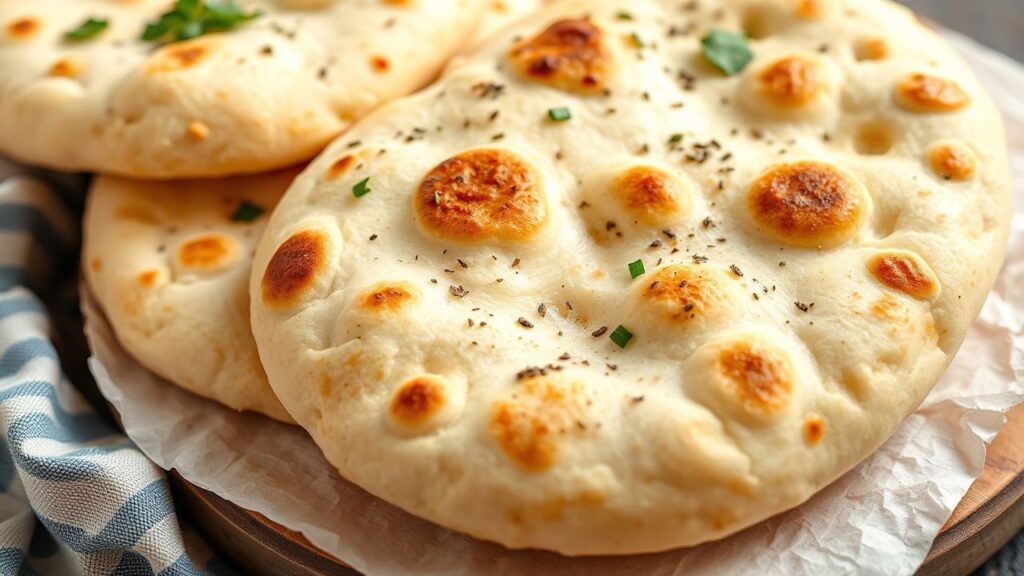
As you cook, you should see steam bubbles and light blistering on the surface. That visual cue tells you the bread is cooking through while staying tender. If your naan isn’t bubbling, raise heat slightly and check thickness.
For extra control, use a timer per side. Fast cooking protects softness and keeps the bread from drying out. You can also learn more about how heat and moisture shape baked goods through Maillard reactions, which drive the golden color.
Tips and Tricks for Classic Naan Flavor at Home
Flavor comes from two places: seasoning inside the dough and aroma added right after cooking. Because this recipe is quick, every step matters.
Enhance aroma: Mix minced garlic or chopped herbs into the dough before resting. You can also brush cooked naan with garlic butter for a richer top note.
Balance flour: If you want extra tenderness, you may replace up to ¼ cup of all-purpose flour with cake flour. Lower-protein flour can yield a softer crumb, but keep the rest the same for structure.
Don’t skip resting: Even though you skip yeast, the rest still improves texture. It lets dough relax so the gluten (or dough network) doesn’t fight your rolling.
Use the right pan: A cast-iron skillet holds heat well and supports blistering. Non-stick can still work, but you may get less char and less browning.
Cook in batches: Give each naan room. Crowding drops pan temperature, which reduces bubbles and delays browning.
Serving Suggestions
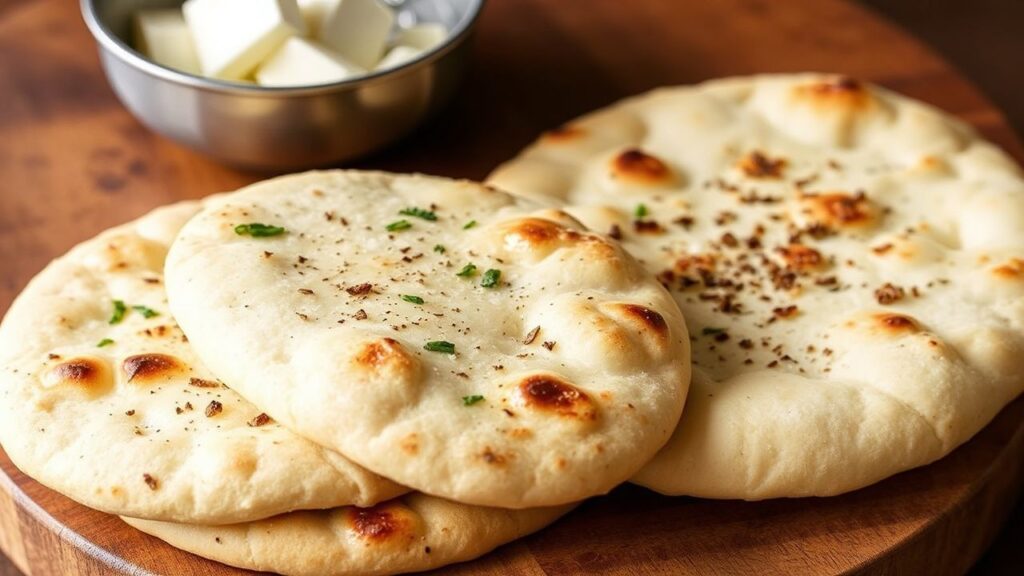
Serve naan hot for the best stretch and scoop. The warm bread pairs naturally with saucy dishes and creamy curries.
Try it with butter chicken, chana masala, or lentil dal. Garnish with chopped cilantro or add a spoon of garlic butter to the center for extra richness.
If you want a quick street-food style meal, use naan as a wrap. Add grilled vegetables, paneer, and mint chutney, then fold and warm briefly in the skillet.
For pairing ideas, consider how bread complements dishes through texture and moisture balance. If you want broader background, see Indian cuisine and explore how flatbreads work across regions.
For storage, keep leftovers in an airtight container at room temperature. Consume within 2 days for best softness, and rewarm in a skillet or microwave with a damp towel to restore steam.
| Nutrient | Per Serving (1 naan) |
|---|---|
| Calories | 180 |
| Protein | 5g |
| Carbohydrates | 32g |
| Fat | 4g |
If you bake often, compare leavening outcomes between recipes. Baking powder reacts differently than yeast fermentation, and understanding that chemistry helps you troubleshoot results. For the mechanics, read leavening agent.
Want more flatbread practice? Your best next step is to try other Indian-style breads with similar cooking methods, then compare dough hydration and thickness. Explore our related guides using internal links so you can keep visitors moving.
Check also: Indian flatbread recipes and quick dough techniques for more texture tips and shaping ideas.
Q&A: Fluffy Naan Made Simple
Quick questions help you cook with confidence. Use these answers while you prepare your dough so you don’t lose momentum mid-recipe.
Each response focuses on yeast-free results, because baking powder and yogurt need slightly different handling than traditional fermented doughs.
1) What makes this naan recipe different from traditional naan?
Traditional naan often uses yeast and longer rises. This version skips yeast and uses baking powder plus a small amount of baking soda for lift.
You still get a soft, tender crumb because yogurt hydrates the dough and adds acidity, which supports the leavening reaction.
2) Can I get fluffy naan without yeast?
Yes. Chemical leaveners create gas bubbles when they get warm and damp, so the naan puffs quickly as it cooks.
Resting also matters. The dough relaxes, which helps thickness stay even and supports a light interior.
3) What are the key ingredients for yeast-free naan?
You need simple pantry items: all-purpose flour, baking powder, baking soda, salt, sugar, and plain yogurt. Ghee or butter adds flavor and tenderness.
Warm water helps the dough come together, then proper kneading builds elasticity for rolling.
4) Is this recipe gluten-free?
No. It uses wheat flour, so it contains gluten. If you need gluten-free naan, you must use a gluten-free flour blend and often additional binders.
Texture and puffing can change, so test with small batches and adjust hydration carefully.
5) How do I cook naan for the best char and softness?
Preheat your skillet until it’s very hot. Cook each naan quickly so it develops golden spots without drying out.
Flip when bubbles rise, then press gently with a spatula to contact the pan for better browning. Finish with butter or ghee right after cooking.
Closing Remarks
Fluffy naan made simple means you get the comfort of naan without the yeast wait. You mix, rest, and cook in one smooth flow, then serve warm bread that scoops sauce cleanly.
If you keep the pan hot, roll to about ¼ inch thickness, and brush with ghee or butter right away, the results stay soft and flavorful. You’ll reach that classic naan feel with a recipe built for busy nights.
See also: yeast-free naan