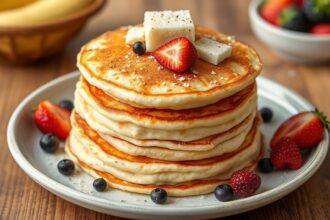
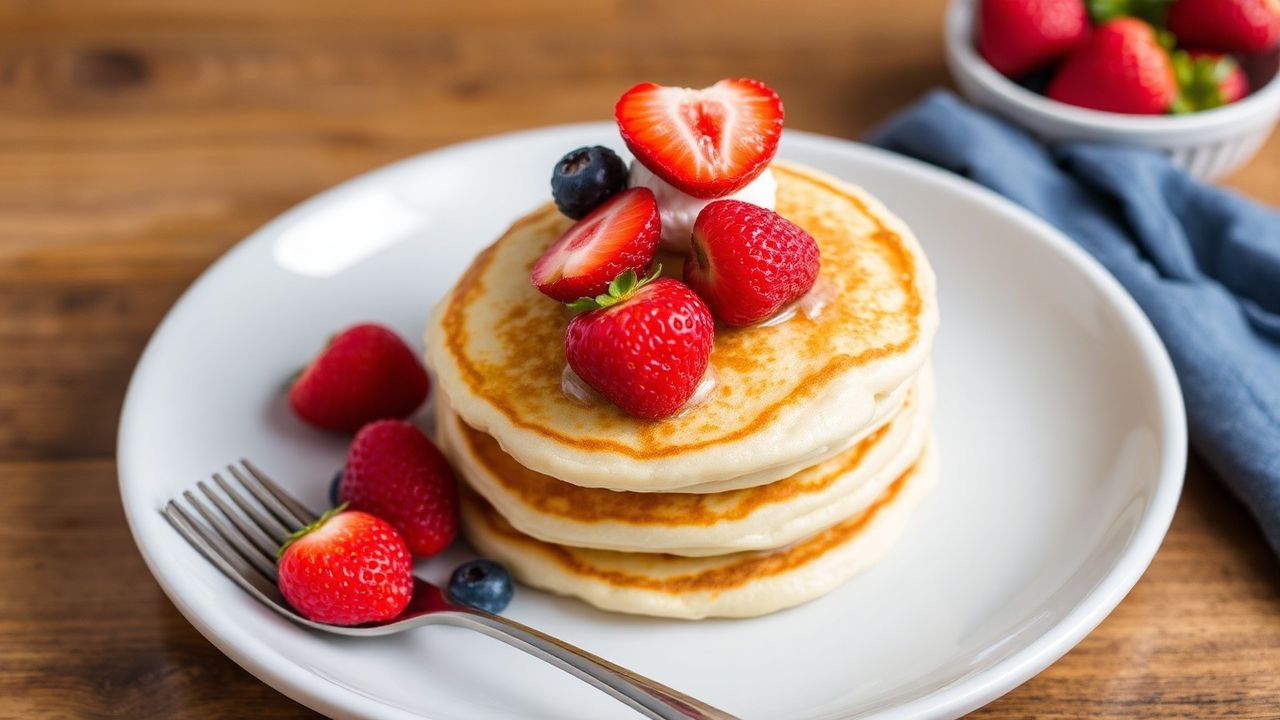
keto pancakes made with coconut flour deliver a light, tender stack while keeping net carbs low for your morning routine. With the right mixing order and a short rest, you get fluffy texture instead of a dense bite.
- At a Glance: What You’ll Get with These Fluffy Keto Pancakes
- Prep and Cook Time
- Yield and Portion Fit
- Difficulty Level
- Ingredients for Coconut Flour Keto Pancakes
- Instructions: How to Make Fluffy Keto Pancakes
- Tips for Perfect Fluffy Keto Pancakes
- Serving Suggestions That Keep Pancakes Keto
- Nutrition Snapshot
- Storage and Reheating
- Why Coconut Flour Works for Keto Pancakes
- Final Notes
- FAQ
- Low net carbs: Coconut flour is high in fiber, which can lower net carbs.
- Fluff comes from technique: Rest the batter and aerate eggs for lift.
- Quick and repeatable: You can prep in about 10 minutes.
- Cook with control: Medium-low heat prevents dryness and fast browning.
Why does this coconut flour method work? Coconut flour absorbs more liquid than most nut flours. When you rest the batter, it fully hydrates and helps the pancakes set without turning dry.
For context, coconut flour fits a ketogenic breakfast because it supports low digestible carbs and adds fiber. If you want a background on the keto approach, read about the ketogenic diet. For general ingredient behavior in cooking, see coconut and how coconut-derived flours act in recipes.
Also, fat and protein strongly shape pancake structure. Eggs provide structure, and fats carry heat so the crumb stays soft. For fundamentals on how eggs work in cooking, review egg science.
At a Glance: What You’ll Get with These Fluffy Keto Pancakes
You get a reliable batter that cooks evenly and keeps a tender crumb. This recipe uses simple steps you can repeat, even on busy mornings.
The method also accounts for coconut flour’s fast thickening. If you respect the rest time and use steady heat, the final texture stays fluffy and cohesive.
Prep and Cook Time
Readiness: 10 minutes. Cooking: 15 minutes. Total time for a single batch stays around 25 minutes.
This timing works with medium-low heat and a non-stick skillet. If you double the batch, cook smaller rounds so the centers set without burning the edges.
Medium-low heat matters because coconut flour browns quickly. Too much heat can dry the surface before the middle finishes cooking through.
Yield and Portion Fit
Makes about 8 pancakes. This usually serves 2 to 3 people depending on how thick you pour and how big your portions are.
Portion control helps keep net carbs and calories aligned with low-carb plans. Coconut flour’s fiber can reduce net carbs, but toppings still change your final totals.
If you want a larger breakfast, scale ingredients proportionally. Then rest the extra batter in the fridge and cook it within about an hour for best texture.
Difficulty Level
Easy. You use common tools like a whisk, bowls, and a skillet. You also rely on one core skill: egg aeration.
Most “dense keto pancakes” problems come from skipping the rest or rushing the heat. When you rest the batter, coconut flour hydrates and the crumb forms better.
For measurement accuracy, use a digital kitchen scale if you have one. Coconut flour compacts easily, so consistent weights reduce texture swings.
Ingredients for Coconut Flour Keto Pancakes
Gather everything before you start. Coconut flour works best when you sift it and measure carefully. If you pack it, your batter turns too thick and cooks dry.
Core ingredients include coconut flour, eggs, unsweetened almond milk, melted coconut oil or butter, a keto sweetener, baking powder, vanilla, and salt. If you want background on the plant milk category, review almond milk.
Also choose an aluminum-free baking powder. It supports clean flavor and dependable lift in low-carb baking.
- 1/4 cup finely sifted coconut flour
- 4 large eggs, room temperature
- 1/2 cup unsweetened almond milk (or other low-carb plant milk)
- 2 tbsp melted coconut oil or unsalted butter
- 1 tbsp erythritol or preferred keto-friendly sweetener
- 1 tsp aluminum-free baking powder
- 1/2 tsp pure vanilla extract
- 1/4 tsp sea salt
Instructions: How to Make Fluffy Keto Pancakes
Use the sequence for best lifts: aerate eggs first, then combine wet and dry components. Egg aeration builds structure, and the rest time lets coconut flour hydrate.
Keep heat medium-low throughout. Coconut flour browns quickly, so stable heat helps the centers cook with soft edges.
- Whisk the eggs in a large bowl until frothy. You trap air and build structure for a lighter crumb.
- Stir in almond milk, melted coconut oil, vanilla, and the sweetener. Mix until the batter looks smooth.
- In a separate bowl, sift together the coconut flour, baking powder, and salt. Sifting reduces lumps and improves even hydration.
- Fold dry into wet. Aim for a thick but pourable batter. Overmixing knocks out air.
- Let the batter rest for 5 minutes. Coconut flour thickens as it hydrates.
- Preheat a non-stick skillet on medium-low heat and lightly grease it. Use a small ladle for consistent pancake sizes.
- Pour about 1/4 cup batter per pancake. Cook 3–4 minutes until edges set and the top loses wet sheen.
- Flip carefully and cook 2–3 minutes more. Keep heat steady to avoid burning.
- Move pancakes to a warm plate. Finish the batch and keep them warm with a low oven if needed.
Tips for Perfect Fluffy Keto Pancakes
Small choices drive big results with coconut flour. Use room-temperature eggs and sifted flour to avoid dense outcomes.
Most importantly, do not skip the rest. Coconut flour needs time to absorb liquid and set the crumb so pancakes stay tender.
- Measure coconut flour by spooning into a measuring cup and leveling. Do not scoop directly from the bag.
- If batter looks too thick after resting, add 1–2 tablespoons almond milk. Add slowly to keep batter thick.
- Control heat closely. Medium-low helps the center cook without drying the edges.
- For extra lift, separate egg whites and whip them first.
Protein and fat also affect texture. Eggs provide structure, and melted fats help carry heat and keep the crumb moist during cooking. For general protein structure concepts, read about protein.
Expert Insight: Separate one or two egg whites, whip to soft peaks, then fold them into the batter right after mixing. This adds air for lighter keto pancakes without changing the coconut flour flavor.
Because coconut flour is absorbent, you may notice thicker batter than almond-flour recipes. That difference is normal, and the rest time corrects it by fully hydrating the flour.
Pro-Caution: Coconut flour absorbs liquid quickly. If you add too much dry flour or skip the batter rest, your pancakes often turn dry and crumbly even if they look cooked through.
Also watch for over-browning. If the pan runs hot, the outside sets before the middle finishes, which can feel firm or slightly gritty.
Serving Suggestions That Keep Pancakes Keto
Serve your keto pancakes with toppings that match low-carb goals. Fresh berries in measured portions and sugar-free syrups work for many people.
Add healthy fats and crunch for better texture. Try toasted unsweetened coconut, chia seeds, or a small spoon of nut butter.
If you want brighter flavor, use lemon zest or fresh mint. These add aroma without adding meaningful carbs.
Nutrition Snapshot
Per serving (3 pancakes), this recipe typically provides about 210 calories, 10 g protein, 16 g fat, and 4 g net carbs. Values shift with sweetener type and topping choices.
Net carbs reflect total carbs minus fiber. Coconut flour contains high fiber, which often lowers net carbs compared with wheat-based flours. For a refresher on how fiber affects digestion, see dietary fiber.
For a broader view of carb counting concepts, review carbohydrate. For overall fat roles in cooking, see fat.
| Nutrient | Per Serving (3 pancakes) |
|---|---|
| Calories | 210 |
| Protein | 10g |
| Net Carbs | 4g |
| Fat | 16g |
Storage and Reheating
Store cooked pancakes in an airtight container in the refrigerator for up to three days. Add parchment paper between stacks to prevent sticking.
When you reheat, use gentle heat. A low-temperature skillet or toaster oven keeps the pancake softer and helps preserve a lighter crumb.
A microwave can work, but it can make coconut flour pancakes softer in a less appealing way. If you microwave, use short bursts and avoid overheating.
Why Coconut Flour Works for Keto Pancakes
Coconut flour has high fiber and lower digestible carbohydrate content, which supports low-carb baking. It also absorbs liquid, so it can create a tender crumb when you hydrate it fully.
The hydration effect is the key. When coconut flour absorbs moisture, it forms a thicker batter and helps pancakes set without wheat flour starch.
Compared with other flours, coconut flour requires patience. Egg aeration and batter rest build the structure so pancakes cook up fluffy instead of flat.
Final Notes
These coconut flour keto pancakes reward careful measuring and simple technique. Whipped eggs, a short rest, and medium-low heat create a consistently fluffy stack.
Use this as your base recipe, then test small variations. Add lemon zest, a touch of cinnamon, or chopped nuts, and keep portions steady so the carb count stays on plan.
Try cooking one test pancake first if you’re new to coconut flour. That quick check helps you dial in thickness and heat before you cook the whole batch.
See also: keto pancakes
FAQ
Are these pancakes truly keto-friendly?
Yes. Coconut flour, eggs, healthy fats, and a sugar-free sweetener keep net carbs low per serving. Your final numbers depend on portion size and toppings.
To keep keto consistent, use measured sweetener and stick to low-carb toppings. If you add fruit or syrup, track the carb impact.
Can I swap almond flour for coconut flour?
You can’t do a straight swap. Almond flour absorbs less liquid than coconut flour, so the batter will run thinner and the texture will shift.
If you substitute, you usually need less almond flour and more liquid. Even then, expect a denser result unless you adjust and test.
How do I make these pancakes dairy-free?
Use melted coconut oil or a dairy-free plant butter instead of butter. Then confirm your baking powder is aluminum-free, and check labels for hidden dairy ingredients.
Choose unsweetened plant milk such as almond milk to keep the batter dairy-free.
Can I freeze leftovers?
Yes. Cool pancakes completely, then freeze in a single layer before stacking. This prevents them from clumping together.
Reheat from frozen in a skillet or toaster oven for best texture. Gentle heat helps keep the crumb soft.
What causes dense pancakes and how do I fix it?
Dense pancakes usually come from over-measuring coconut flour, skipping the batter rest, or under-whisking the eggs. Coconut flour needs hydration, and eggs need enough aeration for lift.
Measure carefully, sift the dry ingredients, and let the batter rest for 5 minutes. Then cook on medium-low and avoid rushing the flip.