
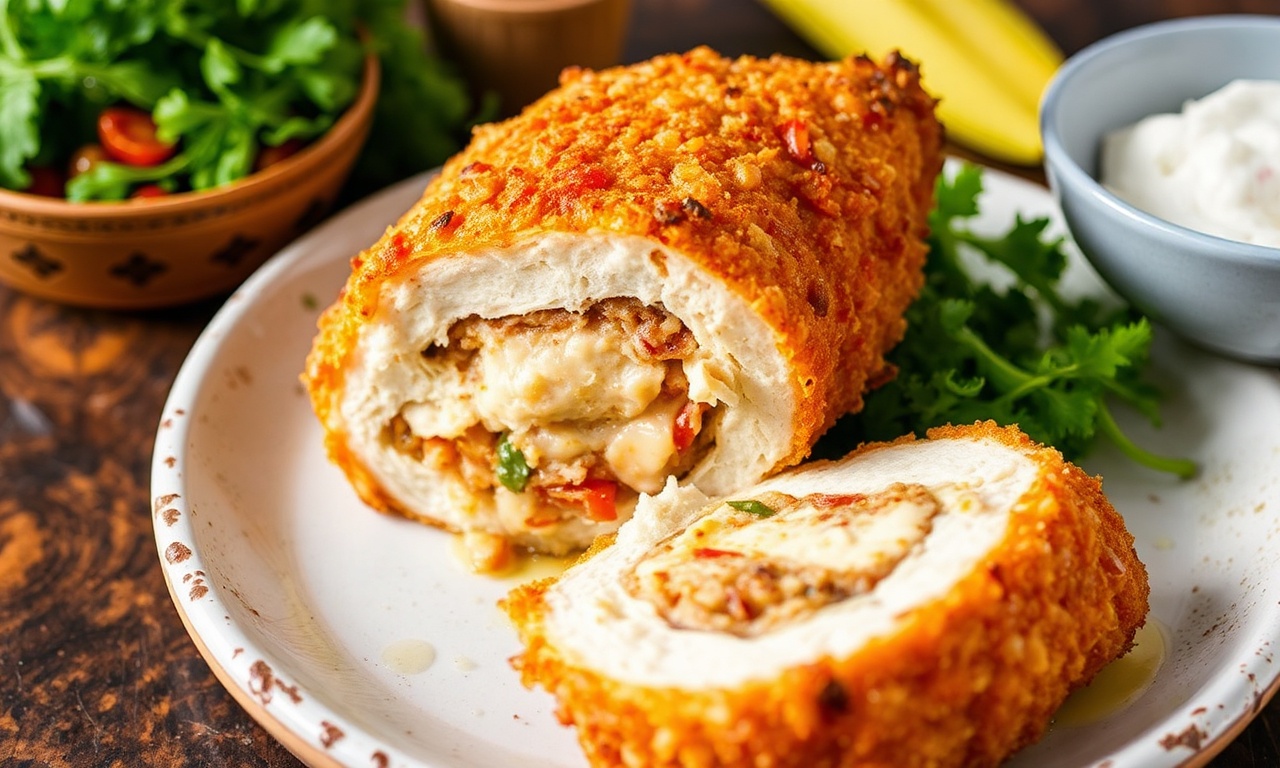
The Best Crispy Filipino Stuffed Chicken (Rellenong Manok) delivers a rare balance: crisp skin outside and savory, juicy filling inside. Filipino celebrations often call for showstopper food, and this dish fits that role perfectly.
- The Best Crispy Filipino Stuffed Chicken: What It Really Is
- Origins and Cultural Significance of Rellenong Manok
- Prep and Cook Time, Yield, and Difficulty
- Mastering the Perfect Filling: Ingredients and Flavor Combinations
- Step by Step to Crispy Perfection: Cooking Techniques and Tips
- Step 1: Prepare the Filling
- Step 2: Season and Bind
- Step 3: Stuff and Seal the Chicken
- Step 4: Dredging and Coating
- Step 5: Deep Fry Until Golden and Cooked Through
- Step 6: Rest, Drain, and Slice
- Chef’s Notes: Troubleshooting and Flavor Variations
- Make-Ahead Without Losing Crispness
- Variations That Still Feel Like Rellenong Manok
- Texture Tip for a Harder Crunch
- Common Issue: Filling Leaks
- Serving Suggestions and Pairings for an Unforgettable Meal
- FAQ: The Best Crispy Filipino Stuffed Chicken (Rellenong Manok)
Rellenong Manok takes classic home-style ingredients and turns them into a festive centerpiece. First, you stuff a deboned chicken with a flavorful mix, then you seal it and fry until the crust turns golden and audible.
At a Glance: Best Results for Crispy Rellenong Manok
- Dry the chicken well to help the breading stick and crisp up fast.
- Bind the filling with eggs so it stays inside while frying.
- Use the right oil temperature for crunch, not greasy coating.
- Rest before slicing so juices set and the crust stays crisp.
The Best Crispy Filipino Stuffed Chicken: What It Really Is
Rellenong Manok is Filipino stuffed chicken. Cooks debone the chicken, fill the cavity with a seasoned mixture, then reassemble it for frying or roasting.
What makes it “best” is texture contrast. You get a shatter-crisp exterior from coating and hot oil, plus a tender interior that comes from properly cooked chicken and well-bound filling.
Origins and Cultural Significance of Rellenong Manok
Filipino holiday cooking favors dishes that feed many people and look impressive. Stuffed chicken fits that tradition because it serves well and looks like a centerpiece on the table.
Across Filipino regions and families, recipes vary by stuffing mix and spice level. Still, the core idea stays the same: turning everyday ingredients into a celebratory meal. For background on Filipino cuisine, see Filipino cuisine.
Prep and Cook Time, Yield, and Difficulty
Plan your schedule so you can focus during frying. Crisping demands steady heat, and stuffing needs time to cool slightly before you bind it.
- Preparation Time: 45 minutes
- Cooking Time: 1 hour 15 minutes
- Total Time: 2 hours
Yield: Serves 6 generous portions.
Difficulty Level: Medium. You need patience for clean deboning, careful sealing, and consistent frying.
Mastering the Perfect Filling: Ingredients and Flavor Combinations
The filling builds the “wow” flavor in every slice. For best results, use a mix that cooks down evenly and binds into a firm texture.
Ground chicken works like a base, while vegetables add sweetness and aroma. Mushrooms deepen the savory profile, and carrots add a mild, earthy balance.
Seasoning matters because stuffed chicken tastes best when the filling has clear flavor. If you want a deeper understanding of meat and poultry cuts, read poultry and how cooking affects texture.
Core Filling Ingredients (Reliable and Crispy-Friendly)
Use this filling list as a tested framework. It creates a cohesive stuffing when you bind it with eggs and cook off excess moisture.
For best practice in breading science, remember that moisture causes coating to fail. Keep the filling thick, not wet, so the crust stays crisp after frying.
- 1 whole chicken (about 3–4 lbs), cleaned and deboned, bones reserved for broth
- 2 tbsp vegetable oil
- 1 medium onion, finely chopped
- 4 cloves garlic, minced
- 1 cup button mushrooms, diced
- 1 cup carrots, finely diced
- 1/3 cup raisins
- 1/2 cup cooked chicken breast, shredded
- 2 large eggs, beaten
- 1/4 cup chicken broth (preferably homemade from reserved bones)
- 1 tsp ground black pepper
- 1/2 tsp ground nutmeg
- Salt to taste
- 1 cup all-purpose flour (for dredging)
- 2 large eggs (for coating)
- 1 cup fine breadcrumbs
- Vegetable oil for deep frying
Optional boosts that still fit the dish style include extra black pepper or a touch more nutmeg. Keep changes small so you don’t overpower the classic balance of savory and gently sweet notes from raisins.
Cooking the Filling So It Stays Put
Cook onions and garlic first until fragrant. Next, sauté mushrooms and carrots until moisture drops and the mixture looks thick.
Stir in raisins and shredded chicken, then simmer briefly with broth. When it mostly absorbs, cool it slightly and fold in beaten eggs to bind.
To understand why cooking moisture matters for texture, review Maillard reaction. Crisping relies on surface browning, and extra water blocks that crisp stage.
Step by Step to Crispy Perfection: Cooking Techniques and Tips
Now you build the exterior crunch. You’ll coat in flour, egg, then breadcrumbs, and you’ll fry at a temperature that cooks through fast without burning.
For stuffed chicken, the order matters. If you skip drying, you’ll lose crust adhesion. If you fry too cool, the coating absorbs oil and turns heavy.
Step 1: Prepare the Filling
Heat 2 tbsp vegetable oil in a large pan. Sauté the chopped onion and garlic until translucent and aromatic, about 3–4 minutes.
Add diced mushrooms and carrots. Cook 5 minutes, stirring often, until the mixture looks drier and vegetables soften.
Step 2: Season and Bind
Stir in raisins and the shredded cooked chicken. Cook 2 minutes so flavors blend.
Pour in chicken broth and season with black pepper, nutmeg, and salt. Simmer until mostly absorbed, about 3 minutes.
Remove from heat and let cool slightly. Mix in beaten eggs to bind the filling so it holds together when inside the chicken.
Step 3: Stuff and Seal the Chicken
Stuff the filling into the cleaned chicken cavity. Use kitchen twine to truss and secure it so filling doesn’t spill while frying.
Step 4: Dredging and Coating
Set up three shallow dishes: flour, beaten eggs, and breadcrumbs. Coat the stuffed chicken with flour first, then dip into egg, then press firmly into breadcrumbs.
Take 30 seconds to press the breadcrumbs well. A dense crust helps prevent oil seepage and creates that crisp bite you expect.
Step 5: Deep Fry Until Golden and Cooked Through
Heat enough vegetable oil to fully submerge the chicken. Maintain about 350°F (175°C) for steady frying.
Lower the chicken gently into the hot oil. Fry until golden and crispy, about 12–15 minutes per side, adjusting for size.
Use a meat thermometer and check the internal temperature reaches 165°F (74°C). If you want background on food safety and poultry temperatures, see food safety.
Step 6: Rest, Drain, and Slice
Remove the chicken carefully and drain on a wire rack. This keeps airflow under the crust so it stays crisp rather than steaming in pooled oil.
Rest for 10 minutes before slicing. Then cut across the stuffed sections so each slice shows filling and keeps the crust intact.
Chef’s Notes: Troubleshooting and Flavor Variations
Great crisp chicken depends on a few control points. Use these notes to fix common issues quickly and keep flavor consistent.
When your first attempt leaks or browns unevenly, don’t panic. Adjust one variable at a time: binding, trussing tightness, or oil temperature.
Make-Ahead Without Losing Crispness
You can prepare the filling a day ahead. Cover and refrigerate it, then bring it out long enough to stuff comfortably.
Chilled filling can stiffen well, which helps sealing. Still, stuff when it’s firm but workable, not frozen.
Variations That Still Feel Like Rellenong Manok
Swap chicken broth for mushroom broth if you prefer a deeper vegetarian-friendly direction in the filling. It stays flavorful while keeping the dish concept intact.
You can also add more diced vegetables like bell peppers for extra crunch. Keep the filling cooked down so moisture doesn’t weaken the coating.
Texture Tip for a Harder Crunch
For extra crispness, double-dip: egg, breadcrumbs, then egg again, then breadcrumbs. This thickens the crust and creates a stronger bite.
Double coating works best when you fry at steady temperature. If the oil drops after adding the chicken, let it recover before you keep frying.
Common Issue: Filling Leaks
If filling leaks, it usually means the stuffing wasn’t bound enough or the chicken wasn’t sealed tightly. Eggs help bind, but the filling must also be thick after simmering.
Truss tighter and keep the cavity packed evenly. Also ensure the breadcrumb layer covers smooth surfaces so oil won’t reach weak spots.
Serving Suggestions and Pairings for an Unforgettable Meal
Serve Rellenong Manok on a platter with fresh herbs and citrus. A little brightness lifts the rich, savory filling and keeps every bite balanced.
Garnish with calamansi or lemon wedges, plus cilantro sprigs if you like a fresh herbal note. This matches the dish’s fried crunch without changing the classic flavor profile.
For sides, garlic fried rice works well because it soaks up savory drippings. Pair with atchara or a simple pickled cucumber salad for acidity.
If you want dipping sauce, keep it sharp and tangy. A vinegar-garlic-chili blend complements the crust and cuts through fat.
For more context on regional Filipino fermented or pickled flavors, you can reference atchara. For general spice and culinary balance, read nutmeg.
Nutritional Awareness (Practical and Realistic)
Stuffed fried chicken is calorie-dense because it includes breading and cooking oil. Portions matter, especially at family gatherings.
If you plan for a lighter meal, keep sides high in fiber like vegetables and focus on smaller slices per person.
| Nutrient | Per Serving |
|---|---|
| Calories | 480 kcal |
| Protein | 38 g |
| Carbohydrates | 20 g |
| Fat | 25 g |
FAQ: The Best Crispy Filipino Stuffed Chicken (Rellenong Manok)
These answers help you cook with confidence. Use them when timing, stuffing, or crispness becomes tricky.
What makes Rellenong Manok crispy instead of soggy?
You need a dry chicken exterior, thick bound filling, and steady hot oil. If the filling leaks or the oil temperature drops too much, the coating absorbs oil and turns soft.
Can I bake Rellenong Manok instead of deep-frying?
Yes, you can bake for a different texture, but crispness will vary. For crunch, deep-frying gives the most reliable crust. If you bake, keep coatings thick and cook until the chicken reaches safe internal temperature.
How do I prevent the stuffing from leaking during cooking?
Bind the filling with eggs and simmer it until thick. Then truss the chicken tightly, and avoid overpacking the cavity so pressure doesn’t split the seam.
What oil temperature should I use for the best crust?
Use about 350°F (175°C) for consistent browning. If your oil runs cooler, the crust absorbs oil; if it runs too hot, the outside browns before the chicken finishes cooking.
How long should I rest before slicing?
Rest for 10 minutes on a wire rack. This step helps juices set and helps the crust stay crisp instead of steaming when you cut.
See also: Crispy Filipino