
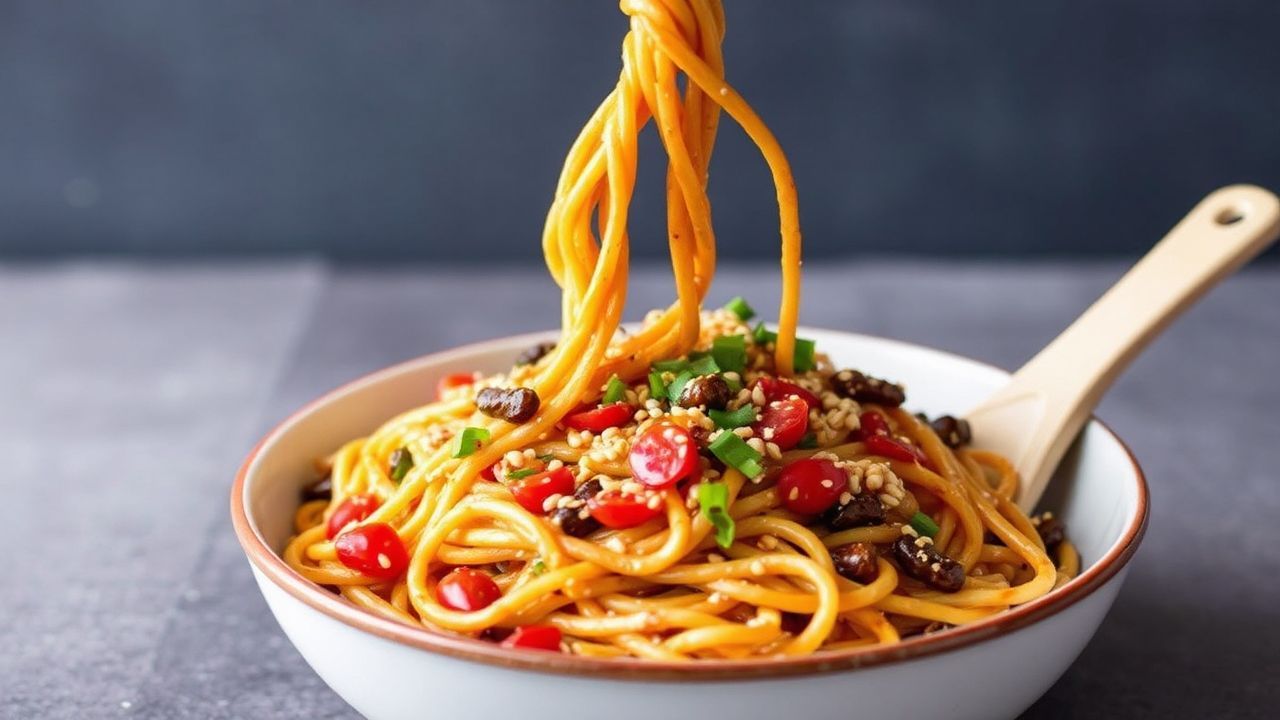
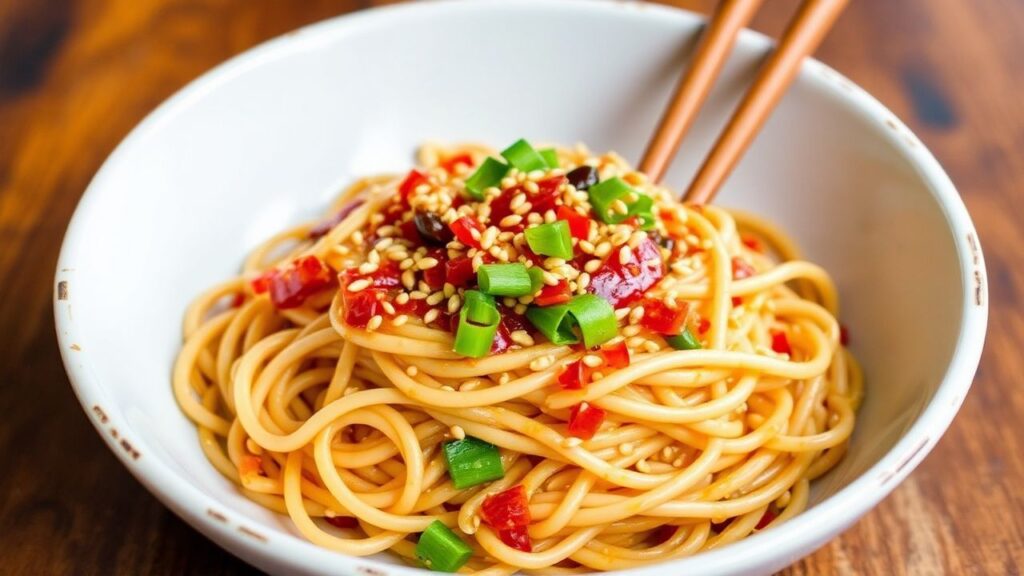
Fiery Sesame Noodles deliver a fast, bold bowl of flavor with a creamy, heat-forward meatless sauce. You get the nutty aroma of sesame plus the savory depth of soy, so each twirl tastes rich and satisfying. This recipe keeps weeknight cooking simple while still giving you restaurant-style heat and gloss.
At a Glance
- Focus: Fiery sesame sauce made with tahini, soy, and chili garlic.
- Time: Cook noodles fast, then mix and warm the sauce.
- Texture: Rinse noodles to control starch and prevent clumps.
- Heat control: Add chili in small steps to match your spice level.
Whether you go fully vegan or just want more meatless meals, this dish brings real umami. The key comes from balancing nutty tahini with tangy vinegar and a touch of sweetness. You then warm the sauce briefly so the sesame flavor blooms without overcooking the garlic.
Fiery Sesame Noodles work for a quiet dinner or a crowd. They also reheat well when you store sauce and noodles separately. If you like sesame-forward noodle bowls, this version gives you a spicy, creamy coating that clings to every strand.
Fiery sesame noodles pair chewy wheat noodles with a silky sauce built for heat, nuttiness, and savory depth. This meatless sauce uses tahini for body, soy sauce for umami, and chili garlic sauce for a steady burn. The result feels bold but stays easy to repeat at home.
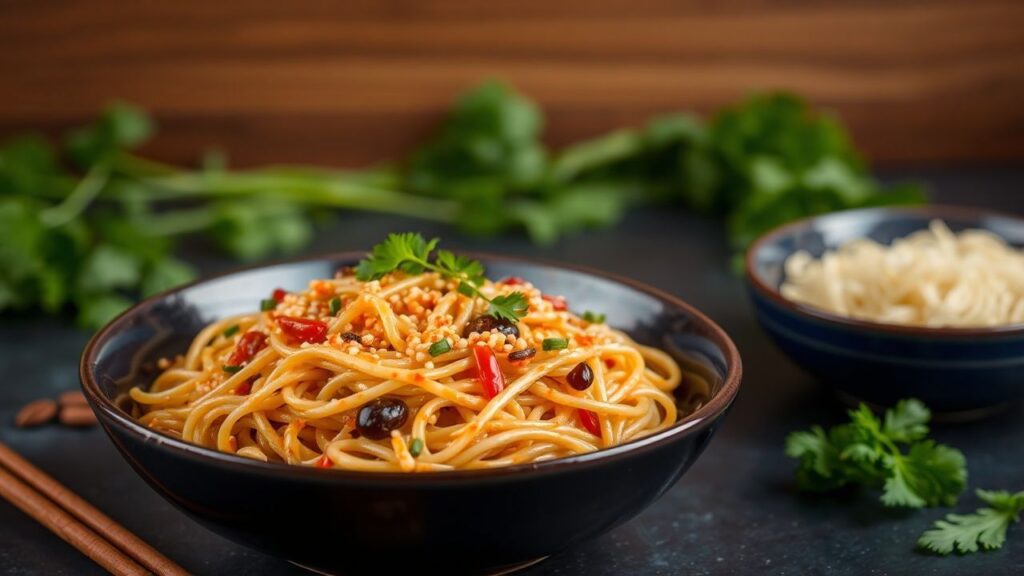
For the flavor base, tahini acts like a creamy carrier for sesame notes. Tahini is simply sesame paste, and sesame itself is widely used as a flavoring ingredient across many cuisines. If you want to understand why sesame tastes so intense, see Sesame for background on the seed’s oil-rich character.
Because the sauce includes chili garlic, it also leans into the way heat compounds spread across the palate. Chili flavor comes from capsaicinoids, and you can dial intensity by adding more or less chili. Learn the basics of capsaicin at Capsaicin.
Why Fiery Sesame Noodles Taste “Diner-Style”
You get that diner-style effect from three technique choices: rinse the noodles, warm the sauce, and toss thoroughly. First, rinsing reduces excess surface starch that can make noodles gummy. Then, warming the sauce helps it coat better and intensifies sesame aroma.
Second, the sauce uses layered seasoning. Soy sauce provides savory, while rice vinegar adds brightness. A small amount of sweet balances the heat so the bowl tastes rounded instead of harsh.
For more context on fermentation-based soy flavors, refer to Soy sauce. For why sesame oil matters in cooking, check Sesame oil.
Prep and Cook Time
Timing stays tight for weeknights. You boil the noodles while you whisk the sauce, then warm and toss. The bowl comes together in about 25 minutes from start to finish.
- Readiness: 15 minutes
- Cooking: 10 minutes
- Total Time: 25 minutes
Yield and Difficulty
This recipe makes enough for a hearty family meal. You can also scale it down for two portions without changing the method.
Yield: serves 4 generous portions
Difficulty Level: Easy—works well for both novice cooks and experienced cooks who want a reliable spicy sauce.
Ingredients
Use ingredients you can find easily. Choose sesame-forward products for best taste: toasted sesame oil and tahini that tastes fresh and nutty.
If you want extra depth, crush peanuts at home and toast them briefly. For noodle texture, select noodles that hold sauce well and stay springy after boiling.
- 8 oz fresh or dried wheat noodles (fresh Chinese egg noodles or ramen for ideal texture)
- 3 tbsp toasted sesame oil
- 1/4 cup smooth tahini (sesame paste)
- 2 tbsp reduced-sodium soy sauce
- 1 tbsp chili garlic sauce (adjust to taste for desired heat)
- 1 tbsp rice vinegar
- 1 tbsp maple syrup (or honey)
- 2 cloves garlic, finely minced
- 1 tsp freshly grated ginger
- 1/4 cup warm water (to thin the sauce)
- 2 green onions, thinly sliced
- 1/4 cup toasted sesame seeds (white or black)
- 1 cup julienned cucumber (optional, for freshness and crunch)
- Fresh cilantro leaves for garnish
- Crushed dry roasted peanuts (optional, for extra texture)
Instructions
Follow the steps in order to get a creamy coating. Work fast: noodles cook quickly, and the sauce warms in minutes.
Also keep the heat moderate. Garlic can turn bitter if you scorch it, so warm gently and stir.
- Cook the noodles: Bring a large pot of salted water to a rolling boil. Add noodles and cook according to the package until al dente. Drain and rinse under cold water to stop cooking and remove excess starch. Drizzle with 1 teaspoon toasted sesame oil to reduce sticking, then set aside.
- Prepare the fiery sesame sauce: In a medium bowl, whisk tahini, soy sauce, chili garlic sauce, rice vinegar, maple syrup, minced garlic, and grated ginger. Slowly add warm water, a tablespoon at a time, until the sauce turns smooth, pourable, and still creamy. Taste and adjust: add more chili garlic for heat or a bit more sweetness to round the flavor.
- Warm the sauce: In a skillet over medium heat, warm the remaining 2 tablespoons toasted sesame oil. Pour in the sauce and stir continuously for about 2 minutes. This step helps the sesame aroma bloom and keeps the garlic from drying out.
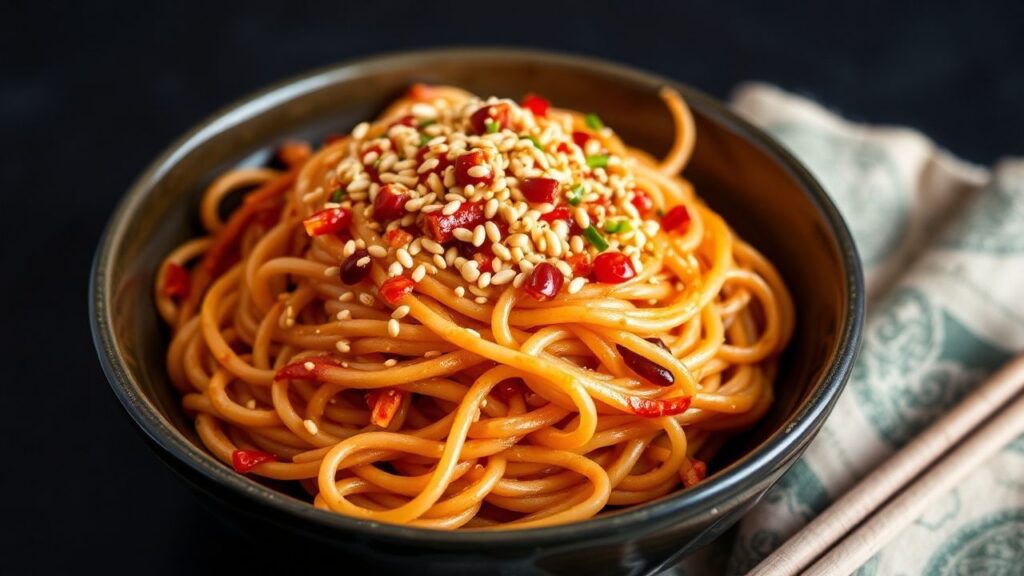
- Toss noodles with sauce: Transfer noodles to the skillet or a large mixing bowl. Toss thoroughly so every strand gets coated. The noodles should look glossy with a spicy sheen.
- Add fresh ingredients: Fold in sliced green onions, julienned cucumber, and about half the toasted sesame seeds. The cool crunch balances the warm heat.
- Serve: Plate the noodles and garnish with remaining sesame seeds, cilantro, and optional crushed peanuts for texture.
Tips for Success
Small choices decide whether sesame noodles taste silky or sticky. Use this checklist to keep your bowl smooth, balanced, and spicy.
That means a “just right” sauce often tastes a touch thin in the bowl before it meets the noodles. After tossing, the coating should look even and not clumpy.
Choose Noodles That Hold Sauce
Fresh egg noodles and ramen-style noodles work best because they keep a springy bite. Whole wheat spaghetti can also work if you cook it al dente and rinse well.
For noodle texture basics, see Noodle on how noodle types differ. The main idea: choose noodles that you can rinse without breaking and that don’t turn mushy quickly.
Balance Heat Without Guessing
Add chili garlic sauce in increments. Start with the full amount for a medium heat level, then adjust next time based on your taste. Heat builds quickly, so small changes matter.
If you want more depth, you can also stir in a teaspoon of chili oil or smoked paprika. Keep total additions modest so the sesame flavor stays in front.
Tahini Alternatives (If Needed)
If you cannot find tahini, blending toasted sesame seeds into a paste can work. However, the sauce may thicken differently because store-bought tahini typically has a smoother texture.
A smoother paste plus warm water helps you reach the same silky consistency. For general sesame paste uses, refer to Tahini.
Pro-Caution: Do not boil the sauce. Boiling can dull sesame aroma and make the texture feel oily. Warm it only until it turns glossy and fragrant, then toss right away.[/WARNING]
Serving Suggestions
Serve Fiery Sesame Noodles in shallow bowls so the glossy sauce coats each strand. A generous garnish helps you taste sesame and heat in every bite.
Pair the bowl with simple sides that add crunch or freshness. Steamed edamame adds protein, and spring rolls add crisp texture.
For extra brightness, add a squeeze of fresh lime. Fresh chili or chili flakes also work if you want guests to customize heat at the table.
Consider using purple shiso leaves or fresh mint to cool the palate between bites. If you want to learn more about how herbs and spices contribute to flavor perception, browse Herb.
| Nutrient | Per Serving |
|---|---|
| Calories | 380 kcal |
| Protein | 12 g |
| Carbohydrates | 52 g |
| Fat | 14 g |
If you want more meatless noodle ideas, keep exploring similar sesame-and-chili flavor profiles. For background on sesame nutrition and oil content, see Sesame seed.
For deeper understanding of why vinegar brightens savory dishes, check Vinegar. A small amount helps your sauce taste balanced instead of heavy.
Q&A
What makes Fiery Sesame Noodles stand out as a meatless dish?
They taste substantial because tahini creates body and soy adds umami. Chili garlic sauce gives heat without needing meat, and warming the sauce makes the sesame aroma stronger.
What gives the sauce its distinctive flavor?
The sauce blends toasted sesame oil, tahini, soy sauce, garlic, ginger, and rice vinegar. Maple syrup rounds out the chili so the flavor feels layered rather than one-note.
How do I get the perfect noodle texture?
Cook al dente, then rinse under cold water to stop cooking and remove excess starch. This keeps noodles springy and helps the sauce coat evenly.
Can I customize the spice level?
Yes. Reduce chili garlic sauce for mild heat, or add extra chili oil for more intensity. Taste the sauce before tossing so you control the final level.
How should I store leftovers?
Store sauce and noodles separately when possible. Keep them in airtight containers in the refrigerator, then warm the sauce and toss with reheated noodles to restore the glossy texture.
See also: Fiery Sesame