
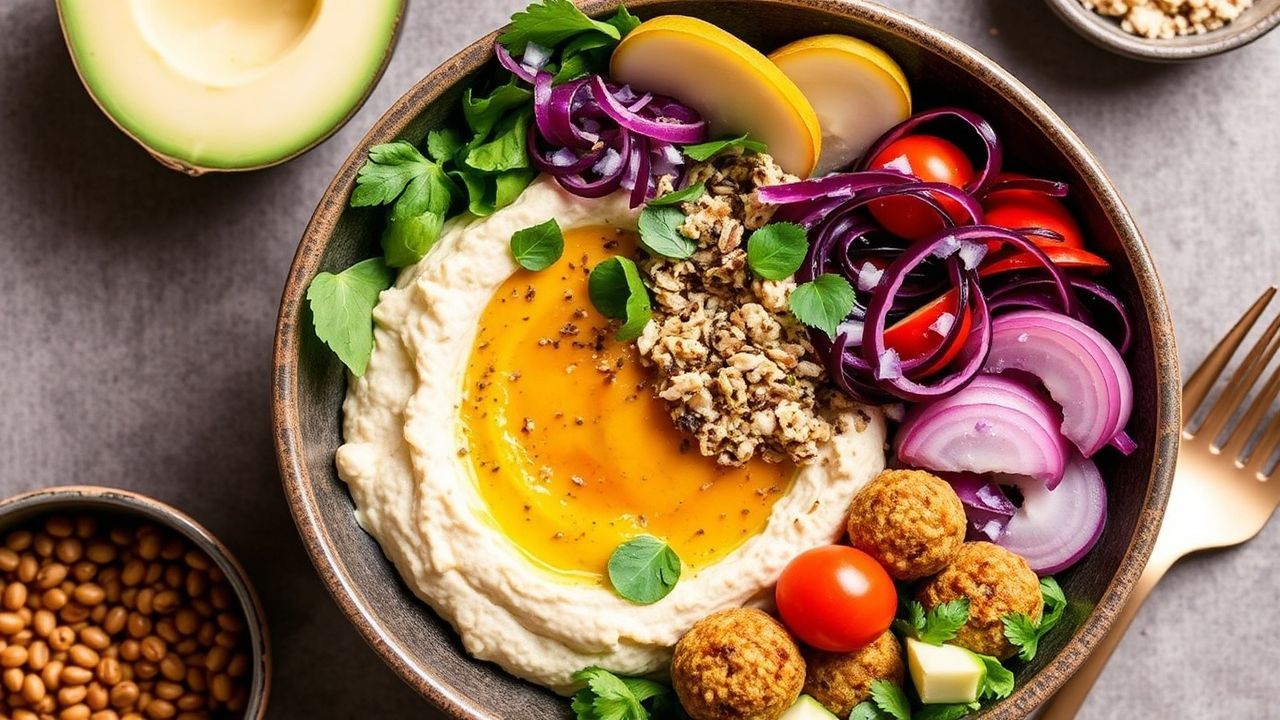
Falafel & hummus power bowls bring together crispy chickpea falafel, creamy hummus, and fresh vegetables in one plate. This combo delivers steady energy, strong fiber support, and plenty of plant-based protein. If you want a satisfying meal that still feels light, this is an easy win.
At a Glance
- Falafel and hummus work as a high-protein, high-fiber duo.
- Quinoa or brown rice adds complex carbs for longer fullness.
- You can prep falafel and hummus ahead for weeknight speed.
- Fresh toppings control flavor balance: herbs, lemon, and crunch.
Start with chickpeas. They fuel both falafel and hummus, so you repeat the ingredient base and keep the bowl cohesive. Then add tahini, olive oil, herbs, and lemon for depth, plus crunchy vegetables for texture.
Exploring the Nutritional Benefits of Falafel and Hummus in Power Bowls
Falafel & hummus power bowls focus on whole-food plant nutrition. Chickpeas provide protein and fiber, and they also support gut health by feeding beneficial bacteria. If you want a meal that supports digestion and steady appetite control, legumes are a smart foundation.
Chickpeas and tahini also bring key micronutrients. Chickpeas supply folate and iron, while tahini contributes healthy fats and minerals. For background on legumes and dietary fiber, see legumes and dietary fiber.
Falafel adds a satisfying crunch from frying or air-frying. Hummus adds creamy body from blended chickpeas, tahini, and lemon. Together, they make a bowl that feels indulgent, yet it stays plant-forward and nutrient dense.
For a deeper science lens on chickpeas, you can review chickpeas. The key practical takeaway: chickpeas pack both protein and carbs, so they help balance energy after meals.
What Makes the Protein and Fiber Count Work
Fiber slows digestion, which helps keep blood sugar steadier for many people. Protein also supports satiety, so you feel full longer. This combination matters when you build a power bowl for lunch or post-workout recovery.
When you add grains like quinoa or brown rice, you complete the bowl with complex carbohydrates. Quinoa brings extra protein quality compared with some grains. Learn more about grains and whole-food choices via whole grains.
Prep and Cook Time
- Readiness: 20 minutes
- Cooking: 15 minutes
- Total Time: 35 minutes
This timeline fits weeknight cooking when you use either soaked chickpeas (best texture) or well-drained canned chickpeas (fastest route). Either option still supports the same core flavor profile.
If you plan ahead, cooking becomes simpler. Bake or fry falafel in batches and store them so you can assemble bowls quickly all week.
Yield
Serves 4 power-packed bowls.
This yield works well for meal prep. You can keep bases, toppings, and sauces separate to preserve texture.
Difficulty Level
Easy to Medium — perfect for first-time power bowl cooks and meal prep fans.
You mainly do two tasks: form falafel and blend hummus. Then you assemble with fresh produce.
Ingredients
Use quality spices and fresh herbs. They carry flavor even when you keep the recipe simple.
- 1 cup dried chickpeas, soaked overnight (or 2 cups canned chickpeas, drained)
- 1 small onion, finely chopped
- 3 cloves garlic, minced
- 1/4 cup fresh parsley, chopped
- 1/4 cup fresh cilantro, chopped
- 1 tsp ground cumin
- 1 tsp ground coriander
- 1/2 tsp cayenne pepper (optional)
- 1 tsp baking powder
- 2 tbsp all-purpose flour
- Salt and pepper, to taste
- Vegetable oil, for frying
- For the Hummus:
- 1 1/2 cups canned chickpeas, drained and rinsed
- 1/4 cup tahini
- 3 tbsp fresh lemon juice
- 2 tbsp extra virgin olive oil
- 1 garlic clove, minced
- 1/2 tsp ground cumin
- Salt, to taste
- 2-3 tbsp cold water (to adjust consistency)
- For the Bowl:
- 2 cups cooked quinoa or brown rice
- 1 cup cherry tomatoes, halved
- 1 cucumber, diced
- 1/2 cup shredded red cabbage
- 1/4 cup pickled turnips or olives (optional)
- Fresh mint and parsley, for garnish
- Lemon wedges, for serving
Instructions
Follow the steps in order so the falafel batter sets and the hummus stays smooth. Work fast after blending so the texture stays creamy.
- Prepare the falafel mixture: Drain soaked chickpeas thoroughly. In a food processor, pulse chickpeas with onion, garlic, parsley, cilantro, cumin, coriander, cayenne, baking powder, flour, salt, and pepper until coarse but combined. Scrape down sides. The mixture should hold together when pressed. If it feels too loose, add 1 teaspoon of flour.
- Form and fry the falafel: Heat vegetable oil in a deep skillet over medium-high heat. Shape the mixture into golf ball-sized patties or balls. Fry in batches for 3-4 minutes per side until golden and crisp. Drain on paper towels.
- Make the hummus: In a blender or food processor, combine chickpeas, tahini, lemon juice, olive oil, garlic, cumin, and salt. Blend until smooth. Add cold water 1 tablespoon at a time until creamy and spreadable.
- Assemble the bowls: Add warm quinoa or brown rice as the base. Spoon hummus in the center. Arrange falafel, cherry tomatoes, cucumber, shredded cabbage, and pickled turnips around the hummus.
- Garnish and serve: Sprinkle fresh mint and parsley over the bowl. Finish with a drizzle of olive oil and a squeeze of lemon.
When you assemble, keep the crunchy vegetables fresh and cool. That contrast makes the warm falafel taste brighter.
For an ingredient background on tahini and sesame, review tahini and sesame. Both help explain why the sauce feels rich and satisfying.
Tips for Success
Small technique changes make a big difference. You can keep the same ingredient list and still improve texture and flavor fast.
Use dried chickpeas: Soaked and processed dried chickpeas give a lighter, more defined falafel crumb than many canned versions. If you use canned chickpeas, drain longer and pat them dry.
Prevent falafel from falling apart: Ensure the mixture feels cohesive when pressed. Resting helps, and adding a teaspoon of flour fixes a batter that runs too wet.
Make-ahead: Store falafel and hummus separately in airtight containers. Refrigerate up to 3 days. Rewarm falafel in a toaster oven or air fryer to restore crispness.
Substitutions: Swap brown rice for cauliflower rice if you want fewer carbs. You can also add roasted sweet potato for a sweeter base, which pairs well with lemon and cumin.
Enhance flavors: Toast cumin and coriander in a dry pan for 20–30 seconds before using. That simple step boosts aroma and makes the spices taste fresher.
Serving Suggestions
These bowls shine because they balance warm, creamy, and crunchy textures. Use a wide bowl so everyone gets hummus in every bite.
Add a final brightness layer right before serving. Lemon wedges work best, and fresh herbs prevent the bowl from tasting heavy. For spice layering ideas, see cumin and lemon.
For extra heat, mix harissa into hummus in small amounts. For a milder approach, sprinkle smoked paprika over the rice or salad. If you like crunch, add toasted seeds or a handful of sprouts.
This bowl also pairs well with a side of pita, if you want more traditional structure. Alternatively, serve with extra cucumber and tomato for a lighter carry-through.
| Nutrient | Per Serving |
|---|---|
| Calories | 480 kcal |
| Protein | 18 g |
| Carbohydrates | 55 g |
| Fat | 14 g |
Nutrition values vary by brand and portion size. The numbers here help you plan your day, but taste and adjust ingredients based on your goals.
If you want more context on dietary patterns like plant-based eating, review plant-based diets. This can help you frame the bowl as part of a wider nutrition plan.
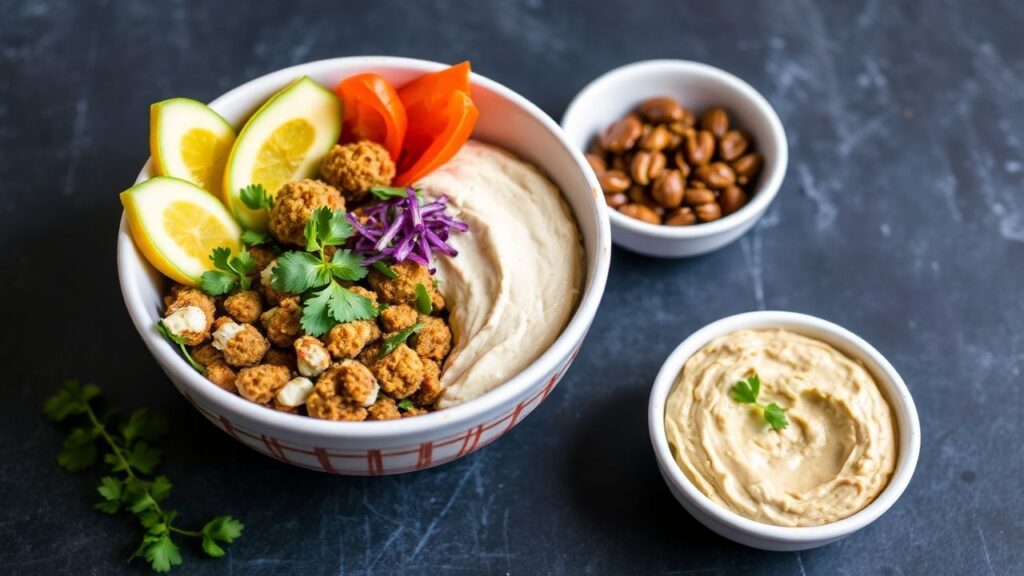
Build Your Perfect Falafel & Hummus Power Bowls
Use this bowl as a base template. Swap toppings without changing the core falafel-and-hummus foundation. That keeps flavor consistent while letting you use what you already have.
Start with a warm grain base, then layer hummus and falafel. After that, add vegetables in two roles: crunch (cucumber, cabbage) and juiciness (tomatoes). Finish with herbs and lemon for freshness.
Flavor Balancing Guide
If the bowl tastes flat, you usually need salt or lemon. Lemon boosts brightness and makes tahini taste more lively. Add a squeeze at the end so the flavor stays sharp.
If the bowl tastes too strong, add cooling crunch. Extra cucumber, shredded lettuce, or a handful of greens can soften spice intensity. That contrast keeps the bowl enjoyable even with bold cumin and cayenne.
Meal Prep Strategy
For best results, store components separately. Keep hummus in one container, falafel in another, and toppings in a third. This approach protects texture and prevents soggy vegetables.
Reheat falafel until hot and crisp. Then assemble quickly. Assembly time matters because it preserves the crisp edges and keeps veggies tasting fresh.
If you like the idea of cooked grain storage, you can review safe food storage concepts via refrigeration. Proper cooling helps maintain quality and reduces waste.
Concluding Remarks
Falafel & hummus power bowls deliver a practical mix of protein, fiber, and flavor. Crispy falafel and creamy hummus create a satisfying texture pairing, while fresh vegetables keep the meal light and bright.
When you cook in batches and assemble with a consistent topping formula, you get reliable results for lunch, dinner, or meal prep. Build your bowl with a grain base, hummus center, falafel around it, and finish with herbs and lemon.
For a final nutrition perspective, legumes and whole-food plant meals often support balanced daily intake. If you want more background on how legumes fit into diets, consult legume sources and apply the bowl structure you now know.
FAQ
Can I make falafel and hummus ahead of time?
Yes. Cook falafel and store it separately from hummus. Refrigerate up to 3 days, and reheat falafel to restore crispness.
What can I use instead of quinoa or brown rice?
You can use cauliflower rice for a lighter option. You can also use bulgur or whole-wheat couscous for a different texture while keeping the bowl filling.
Why did my falafel fall apart while frying?
Most often, the mixture feels too wet or the chickpeas weren’t drained well. Resting the formed patties and avoiding over-blending also helps them hold together.
How do I make hummus smoother?
Blend longer and add cold water gradually until it turns creamy. Using well-rinsed chickpeas and fresh lemon also improves texture.
Are falafel and hummus power bowls vegan?
They can be vegan as written, since both falafel and hummus use plant ingredients. Check any add-ins or garnishes if you swap toppings or sauces.
See also: Falafel & hummus