


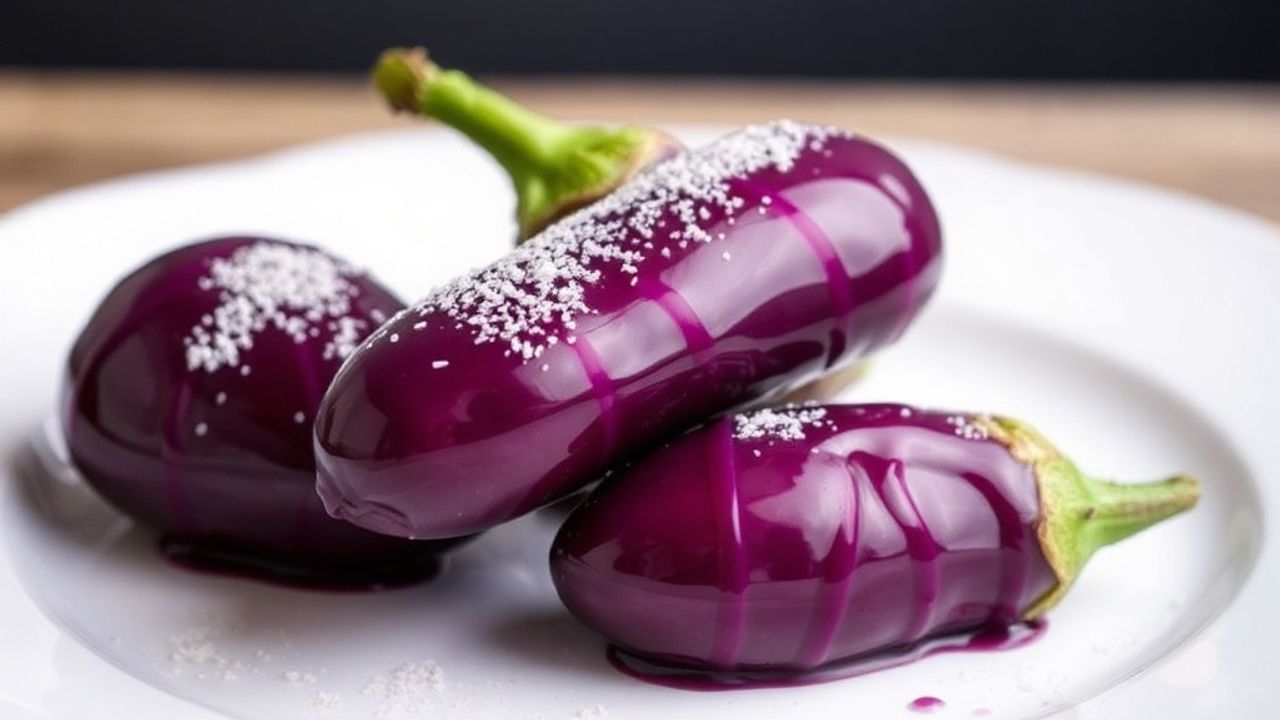
Candied eggplant reimagines a familiar vegetable as a glossy, sweet-savory treat that balances caramelized sugar with the eggplant’s tender texture.
- Candied Eggplant: Origins and Culinary Context
- Candied Eggplant Ingredients and Why They Matter
- Candied Eggplant: Step-by-Step Technique
- Texture Control and Troubleshooting for Candied Eggplant
- Serving and Pairing Candied Eggplant
- Advanced Variations and Flavor Pairings
- Candied Eggplant Nutrition and Practical Notes
- FAQ
- At a glance: candied eggplant converts the vegetable into a dessert-quality or appetizer-quality confection.
- It relies on basic techniques: salting, browning, and slow simmering in syrup.
- Regional traditions from Mediterranean cuisine and Middle Eastern cuisine inform typical spice choices.
- Proper draining and gentle handling preserve texture while allowing syrup absorption.
Candied Eggplant: Origins and Culinary Context
The practice that produces candied eggplant grew from broader methods of preserving produce in sugar.
Early techniques resemble those used for candied fruit and other preserved sweets, adapting preservation to local vegetables.
Eggplant’s spongy flesh absorbs syrup well, which makes candied eggplant a logical candidate for sweet preparations.
Across regions, cooks pair it with warm spices, citrus, or nuts to create contrasts between sweet and savory notes.
Candied Eggplant Ingredients and Why They Matter
Ingredient quality shapes the final dish. Use firm, glossy eggplants for the best texture.
Sugar, acid, and fat work together: sugar builds the glaze, acid brightens flavor, and oil controls browning.
Common spices include cinnamon, cloves, and citrus zest; each adds a distinct aromatic layer to candied eggplant.
When you plan toppings, toasted nuts and fresh herbs provide contrast to sticky slices.
Candied Eggplant: Step-by-Step Technique
Begin by slicing and lightly salting the eggplant to draw out excess moisture and any bitterness.
Rinse and pat dry to remove surface salt before browning to ensure proper caramelization of the flesh.
Preparing the Syrup
Make a simple syrup of sugar and water, then add a splash of acid like lemon juice to prevent crystallization.
Simmer spices briefly in the syrup to infuse flavor without adding bitterness.
Browning and Simmering
Brown eggplant slices in a thin layer of oil to develop color and reduce water content before adding to the syrup.
Simmer the browned slices gently in the syrup until they absorb liquid and turn glossy.
Texture Control and Troubleshooting for Candied Eggplant
Texture is the most common challenge when candying vegetables; aim for tender but intact slices.
If slices become mushy, reduce simmer time or brown longer to expel more moisture before syruping.
Overly dry, leathery results indicate too-high heat or excessive evaporation; add a splash of warm syrup or water and cook briefly to rehydrate.
To maintain bite while keeping syrupy glaze, remove slices as soon as they become translucent and glossy.
After glazing, allow pieces to rest on a rack so excess syrup drains and sets evenly.
Store finished candied eggplant refrigerated in an airtight container to keep texture stable for several days.
Serving and Pairing Candied Eggplant
Candied eggplant adapts to sweet and savory service roles. It works as a compote alternative on cheese boards.
Pair it with creamy cheeses like labneh or ricotta, or use it to top plain yogurt for dessert-style serving.
For savory plates, balance sticky sweetness with acidic salads, charred meats, or smoked proteins.
Garnish with chopped toasted nuts and fresh herbs for texture and visual contrast.
Advanced Variations and Flavor Pairings
Introduce a splash of balsamic or a reduced wine syrup for acidity and depth in modern recipes.
Try ginger, cardamom, or star anise for layered aromatics, and consider using honey instead of sugar for floral notes.
For a textural surprise, fold chopped candied eggplant into quick breads or savory muffins to add moisture and complexity.
Alternatively, dice and use as a garnish on warm porridge or ice cream for creative sweet-salty contrast.
Candied Eggplant Nutrition and Practical Notes
Candied eggplant provides fiber and micronutrients from the vegetable, though sugar adds significant calories.
When you control the sweetener and portion size, candied eggplant can be a balanced occasional treat.
For lower-sugar variants, reduce sugar in the syrup and increase spices or citrus to preserve flavor intensity.
Be mindful of oil usage when browning; a light coating suffices to achieve caramelization.
FAQ
How long does candied eggplant last?
Refrigerated in an airtight container, candied eggplant keeps well for 4–7 days. Always check for off-smells or visible fermentation before serving.
Can I candy other vegetables the same way?
Yes. Firm-fleshed vegetables that tolerate slow simmering, such as beet or carrot, adapt well to candying techniques similar to candied eggplant.
What texture should I aim for with candied eggplant?
A successful result is tender yet intact slices with a glossy, slightly tacky surface. Avoid fully disintegrated pieces; they indicate overcooking.
Is candied eggplant served hot or cold?
Both work. Serve warm to highlight fresh caramel notes, or chilled to emphasize syrup clarity and pairing with cold cheeses or yogurt.
Can I use honey instead of sugar for candied eggplant?
Honey works but changes the flavor profile and syrup behavior. Reduce heat slightly when using honey to avoid burning and to preserve aroma.
Final note: Candied eggplant rewards care and experimentation. Focus on texture control, balance of acid and spice, and thoughtful pairings to make a dish that surprises guests and highlights the vegetable’s versatility.
See also: candied eggplant