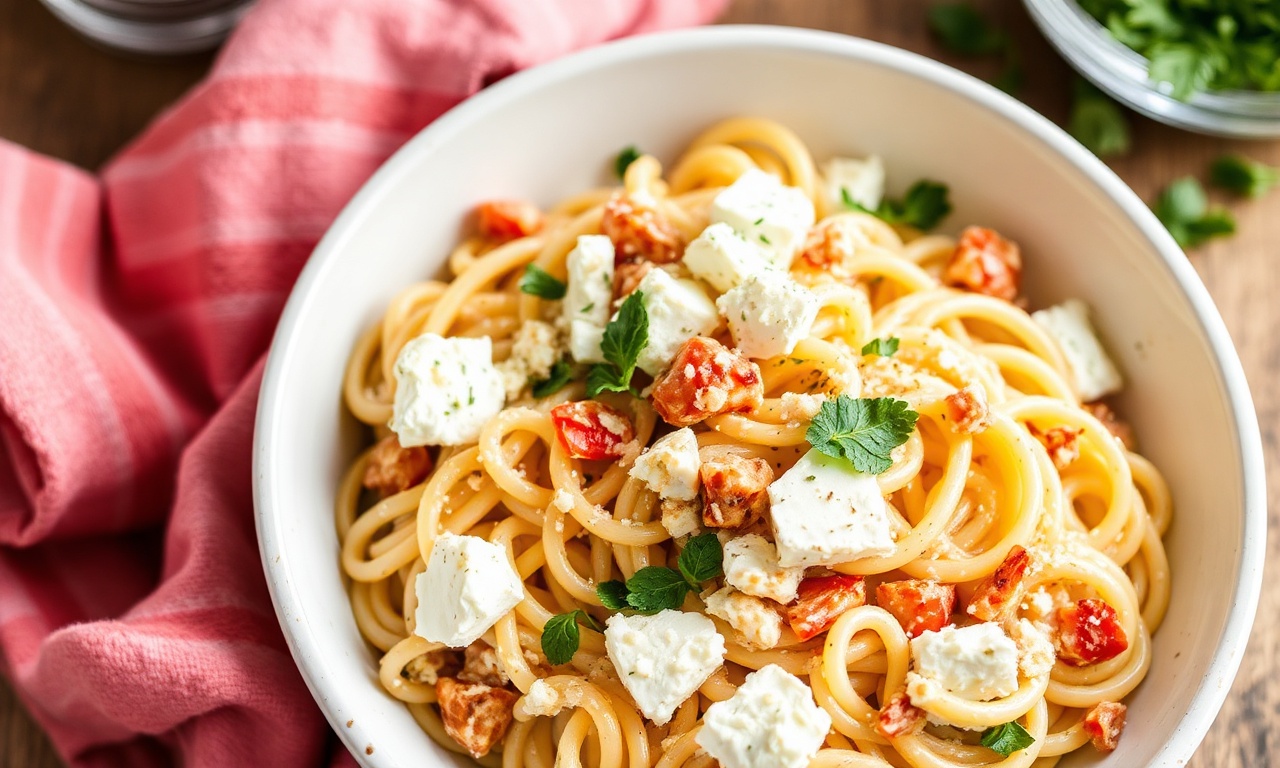
There’s a new kitchen obsession sweeping across home cooks and food lovers: baked feta pasta. This simple method turns a block of feta into a silky, creamy sauce while blistered tomatoes add natural sweetness. Once you stir it through pasta, you get bold flavor with no cream required.
- Prep and Cook Time
- Yield and Difficulty
- Ingredients for Creamy Baked Feta Pasta
- Instructions: Bake, Toss, and Emulsify
- Tips for Success (Texture, Heat, and Balance)
- Serving Suggestions and Pairings
- Nutritional Snapshot (Practical Expectations)
- FAQ: Creamy Baked Feta Pasta
- What makes baked feta pasta creamy without cream?
- What feta should I buy for the best results?
- Can I use gluten-free pasta?
- Why did my sauce turn grainy?
- How should I store and reheat leftovers?
- Final Notes: Make It Your Own
At a Glance
- Oven-melted feta creates a creamy sauce on its own.
- Roasted tomatoes bring tang, sweetness, and color.
- Reserved pasta water helps the sauce cling to every bite.
- Best texture comes from timing: roast, then toss while hot.
Unlock the Secret to Creamy, Flavorful Baked Feta Pasta Magic
Unlock the secret to creamy baked feta pasta with a vibrant, comforting dinner that feels special with almost no effort. The method is straightforward: roast feta with tomatoes until the feta softens and the juices thicken, then toss in al dente pasta.
This dish stands out because it relies on familiar cooking physics. When feta heats, its fat and proteins break down into a smooth, cohesive sauce. Meanwhile, tomatoes caramelize at the edges, so you taste sweetness, tang, and a deep roasted aroma (see roasting).
For best results, keep the oven temperature steady and don’t rush the roast. Then use pasta water—starchy water helps emulsify the sauce, which makes it coat pasta instead of sliding off (learn how starch works at starch).
Prep and Cook Time
Plan for about 10 minutes of prep and 40 minutes of oven time. The roast does most of the work while you prep your pasta and set the table.
Total time lands around 50 minutes. That makes this a realistic weeknight option, especially when you use pre-washed tomatoes and a quick-cooking pasta shape.
Yield and Difficulty
This recipe serves 4 generous portions. If you’re feeding four hungry adults, you’ll likely start with a bit more pasta to ensure everyone gets a full coat of sauce.
The difficulty stays easy. You only need basic knife skills for slicing garlic and a simple toss at the end—no tempering, no complicated steps.
Ingredients for Creamy Baked Feta Pasta
Use a short, high-impact ingredient list so the flavors stay clear. The goal is one creamy, savory-tangy sauce where tomatoes and feta do the heavy lifting.
Choose block feta for the best melting behavior. Crumbled feta can still work, but a solid block gives a more predictable texture as it warms (see feta).
- 200g block of feta cheese
- 500g cherry or grape tomatoes, washed
- 3 cloves garlic, thinly sliced
- 1/4 cup extra-virgin olive oil
- 1/2 teaspoon red chili flakes (optional, to taste)
- Salt and freshly ground black pepper, to taste
- 300g pasta of your choice
- Fresh basil leaves, for garnish
- 1 tablespoon balsamic vinegar (optional, for balance)
Instructions: Bake, Toss, and Emulsify
Follow these steps in order. The roast builds flavor, and the toss locks that flavor into a creamy coating.
Keep a close eye near the end of roasting. The tomatoes should blister and collapse, and the feta should look soft and slightly golden.
- Preheat your oven to 200°C (400°F). Place the block of feta in the center of a medium baking dish.
- Add the tomatoes and garlic around the feta. Drizzle olive oil over everything, then season with chili flakes, salt, and black pepper.
- Roast for 35–40 minutes until tomatoes blister and the feta softens. This step drives the roasted sweetness and creates the signature creamy texture.
- While the dish roasts, cook the pasta in salted boiling water to al dente. Reserve 1/2 cup pasta water before draining.
- Mash and stir the roasted feta and tomatoes with a fork. Mix until you get a thick, creamy base that includes the flavorful oil from the pan.
- Toss the pasta directly into the baking dish.
- Add pasta water gradually and toss steadily until the sauce loosens and clings to the pasta. Keep going until the texture looks glossy.
- If you want a brighter finish, stir in balsamic vinegar at the end.
- Serve immediately with basil, extra black pepper, and an optional drizzle of olive oil.
Expert Tip on Pasta Water Emulsions
If the sauce feels tight, add a splash and toss for 30–45 seconds. If it feels too loose, toss off-heat for a minute so the sauce thickens naturally.
Pro-Caution on Feta Timing
Start checking at the 35-minute mark. Every oven and baking dish holds heat differently, so early observation protects texture.
Also, keep the feta in the center of the dish. If the top oil level stays uneven, you may get one area that melts faster than the rest.
Tips for Success (Texture, Heat, and Balance)
Small changes make a big difference with baked feta pasta. Use these cues to lock in creamy texture and bright flavor.
Think in three phases: roast for creaminess, cook pasta for carryover, and toss for final gloss.
- Choose the ideal pasta shape: Tubular or ridged pasta (penne, rigatoni, fusilli) traps sauce in ridges and pockets.
- Roast tomatoes without rushing: Aim for blistered edges and collapsed tomatoes. That’s where sweetness concentrates (see tomatoes).
- Balance acidity and heat: Chili flakes add warmth, while a small amount of balsamic can sharpen the overall taste.
- Make-ahead strategy: Roast the feta-tomato base up to a day ahead. Rewarm gently, then toss with freshly cooked pasta.
- Dairy-free option: If you use plant-based feta alternatives, expect different melting behavior. Add pasta water early and toss until smooth.
Serving Suggestions and Pairings
Serve baked feta pasta right away so the sauce stays glossy and the tomatoes stay juicy. When pasta cools, starch tightens and the sauce thickens, so timing matters.
For a full meal, add a bright green salad with lemon vinaigrette. The acidity cuts the richness and makes each forkful taste lighter.
You can also serve it with crusty bread to scoop extra sauce. If you want more crunch, toast pine nuts in a dry pan for 2–3 minutes, then sprinkle on top.
Nutritional Snapshot (Practical Expectations)
This is a rich, comfort-style pasta. Portion size helps you keep it balanced, especially since feta and olive oil add fat and calories.
Below is a sample per-serving estimate for typical ingredient amounts. Your exact values vary based on feta brand, pasta type, and how much olive oil you end up with in the final sauce.
| Nutrient | Per Serving |
|---|---|
| Calories | 480 kcal |
| Protein | 18 g |
| Carbohydrates | 56 g |
| Fat | 18 g |
FAQ: Creamy Baked Feta Pasta
These quick answers address the most common questions. If you follow the roast-and-toss logic, you’ll nail the creamy texture.
What makes baked feta pasta creamy without cream?
The feta softens as it heats and releases fat, while tomato juices mix into the same pan. When you toss with starchy pasta water, the mixture emulsifies and forms a smooth sauce.
That process works because fats and water-based liquids can combine when starch helps them stay together (see emulsion).
What feta should I buy for the best results?
Choose block-style feta that is firm and tangy. A solid block melts more predictably into a creamy base than pre-crumbled feta.
Also check the label for brine and salt level. If your feta tastes very salty, you may need less added salt during seasoning.
Can I use gluten-free pasta?
Yes. Cook gluten-free pasta carefully to avoid overcooking, then toss while hot. Gluten-free shapes often absorb sauce differently, so add pasta water as needed.
Richer sauces still work, but the emulsion depends on your pasta’s starch content, so reserve extra pasta water.
Why did my sauce turn grainy?
Graininess often happens when feta overheats or dries out. Next time, pull the dish earlier and keep an eye on color and softness at the 35-minute mark.
If it’s already grainy, toss in extra warm pasta water and stir for 30–60 seconds off-heat to help the texture come together.
How should I store and reheat leftovers?
Cool leftovers quickly, then refrigerate in a sealed container. Eat within 2–3 days for best flavor and texture.
Reheat gently with a splash of water or olive oil. Warm the pasta until hot, then toss once more so the sauce loosens and regains a silky feel (see leftovers).
Final Notes: Make It Your Own
Once you master the basic ratio—feta, tomatoes, olive oil, and pasta water—you can build variations. Add spinach for color, mix in roasted peppers for sweetness, or top with extra basil right before serving.
Most importantly, follow the timing cues. Roast until blistered and soft, cook pasta to al dente, and toss hot so creamy baked feta pasta stays creamy on the plate.
See also: baked feta pasta