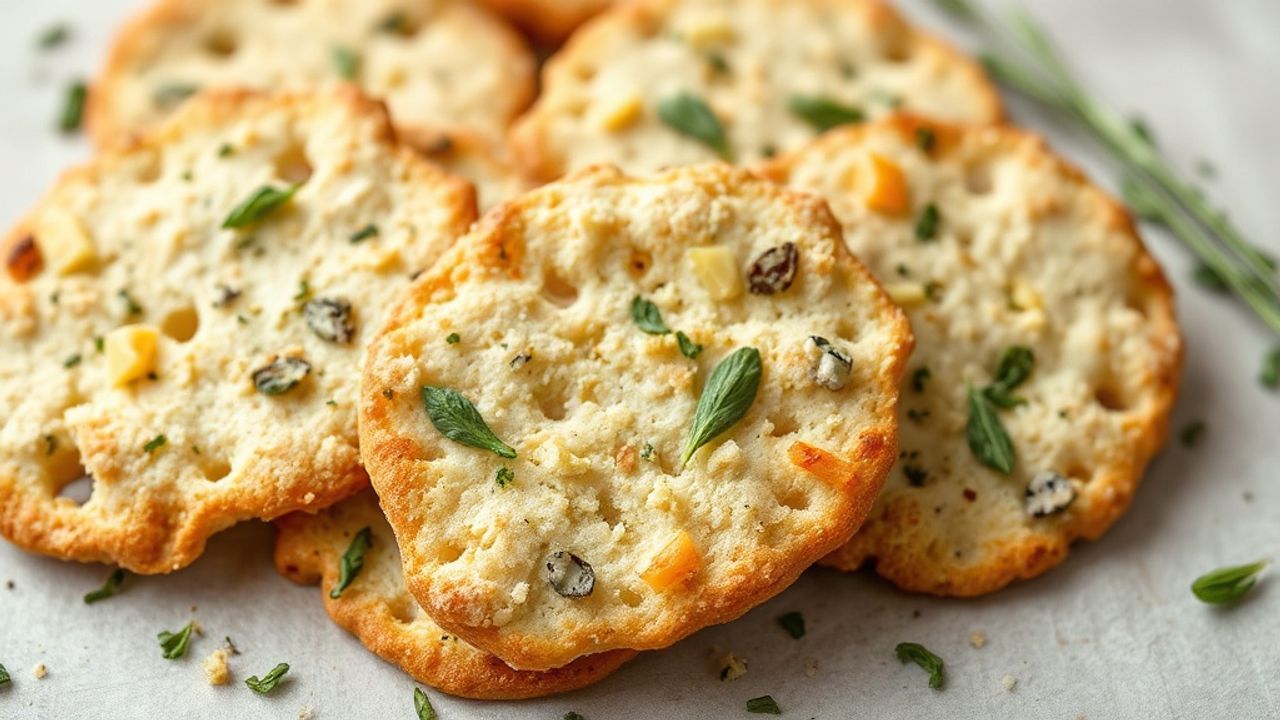
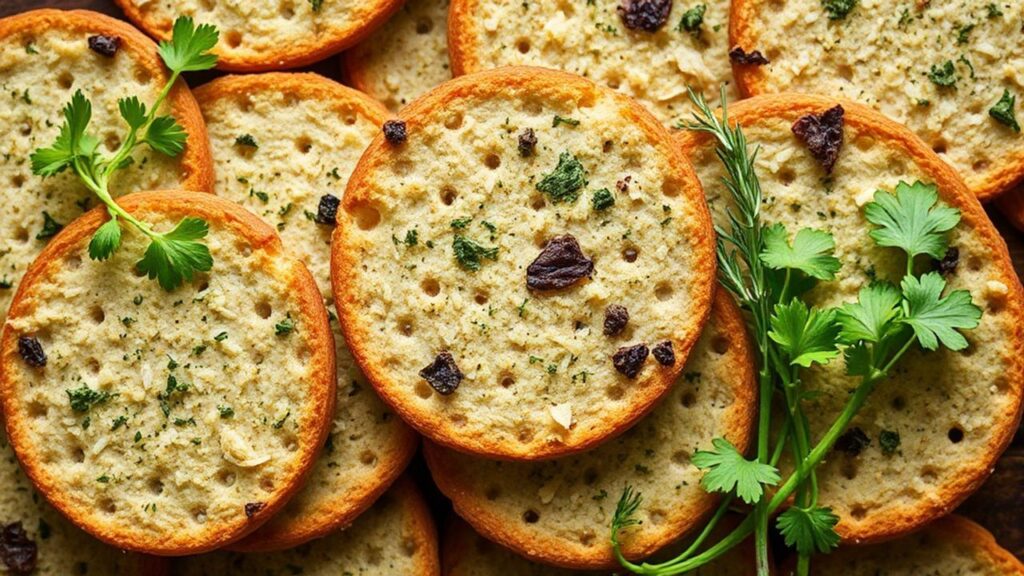
Crunchy sourdough discard crackers with fresh herbs turn leftover starter into a crisp, savory snack. They bake thin, dry out evenly, and deliver a tangy bite that tastes like you planned it.
- Why Crunch Happens: Discard, Hydration, and Heat
- Fresh Herbs That Taste Bright in Every Crunch
- Ingredients for Crunchy Sourdough Discard Crackers with Fresh Herbs
- Instructions: How to Bake Evenly Crunchy Herb Crackers
- Tips and Tricks for the Perfect Crisp Texture
- Creative Herb Combinations to Elevate Your Sourdough Discard Crackers
- Chef’s Notes for Strong Flavor and Reliable Results
- Serving Suggestions That Make the Crackers Disappear
- Final Thoughts: Turn Discard Into a Snack You Crave
- FAQ
At a Glance
- Thin rolling builds crunch, not thickness.
- Fresh herbs boost aroma as they heat.
- Airtight storage keeps the crackers crisp.
- Adjust bake time by oven strength and thickness.
These crackers also cut food waste without losing flavor. Sourdough discard already includes fermentation byproducts, which means you get depth even with simple ingredients.
If you love working with cultured foods, you’ll enjoy how quickly discard becomes dough. Then the oven does the rest: it drives off moisture and turns flexible dough into brittle, snack-ready sheets.
Why Crunch Happens: Discard, Hydration, and Heat
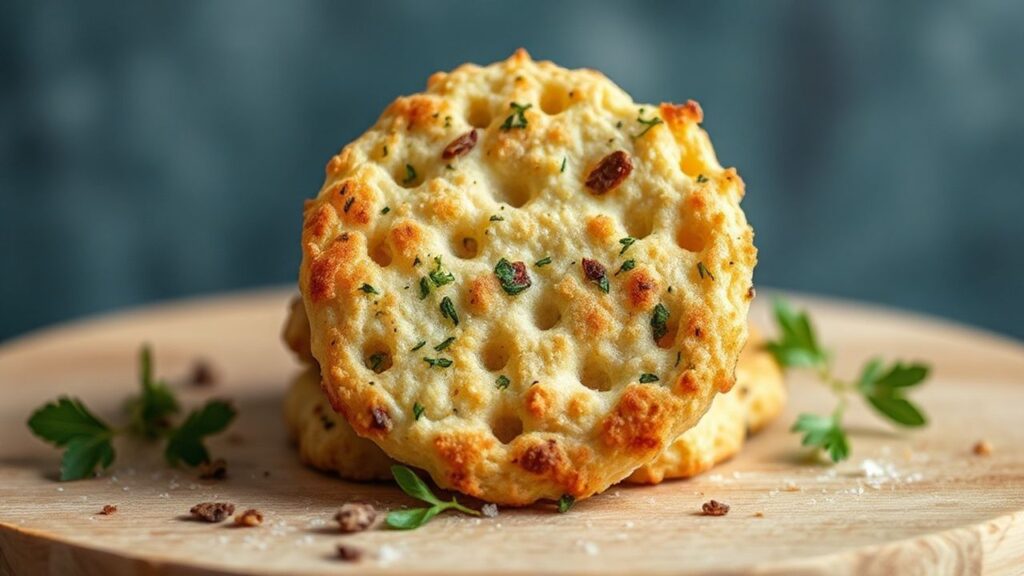
Crunch depends on two things: how much water your dough holds, and how thoroughly the oven dries it. When you roll thin and bake until edges bronze, moisture escapes fast and the cracker snaps.
Sourdough discard works because fermentation changes flavor compounds and acidity. That tang balances the flour and helps the crackers taste “baked,” not just dry.
For background, the role of yeast and fermentation is tied to the biology of dough. See yeast and fermentation for a clear explanation of why tang appears in baked goods.
Meanwhile, herbs add fresh top-notes right at the moment the heat releases their oils. Use them chopped fine so every bite carries color and aroma.
Fresh Herbs That Taste Bright in Every Crunch
This recipe uses rosemary, thyme, and chives for a balanced herb profile. Rosemary brings a piney, woody note, thyme adds earthy warmth, and chives give a mild onion bite.
Fresh herbs also behave better than dried herbs for this cracker style. Dried herbs can taste muted because there’s less volatile aroma released when the dough is baked thin.
To learn how aroma compounds survive heat, read about flavor and why smell drives most of what you perceive as taste. You’ll notice this effect the first time the herb smell hits your kitchen.
If you want a “greener” finish, increase the chives slightly. If you want more bite, add extra black pepper right before baking for a sharper aroma.
Expert Insight: Chop herbs finely and fold them in at the end. Quick mixing keeps herb oils from bruising, so you get stronger aroma without a bitter edge.
Prep and Cook Time
- Prep: 40 minutes (includes mixing and chilling)
- Baking: 20–25 minutes
- Total: about 1 hour 5 minutes
Yield
Yields about 40–45 medium crackers, depending on how thin and how large you cut them. You’ll also get extra scraps—save them and bake for a crunchy “taste test” batch.
Difficulty Level
Easy. This recipe uses a simple dough build and a straightforward roll-and-cut process. Even if you’re new to discard baking, you can get reliable results by rolling evenly.
Ingredients for Crunchy Sourdough Discard Crackers with Fresh Herbs
- 1 cup sourdough discard (unfed, room temperature)
- 1 cup all-purpose flour, sifted
- 2 tablespoons olive oil, plus a little extra for brushing
- 1/2 teaspoon fine sea salt
- 1/2 teaspoon baking powder
- 2 tablespoons finely chopped fresh rosemary
- 1 tablespoon finely chopped fresh thyme
- 1 tablespoon chopped fresh chives
- Freshly ground black pepper, to taste
- Coarse sea salt, for sprinkling
Use discard that smells pleasantly tangy. If it smells “off” or unusually sour, refresh your starter and try again. The dough should feel workable, not watery.
For flour basics, see flour. Different flours absorb water differently, which can affect how thin you can roll and how crisp you can get.
Instructions: How to Bake Evenly Crunchy Herb Crackers
- Mix dry ingredients: In a large bowl, whisk flour, fine sea salt, and baking powder. Whisking spreads leavening so the surface stays crisp.
- Add discard and oil: Stir in sourdough discard and olive oil until a shaggy dough forms. Mix just until no dry flour remains.
- Fold in herbs: Fold in rosemary, thyme, and chives, then add black pepper. Fold gently to keep the dough even.
- Knead briefly and chill: Knead 4–5 turns on a lightly floured surface, then wrap and refrigerate 30 minutes. Chilling firms the dough and makes thin rolling easier.
- Roll thin: Heat oven to 350°F / 175°C. Roll on parchment to about 1/16 inch. Try to keep the thickness consistent for uniform crunch.
- Cut and shape: Cut into squares or rustic triangles. Move parchment to a baking sheet.
- Brush and season: Brush lightly with olive oil. Sprinkle coarse sea salt for texture.
- Bake until dry and golden: Bake 20–25 minutes, rotating once. Watch for dry, lightly golden edges and a brittle feel when tapped.
- Cool fully: Cool on the tray for at least 15 minutes. Cooling completes moisture loss and sets crunch.
For a helpful science note, baking relies on heat transfer and moisture evaporation. If you like that angle, read baking to understand why time and temperature matter so much for crisp crackers.
After your first batch, note your oven behavior. If your crackers brown too fast, lower the rack one step and reduce time by 2–3 minutes next run.
Tips and Tricks for the Perfect Crisp Texture
Thin dough drives crunch because it leaves a shorter path for water to escape. Aim for even thickness across the whole sheet, not just the center.
Chilling improves rollability. It also reduces spreading, so the crackers bake flatter and stay crisp longer.
- Rolling thinly: Use parchment and roll with steady pressure. If the dough sticks, lightly dust with flour and keep moving.
- Check color early: Light gold at the edges signals doneness. Dark brown means you baked past the crisp peak.
- Rotate once: Oven hotspots exist in most kitchens. Rotation helps every cracker dry evenly.
- Cool completely: Warm crackers feel crisp, but they can soften as they finish releasing moisture.
- Storage: Store in an airtight container at room temperature. Keep crackers away from steam, which rehydrates starch and kills crunch.
Creative Herb Combinations to Elevate Your Sourdough Discard Crackers
The base recipe already gives you a strong herb backbone. Now you can change the mood by swapping herbs while keeping the same dough thickness.
Pick herbs that share a similar flavor intensity. Very delicate herbs (like mild lettuce herbs) can fade, while bold herbs (like rosemary) can dominate.
For herb science basics, see herb. It gives a useful overview of how herbs differ from spices and why aroma matters so much in baking.
- Basil and oregano: Use finely chopped basil and oregano. Add sun-dried tomato flakes for a savory, Italian-style edge.
- Dill and lemon zest: Dill tastes bright in thin baked goods. Add grated lemon zest to lift the flavor.
- Sage and black pepper: Sage adds earthy depth. Pair with a generous grind of pepper for a sharper bite.
- Cilantro and cumin: This combo adds warmth and a citrusy herbal note. Use a light hand so cumin doesn’t overpower.
Chef’s Notes for Strong Flavor and Reliable Results
Start with unfed discard for a milder tang. If your discard is fed recently, it can taste less sharp, and the crackers may come out slightly softer in aroma.
Flour swaps change texture. Whole wheat absorbs water and can make the dough feel drier. If you switch flour, you may need to adjust your roll thickness and baking time.
- Use unfed discard for a smoother tang and more balanced flavor.
- Try whole wheat for nuttier flavor; roll thin and bake until the surface dries.
- For gluten-free baking, choose a 1:1 gluten-free flour blend and expect a different crunch profile.
- Add red pepper flakes or smoked paprika if you want heat. Mix evenly so it spreads across each cracker.
- Make ahead: freeze rolled, cut dough on parchment. Bake from frozen and add a few extra minutes.
Serving Suggestions That Make the Crackers Disappear
These herb crackers work as an all-purpose base for dips and spreads. The tang helps rich flavors like cream cheese, while the herbs brighten heavier toppings.
Try them at a board night, pack them in lunch boxes, or serve them with soup. For a simple route, sprinkle extra herbs on top right after baking.
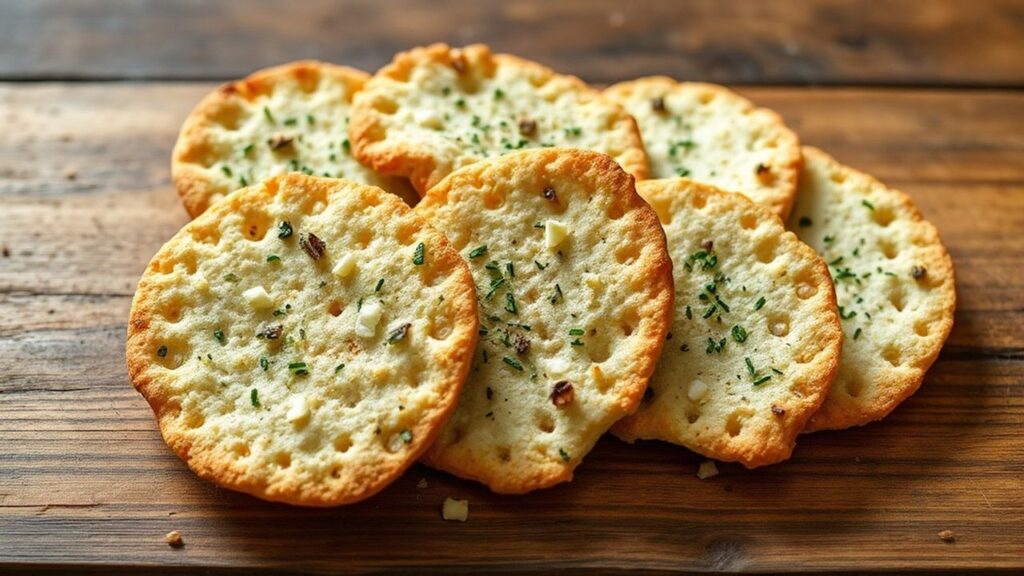
- Serve with cream cheese spreads or ricotta topped with tomatoes.
- Pair with olives, roasted garlic, and sun-dried tomatoes for a Mediterranean platter.
- Top with cucumber and smoked salmon with extra dill.
- Dunk in seasonal dips like roasted red pepper spread or hummus.
- Finish with Parmesan or a small drizzle of truffle oil for an elevated snack.
| Nutritional Info (per 5 crackers) | Calories | Protein | Carbs | Fat |
|---|---|---|---|---|
| Crunchy Sourdough Discard Crackers | 90 kcal | 2 g | 12 g | 4 g |
Final Thoughts: Turn Discard Into a Snack You Crave
Once you bake a thin sheet of herb dough and hear that first sharp snap, sourdough discard stops feeling like leftovers. It becomes a reliable ingredient you can stretch into crisp, flavorful crackers.
Keep the method simple: roll evenly, bake until dry, and cool fully. Then store well so the crunch lasts.
For more on bread culture and starter traditions, you can explore sourdough. It helps connect today’s discard recipes to the long history of fermented baking.
Now set aside your next discard jar. Then bake this batch, pair it with your favorite spread, and enjoy the outcome while it’s at its crispiest.
FAQ
What makes sourdough discard the best base for crackers?
Sourdough discard contains fermented components that add tang and flavor depth. That fermentation also helps your crackers taste complex even when the recipe uses basic flour and herbs.
It’s a smart way to use starter you’d otherwise discard, while still producing an intentional snack with real character.
How do fresh herbs change the flavor of sourdough crackers?
Fresh herbs bring brighter aroma because heat releases their volatile oils. In thin crackers, those oils reach your senses in every bite.
Chop herbs small so they spread through the dough and bake at the same rate as the cracker.
Can I customize the herb blend?
Yes. Swap rosemary and thyme for basil, dill, sage, or a mix that fits your taste. Keep the total herb amount similar so the dough stays balanced.
If a herb is very strong (like rosemary), use slightly less. If a herb is mild (like chives), you can add a bit more for punch.
What’s the secret to getting a true crunch instead of soft crackers?
Roll thin and bake until the surface looks dry and lightly golden. Underbaked crackers keep moisture, and moisture makes crackers soften after cooling.
Rotate the pan once and cool fully on the tray for best results.
How should I store crunchy sourdough discard crackers with fresh herbs?
Store crackers in an airtight container at room temperature. Avoid humidity, because water rehydrates starch and steals crispness.
If they soften, re-crisp them briefly in a low oven until dry again.
See also: sourdough discard